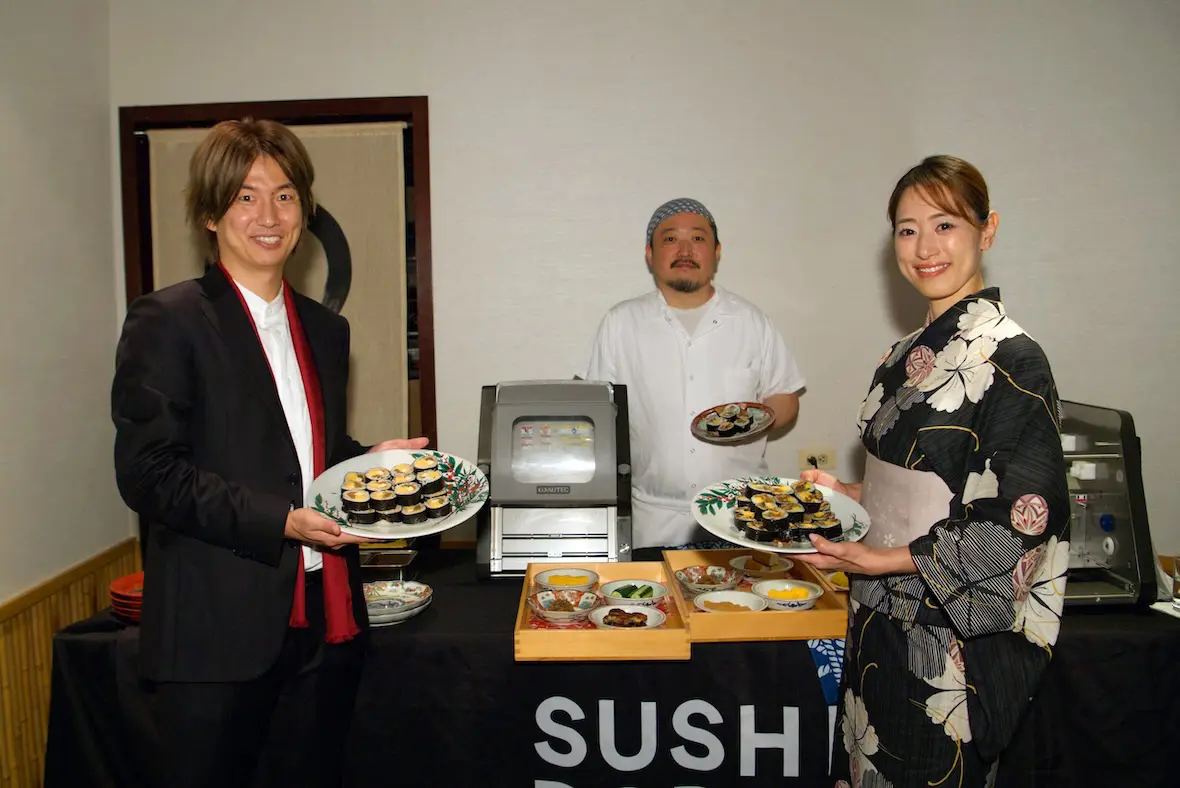
This week, AUTEC launched its Mottainai Project in Midtown Manhattan with CEO Taka Tanaka, cultural strategist Sayaka Wada, and the restaurant’s culinary team to explore how Japanese food traditions can work alongside modern technology.
We joined a bustling crowd of friends, collaborators, and supporters inside a private event space at the Michelin Guide-listed restaurant. A self-service spread offered Japanese dishes alongside sake and beer, while AUTEC’s sushi machines prepared rolls at a demonstration station. The project takes its name from mottainai, a Japanese philosophy often translated as “don’t waste” or “what a waste.” Its meaning extends beyond throwing away less. It also expresses gratitude for ingredients and respect for the people who produce them.
For this first event, Wada introduced the philosophy through obanzai, seasonal home cooking most often associated with Kyoto. Because the tradition developed long before refrigeration, obanzai also favors preparations that use ingredients fully and keep well over time.
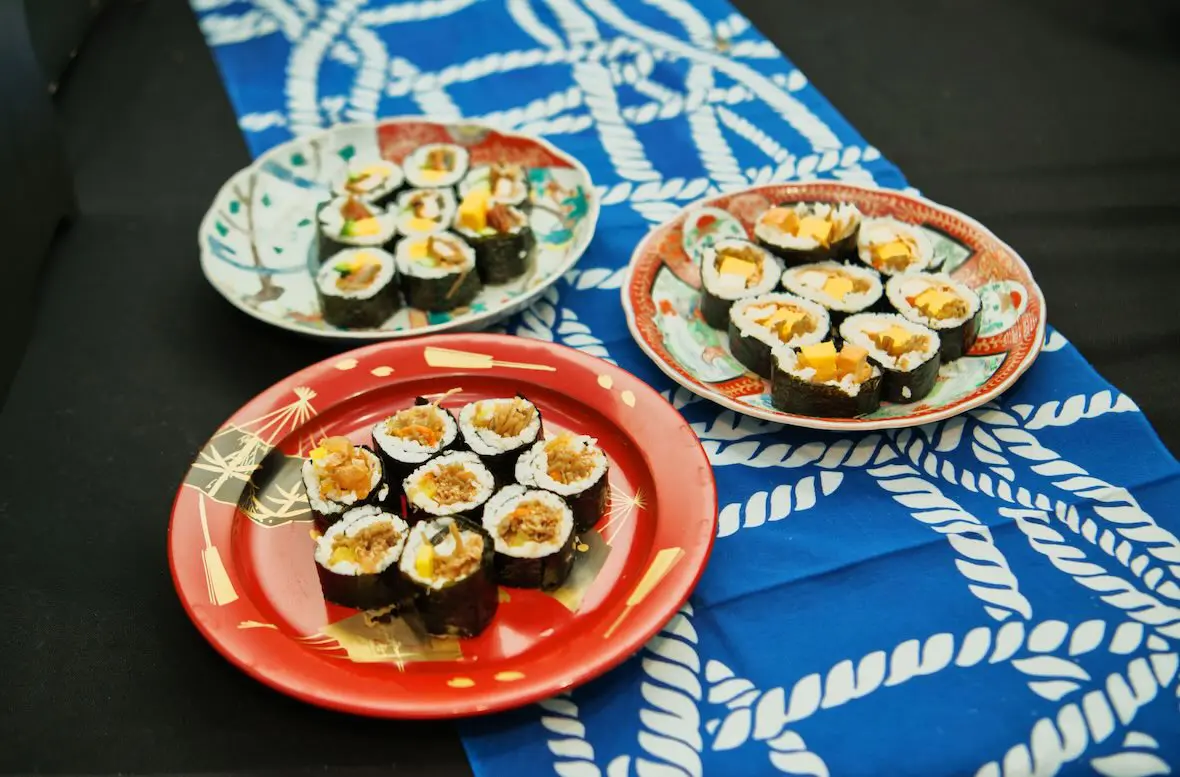
Photo Courtesy: AUTEC
Wada translated that tradition into three Obanzai Rolls: one made with tofu and vegetables, one with meat, and one centered on eel. During the demonstration, AUTEC’s ASM895A Maki Maker measured and pressed rice into an even sheet before the chef added the fillings and completed the roll by hand. From there, the finished roll moved to the ASM260A Roll Cutter. One press of a button cut the entire roll into uniform pieces at once.
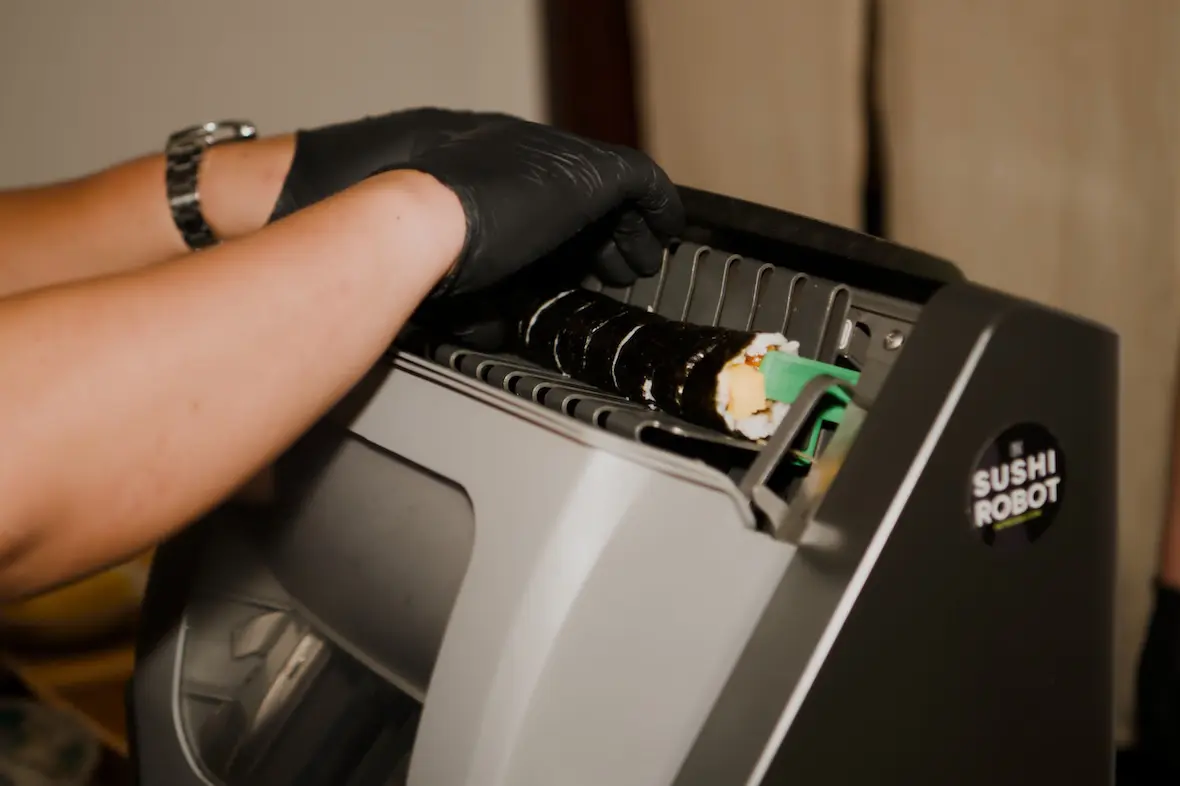
Photo Courtesy: AUTEC
The rolls tasted the same as sushi prepared without robots because the ingredients, seasoning and combinations were still created by chefs. The eel roll was the favorite of the three, while the karaage stood out across the larger Japanese spread. AUTEC CEO Taka Tanaka also addressed the question hanging over any conversation about robot automation on whether the machine replaces the person. AUTEC’s answer was evident from the demonstration – the robots could move faster, but the recipes and final presentation still required a chef’s judgment.
AUTEC’s robots are already used in stadiums, supermarkets and grocery stores, where preparing sushi at scale makes speed especially valuable. Founded in 2000 from technology developed by Audio-Technica Japan, the company now supplies maki, nigiri and onigiri equipment to food businesses around the world. At Izakaya Futago, however, the robots were used to discuss preservation as much as production. Wada described sushi as a bridge for sharing obanzai internationally, while the machines provided a practical platform.
