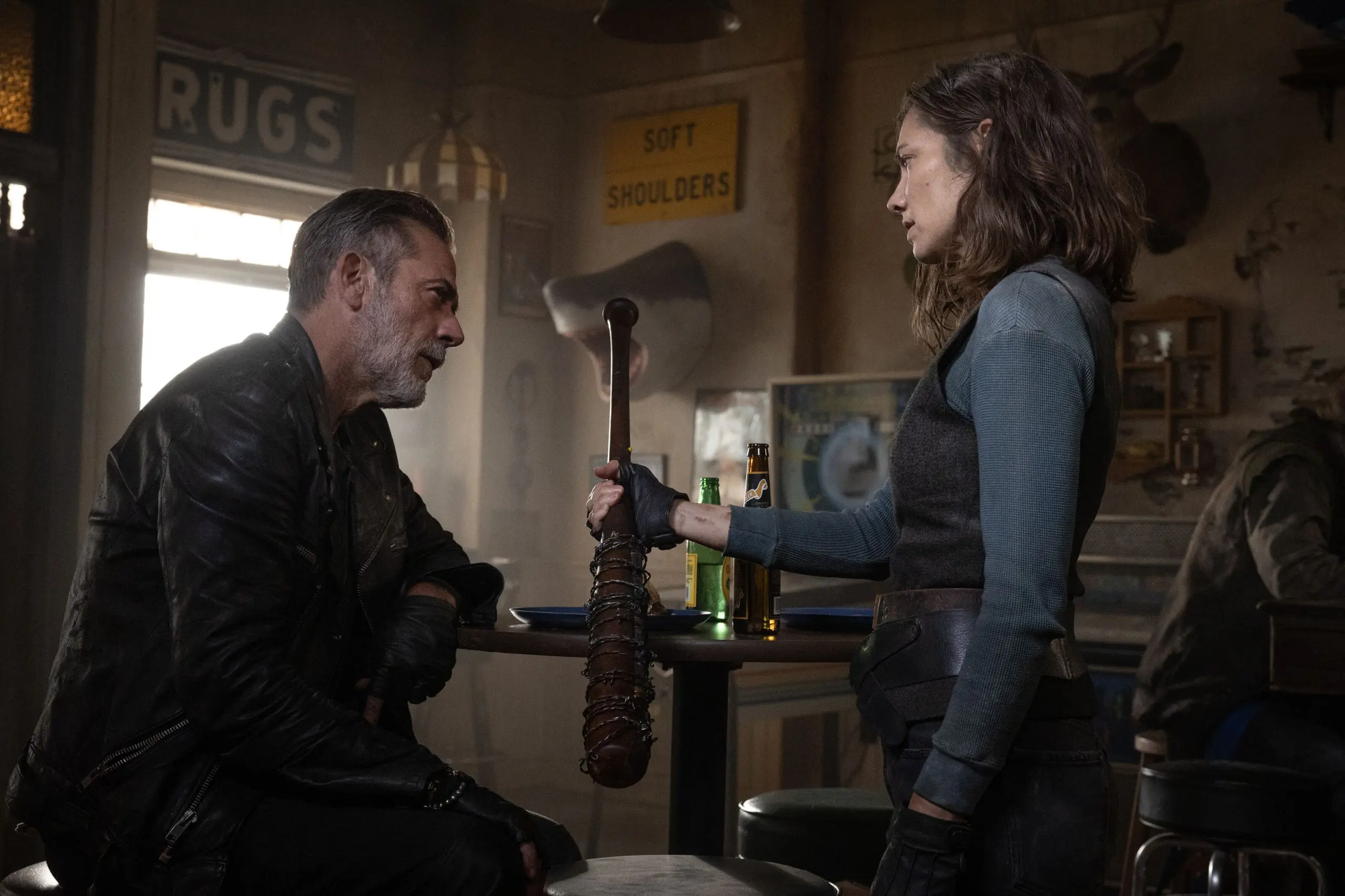
After two seasons of watching Maggie Rhee and Negan Smith try to survive while carrying years of resentment, guilt, and unresolved trauma, The Walking Dead: Dead City Season 3 finally starts asking the question that has been hanging over these characters since their first confrontation: how long can two people stay trapped by the worst moments of their past?
The answer is complicated, which is exactly what makes this season work over its frustrating (at times) second season.
The biggest strength of Dead City Season 3 continues to be the complicated relationship between Maggie and Negan. Their feud has existed since Season 7 of The Walking Dead, when Negan brutally murdered Glenn and permanently changed Maggie’s life. That anger has been understandable, but at some point, both characters have to decide whether they want to continue living in that moment forever or attempt to move forward.
This season does not ignore what happened. Instead, it finally allows them to have the conversations that have been building for years. Those moments could easily be polarizing for longtime viewers, especially those who still struggle with Negan’s actions, but Lauren Cohan and Jeffrey Dean Morgan handle the material with a level of emotional honesty that makes these scenes work.
The chemistry between the two actors remains one of the best parts of the series. Whether Maggie and Negan are arguing, confronting their trauma, or attempting to understand each other, Cohan and Morgan bring a believable amount of history into every scene. Some of the strongest moments come when the two characters are at their lowest, including scenes where they are heavily intoxicated and forced to confront feelings they have spent years avoiding. Those sequences could have easily become overly dramatic, but the performances give them the emotional weight they need.
While Maggie and Negan remain the center of the story, the new additions to the cast help elevate the season. Aimee Garcia brings a strong presence as Renata, adding another layer to the world and creating moments that balance the heavier themes of the season. Jimmi Simpson is also a standout as Dillard, especially in his scenes with Negan. Their interactions provide some of the season’s most entertaining character work because they allow Negan to operate outside of his usual dynamic with Maggie. Simpson and Morgan have a natural rhythm together, creating tension and unexpected humor while still keeping the stakes high.
One of the season’s weaker areas comes from some missing context surrounding the New Babylon Soldiers. After the events of the Season 2 finale, the decision to stop actively searching for Maggie, Negan, Hershel, and Perlie is not explored as much as it should be. That storyline feels like it should have carried more immediate consequences, especially considering the pursuit that came before it. The season eventually moves forward, but the explanation for that shift feels underdeveloped.
Where Dead City Season 3 does improve is in its action, creativity, and use of New York City itself. Rather than relying heavily on abandoned forests or generic post-apocalyptic landscapes, the season embraces multiple recognizable parts of Manhattan, including Times Square, Grand Central Terminal, and Upper Midtown, making the city feel like an active part of the story once again. Forest settings are kept to a minimum, helping the series maintain its distinct urban identity of New York. The season also cleverly incorporates the Statue of Liberty as a key plot device in one episode, giving one of New York’s most iconic landmarks a meaningful role instead of treating it as simple background scenery. The walker kills remain one of the most enjoyable parts of The Walking Dead universe, and this season delivers some memorable sequences, particularly during the middle episodes. The show continues finding new ways to make walkers feel dangerous instead of relying on the same encounters viewers have seen for years. Those moments add energy to the season and remind audiences why the franchise remains capable of creating memorable horror.
Maggie’s journey also takes a major turn when she loses something deeply important to her. The impact of that loss shapes much of the season and forces her to reconsider what she is fighting for. It gives Cohan some of her strongest material and adds another emotional layer to Maggie’s ongoing struggle between survival, revenge, and healing.
One of the season’s biggest creative swings comes with its “what if” episode. The episode is set up through events from a conversation on a previous episode, eventually revealing that the scenario connects to a situation Negan cannot escape from. It is a risky idea that could have easily taken viewers out of the story, but it works because of the performances at its center.
The episode also features a redesigned title sequence, making it feel separate from the rest of the season. While it is an interesting experiment and keeps your attention throughout, it is also the type of episode that works better as a one time experience rather than something most viewers will return to repeatedly. The concept succeeds because Cohan and Morgan fully commit to the material and sell the emotional stakes.
Overall, The Walking Dead: Dead City Season 3 is a stronger and more character focused chapter of the spinoff. The season is at its best when it explores the complicated bond between Maggie and Negan, allowing two characters who have been defined by pain to finally acknowledge what happened and consider what comes next.
There are still some story decisions that could have been explained better, but the performances, creative action sequences, and emotional depth help carry the season. Dead City has always been about whether two broken people can find a way forward, and Season 3 delivers its strongest argument yet that moving on does not mean forgetting.
