Situated in Hells Kitchen, Tavola offers a compelling taste of Sicily and stands out in New York City’s crowded Italian dining scene.
One of my least favorite clichés is the wandering American who finds themselves in Europe and feels they have discovered culture for the very first time. You see this often in films, where the protagonist is attempting to find themselves and laments that their simpler life back in the States cannot replicate the charm and history of Europe. I’ve been thinking about this a lot because I’ve been rewatching Richard Linklater’s Before trilogy. Before Sunset, the second film in the series, contains one of my favorite exchanges on the subject. Ethan Hawke’s character reunites with Julie Delpy’s at a quaint Parisian café and wistfully remarks that he searched for a place like it in New York but could never find one. His bubble is quickly popped when she points out that there are, in fact, several wonderful cafés in New York with a similar atmosphere, subtly suggesting that perhaps he simply had not been looking very hard at all.
I sometimes feel like Ethan Hawke’s character when it comes to Italian food.
Don’t get me wrong, few, if any, immigrant communities have had a greater impact on New York’s culinary identity than Italian Americans. But Italian food in New York has also become its own distinct tradition, one quite different from what you might find in Rome, Naples, or Sicily today. It is still delicious, but as someone who grew up here, it is also familiar. More often than not, I am eating variations of dishes I have known my entire life rather than discovering something that transports me somewhere else. Tavola, a small, almost rustic restaurant tucked away in Hell’s Kitchen, was one of the few places in recent years to change that. The meal reminded me of my last trip to southern Italy, something few Italian restaurants in New York have managed to do.
Opened in 2012 by chef-owner Nick Accardi, Tavola occupies the former home of Manganaro’s Grosseria Italiana, a space with its own long history in the neighborhood. Accardi’s menu is heavily influenced by his Sicilian family heritage, as well as his travels through Sicily, Puglia, and Rome. At the center of the restaurant is a 7,000-pound double wood-burning oven, handcrafted in Naples from volcanic clay. More than a visual centerpiece, the oven gives Tavola’s pizzas the blistered crust and distinctive smoky character that immediately separate them from the typical New York slice.
Before getting to the food, I started with the Sicilian Spritz, a variation on the Aperol Spritz made with lemon and rosemary. It was bright and wonderfully refreshing, almost like an herbal Capri Sun for adults. Tavola also offers several other spritzes and Italian-inspired cocktails, including a limoncello and Prosecco combination for those looking to lean further into the restaurant’s southern Italian sensibility. The appetizers reinforced the restaurant’s ability to deliver uncomplicated pleasures without making them feel ordinary. The arancine were meaty, crisp, and deeply flavorful. At a certain point, it is worth asking how anyone can really go wrong with a fried rice ball filled with veal ragù. The caponata bruschetta was even more straightforward, but no less satisfying, layering cooked vegetables and cheese over toasted bread. It was simple, fresh, and flavorful, with the sweetness and acidity of the vegetables keeping the dish from feeling too heavy.
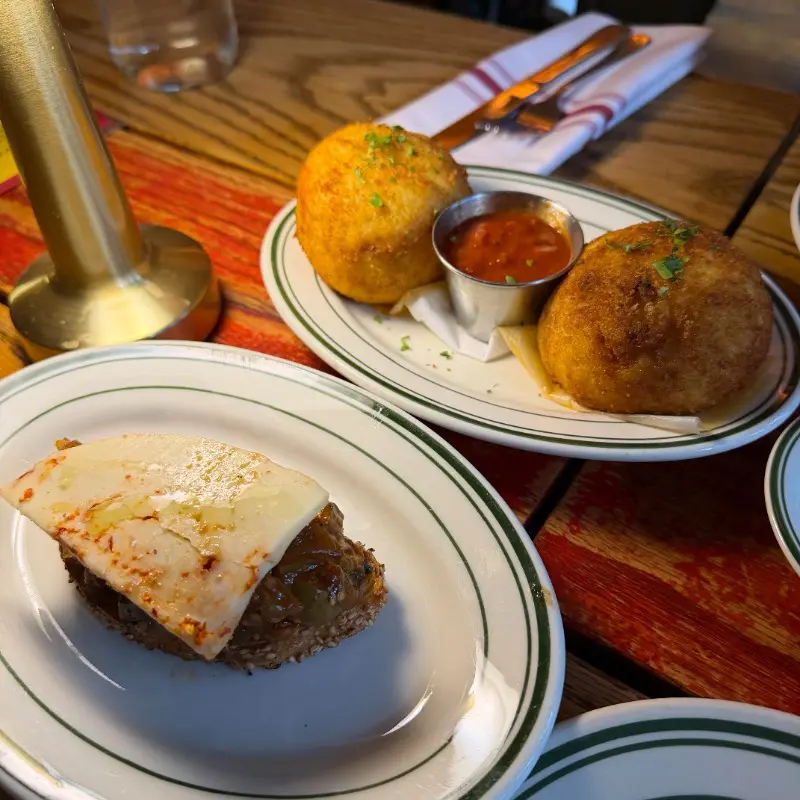
Photo by the Knockturnal
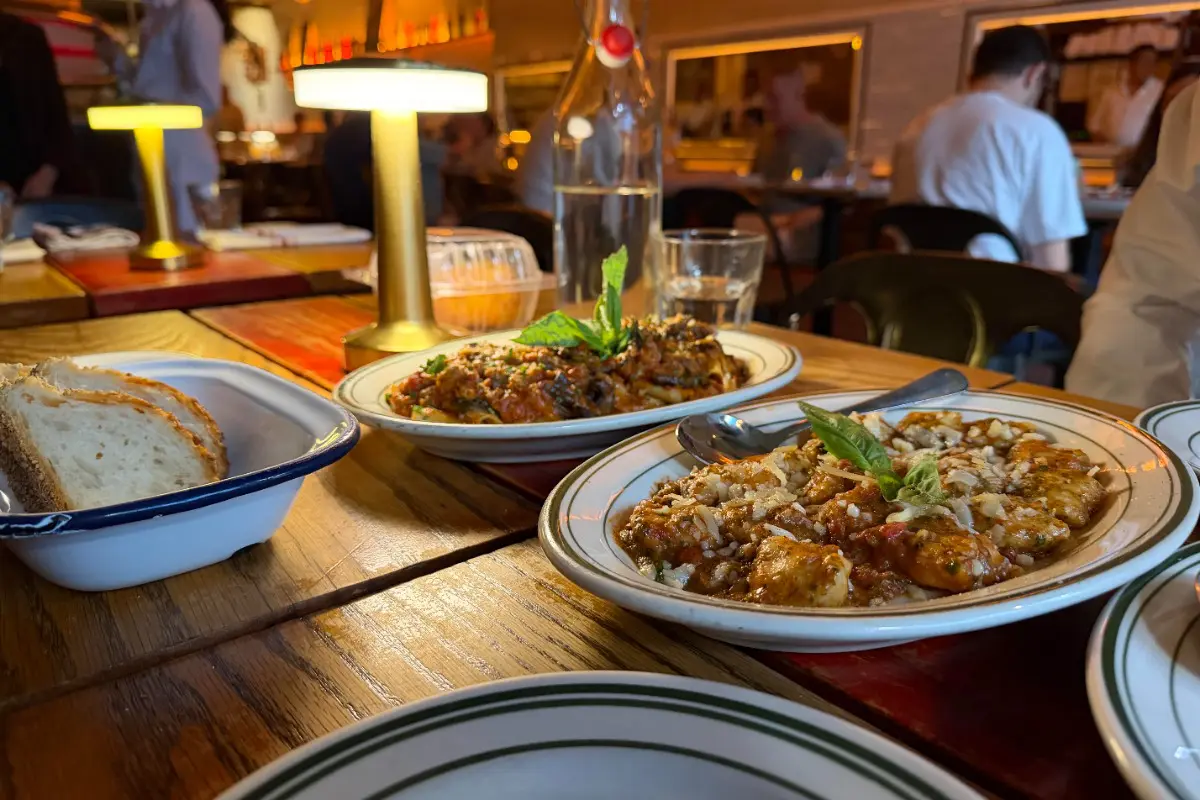
The handmade gnocchi, however, were where the meal became genuinely special. Tavola describes its gnocchi as “light as a cloud,” a phrase that could easily be dismissed as marketing language if the dish did not live up to it so completely. The gnocchi were remarkably delicate, with none of the density or chewiness that can weigh down lesser versions. We sampled them in both tomato basil and Gorgonzola preparations, but the Gorgonzola gnocchi were the clear standout. In a strange way, the Gorgonzola gnocchi tasted like an angelic version of macaroni and cheese, achieving a level of delicacy that kept the sauce from overwhelming the pasta while still satisfying every possible cheese craving. The gnocchi in tomato basil sauce were no slouch either, ranking among my favorite dishes of the evening. Each piece seemed to dissolve as soon as it was eaten. These were not just good enough to order while already dining at Tavola. They were good enough to justify going out of your way for, and they are the dish I would insist any first-time visitor try.

Photo by the Knockturnal
The pappardelle offered a heartier counterpoint. Served with a rich meat sauce, the wide ribbons of fresh pasta held onto the ragù without becoming lost beneath it. It was a filling and deeply savory dish in which the pasta itself remained the focus rather than simply functioning as a vehicle for sauce. Still, the distinction between Tavola and more familiar New York Italian restaurants became clearest with the pizzas. New York has perfected its own style of pizza, and I have no interest in arguing otherwise. But pizza in Italy is a different experience. Not a better one, just a different one. After all, I’m still a guy born and raised in Queens, and I will always die on the hill for New York pizza.
Italian pizza generally has a lighter, more tender crust and more restrained toppings, allowing the ingredients to speak for themselves. Tavola’s pizzas captured that balance. They did not feel like attempts to reproduce a New York slice with more upscale ingredients. They felt closer to the pizzas I remembered eating in southern Italy. The Margherita was the clearest example. With a leopard-charred crust, bright tomato, mozzarella, and basil, it relied on a short list of ingredients and gave each of them room to stand out. The tomato was especially notable, bringing enough sweetness and acidity to carry the pizza without requiring a heavy layer of cheese or seasoning. The Calabrese offered more intensity, but it maintained the same sense of balance. Even with bolder, spicier flavors, the tomato and crust remained noticeable rather than being buried beneath the toppings.
Tavola’s more inventive pizzas were my favorites, though. The Medina paired figs with sheep’s milk Gorgonzola, sesame, and herbs. The sweetness of the figs played beautifully against the salty, pungent cheese, creating a pizza that felt sinfully satisfying and altogether distinctive. The Cacio e Pepe pizza leaned even further into richness. Cheese and black pepper are among the simplest combinations in Italian cooking, but when used generously on a wood-fired pizza, the result was unapologetically decadent. It was heavier than the Margherita or Medina, but still thoughtfully composed and difficult to stop eating. The Cacio e Pepe and the Medina are two pizzas worth going out of your way to try. That range is part of what makes Tavola work so well. It can serve a classic like the Margherita that transports you to a neighborhood pizzeria in Italy, then turn around and offer a fig and Gorgonzola pizza that feels distinctly its own.
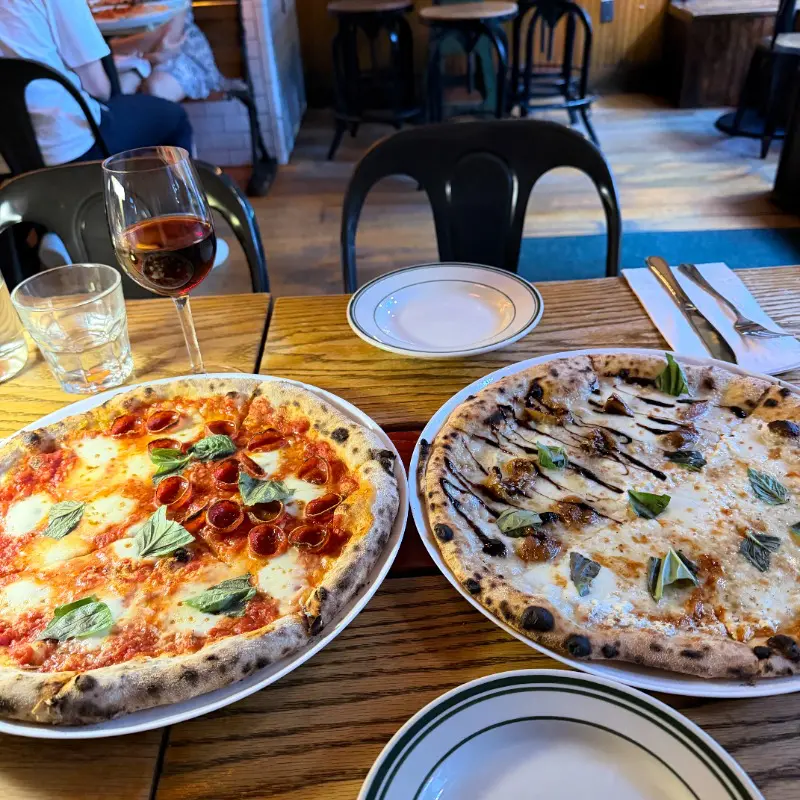
Photo by the Knockturnal
Dessert continued the Sicilian theme with cannoli and cheesecake, which happen to be two of my favorite things on the planet. The cannoli were crisp and creamy, but it was the pistachios that elevated them beyond a standard offering. Their nuttiness added texture and depth to every bite. The Sicilian-style cheesecake, made with ricotta and finished with a strawberry sauce, was even better. It was creamy and rich, but not as dense as a traditional New York cheesecake. The strawberry sauce was the true standout. It was neither saccharine nor syrupy. Instead, it tasted freshly made from quality fruit and added a touch of brightness rather than simply piling more sweetness onto the plate.

Photo by the Knockturnal
There is a temptation when writing about a restaurant like Tavola to rely too heavily on the word “authentic.” It is a complicated term, particularly in a city where generations of Italian Americans have created a culinary tradition that is authentic in its own right. New York Italian food does not need to imitate Italy to justify itself. It has its own history, its own classics, and its own place in the identity of the city. But it is also true that Italian food in Italy tastes different. The balance is different. The pasta feels different. The pizza is lighter, more ingredient-driven, and less concerned with excess. Tavola understands that distinction. It does not reject New York’s Italian heritage, but it offers a compelling reminder that there is another tradition alongside it. From the blistered pizzas to the almost impossibly soft Gorgonzola gnocchi, the restaurant delivers the flavors and textures of southern Italy in a way that feels rare in New York.
Perhaps, like Ethan Hawke’s character, I simply had not been looking hard enough. Tavola was here all along.
