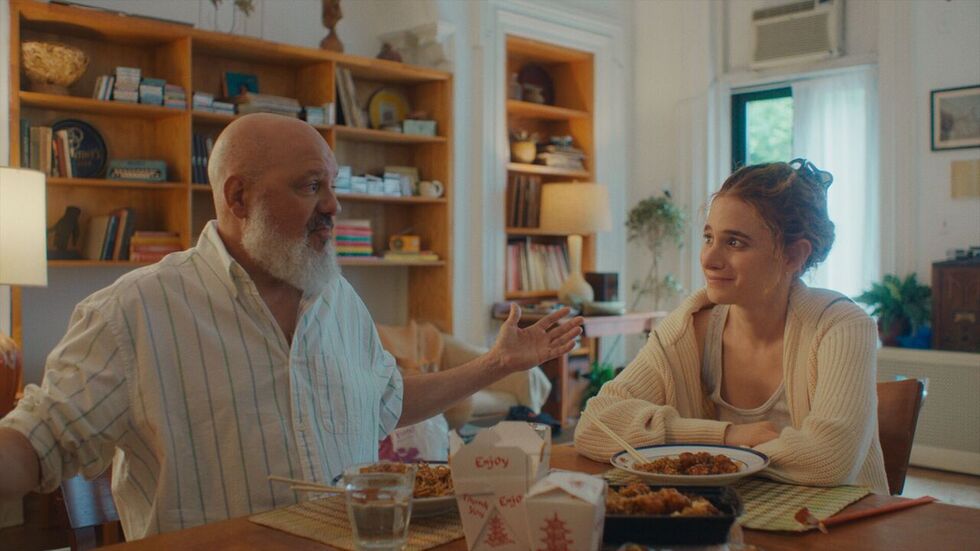
At one point during Lucy Schulman, the titular character (played by writer, director Ellie Sachs) is getting to know a promising potential love interest while enjoying a late-night diner meal. It’s a small moment. Yet for Sachs, the scene, along with the walk through a darkened Central Park that follows, represents something quintessentially New York.
“We just have so many special things about New York that make it so ripe for storytelling,” Sachs told The Knockturnal, counting “diner culture” among them. “That’s something they’ll never take away from us.”
The city’s signature experiences run through Lucy Schulman, Sachs’ feature debut, which premiered at the Tribeca Film Festival. The story follows a young woman rebuilding her life after a painful breakup, moving back in with her father (David Cross) and slowly learning how to stop defining herself through other people. An adult coming-of-age story, it’s also a revival of a type of movie that has largely vanished from contemporary cinema.
The New York captured in Lucy Schulman isn’t the singularly glossy, inaccessible version of the city often upheld in pop culture. Lucy’s struggles are economic as well as emotional. Whether she’s completing monotonous tasks at her bookstore job or squeezing into the room she’s renting after a long day, she’s struggling to build a future while managing the present.
“This is a bastion of culture and arts, creativity, art. Of course, we’re always going to have fancy, froofy bookstores that look like a gallery where there’s a mean boss and downtown chic,” she shared. “That’s, I hope, a mainstay and a fixture of New York. Lucy’s not financially stable. She’s living at home, maybe the first time ever renting a room in her late 20s. She definitely doesn’t totally have it together in that regard. Thinking about this film and how I wanted to position it and Lucy in the city, I wanted it to have that timeless feel.”
That perspective feels particularly resonant at Tribeca, a festival founded after September 11 to help revitalize lower Manhattan through art and community. Twenty-five years later, New York continues to grapple with questions of affordability, displacement, and cultural survival. For Sachs, however, the city’s defining quality remains its resilience.
“This is a city that bands together, and you can just feel the energy,” she added. “New Yorkers take being a New Yorker really seriously. We come together in the good times and the bad.”
That sense of community and rebuilding plays out through Lucy’s journey as she works to repair fractured parts of her life, reconnecting with friends and, ultimately, herself. At a time when pared-down, character-driven films often feel like relics of another era, Sachs revels in small details and trusts audiences to find meaning in quiet moments.
“I think there’s a form of cinema and TV that we don’t see quite as much anymore,” the filmmaker, who drew from ‘70s productions for Lucy Schulman, added. “You’re jumping into this character’s life.”
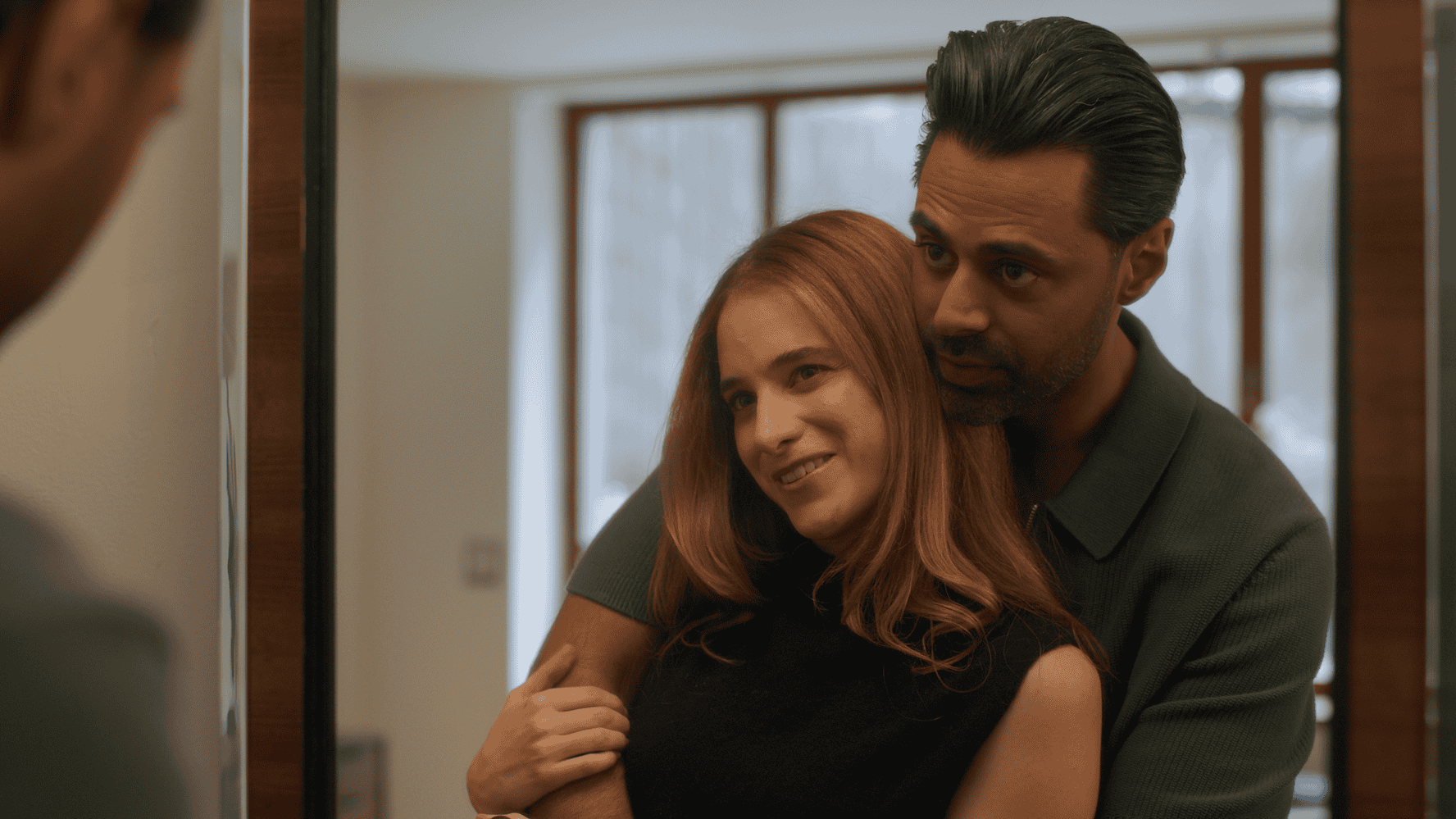
Ellie Sachs and Hasan Minhaj in Lucy Schulman (Barton Cortright)
Among her guiding lights were classics such as Crossing Delancey and An Unmarried Woman, portraits of messy, complicated women navigating the city on their own terms. What Sachs admires isn’t just their subject matter but their willingness to observe.
“I think about Izzy in Crossing Delancey,” she says. “She is so messy, has so many problems, but there’s something so wonderful about that film that’s always stuck with me because I’m like, ‘Oh, I feel like I know her.'”
Those films weren’t afraid of spending time with a character even when nothing traditionally dramatic was happening. Sachs sees something distinctly female in that storytelling approach.
“Sometimes those plots can feel like they’re meandering a little bit,” she says. “Maybe you’re seeing something that isn’t exactly perfect film structure. But I think there’s something very true in those films. It’s kind of what a woman’s life feels like.”
Sachs has spoken openly about writing the screenplay after a devastating breakup that forced her to confront how much of her identity had become wrapped up in another person.
“Women are kind of programmed to cater to other people,” she says. “We’re programmed to be people pleasers.”
Lucy spends much of the film learning to redirect that energy inward. Importantly, Sachs doesn’t solve her protagonist’s life by the final frame. Instead, the film offers an enduring message.
“The most important relationship we have is the relationship we have with ourselves.”
Lucy Schulman shows us why ordinary lives are worthy of cinematic attention. In doing so, Sachs not only introduces a compelling new character but also documents a side of New York rarely immortalized on screen. Years from now, audiences may find themselves watching the film for the same reason Sachs returns to those classics she loves: to revisit a city and a way of life that cinema helped preserve.
