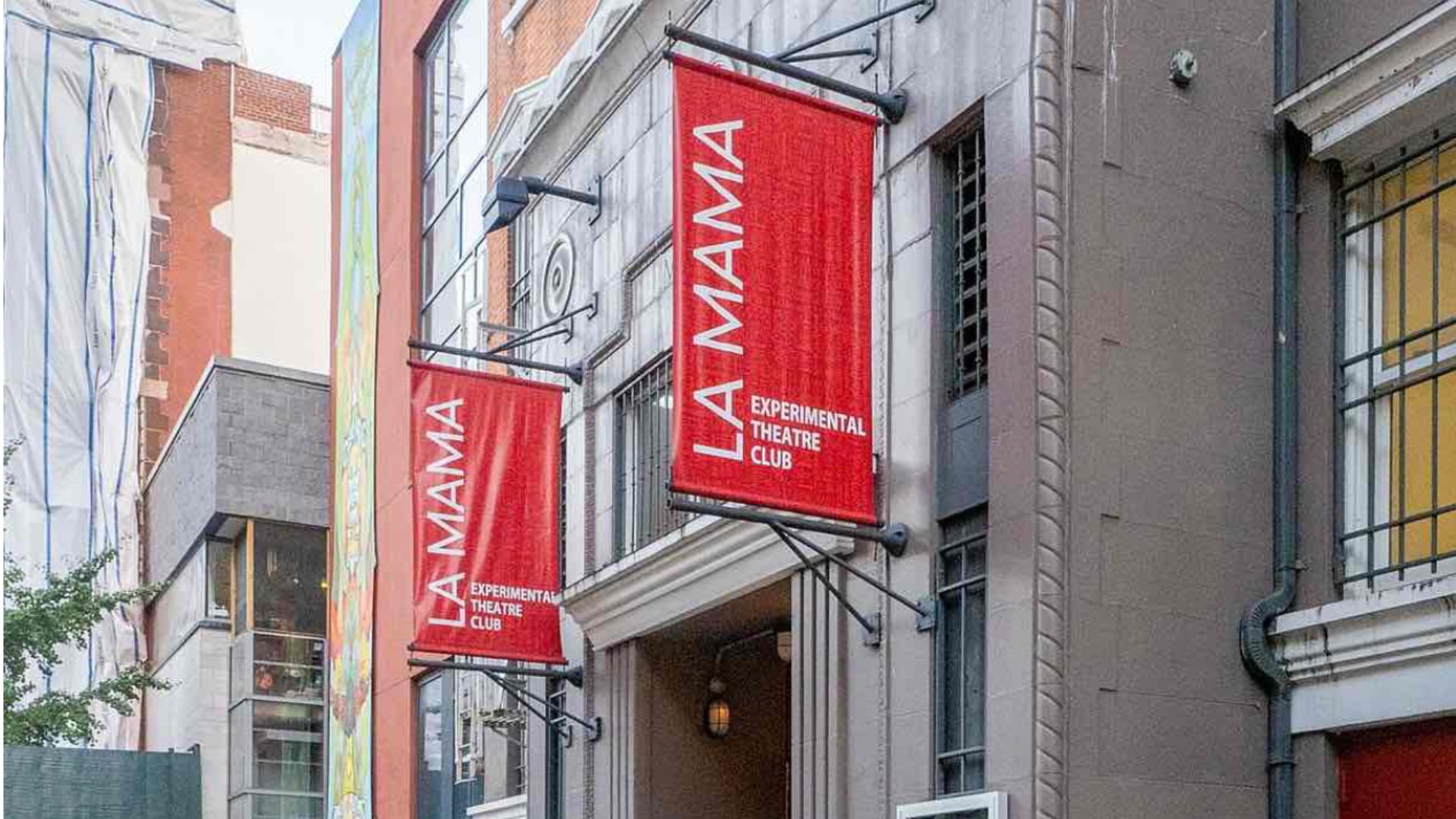
La MaMa Experimental Theatre Club has long provided a space where artists can experiment and take risks. It views art as a force for change, with audiences becoming part of the creative process as their responses help shape the work. Together, artists and audiences form a unified resistance against violence, racism, and discrimination.
The Downtown Urban Arts Festival (DUAF) is an annual spring event that presents groundbreaking performances at renowned venues across New York City. As an incubator for new work, DUAF showcases pieces that challenge perspectives and spark discussion. Among its experimental offerings are 40 Seconds and Agon, two distinct works that reflect the shared goals of DUAF and La MaMa.
In 40 Seconds, Jake Alexander tells the story of Devon, “a journalist without a publication,” who enters the subway tunnels to interview Lookey, a secretive graffiti artist. Tomi Newmann, from the University of Cincinnati, portrays Devon, while Kameron Richardson, following a six-year tour with Hamilton, plays Lookey, a loner who considers rats his colleagues. As director, Tom Meglio has skillfully ensured that the production ran smoothly. Lookey describes the dangers of working underground: a person can be clipped by a train, killed by the third rail, or injured if a spray-paint canister explodes and starts a fire. He knows his work is dangerous, but he tells Devon, “I’m really just trying to make my art the best way I know how.” Lookey explains that he paints underground because art depends on its canvas; not every idea belongs in the same place. When Devon joins him in “throwing up” a piece, the play shows that, for both characters, art itself is what drives the work. Kameron Richardson and Tomi Newman work together to bring their characters to life.
Agon, written and directed by Charlene Adhiambo, also centers on an interview. Murphy Lorenzo Applin Jr. portrays Moses Beatty, the first Black male artistic director of a leading ballet company, who has been asked by Vogue to interview Lucinda St. James. Justine J. Hall gives a powerful performance as the controversial retired dancer who once mentored Moses. Their conversation exposes old resentments between them and within the dance industry. St. James wants to be remembered for her choreography, but feels that her white partner, Renee, received credit for much of her work. She also believes she protected Moses from Renee and other predators, only for him to later take her position as director. All she has left is her name. Moses, in turn, resents the control St. James once had over him. Both characters carry the wounds of a cutthroat industry. For St. James, the plaque naming a dance studio after her meant to honor feels less like a tribute than a tombstone. Justine J. Hall and Murphy Lorenzo Applin Jr. are examples of the great talent that exists outside of equity.
Both Lookey and Lucinda St. James create art that is fleeting: subway graffiti glimpsed briefly by a few people and ballet that exists fully only in performance. Art draws Lookey and Devon together, while it drives Moses Beatty and Lucinda St. James apart. The two works offer contrasting views of art: Lookey treats it as a guiding force, while St. James seeks recognition for her legacy. Strong performances bring each character vividly to life. Together, 40 Seconds and Agon examine the relationship among artists, art, and fame. Each piece runs thirty minutes, with a fifteen-minute intermission between them. As a pair, they invite audiences to reconsider what art is and how it should be valued.
