It was music’s biggest night—a cultural coronation draped in couture and soundtracked by the industry’s most daring icons. Whether you’re here for the fashion highlights or the show-stopping medleys, we’re keeping score on the moments that truly hit all the right notes.
Lifestyle
Inside Ghia’s Intimate Zero-Proof Evening at Felice on Hudson
Ghia welcomed guests to Felice Hudson last week for a zero-proof cocktail experience celebrating Dry January and the brand’s partnership with the West Village restaurant. Taking place just days after a major snowstorm, the intimate event combined cocktail education, tastings, and a live demonstration led by Mélanie Masarin and the Felice bar team.
The evening brought together a small group of guests for a guided cocktail class, tasting, and conversation led by Ghia founder Mélanie Masarin, her business partner Sam, and the Felice bar team. With Dry January well underway and winter still pressing in, the gathering felt deliberate, contained, and quietly celebratory. Guests arrived bundled and flushed from the weather, stepping into the warmth of candlelight and conversation for an intimate zero-proof cocktail experience.
The Ghia team opened the night with a reflection that framed evening’s activities. This wasn’t about replacing alcohol or replicating its effects, but about expanding the idea of what a cocktail moment can be. Our bartender spoke about “golden hour” not as a specific time of day, but as a feeling, that in-between space after a shower, linen clothes on skin, dinner still hours away, when you’re thirsty and social but not necessarily looking to drink. A moment that feels relaxed, communal, and open, without the need for excess. It was an idea that resonated immediately. Many in the room recognized it instinctively, even if they hadn’t named it before. Felice’s menu echoed that same feeling, comforting, unfussy, and grounded in quality, exactly the kind of food you reach for during that soft stretch of the day when conversation matters.
The group then moved into the interactive portion of the evening, building Ghia’s Berry Mule together. Fresh blackberry, citrus, ginger, and Ghia’s signature aperitif came together in a drink that felt bright and layered, dry without being austere. The act of making the drink was as much a part of the experience as tasting it.

That sense of ritual still defines the brand. Ghia isn’t positioned as a substitute for alcohol, but as its own category entirely. Built from real botanicals, citrus, and fruit extracts, with no distillation and nothing synthetic, its profile leans bitter, dry, and complex. Not long ago, the default nonalcoholic option was pineapple juice, soda water, maybe lime if someone felt generous, but Ghia helps reflects a broader shift of one that centers mindful choice rather than abstinence, offering flavors that feel intentional and adult without apology. Masarin also shared the story behind the name. Ghia draws inspiration from Carrozzeria Ghia, the legendary Italian automobile design house founded in 1916 in Turin, known for elegance, movement, and optimism. She wanted a name that felt joyful when spoken, something that carried a sense of forward motion and lightness. Over time, that feeling became central to the brand’s identity. Ghia is about access where everyone at the table can participate, from kids to grandparents to friends, without anyone feeling like they’re opting out.


Masarin also shared what’s next for the brand: a cookbook launching focused on food pairings for Ghia’s drinks, and a tableware collaboration slated for later this year, further expanding the world around the product. Before leaving, guests were sent home with curated takeaways to extend the experience. Ghia gifted branded bottle openers and bottles of their aperitif, along with a small recipe booklet encouraging guests to recreate the ritual in their own kitchens.
Dominoes, Dark Rum, and Deep Roasts: Jimmy Butler and BACARDÍ Took the Rum Room West
San Francisco welcomed a new kind of nightlife ritual on Thursday—one that smelled like fresh coffee, sounded like dominoes slapping the table, and tasted like aged rum with a bold espresso backbone. BACARDÍ Rum and NBA All-Star Jimmy Butler hosted the third chapter of their ongoing collaboration: the BACARDÍ x BIGFACE Rum Room Domino Club, marking its first-ever West Coast appearance after a buzzy Miami debut in 2024.
More than a pop-up, the Rum Room Domino Club unfolded as a living expression of culture and connection. Hosted at Starlite in Union Square, the immersive, one-night experience drew from BACARDÍ’s Caribbean and Latin heritage and Butler’s personal passions—coffee, competition, and community. At the center of the room was dominoes, a game Butler has long championed as both a cultural tradition and a social equalizer.
Guests moved through a high-energy space filled with custom domino tables, Caribbean- and Latin-inspired music, and signature cocktails crafted with BACARDÍ Reserva Ocho Rum. Staying true to the spirit of past Rum Room events, Butler was front and center throughout the night—serving drinks, mingling with attendees, and jumping into multiple rounds of dominoes with guests.
The event also marked the Bay Area debut of the BACARDÍ x BIGFACE Café Con Ocho cocktail. A creative twist on the classic espresso martini, the drink paired the smooth, layered notes of BACARDÍ Reserva Ocho with BIGFACE’s Doublestar Omni Blend coffee, accented by salted caramel and finished with an orange garnish. The result was bold, balanced, and quickly became a crowd favorite.
For Butler, bringing the Rum Room to San Francisco carried special meaning. “BIGFACE is built on coffee, culture, community, and competition,” he shared during the event. “The Rum Room Domino Club brings all of that together with BACARDÍ Rum. San Francisco feels like home, so it was great to see the Bay Area show up, try Café Con Ocho, and really experience what this collaboration is about.”
The celebration extended beyond the walls of Starlite. BIGFACE Coffee officially kicked off its expanded residency at Square’s Corner Store the same day, launching a multi-month presence that will run through mid-April. Designed as a “living pop-up,” the space began offering daily BIGFACE service alongside rotating programming, establishing a new hub for Bay Area coffee culture.
Thursday night also served as the debut of the all-new BACARDÍ x BIGFACE co-branded merchandise collection. Following strong demand at previous Rum Room Domino Club events, the refreshed 2026 capsule featured a jacket, hoodie, t-shirt, and hat. Butler debuted select pieces during the event, including an exclusive hat worn while playing dominoes with guests. For the first time, the collection became available not only at the event but also online nationwide in the weeks following.
The Rum Room Domino Club drew familiar faces as well, including Golden State Warriors guard Gary Payton II, who joined the celebration and added a local connection to the night’s energy. With DJ Jaymeebaaby setting the soundtrack and dominoes anchoring the room, the event captured the celebratory spirit and sense of community that define the BACARDÍ x BIGFACE partnership.
As the third iteration of their collaboration came to life on the West Coast, the San Francisco Rum Room Domino Club reinforced what has made the partnership resonate from the start. It wasn’t just about rum, coffee, or fashion—it was about shared rituals, cultural roots, and the simple joy of people coming together around a table, a drink, and a game.
Royal Caribbean offers it all for the traveler looking for a perfect vacation. It plays out your holiday in the best way possible, especially when it comes to entertainment.
Each January, The Winter Show returns to the Park Avenue Armory with a familiar mix of museum-quality antiques, fine art, and design. Long known for its scholarly rigor, the fair has typically rewarded historical fluency. This year from January 23rd to February 1st, the experience feels slightly recalibrated. Alongside connoisseurship, there is a greater emphasis on atmosphere, narrative, and how visitors move through the space. Two presentations in particular help define that: a design-led collectors lounge by frenchCALIFORNIA and a literary showcase by Peter Harrington Rare Books that treats books as both cultural artifacts and sculptural objects.
This year, frenchCALIFORNIA has designed the VIP Collectors Lounge, titled The Modern Salon. Rather than functioning as a branded pause point, the lounge reads as a fully realized interior. Furniture, lighting, sound, and spatial rhythm are treated as equal elements, creating an environment that feels composed rather than decorative. The installation brings together contemporary Italian design through Dexelance, featuring works by Meridiani, Saba, Turri, and Davide Groppi, unified by an emphasis on proportion, material quality, and human scale.
The lounge responds directly to the architecture of the Armory’s Veterans Room, originally realized under the artistic direction of Louis C. Tiffany. Instead of competing with the room’s historic presence, frenchCALIFORNIA works in dialogue with it. Modern silhouettes and restrained palettes sit comfortably against the building’s ornate bones, creating a quiet tension between past and present. Seating arrangements are intentionally relaxed, encouraging conversation without formality and reinforcing the salon’s role as a place for exchange rather than display.

If frenchCALIFORNIA’s presentation centers on how design is experienced in real time, Peter Harrington Rare Books offers a counterpoint grounded in history, craftsmanship, and intellectual legacy. One of the world’s leading antiquarian book dealers, Peter Harrington arrives at The Winter Show with a tightly curated selection that favors depth over volume. The display encourages lingering, inviting viewers to consider books as objects shaped by labor, time, and cultural context.
Among the most significant highlights is The Science of Climate Change, a landmark collection assembled over more than a decade by collector David L. Wenner. Tracing the evolution of climate science from the fifteenth century to the present, the collection includes incunabula, handwritten observational data, and foundational research papers where ideas such as the greenhouse effect first appeared in print. Presented together, the works form a restrained but powerful narrative about how scientific knowledge accumulates over centuries and how long it can take for evidence to enter public consciousness.
Another focal point is a unique illuminated manuscript of Dante Gabriel Rossetti’s The Blessed Damozel, produced between 1910 and 1929. Illuminated by Alberto Sangorski and bound by Rivière & Son, the manuscript represents a high point of Arts and Crafts bookmaking. A full-page miniature inspired by Rossetti’s painting anchors the volume, while a certification leaf confirms the work “will not be duplicated.” The manuscript is presented less as a literary document and more as a singular artwork, blurring the boundary between book and fine art.
The booth also offers moments of levity. An archive of letters from P. G. Wodehouse to his American editor reveals the author’s humor and vulnerability late in life, touching on everything from royalties to adaptations and aging. Nearby, a complete set of first editions of The Chronicles of Narnia, bound in custom morocco with designs reflecting each volume’s themes, reframes a familiar series as a cohesive sculptural library.
Together, these two presentations point to what feels newly resonant about The Winter Show this year. The fair continues to reward expertise and close study, but it also opens itself to a wider range of entry points. Design-minded visitors are drawn to the lounge’s sensory intelligence and spatial restraint. Literary collectors and history enthusiasts can engage deeply with manuscripts and archives that connect past debates to present concerns. Even casual attendees encounter moments that invite curiosity rather than intimidation.
“A jack of all trades is a master of none, but oftentimes better than a master of one”. It’s a quote whose second half is often cut in order to present a specific view of the world that is contrary to reality but easier to digest. If that wasn’t the case, society wouldn’t type cast people into one defining role with rather unsung nuance, save for the most complex of cases. Restaurants are often no different. When you recommend a place, you’ll quickly define it by its genre in order to convey what it is quickly. I’m guilty of this as well. However, with Blu Ember, describing them is difficult to sublime into a single statement and if I had to be reductive, it’d be this: It’s really good food.
Blu Ember, nestled in the ground floor of The Westin in Flushing, is the newest culinary concept from Balance Hospitality Group (MOLI, HINOKI, MIKU Sushi). The team here has truly created something that defies easy categorization. It’s not quite a steakhouse, though the meat program rivals many. It’s not just a sushi spot, though the toro alone could argue otherwise. And despite a menu sprawling with East Asian influences—Korean tartare, Thai-inflected pork cheek, Japanese binchotan grilling—it’s not a fusion free-for-all. Instead, it’s a restaurant that seems most at ease when it’s drawing no boundaries at all.
Before the meal started, I was genuinely taken aback by the ambience. I’m not one to award points for a nice interior, however, the elegant and incredibly polished conditions highlight the experience and dedication to quality that the team behind this have for the work they do. Stepping in Blu Ember is truly like walking into a Michelin-starred restaurant.
We began with the pork jowl, sweet and salty in a way that felt old-fashioned and familiar—like something you’d be served by an uncle who’s been braising pork for decades. Then came the Korean steak tartare, which arrived with slices of hearty, expertly buttered toast. It’s easy to mishandle raw beef—either under-seasoning or overwhelming it—but here, the dish struck a balance that felt genuinely refreshing. It even flirted with illusion: the beef, somehow, carried the clean, saline brightness of good tuna, leaving a refreshing taste on the palate. A rare sleight of hand.
Speaking of tuna, the toro here is wonderfully indulgent, just the way I like it. Served over crisp nori, the fatty richness of the fish is left mostly alone, needing no dressing up. The seaweed supports rather than competes, like a stage hand keeping the spotlight fixed on the star. This should come as no shock, especially considering they offer an Omakase tasting menu which I’ll need to come back to try at some point.
And then there’s the burger. Two smash patties, thoughtfully composed, somehow managing to be all flavor with none of the greasy aftermath. It’s the kind of dish that could have easily been a throwaway menu filler but instead feels like a sleeper hit. You could build a whole lunch menu around it and is the dish that will keep you coming back on a weekly basis.
Blu Ember’s ambition lies not just in what’s on the plate, but in how much ground it tries to cover. A sushi bar tucked into a serene alcove offers omakase with fish flown in from Toyosu. The open kitchen sends out charcoal-seared wagyu and octopus. There’s a seafood pasta, there’s a Thai-style sea bass, there’s a steakhouse menu complete with chimichurri and foie gras sauce. It’s a place where you could go with a table of six and all order something vastly different—and it would all somehow make sense.
What impressed me most, though, wasn’t any one dish. It was the cohesion amid the mix and the ease with which Blu Ember moves between culinary traditions without diluting any of them. For a group of friends with wide-ranging tastes or simply those prone to indecision, this might be the perfect table to gather around. Flushing is not short on restaurants worth visiting, but Blu Ember distinguishes itself by daring to be everything, and remarkably, pulling it off.


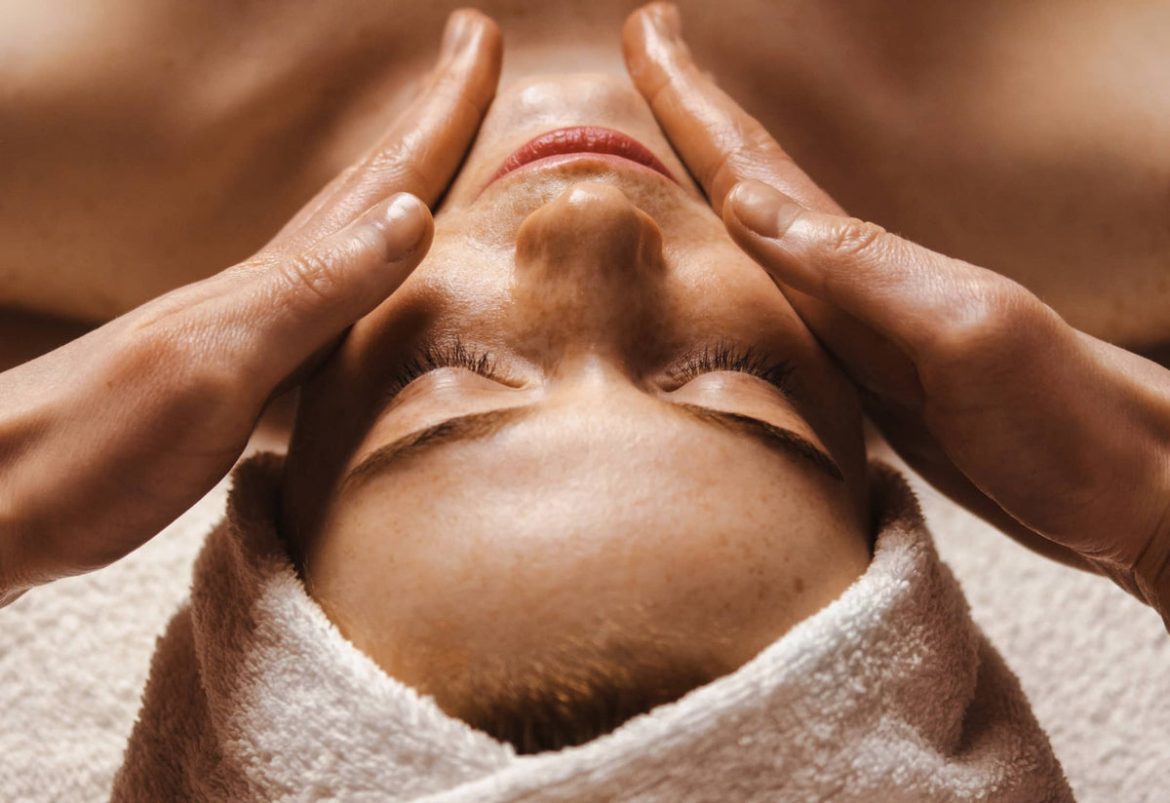
Last week in Tribeca, GoingDry.co gathered guests inside Glowbar for a wellness event focused on skincare, herbal remedies, and nonalcoholic social rituals. The appointment-only experience combined custom facials with mocktails, supplements, and at-home wellness tools, offering a grounded approach to self-care during the colder months.
The latest GoingDry.co event, hosted by Hilary Sheinbaum, invited guests into an experience centered on wellness and intention. Attendees arrived one by one into Glowbar’s lobby, designed with soft, neutral tones. A mocktail bar stood as a welcoming focal point, stocked with nonalcoholic spirits from FLUÈRE and plant-based tinctures from WishGarden Herbs. Sheinbaum guided guests through the offerings, each aligned with the GoingDry.co’s philosophy of drinking less and living more. FLUÈRE’s spirit bottles were beautifully designed, and the Spicy Margarita was as a standout, carrying citrus and heat with none of the heaviness that usually follows. The mocktails were layered and intentional, built to feel social without demanding recovery.
WishGarden’s herbal tinctures were paired seamlessly into the experience. Known for their liquid formulations designed for fast absorption, the blends promote sleep, energy, skin support, and nervous system balance. After beginning to build a routine with the Immune Boost and Sleepy Nights tinctures, I noticed better sleep and clearer mornings that felt natural and sustainable. Nearby, Make Time Wellness supplements focused on hydration, focus, and beauty from within, designed for daily use rather than short-term fixes. The orange-flavored hydration drink offered a gentle alternative to coffee, supporting focus without overstimulation and reinforcing wellness as something that fits into a morning rather than overtakes it.
Inside the treatment rooms, the tone remained clean and unhurried. Custom facials were led by Glowbar estheticians, including Alize Santos, whose approach balanced precision with calm. Extractions were performed carefully, clearing congestion without irritation. Cavitation followed, using ultrasound technology to gently lift impurities and exfoliate the skin without harsh ingredients. High-frequency treatment introduced warmth and oxygenation, supporting healing and reducing inflammation. Microcurrent closed the session, subtly lifting and toning facial muscles while improving circulation and lymphatic flow. The results were understated but immediate. Skin looked rested rather than treated, bright without shine. It felt like the kind of glow that comes from well-kept consistency rather than correction.
After treatments, guests were introduced to the wellness rituals they would be taking home to continue the self-care experience. Gift bags included additional WishGarden tinctures, Make Time Wellness supplements, and a shower head filter from AquaTru.
The mocktails, tinctures, and treatments all point toward the idea of self-care as something that can be layered into daily life without friction that supports wellness inside and out. A sleep tincture before bed. Filtered water in the shower. Hydration in the morning. While winter is an ideal time to built habits quietly and intentionally, it’s also a good reminder to take time and design a lifestyle to support energy when it’s low and restore balance when it slips.
Awards Season is officially in full swing and this year, the most coveted ticket in town might not be to a ceremony, but to tea.
On January 21st, Angelenos traveled to Bordeaux not by passport but by glass, as Wally’s welcomed Union Grands Crus Bordeaux (aka the UGCB) back to LA.
Two Immersive Attractions Bring Interactive Entertainment to Times Square’s Historic Brill Building
Times Square has added two major players to its ever-evolving entertainment lineup.