
Television is designed to make audiences forget that they’re watching television. We get absorbed in the characters, the conflicts and the worlds being built in front of us, rarely thinking about the hundreds of decisions that had to happen behind the scenes to make a moment feel effortless.
That was part of the appeal of Televerse, the Television Academy’s three day television festival, which returned to the JW Marriott at L.A. LIVE from August 14–16. Now in its second year, the festival brings fans, talent and industry insiders together for panels, screenings, workshops and conversations designed to take audiences “beyond the screen.”
Among the shows represented at this year’s festival were Shrinking, Beef and Paradise — three very different series that have nevertheless found ways to make audiences deeply invested in the people at the center of their stories.
And hearing the actors, writers and directors talk about those characters offered a reminder that sometimes the reason a show stays with us has less to do with its biggest twists or funniest moments and more to do with the emotional choices happening underneath them.

Jason Segel participates in a lively discussion during the FYC presentation of “Shrinking” at Televerse 26, a festival by the Television Academy, on Saturday, Aug. 15, 2026 at the JW Marriott L.A. LIVE in Los Angeles. (Photo by Todd Williamson/Invision for the Television Academy/AP Content Services)
On paper, Shrinking is a comedy about a grieving therapist who begins ignoring the boundaries of his profession. But the Apple TV+ series has always been interested in something much more complicated — what happens when people who are supposed to help everyone else are struggling to help themselves.
That emotional honesty was something Jason Segel, who co-created and stars in the series, emphasized when discussing the show’s Pasadena setting.
“The show is about therapy and we didn’t want it to feel like an entitled version of therapy,” Segel explained. He said filming outside of Los Angeles proper, in Pasadena, helped create a different socioeconomic backdrop so that the issues the show explores wouldn’t feel exclusively “industry driven.”
It is a small creative decision, but one that speaks to the larger philosophy behind Shrinking. The series isn’t interested in presenting therapy, grief or friendship as polished, aspirational experiences. Its characters are messy, sometimes selfish and frequently wrong. That is also what makes them recognizable.
The same care extends to the show’s more emotionally difficult scenes. Jessica Williams, who plays Gaby, spoke about filming an emotional scene involving Brett Goldstein’s Louis and how the environment on set allowed the actors to fully inhabit those moments.
“We have an amazing crew, they’re really goofy and silly and great at their job but they also know when we’re doing scenes that are more emotional, they hold space for you. It felt really safe,” Williams said.
That sense of safety matters when a series depends on actors being willing to go somewhere vulnerable. Shrinking may be built around jokes, but its emotional stakes are what keep viewers invested.
If Shrinking draws audiences in through emotional intimacy, Paradise does it through mystery.
The series asks viewers to become invested in a world where information is deliberately withheld, making the audience’s relationship with its characters almost as important as the mystery itself. But behind the show’s elaborate storytelling is a much more personal story about the relationships that helped bring it to life.
Director Hanelle M. Culpepper spoke about her connection with Sterling K. Brown and how he ultimately helped bring her into the Paradise family.
“He [Sterling K. Brown] is the reason I am here. He is the one who told Dan Fogelman you need to meet Hanelle, I think she would be great. So he brought me into this family and it has changed my life,” Culpepper said.
It is the kind of behind-the-scenes story that changes the way you look at a finished series. What appears on screen as a seamless collaboration is often the result of years of relationships, trust and people advocating for one another.

Sterling K. Brown and Shailene Woodley participate in a lively discussion during the FYC presentation of “Paradise” at Televerse 26, a festival by the Television Academy, on Saturday, Aug. 15, 2026 at the JW Marriott L.A. LIVE in Los Angeles. (Photo by Jordan Strauss/Invision for the Television Academy/AP Content Services)
The emotional investment was also evident in the cast’s discussion of the show’s final moments.
For Shailene Woodley, the emotional impact was something she knew was coming long before audiences did.
“I knew what was going to happen to Annie from my first conversation with Dan [Fogelman], but I didn’t know that it would make me cry when I read the script,” Woodley said.
Woodley also described her relationship with Annie’s co-star Xavier [Sterling K. Brown] as something particularly meaningful to portray.
“It’s one of the first relationships I ever had the opportunity to play between a male and a female that truly represents love in its most wholely defined form without the complication of sexuality or physical intimacy,” she said. “There’s so much emotional depth between Xavier and Annie and I feel so lucky that we got to be partners in that.”
In a television landscape often driven by romantic storylines, it is refreshing to hear an actor describe one of the show’s most meaningful relationships simply in terms of love, trust and partnership.
Then there is Beef, a series that has never been particularly interested in giving audiences characters who are easy to root for.
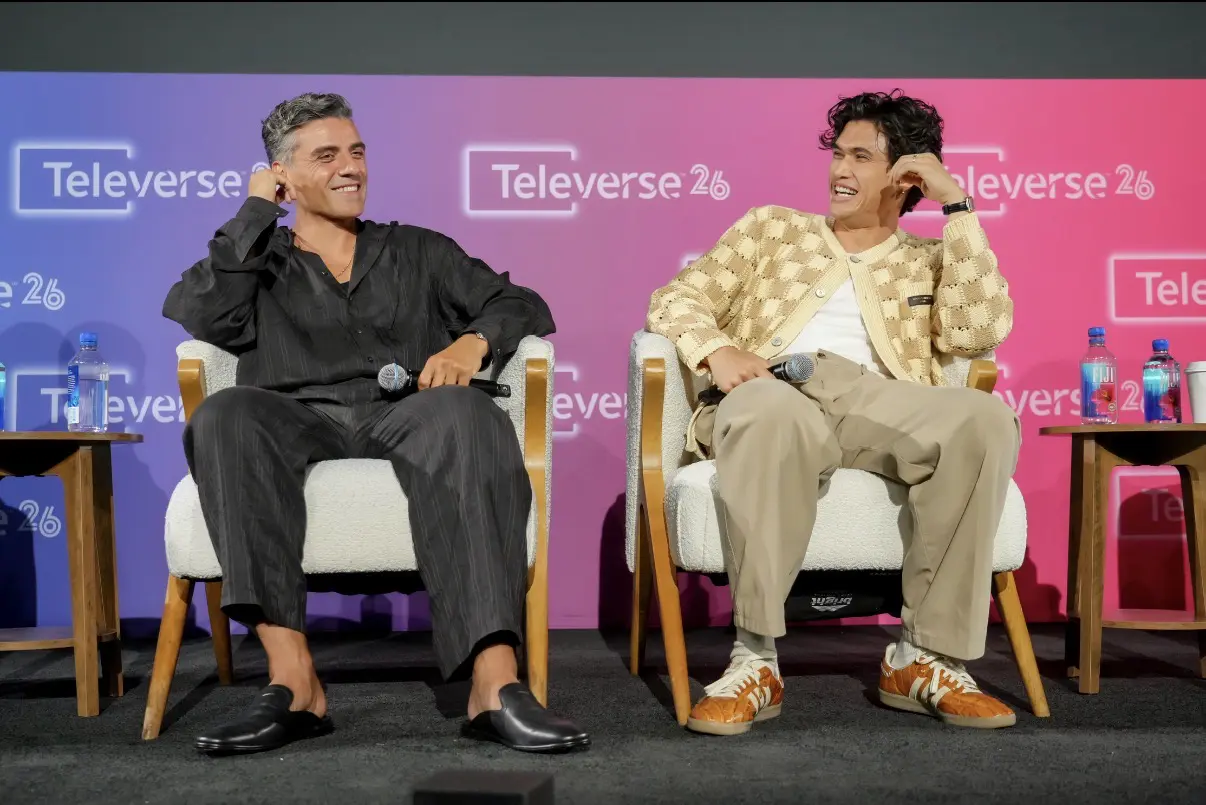
Oscar Isaac and Charles Melton participate in a lively discussion during the FYC presentation of “BEEF” at Televerse 26, a festival by the Television Academy, on Saturday, Aug. 15, 2026 at the JW Marriott L.A. LIVE in Los Angeles. (Photo by Jordan Strauss/Invision for the Television Academy/AP Content Services)
The show’s appeal comes partly from its willingness to sit with contradiction. Its characters can be funny and frustrating, sympathetic and selfish, sometimes within the same scene. That complexity requires actors and filmmakers who are willing to resist the temptation to make every moment obvious.
For creator Lee Sung Jin, that process starts with trusting his cast.
“What’s great about working with this cast, they’re laser precision for finding falsehoods is unparalleled and as a writer and director, that is something that is just so priceless,” Sung Jin said.
That ability to recognize when something doesn’t feel emotionally truthful may be invisible to viewers, but it can make the difference between a scene that simply moves the plot forward and one that feels genuinely uncomfortable, funny or surprising.
It is also where a show like Beef finds much of its power. The series doesn’t necessarily ask viewers to approve of its characters, it asks them to understand them.
Television has become increasingly comfortable with morally complicated protagonists, but the best versions of those characters aren’t complicated simply for the sake of being edgy. They’re complicated because real people are.
That’s ultimately what made the conversations around Shrinking, Paradise and Beef so interesting at Televerse.
The festival offered a chance to understand the choices that audiences normally never see—the location that subtly changes the tone of a show, the actor who already knows a character’s fate, the director whose career was changed because another actor believed in her, or the cast that creates an environment where difficult scenes can actually happen.
