
Last week, the Japan Tourism Agency and Japan’s Ministry of Agriculture, Forestry and Fisheries hosted the annual Japan–U.S. Tourism and Culinary Night in Midtown New York.
The evening brought together regional food, drinks and travel displays, introducing guests to parts of Japan that may be less familiar to visitors. Opening remarks addressed how tourism and food bring people from the two countries together, with an invitation to experience more of Japan’s regional culture.
Inside Gotham Hall, red lighting illuminated the columns, while tall arrangements of pink blossoms decorated the food stations. The program included a Kabuki dance performance by Ichikawa Danjuro XIII, while chefs and exhibitors introduced guests to the evening’s food and travel explorations.
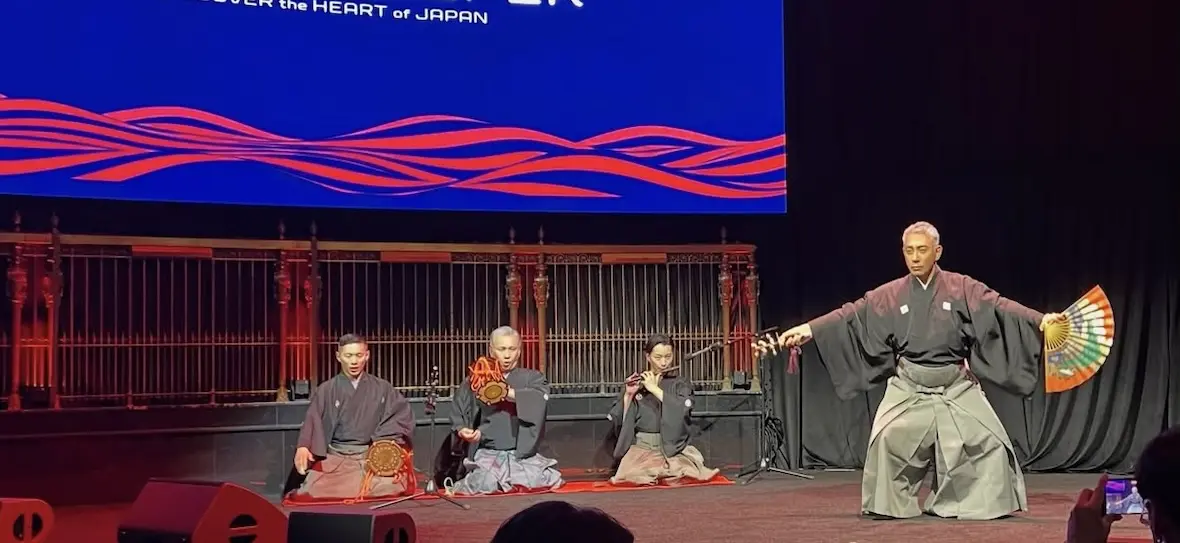
Photo Courtesy: JapanCultureNYC
Guests visited booths stocked with pamphlets and photographs of hiking trails, ski destinations and waterside escapes beyond the usual Tokyo and Kyoto itinerary. The evening also previewed GREEN×EXPO 2027, an upcoming international horticultural exhibition in Yokohama, whose mascot, Tunku Tunku, also joined the event.
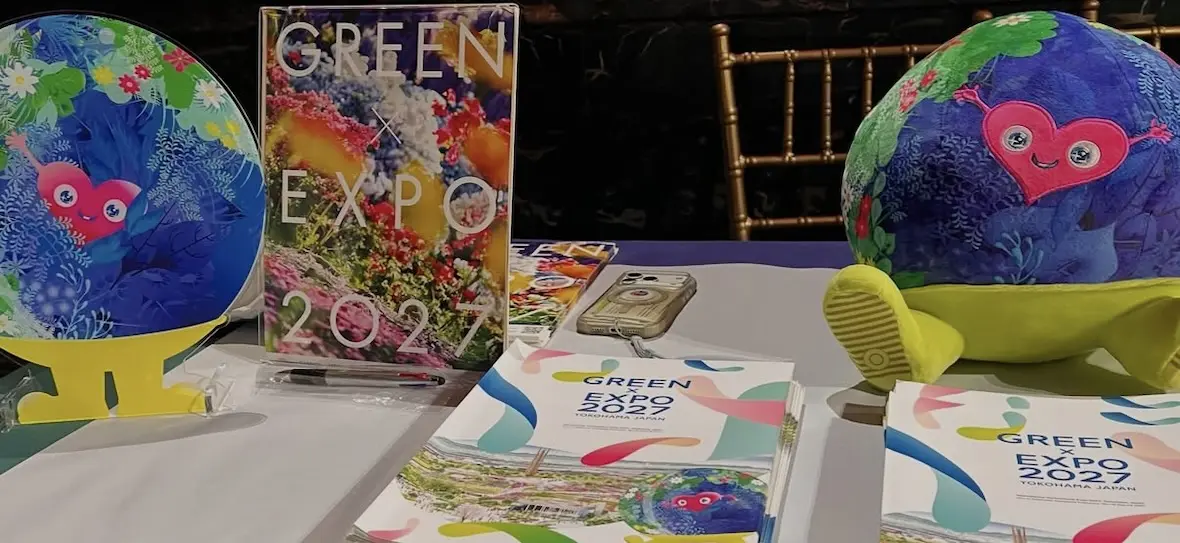
Photo Courtesy: JapanCultureNYC
The tasting stations featured regional specialties, including wagyu from Iwate, yellowtail and red sea bream from Ehime, and Crown Melon from Shizuoka. Menu cards included maps showing where the ingredients came from.
The seafood was especially delicious. Nigiri included soy-marinated bluefin tuna from Tsushima, Fuji-san salmon from Shizuoka and Hokkaido scallops, served over Iwate’s Shizuku rice. Other preparations included Aomori scallops with sea urchin in dashi jelly and Hiroshima oysters simmered in sweet soy and ginger. There was enough variety to appreciate the ingredients across several dishes.
Ehime’s offerings included buri saikyo yaki, a miso-marinated yellowtail, and madai ume kombu-ae, red sea bream with plum and kombu. Across the seafood selection, the fish tasted exceptionally fresh and flavorful.
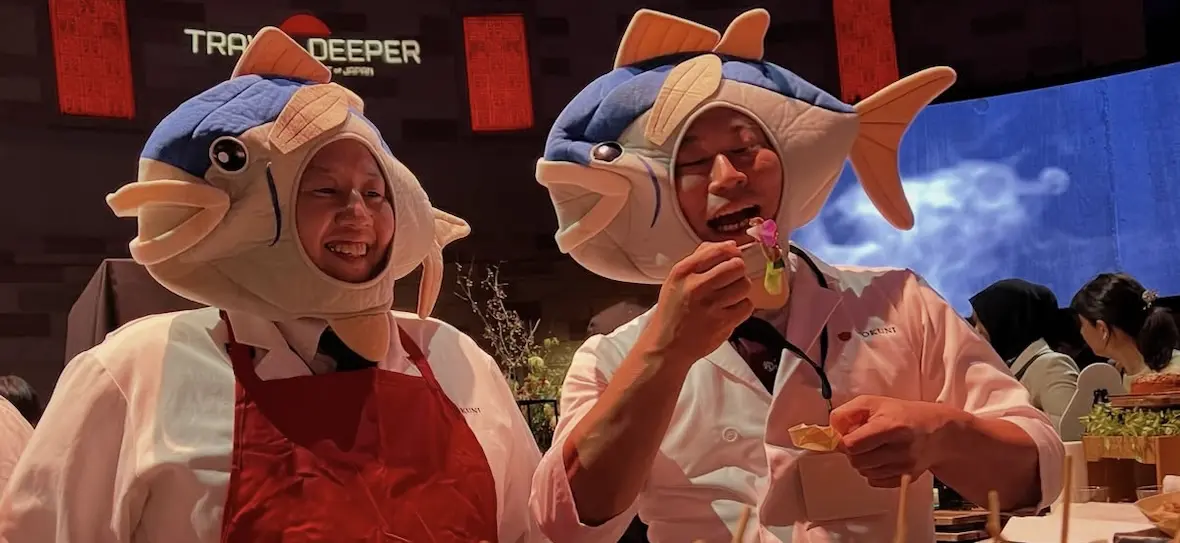
Photo Courtesy: JapanCultureNYC
The walnut brioche was developed under the supervision of Chef Fukuda, president of the Japan Rice Flour Association and honorary executive chef at Cerulean Tower Tokyu Hotel. At the neighboring station, baby scallops were lightly fried in rice flour, giving them a crisp exterior around a tender center. The drinks selection included sake, shochu and awamori. Sake is brewed from rice, while shochu is distilled from ingredients such as rice, barley or sweet potato. The latter also appeared in a Matcha Piña Colada, which combined Kuro Kirishima sweet-potato shochu with matcha, pineapple and lime.
Dessert was a highlight. Shizuoka Crown Melon was served with matcha biscotti and a soba-leaf cookie. The melon was exceptionally sweet, complemented by the crunch of the biscotti. It was one of the simplest plates we tried, and one of the most memorable. The evening gave guests more reasons to explore Japan’s regional destinations. The booths introduced places to hike, ski, and explore, while the food offered a taste of what they might find along the way.
