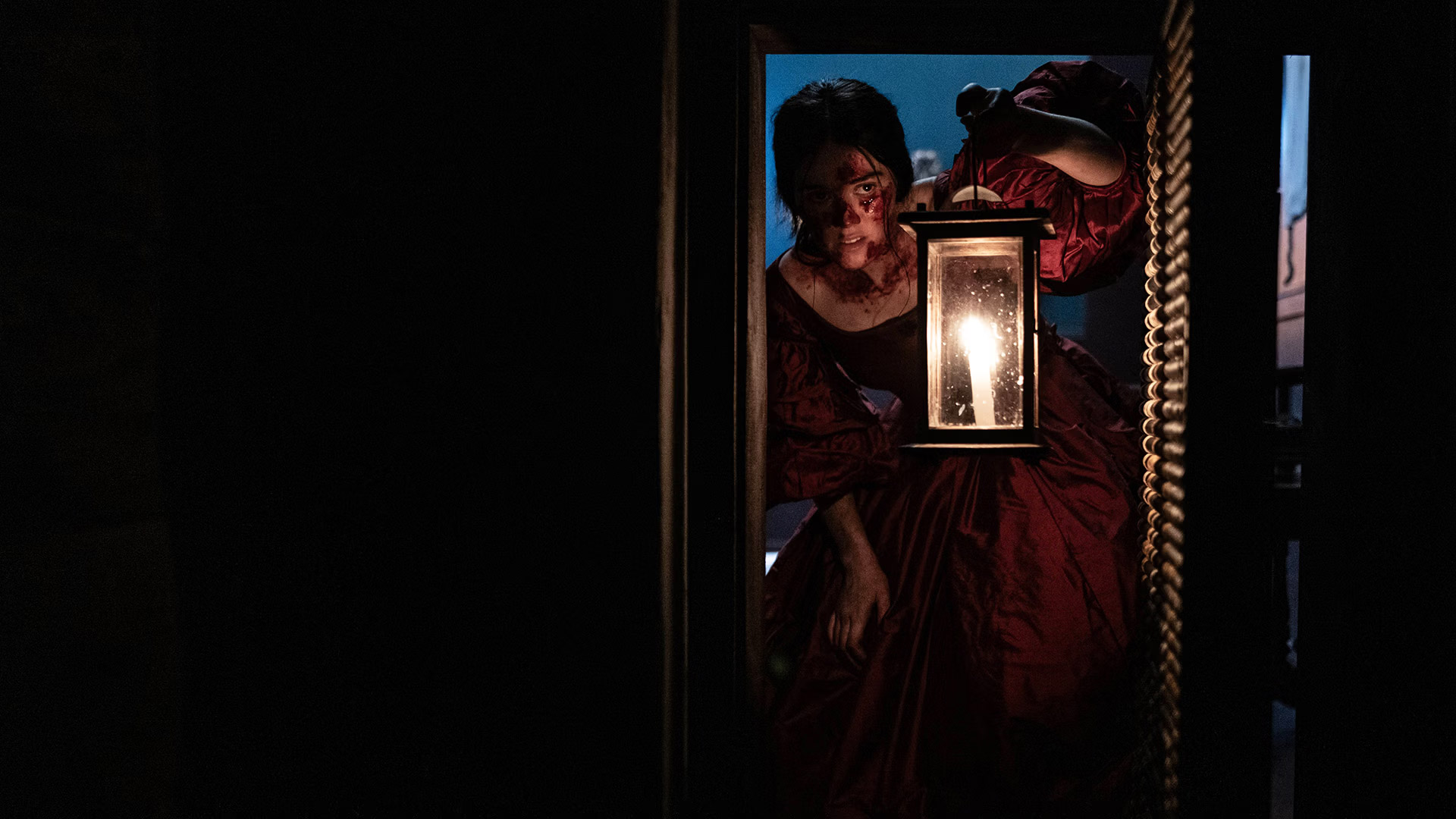
After her novel Beloved debuted in 1987, Toni Morrison expressed the profound need for the story to exist.
“There is no place you or I can go, to think about or not think about, to summon the presences of, or recollect the absences of slaves,” she told The World in 1989. “There is no suitable memorial, or plaque, or wreath, or wall, or park, or skyscraper lobby. There’s no 300-foot tower, there’s no small bench by the road. There is not even a tree scored, an initial that I can visit or you can visit in Charleston or Savannah or New York or Providence or better still on the banks of the Mississippi. And because such a place doesn’t exist . . . the book had to.”
Taratoa Stappard’s film Mārama features an opening title card that echoes Morrison’s statement.
It reads: “This story is grounded in the colonized history of Aotearoa New Zealand. It contains disturbing scenes of the violation and desecration of Māori culture. To move into our future we must first understand our past…”
As gratifying as it is terrifying, the film, much like Beloved, is drawn from historical record. Morrison was inspired by the true story of Margaret Garner, an enslaved woman who escaped Kentucky in 1856 and, when captured in Ohio, killed her own daughter rather than see her returned to slavery. For Stappard, his story, also drawn from the horrors of the past, is “reclamatory horror.”
The story weaves a tapestry of familiar settings and tropes, stitching it with painful histories. Then it’s all ripped away, leaving the audience wounded.
Set in 1859 England, the film centers on a young Māori woman (Ariāna Osborne) confronting both personal and historical trauma, blending a gothic atmosphere with a reckoning around colonial violence and identity.
When I sit down with Stappard on a rainy day in New York, it’s clear this isn’t just a genre exercise; it’s a personal excavation.
“The film is a tribute to my mother, who is Māori,” he says. On the table between us are photographs of the women in his family, dating back generations. Stappard recalls the racism she faced throughout her life, making the telling of the titular character’s story all the more significant. That also meant exposing the gut-wrenching realities of colonial violence.
Stappard was born in Hāwera, Aotearoa, New Zealand, to an English father and a Māori mother, with tribal affiliations to Ngāti Toa, Ngāti Raukawa, and Ngāti Tūwharetoa.
“Some histories are still too painful to fully speak aloud, but you can’t ignore their shape either,” he shares of the gruesome truths the film depicts, particularly in its final act. “It shows a history that is deeply uncomfortable.”
Those familiar with Charlotte Brontë’s Jane Eyre (1847) or its over two dozen film and TV adaptations may find the film’s premise sounds familiar. A young woman travels from home to a towering residence in Yorkshire, England, and is hired by the master of the house (Toby Stephens) to be a governess to his young ward. The setting itself (captured by cinematographer Gin Loane) is imbued with life. The windswept smog swirling from the rocky water’s edge, the secluded house feeling isolated and dreary, yet not wholly safe from unwanted visitors.
“It’s a gothic language, but through a different lens, the world seen from the other side,” Stappard tells me. “I wanted to tell a story rooted in lived, displaced experience. It’s a bit like… Indigenous reclamatory horror.”
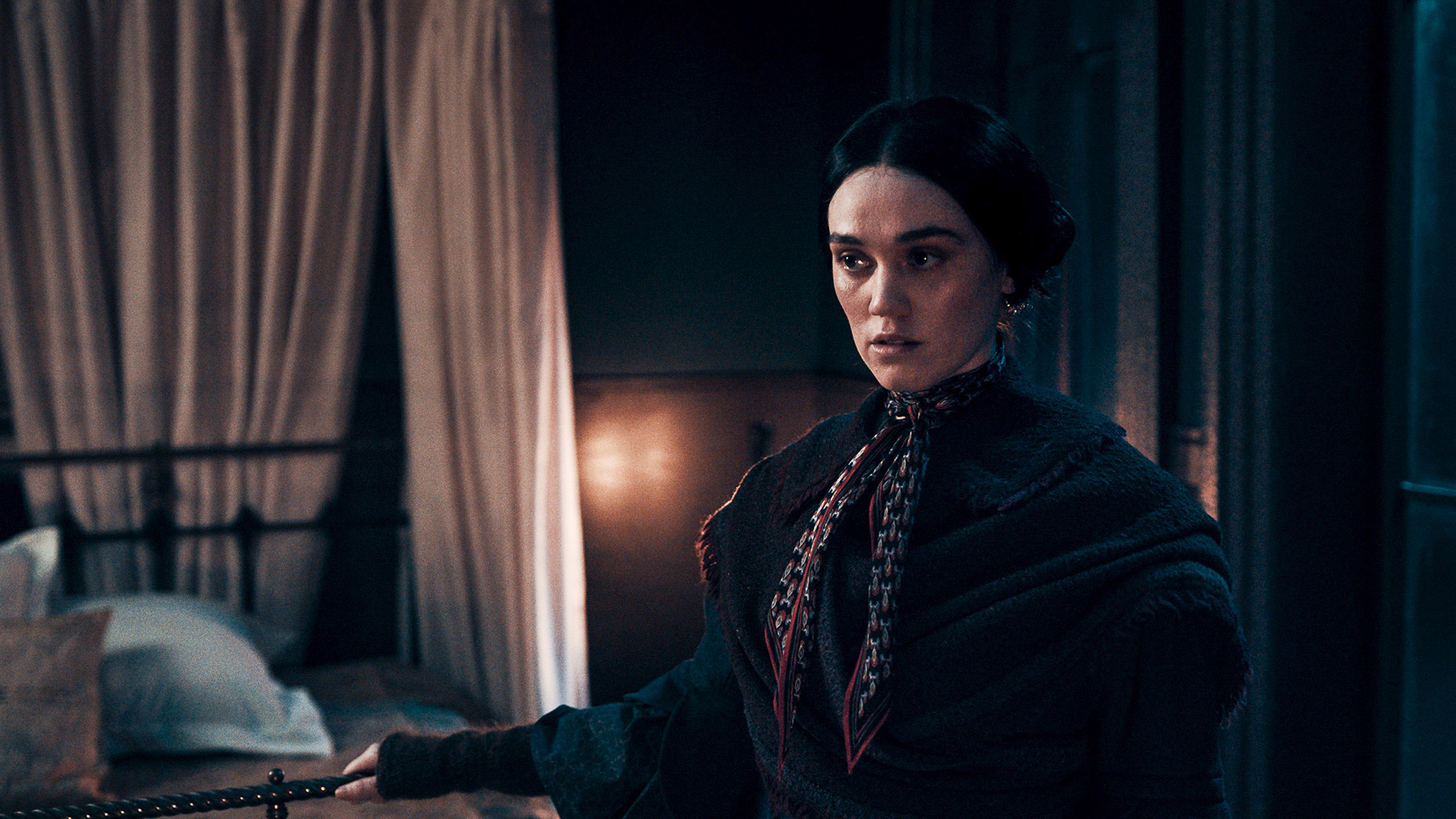
Ariāna Osborne in Mārama (Watermelon Pictures)
At first, Mary is welcomed by Nathanial Cole (Toby Stephens), who, in other versions of a gothic tale such as this, would be the brooding romantic hero. But just as Jean Rhys countered with her 1966 novel Wide Sargasso Sea, it’s soon clear what he’s meant to really embody. Rhys wrote this prequel to Jane Eyre to breathe life into the “madwoman in the attic” who haunts Brontë’s novel. Bertha, the secret wife of Jane’s beloved Mr. Rochester, was transported like cargo from her homeland in the Caribbean as part of a business arrangement that saw her married off and locked away when her mental health deteriorated.
The fact that Stephens himself portrayed the famed literary character in the 2004 BBC adaptation of Jane Eyre feels like a play on literary norms that are then turned on their head. Audiences may feel drawn to his character in Mārama, but in the film, that safety is often an illusion.
“There’s a kind of cultural fascination with dangerous romantic figures,” he says. “The question is why we keep returning to them.”
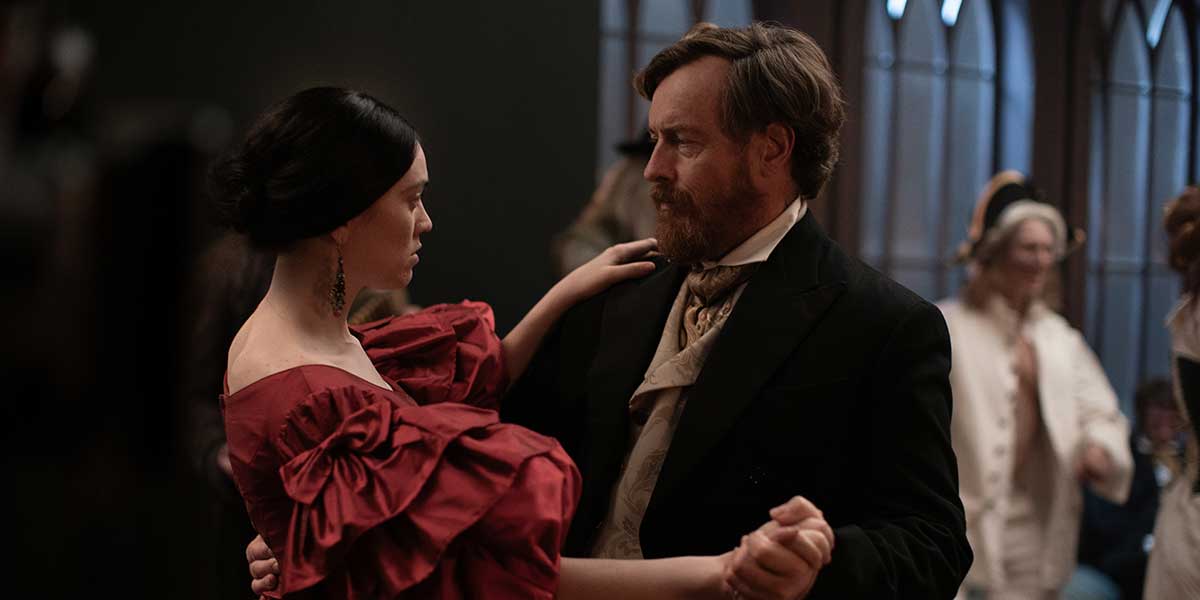
Ariāna Osborne and Toby Stephens in Mārama (Watermelon Pictures)
Stappard is proud that the film has been hailed as a “good for her” narrative, a type of revenge film in which a woman reclaims her power and triumphs over an abusive force. It’s a growing canon that features films like the female-driven The Invisible Man (2020), Promising Young Woman (2020), Midsommar (2019), The Witch (2015), and A Girl Walks Home Alone at Night (2014).
“Sometimes relevance is accidental. Sometimes it’s inevitable,” he says, reflecting on the film’s resonance amidst the battle for gender equality.
For the debut feature filmmaker, who has now shared the film at festivals and screenings around the world, the film has ignited an array of reactions he hopes will be long-lasting.
“You can’t always know what your film will mean in five or ten years, but you can feel when it’s holding something true,” he adds. “What we leave unresolved in a film is often what audiences carry forward.”
As the erasure of documented violence against communities of color remains endemic and imperialist violence continues to plague large swaths of the world, the need for stories told from the perspective of those impacted by such atrocities feels urgent.
Stappard’s act of narrative archaeology mirrors that of authors like Tiya Miles, Dahlma Llanos-Figueroa, Silvia Moreno-Garcia, and Jesmyn Ward, who have excavated stories of enslavement, abuse, and generational trauma in their books. In doing so, they’ve used words to build memorials. Mārama feels like one crafted with imagery.
But beyond memorialization, the film serves as a cathartic reclaiming of the past. Or as the filmmaker puts it, “walking backwards into the future.”
Mārama premiered in select theaters on April 17.
