Programming film festivals isn’t just about selecting productions for exhibition. It’s a means of advocating for bold new works of cinema that audiences can discover.
For the San Francisco Film Festival Programming Director Jessie Fairbanks, that responsibility begins with choosing what to platform at the iconic event, which happens to be the longest-running film festival in the Americas.
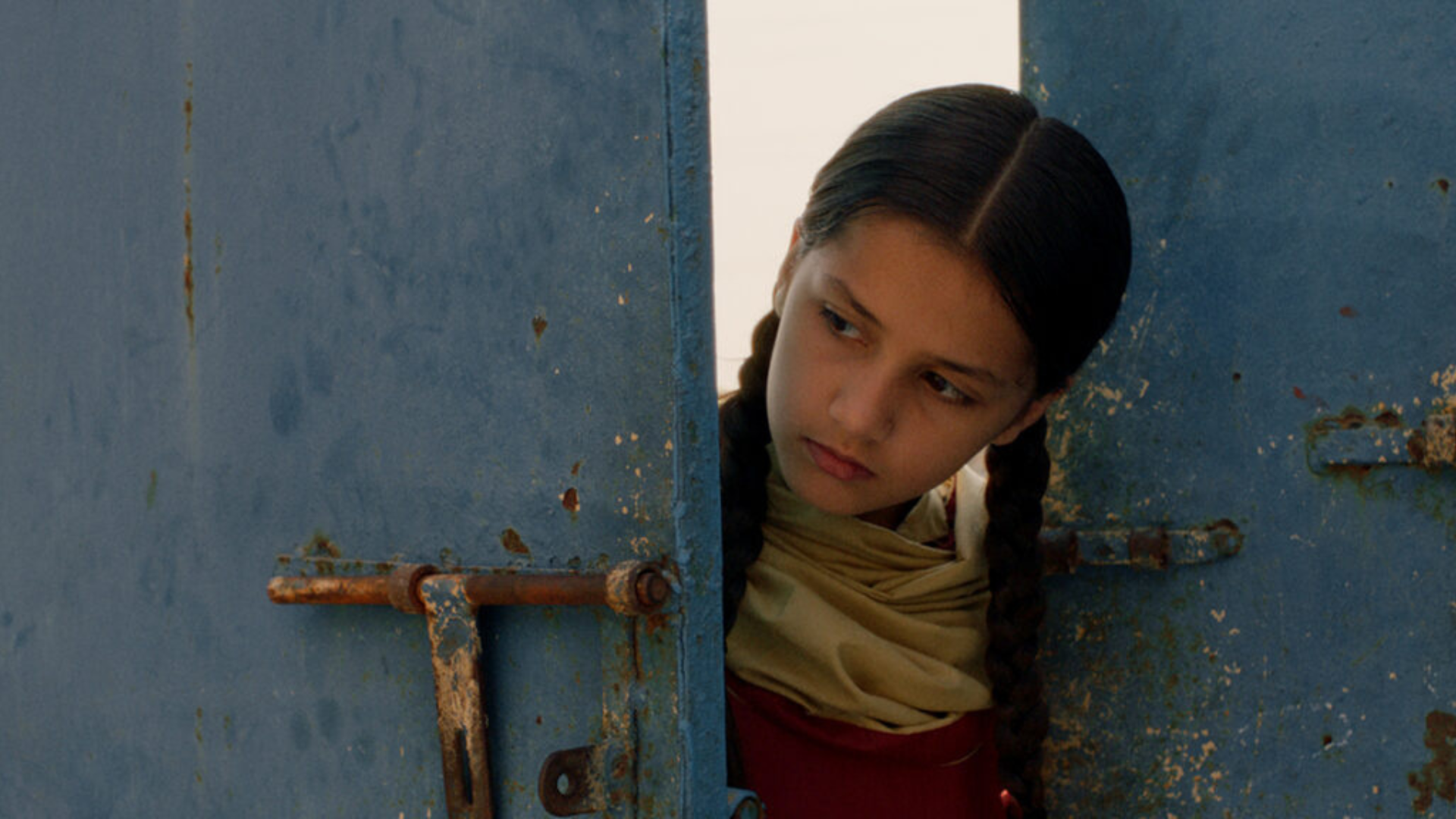
This year’s lineup is shaped by global perspectives, with productions emerging out of Iran, Palestine, Malaysia, and Myanmar, groundbreaking experimental works, and archival restorations.
At a moment when distribution timelines stretch longer, and mid-budget independent filmmaking continues to face new challenges, the role of film festivals continue to evolve.
We spoke to Fairbanks about this year’s exciting slate and how the program serves as a celebration of established and emerging artists while embodying the spirit of the Bay Area.
The Knockturnal: You have a background in documentary and nonfiction storytelling, and I’ve been thinking a lot lately about cinematic truth-telling across different forms. Given everything happening in the world right now, and the role art can play as catharsis or reflection, what kinds of themes emerged organically in this year’s festival programming?
Jessie Fairbanks: I think we see the ability to provide a platform to films as both an incredible honor and a huge responsibility. We’re the ones who get to decide what gets to be on the screen, something we don’t take lightly. We also find it to be our own way of uplifting stories that perhaps are not being as widely disseminated in certain circles.
We’re certainly very excited that this year we have filmmakers who have sent us their work from Iran, from Palestine, from Malaysia, and Myanmar, as well as filmmakers in the United States who are making bold films. That is empowering, to be in dialogue with these artists about critical issues of the times.
Our program is always reflective of what’s happening in the world, because artists are making films about what’s happening around us. Another theme that was really interesting and organic this year was reflection, especially late-in-life reflection. There are a lot of films looking at that last chapter in life: how it’s represented, how it’s explored, and who can speak on it.
Another theme that emerged was departures, departures from a physical place, or from a chapter of life. Moving from adolescence into young adulthood, from middle age into later life, but also departures from the norm. How are our institutions and educational systems under pressure or responding to what we’ve begun to think of as “normal”? How has that changed in the last two years versus the last several decades?
Those are some of the organic themes that came out for us.
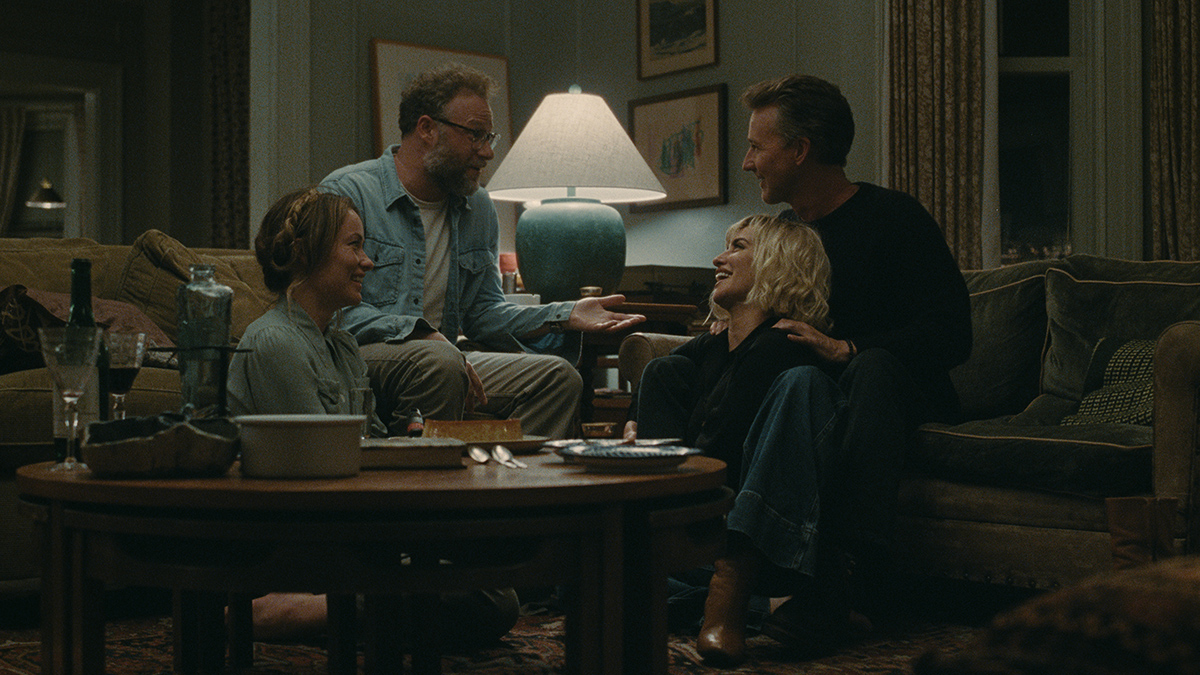
Penelope Cruz, Olivia Wilde, Edward Norton, and Seth Rogen in The Invite (A24)
The Knockturnal: What’s incredible about the festival is that it’s not just this annual event, but the year-round programming, education work, and community engagement. It feels deeply tied to the spirit of San Francisco itself. What does that artistic spirit feel like right now in the city?
Jessie Fairbanks: San Francisco is such a historic city that has undergone so many changes, even just compared to three years ago. Where the arts and culture scene was then versus what’s happening today.
We are a nonprofit arts organization, and we are not immune to what’s been happening in terms of the funding landscape, both locally and nationally. We feel very lucky to have the supporters that we do: funders, foundations, donors, grants, and especially our audiences. Our audiences are really what keep us going.
We also have the trust of filmmakers, filmmakers who want to share their work with us, develop projects with us, be in residence, or receive grants. Our education program is very well received, we work with over 30,000 public school students every year, and we have a college program with over seven institutions.
Because we engage with students, emerging artists, established artists, and studios year-round, we get this huge palette of art that we can both consume and share.
Even with all the challenges San Francisco has faced since the pandemic, we still have incredibly engaged, determined, and loyal audiences. They show up year-round.
Our Doc Stories program is a great example; it’s small and curated, and those screenings are sold out or at 90-plus percent capacity. That shows that San Francisco will always be a place where art is welcome, where progressive ideas are welcomed, and where people are open to perspectives they may not agree with.
The Knockturnal: I’ve found myself going to more festivals lately, partly because I’m craving that communal experience again, laughing with strangers, gasping at the same moment, feeling emotionally connected in a room together. After everything cinema and the world have gone through in recent years, what do you think audiences are still searching for in these shared spaces?
Jessie Fairbanks: Absolutely. We program both challenging and inventive films, sometimes about global issues, sometimes formally experimental. One of the beautiful things about cinema is how inventive it can be. There’s the idea that there are only a few core stories, but what changes is how they’re told.
We also see a huge range in formats this year, which is exciting. For example, we have a film shot on 16mm using a wind-up camera that only allows 27-second takes and no sync sound. It requires immense precision in both planning and post-production sound design.
Then we have another film made almost entirely on a laptop using AI tools, an imaginative work that couldn’t have been funded traditionally but creates an entirely new visual world. We also have a 4K restoration of a historic film that was lost for decades and rebuilt from fragments. And we’re opening with a 35mm film. So you really see the range, from analog to digital to AI. If you see films across different formats, it’s a really rich experience.
The Knockturnal: One thing I love about festivals is that certain films reveal entirely new layers on rewatch. Sometimes the first viewing is overwhelming because you’re rushing between screenings and conversations. I’m curious whether films continue to evolve for you too, even after the programming process, especially when you’re introducing them to new audiences for the first time.
Jessie Fairbanks: Yes, absolutely. We’re actually approaching our 70th year, and we’re curating a retrospective of films that premiered at the festival in earlier decades but didn’t get wider circulation. We want to honor that legacy and the programmers who built this institution over time.
We also require premieres for many of our sections, so a lot of the work is very fresh, often North American or California premieres. We balance discovery with recognition, bringing in new voices from festivals like Berlin, while also highlighting important work that hasn’t yet had local exposure. Sometimes the films we show are already known internationally; other times they are true discoveries.
For example, Sender. Russell [Goldman] has been working on the film since it was a short [Return to Sender]. Jamie Lee Curtis is an executive producer. It’s such a beautiful story of how a filmmaker can capture the attention of an established individual in Hollywood. Jamie is well known for pulling artists up behind her.
We’re so lucky that both the filmmaker Russell and Britt Lower, who stars in the film, and is known to many people as one of the cast members of Severance. To have Britt come all the way to San Francisco because it felt important enough for her and important to Russell for both of them to be present on the ground to share their film means a lot. They’ve had their big debut at SXSW, and still, they really value the exposure they can get in the Bay Area from our curious, inquisitive, and dedicated audience.
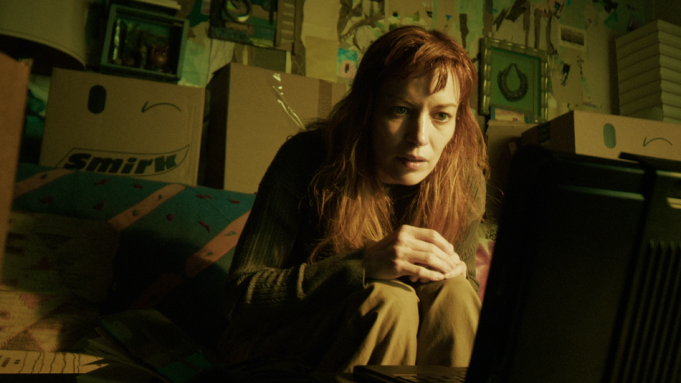
Britt Lower in Sender (Comet Pictures)
The Knockturnal: I’ve been thinking a lot about how much the independent film landscape has changed even in the last year or two. Incredible films are premiering at festivals that still don’t immediately find distribution, and filmmakers seem to be navigating a much more uncertain path than before. From your perspective, how has the role of festivals evolved within that changing ecosystem?
Jessie Fairbanks: The economic paradigm of Hollywood is undergoing a massive shift. Mid-level independent budgets have been disappearing for years. It’s either very low-budget or large studio productions.
Distribution is happening more slowly; films that used to sell in weeks now take months. But every year, people predict the end of cinema. It’s happened with sound, color, television, and streaming. And yet, cinema keeps evolving.
An algorithm will never serve you something that truly challenges you or exposes you to something outside your experience. Festivals do that. As distribution channels shrink and independent theaters close, festivals become even more important—they’re where you can see something unexpected, something not selected by a formula.
As long as people are making films, and that number is growing, there will be incredible work. Those films just need a home. We’re lucky to be part of that.
The San Francisco Film Festival runs from April 24 to May 4.
