
As ‘Is God Is’ prepares for its theatrical release, Kara Young and Mallori Johnson bring a chemistry to the screen that feels instinctive, raw, and deeply lived-in. Their connection as sisters is built on emotional trust, discipline, and a quiet understanding that extends far beyond performance.
Some stories ask actors to do more than simply play a role. They demand complete emotional surrender. Is God Is is one of those stories. It is one that requires not only precision, but genuine bravery.
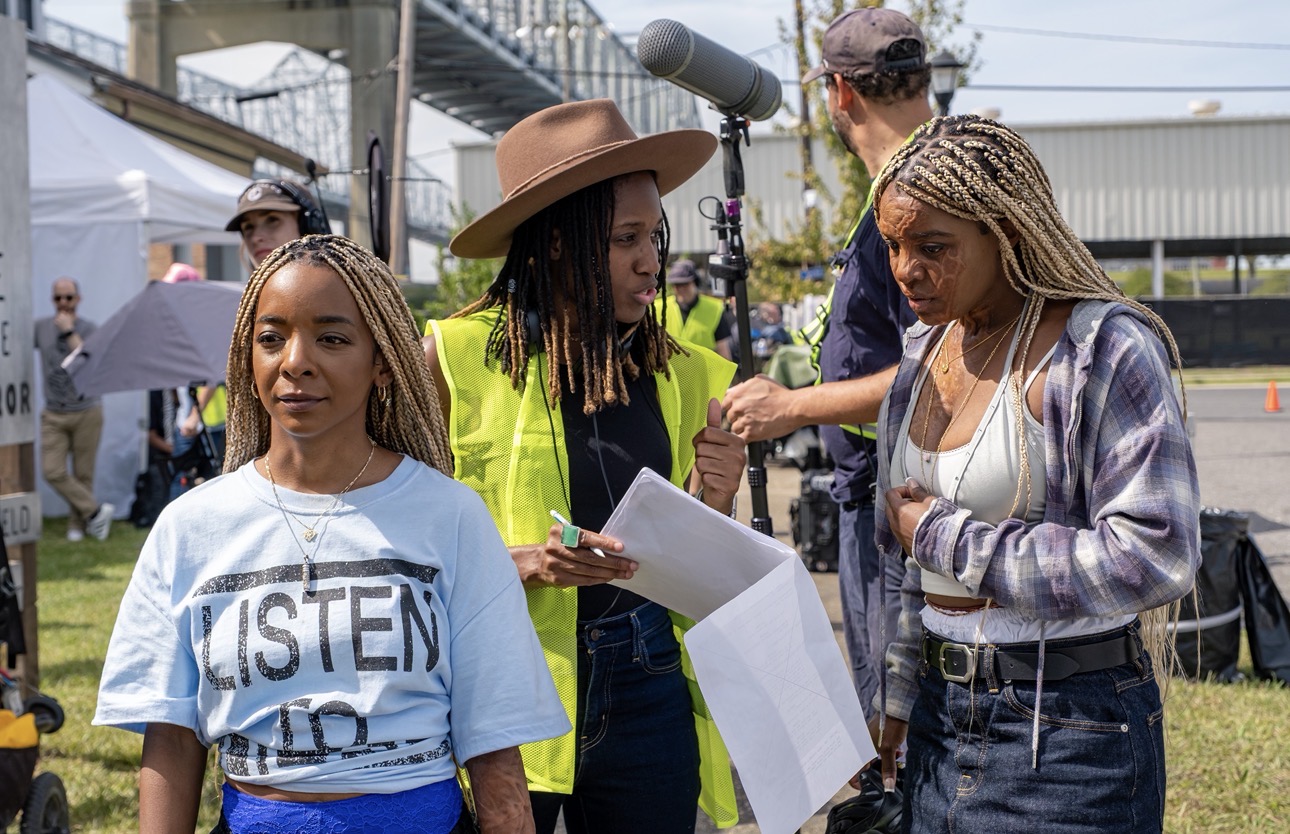
From the film’s opening moments, Young and Johnson establish a sibling bond that feels intimate and unspoken. As the story spirals through grief, revenge, memory, and survival, their connection only deepens, grounding even the film’s most surreal moments in something emotionally real. Their performances are shaped by years of theater training, emotional endurance and a shared commitment to honoring every layer of their humanity.
(Photo credit: Patti Perret
© 2026 Amazon Content Services LLC. All Rights Reserved)
Reflecting on the experience, Johnson explains, “It was so beautiful and interesting working on Aleshea’s project because this was a play. And we all come from a background of true theater.”
That foundation is present in every scene. Every line feels intentional. Even silence carries weight.
For Young, live performance taught her that storytelling is never static. “In repetition, the thing starts to blossom a little differently,” she reflects. “It’s new alchemy in the house every single night. New people, new heartbeats, new energy.”
Johnson channels that same fearlessness into Anaia, approaching the character with softness and emotional sensitivity without ever allowing her vulnerability to feel small.
“From the moment I read her text, I understood her sensitivity,” Johnson says. “And although she has this very deep emotional well, I hope it’s communicated in the film that it’s a strength as well.”
(Photo credit: Patti Perret
© 2026 Amazon Content Services LLC. All Rights Reserved)
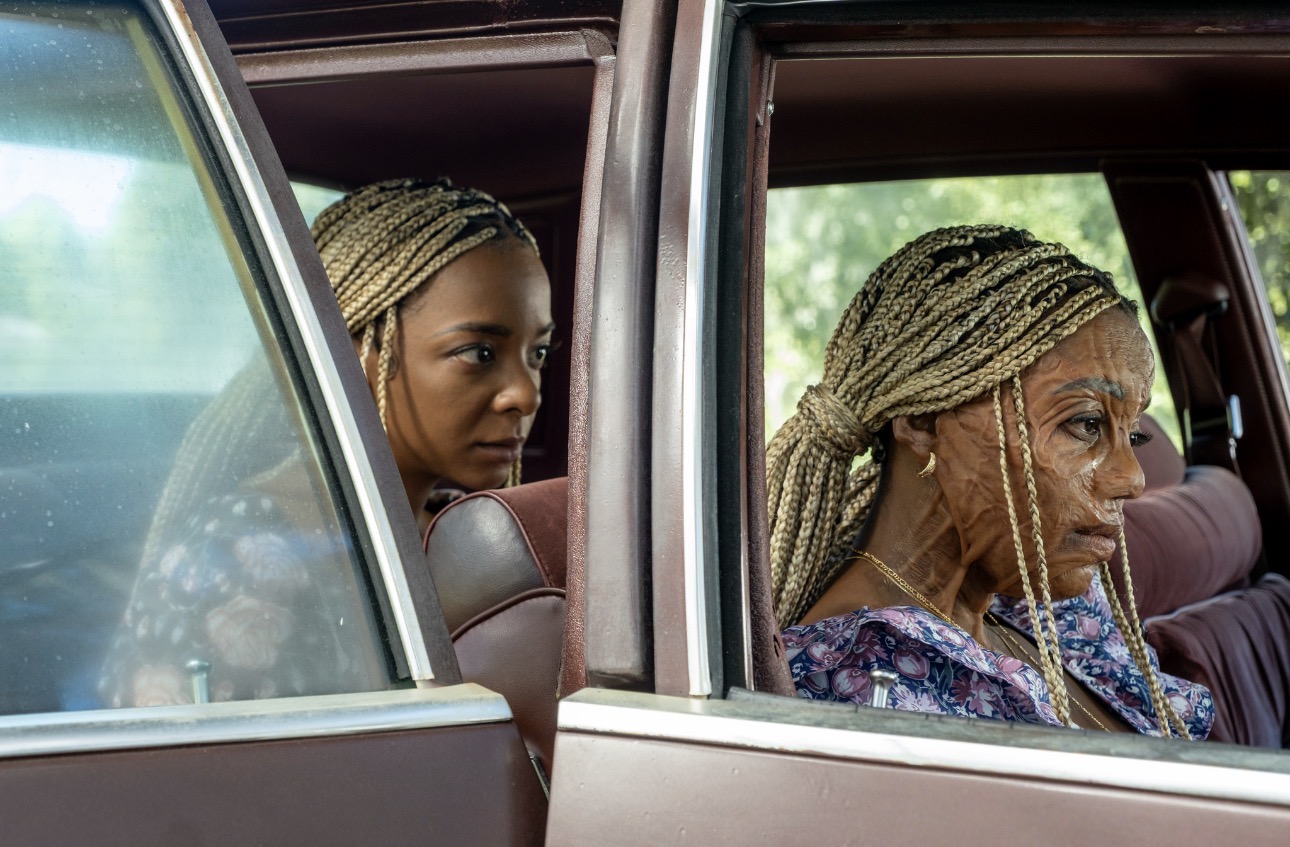
That emotional intelligence becomes one of the film’s greatest strengths. Even amid chaos and violence, Johnson brings a tenderness to Anaia, while Young’s Racine burns with rage, urgency, and passion. Together, they allow their characters to exist in full contradiction. Angry yet loving; fragile yet dangerous; wounded yet resilient.
That complexity is part of what makes Is God Is feel so refreshing. The film gives Black women the freedom to exist fully onscreen and not simply as symbols of suffering or strength. Rather, they are complete people who are messy, funny, grieving, vulnerable, desirous, and deeply human all at once.
Neither performance happened by accident. Both actors approached the work with the kind of stamina and emotional discipline that theater demands.

(Photo credit: Patti Perret
© 2026 Amazon Content Services LLC. All Rights Reserved)
Johnson recalls the intensity of filming: “We were so exhausted at one point because we were working really every single day. We were on call almost 23 hours a day and we were getting IVs. And she [Young] was like, ‘Yeah, you know, I love this shit.’ Even when we were tired, it was always, ‘Yeah, let’s keep going. Let’s push.’ It comes from a place of love and true, true passion.”
For Young, that emotional excavation also carries responsibility, especially as a Black woman performing stories of pain, liberation, and survival.
“How do you honor someone in the scenes that you have?” she reflects. “How do you honor a full human being in the scenes that you have on a stage for two hours plus? In our cases, as Black vessels, there’s something about being heard. A Black woman being heard on these stages.”

Photographer: Jenny Anderson
That understanding sits at the soul of Is God Is. The film allows its characters to unravel, rage, grieve, protect, and survive without apology – a freedom Young found liberating to embody.
“The work itself and how big this story is requires us to resist nothing,” she says. “There should be no resistance. It’s almost the full liberation of the spectrum of our humanity.”
For Young, embodying Racine meant exploring every shade of anger and grief within her mission for vengeance.
“Rage is not one thing,” she explains. “It’s many, many things. So within that, it became about asking what are all the colors of this rage in her mission, in her need to avenge the person who created us, who made us.”

(Photo: Courtesy Amazon)
That question echoes throughout the film. One of Is God Is’ most striking achievements is the way it redefines rage and not simply as destruction, but as memory, protection, grief, inheritance, and survival.
While the film’s world is heightened and surreal, its emotional truths feel painfully familiar, especially for young Black women navigating visibility, expectation, and emotional labor in everyday life.
For Johnson, that honesty is what made the experience so fulfilling.

Photographer: Jenny Anderson
“Nothing is necessarily difficult, even navigating these huge emotional spaces, because it comes from a place of love and true passion,” she says. “It was fulfilling, exploring all the corners of these women’s spirits, lives, wants, hopes, dreams, and truths. To represent Black women in all the lovely, soft, and rough corners of our being was an amazing opportunity.”
That honesty is ultimately what makes Young and Johnson’s work resonate so deeply. Together, they embody the essence of what people often mean when they speak about Black girl magic but not as a performance, but as emotional truth.
Perhaps that is the real power of Is God Is. It reminds audiences that being fully seen is its own form of freedom. And in the hands of Young and Johnson, that freedom becomes something even rarer – a portrait of Black womanhood allowed to be whole.
Is God Is premieres in theaters May 15.