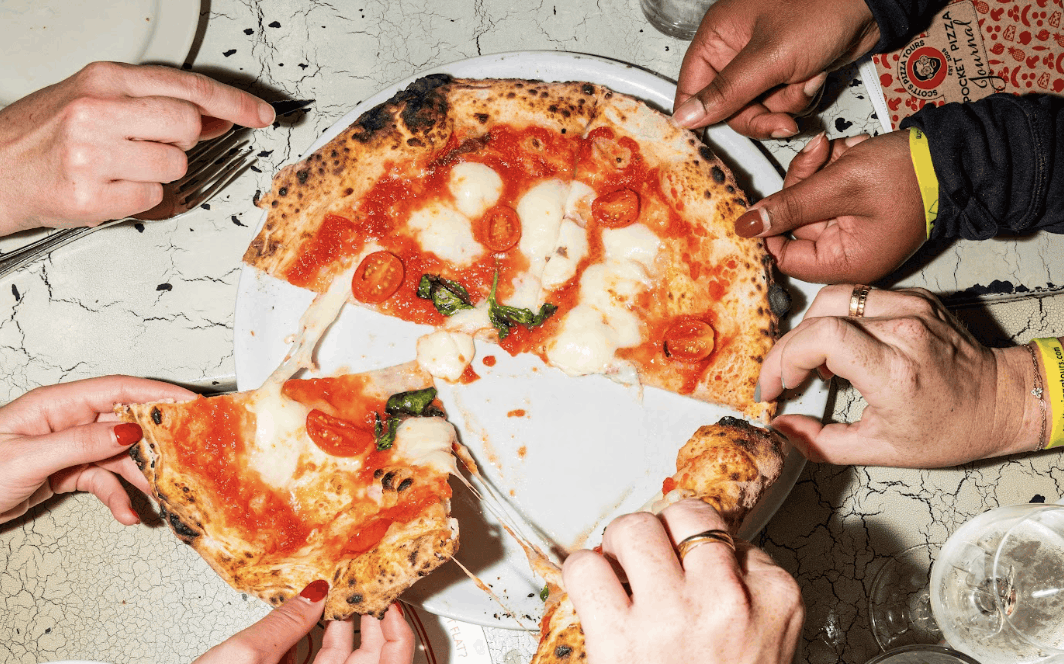
Scott’s Pizza Tours offers a flavorful journey through the history and evolution of pizza, with stops at three NYC restaurants showcasing Neapolitan, Roman, and modern New York styles. Through tastings, historical insights, and behind-the-scenes kitchen access, the tour reveals the craft and creativity behind one of the city’s most beloved foods.
New York City’s status as a pizza capital rests on more than its abundance of neighborhood pizzerias. From traditional Neapolitan pies to crisp Roman-style preparations and contemporary interpretations of the New York slice, the city’s pizza culture reflects generations of culinary exchange and reinvention. Scott’s Pizza Tours offers a closer look at that evolution, combining tastings at established restaurants with historical context and demonstrations of the techniques that distinguish each style. During a recent tour, three stops across the city illustrated how a dish with humble origins became a global culinary institution.
The tour began at Kesté Pizza e Vino, where Scott introduced participants to the history of Neapolitan pizza and its development in Naples before its eventual spread around the world. The discussion traced pizza’s evolution from early uses of dough associated with cooling ovens to a food in its own right, initially prepared without tomato sauce, before gradually taking on characteristics more familiar to modern diners. Scott’s informational approach placed an emphasis on conversation rather than simply presenting historical facts. He encouraged participants to share their own experiences with pizza, asking about personal preferences and the styles that had made lasting impressions. The format lent an intimate quality to the group experience, connecting the history of the dish to the ways people encounter and enjoy it today. While he spoke, we dove into the first tasting, featuring pizza fritta: a fried preparation associated with Neapolitan tradition, which was followed by a classic Neapolitan pizza characterized by its light, airy crust and relatively restrained toppings. Wines from Cavit accompanied the meal, including a cocktail incorporating Mike’s Hot Honey. Participants also received small notebooks designed as pizza guides, with space to record observations, rank each slice, and sketch the pizzas they encountered throughout the tour.

Scott with Neapolitan Pizza and a glass of Cavit wine
-Courtesy of Scott’s Pizza Tours
During the journey aboard the pizza bus, Scott provided additional historical background and clues about the next style awaiting the group. The stop, Gnocco, introduced a contrasting tradition: Roman-style pizza. The reveal marked a distinct shift from the first tasting, with a thinner, crispier crust replacing the soft, pillowy texture of Neapolitan pizza. The Roman-style pie also offered a more assertive combination of toppings, including garlic, onion, and red chili flakes. Together, these ingredients produced a pronounced interplay of flavors that contrasted with the simplicity of the earlier Neapolitan preparation. The difference demonstrated how variations in crust, toppings, and technique can fundamentally change the character of a pizza, even when the underlying dish remains the same. Participants were also given an opportunity to visit the kitchen, observe the preparation process, and examine the oven used to achieve the style’s more thoroughly cooked crust. The behind-the-scenes look highlighted the technical considerations involved in producing different regional styles. A glass of classic red wine accompanied the tasting before the group returned to the pizza bus for its final destination.
At Cello’s Pizzeria, the tour concluded with a contemporary interpretation of New York-style pizza: a vodka pie topped with fresh jalapeños. The combination balanced the richness and creaminess of the vodka sauce with the peppers’ tangy acidity, while a drizzle of Mike’s Extra Hot Honey added sweetness and heat. The result offered a modern take on a familiar style, bringing together contrasting flavors without losing the qualities that make New York pizza distinctive. The final pie also served as a fitting conclusion to the evening’s progression through different pizza traditions. Beginning with the historical foundations of Neapolitan pizza, moving through the crispier Roman style, and ending with a contemporary New York creation, the tour presented pizza as a constantly evolving food shaped by regional preferences, culinary techniques, and individual creativity. The Cello’s pie emerged as a particular standout, illustrating how traditional foundations can provide room for experimentation. It became an instant favorite of mine. A glass of white wine from Cavit accompanied this final tasting.
Across the three stops, the tour demonstrated how a dish that appears simple on the surface carries a complex history of adaptation and reinvention. Each restaurant offered a distinct perspective on pizza, from its Neapolitan roots to the techniques that define Roman preparations and the modern combinations found in New York today. Through its combination of tastings, historical commentary, and kitchen access, Scott’s Pizza Tours offers a structured exploration of the culinary traditions behind one of New York City’s most recognizable foods. Beyond sampling different slices, the experience examines the people, processes, and regional influences that have shaped pizza over time, revealing why a dish that originated in one part of the world continues to evolve across the globe.
