The legendary MC returns to New York City to celebrate a quarter-century of one of hip-hop’s most important independent albums, Disposable Arts, and reflects artistry, and what it means to endure in Hip-Hop.
On July 15, Masta Ace returns to New York City with a milestone worth honoring: the 25th anniversary of Disposable Arts, one of hip-hop’s most celebrated independent albums. Fresh from a successful European tour, the Brownsville legend takes center stage at Nublu on the Lower East Side for an evening that proves why this record, and this artist, remain essential.
Hosted by SiriusXM’s, Torae and presented by ATRX UpNext Artist Series, the event showcases hip-hop’s past, present, and future. Opening performances from Genique, MildlyBrown, Kaz Will, and Dave-O (The Descendant) set the stage, each bringing their own vibrant energy. The night also features appearances by Leschea, Pearl Gates, Apocalypse, and surprise special guests, creating a collaborative lineage that hip-hop desperately needs.
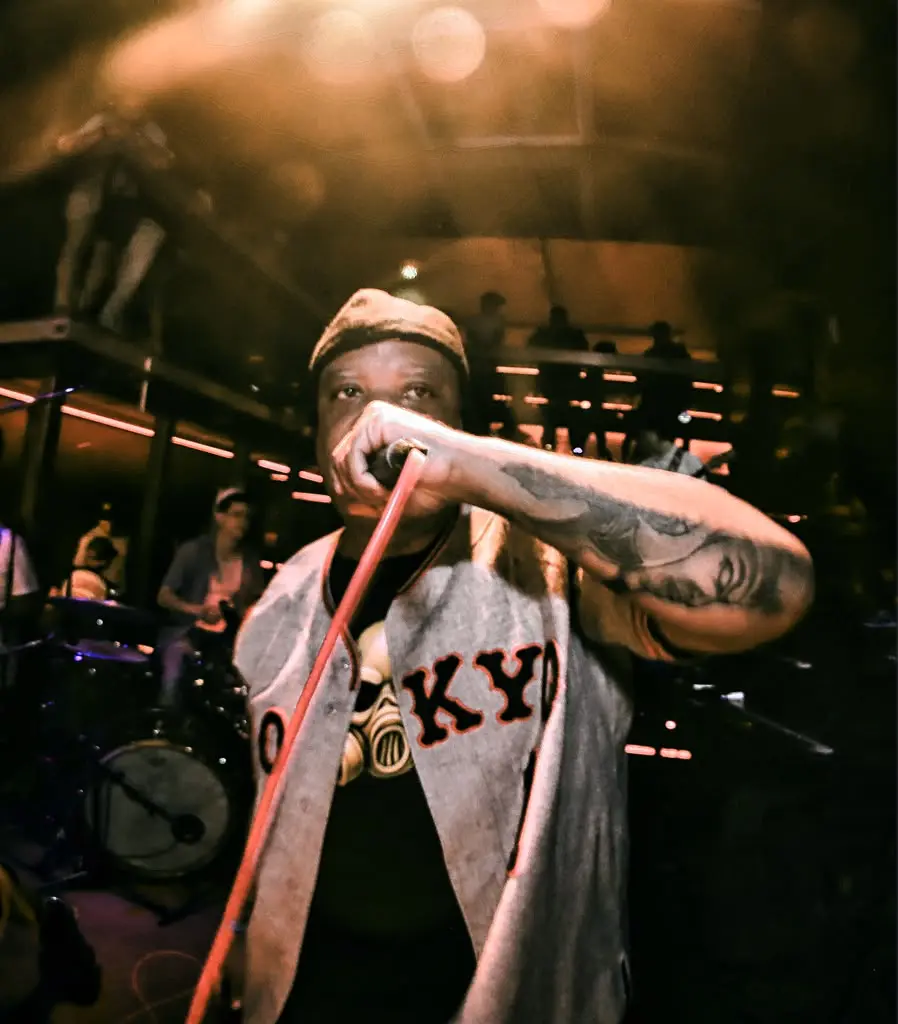
Featured appearances by Leschea, Pearl Gates, and Apocalypse (pictured)
Masta Ace took the stage with the backing of a live band, performing selections from Disposable Arts alongside deep cuts from his legendary catalog.
The real conversation happened before the performance. The Knockturnal sits down with Masta Ace to reflect on the album’s origin, his evolution, and what it takes to survive in hip-hop.
What made you call it Disposable Arts? What was the premise behind that concept?
Basically, this was a time in hip-hop—2001—where you had artists going into interviews, saying they recorded 35 songs and then picked the best 10 to put on the album. Around that same time, I had done a body of work for a label in New York City. I did like 23 songs, and they basically just scrapped the album with no second thought. So it started to appear to me that the art we were creating was disposable to these labels. That’s why I called it that.
You’ve spanned decades in hip-hop with albums like Slaughtahouse and Disposable Arts, and your production has always been forward-thinking. How do you think the Brooklyn sound you helped define has evolved, and where do you see your role in its lineage now?
I don’t know if there was ever a quote-unquote “Brooklyn sound.” I would really call it more of a New York sound. We were known for hard drums and boom-bap style hip-hop. It’s evolved into younger New York artists delving into trap and different sounds outside of New York; Chicago sounds, things of that nature.
The young artists have gravitated towards sounds outside of the New York area, which is fine. But somebody like myself still considers myself one who holds those original values, and those original sounds close to my heart. That’s the music I still do.
Your wordplay and storytelling are consistently intricate. What’s your approach to balancing technical complexity and making sure the message hits without losing the artistry?
I really don’t think too much about that. What I do is focus on going in the studio and making music that I like, that sounds good to me. I try to make music that I would want to hear if I was just a fan. Hopefully, the fans will recognize that sound. The ones that love that sound will gravitate to it. That’s what’s been happening for the last 25 years.

Live & Uncut: Twenty-five years later, Disposable Arts remains an undisposed testament to craft, independence, and uncompromising vision
From your earlier collaborations with other MCs, who or what has shifted your perspective on hip-hop the most?
There’s no one person or two people. I really do pay attention to the culture, and to the new artists that come out every single day. I’m a student of music. I’m always paying attention, and I get influenced by everyone because, whether they’re good or bad, even the artists whose music I don’t like, I get inspired by them. They show me something I don’t want to do, or a place I don’t want to go. So, it really is the entire culture that I’m paying attention to and trying to tune into, so I can figure out where I fit.
What keeps you invested in making music?
The fans. Because of this one album—Disposable Arts—had I not dropped this album, you and I wouldn’t be talking right now. This one album single-handedly extended my career 25 years. The fact that I got an extension of 25 years because of one album is why I say this album is my most important album.
What legacy do you want to leave in hip-hop? What do you hope you’re remembered through?
I hope I’m remembered for my storytelling, my honest approach to lyrics, my lyricism, and the fact that I put feeling into the music. The words mean something, and the songs are about something. Hopefully, that’s important to people.
Looking around Nublu that night, it was clear: people were listening. They had been listening for 25 years.
What advice would you give lyricists and artists coming up in hip-hop to learn the culture? What would you advise for them to do to get started?
Create your own sound. Being honest is always the first start—being honest to who you are, rapping about real things, what’s really happening in your life and around you. That’s really the most important advice, because so many artists just listen to what’s on the radio, listen to those messages, and say, “Oh, I gotta write something with these topics in it.” They try to chase the sound that’s quote-unquote “popular.” I say write songs that are true to your life and true to your heart.
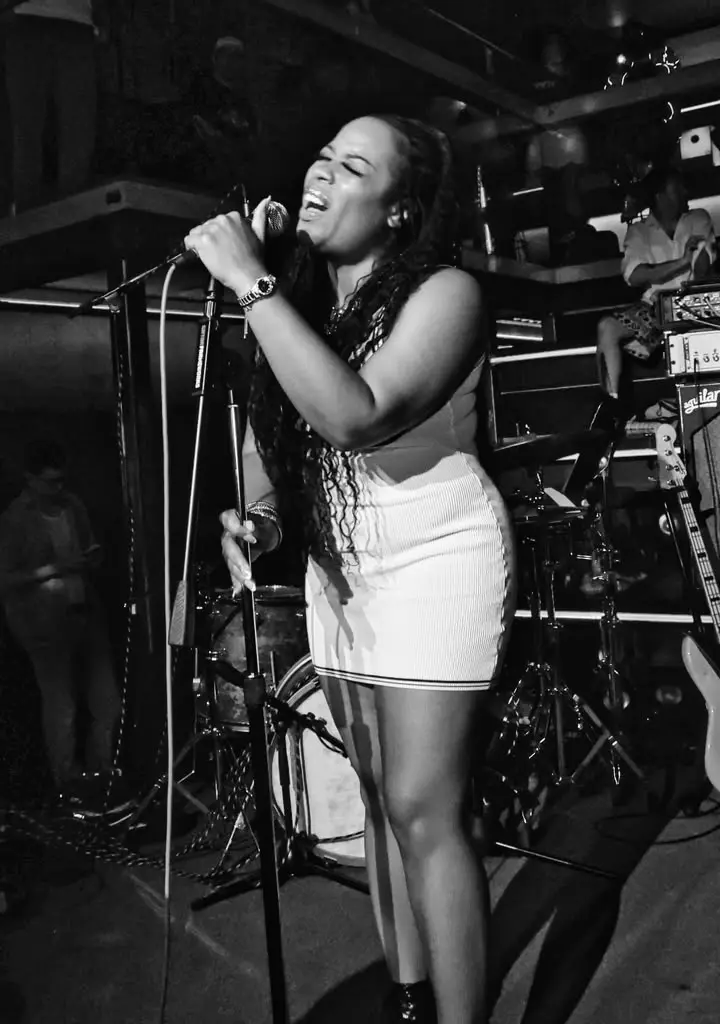
Rapper, singer, and dancehall artist Genique bares her soul
The evening closed with Masta Ace signing copies of his vinyl records, CD, memorabilia, and taking photos with eager fans. What marks July 15 as significant is witnessing hip-hop operating in a way it should work, as a culture of mentorship, of community, of elders and emerging voices on the same stage.
Upcoming artists like Genique, MildlyBrown, Kaz Will, and Dave-O (The Descendant) weren’t opening for a legend; they were learning from one. Masta Ace, wasn’t performing for the past; he proved that some art never becomes disposable.
