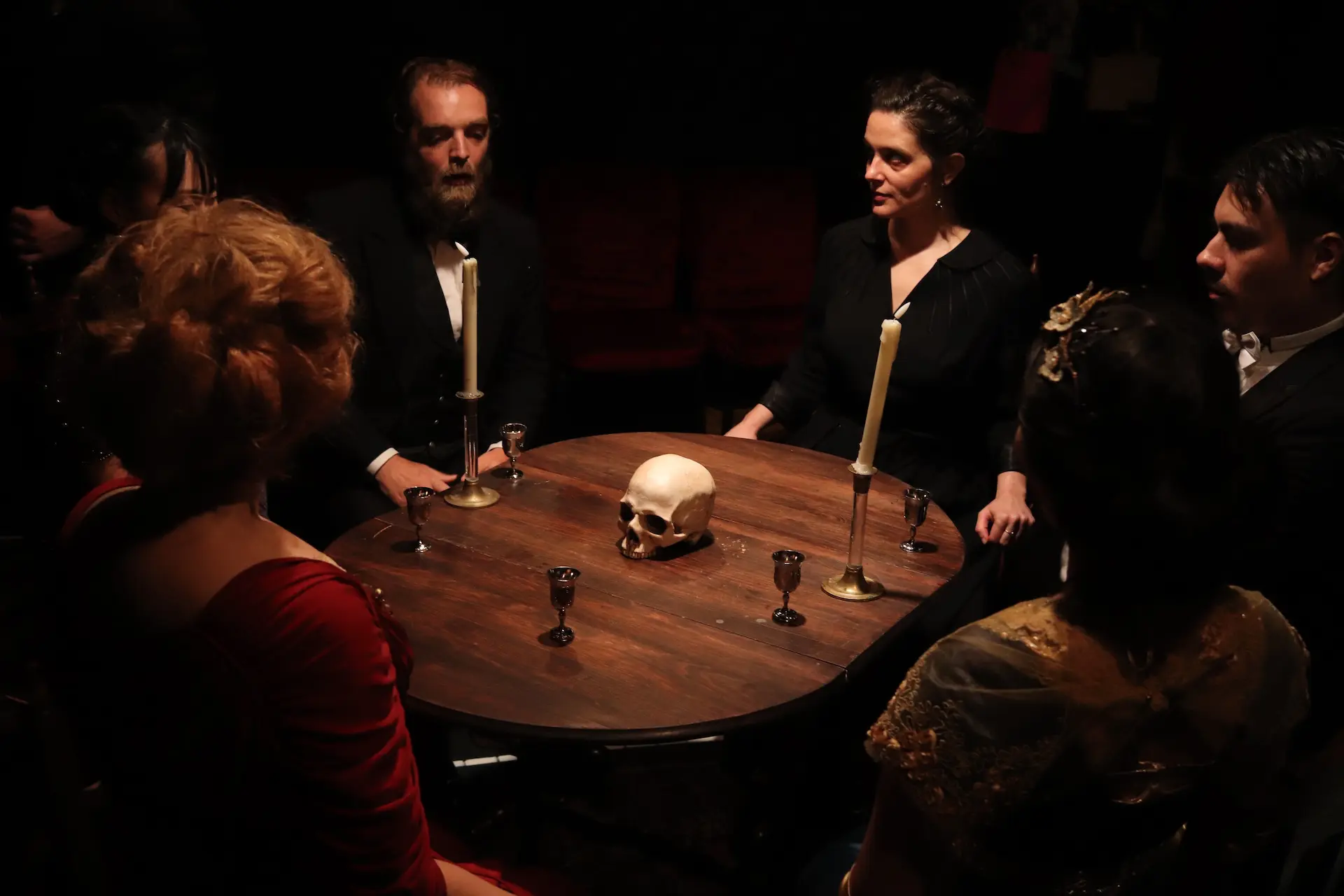
Can mediums truly speak with the dead, or are they con artists preying on the grieving at their most vulnerable?
Can the dead fall in love with the living? What is love, anyway? And how, exactly, do you get rid of a troublesome ghost? Sara Fellini’s Ectoplasm raises all of these questions, and it doesn’t let its audience watch from a safe distance. Fellini transports us to an exclusive, private séance in 1912, seating us among the performers, where we observe the events unfolding around us like ghosts ourselves.
Fellini is a playwright drawn to stories about death. In The Execution of Mrs. Cotton, she told the story of a real 19th-century female serial killer, and in The Wake of Dorcas Kelly, she turned to another murderer, this one from the 18th century. That same penchant for historical figures and melodrama fuels Ectoplasm.
We first meet the medium, Sara Beraud Conlan, played by the playwright herself. Fellini shows off her skills as an actor, bringing Conlan vividly to life as a woman who doubts her powers as a medium and relies on tricks to bolster her confidence. Her husband, Kal Conlan, is played by Steven Gamble, who comes to us from North Carolina with experience in both leading and supporting roles. Gamble shows us a man who is tired of courting the elite to make a living through mediumship and who has lost faith in the very idea of it.
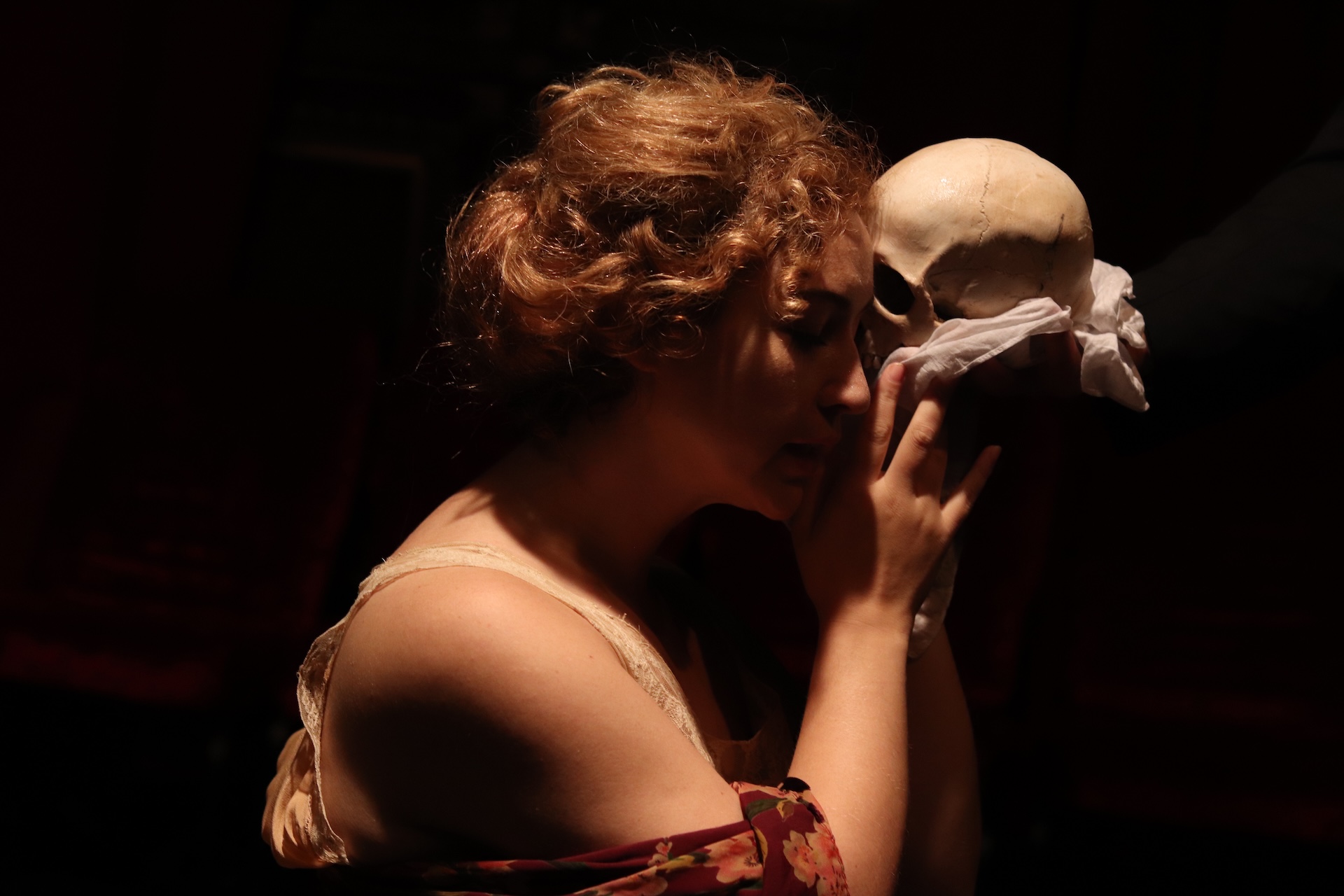
Photo Credit: Giancarlo Osaben
The séance takes place at the home of Madame Francine Montfort, played by Laural Creighton in her Spit&Vigor debut. Creighton, who has appeared Off-Off Broadway and in several Netflix shows, portrays an analog of Lord Byron: openly sexual, eccentric, and deceptive. Madame Montfort is attended by her recently promoted butler, Callum Holes, played by George Walsh. Walsh, who has served as stage manager and technical director for various Spit&Vigor productions, steps onto the stage to deliver a dryly humorous character.

Photo Credit: Giancarlo Osaben
Ira Orinthall, a former medium and professional magician, is played by Federico Mostert, a Mexican-American actor, singer, writer, and playwright whose work spans film, theater, musicals, Shakespeare, Chekhov, and original pieces exploring Latinidad, queerness, and Lovecraftian themes. Mostert shows his range as Orinthall pursues a personal vendetta against mediums, and Orinthall’s scenes with Sara Conlan form the dramatic core of the play. Orinthall is accompanied by his wife, Annette, a dedicated suffragist who has been tortured for her beliefs and who questions the roles women are locked into. Azumi Tsutsui, who comes from Osaka, Japan, and has appeared in commercials, film, and television, brings a warm, friendly, and committed presence to the role.
Another guest with professional credentials is the parapsychologist Dr. George Crookes. Jesse Metz, a New York–based actor and director, vividly portrays him as an enthusiastic, gullible investigator and makes it abundantly clear how handsy Crookes is with women. Crookes is accompanied by his unhappy wife, Mizka, played by Yurika Ohno, an actor, singer, and voiceover artist from Kobe, Japan. Ohno portrays a dark, discontented woman with an interest in blood rituals.
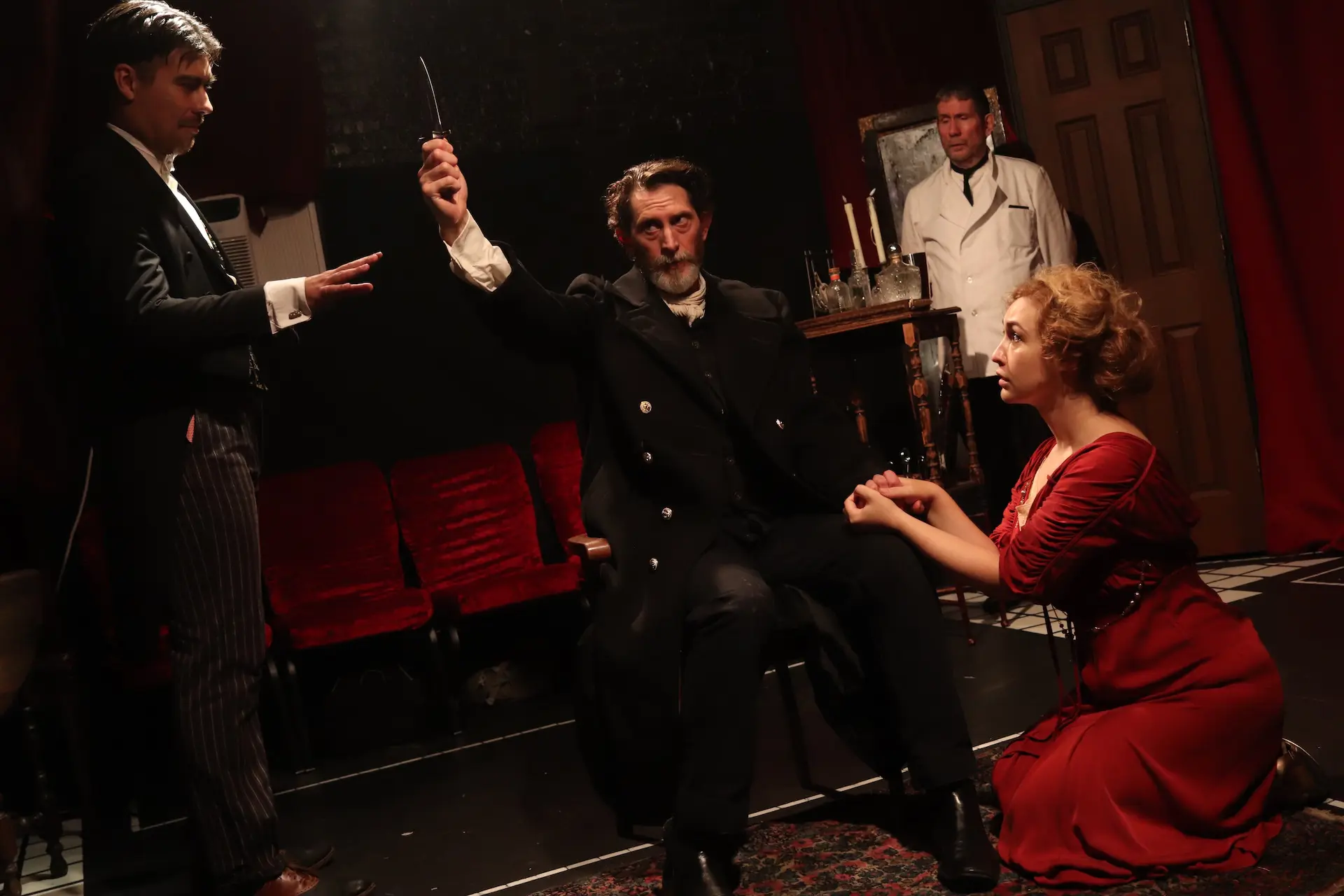
Photo Credit: Giancarlo Osaben
The final guest, who arrives alone, is Elisha Kane, a former Arctic explorer with a tortured past. Adam Belvo, a Brooklyn-based actor and theater producer who serves as Executive Producer of Spit&Vigor, embodies Kane as a robust and wonderfully strange figure. Kane’s appearance raises the central questions of Ectoplasm as the play explores the relationships between the living and the dead.
The actors are supported by Florence Scagliarini’s elegant, antique-furnished set, and it is easy to see why Scagliarini is a prominent designer. Claire Daily’s costumes and props evoke the era beautifully, while sudden blackouts and intimate lighting carry a great deal of the plot. It is all in keeping with Spit&Vigor’s reputation as an independent production company that presents innovative, immersive pieces.
Ectoplasm is neither a big production nor a comedy. But if you want to spend 90 minutes (with no intermission) in the company of an offbeat, entertaining ensemble, it is a perfect choice. Fellini raises questions about grief, faith, and those who exploit them that are as unsettling today as they were in 1912. For anyone who loves loosely constructed, innovative theater, Ectoplasm fits the bill. Pull up a chair, join the circle, and see who answers.
