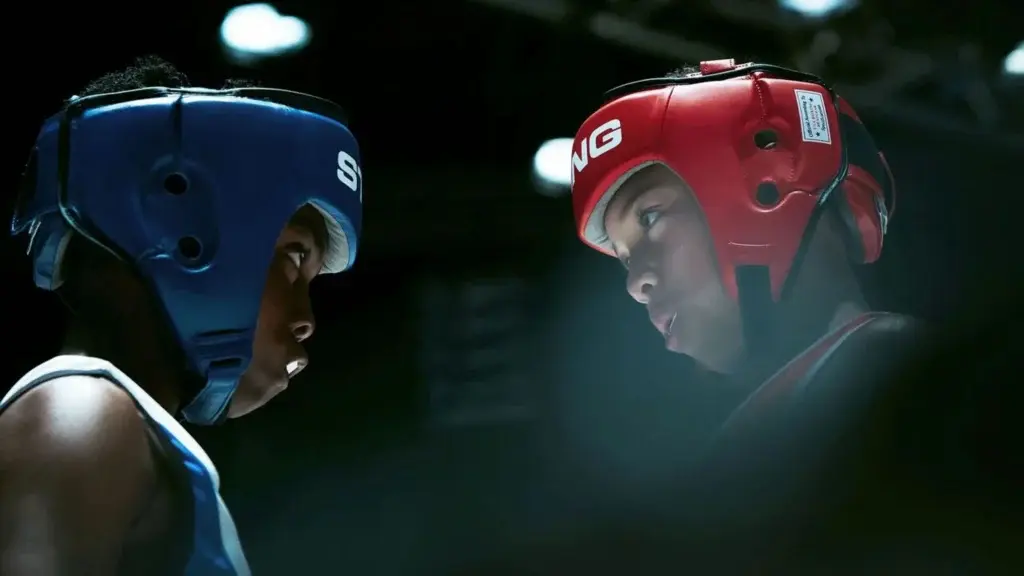
Ahead of the Olympic Winter Games, Gillette Venus announced its partnership with U.S. Figure Skating athletes Alysa Liu, Isabeau Levito, and Starr Andrews, aligning with Team USA as the Official Razor of the Games. In the lead-up to competition, when routines sharpen and rituals matter most, Venus is positioning smooth precision as part of the preparation, and for figure skaters training and competing in the cold of Milan, performance extends beyond the ice. We spoke with Starr Andrews ahead of the Games about artistry, identity, and the rituals that ground her before stepping into an arena.
Andrews has never skated quietly. Long before Olympic conversations, before national podiums and international assignments, she was a child skating to “Whip My Hair,” unapologetic and magnetic. Her now iconic viral routine, set to Willow Smith’s anthem, showcased both technical skill and personality. Even earlier, at four years old, she was performing to “Twinkle Twinkle Little Star” and “Lean Back,” choosing contrast over convention. “I’ve always kind of had bold music choices,” she says. “I feel like people get scared to use certain songs because they’re not sure if judges will get it. I’m just like, I’m going to do it. And I’m going to try to act it out so they understand.”
That instinct to choose differently has followed her into adulthood. In recent Olympic cycles, Andrews began recording her own vocals for competition programs, a rare move in figure skating. The first time she performed to her own voice, singing Whitney Houston, she admits it startled her. Hearing herself echo through an arena mid-program felt surreal. “I forgot that I recorded it,” she laughs. “I was like, oh my god, that’s me.” What began as an experiment evolved into a pattern. For another Olympic year, she recorded “At Last” by Etta James. Her voice has matured, deepened, and the choice to sing her own music has become more than novelty. Skating to her own voice, she explains, shifts something internally, the performance feels less performative and more personal.
“It’s more calming,” she says. “I know what I’m singing about. It’s heartfelt. It brings a genuine smile.” She describes how different genres trigger different physical responses. While, her short program channels Beyoncé (sassy, sharp, confident), her long program moves between darker, vampire-inspired intensity and a softer second half set to “Turning Page” by Sleeping At Last, a song she sings herself. The lyrics thank those who’ve supported her journey.
Andrews enters this Olympic chapter not as a newcomer but as an athlete shaped by cycles of successes, setbacks, and visibility. Born in Los Angeles and introduced to skating by her mother, she rose through the ranks quickly, becoming one of the most recognizable young faces in U.S. figure skating. Her early viral fame introduced her to a broader audience, but her competitive résumé solidified her credibility: national medals, Grand Prix assignments, and now Olympic selection as an alternate for Team USA.
Representation has been part of her story whether she intended it or not. Growing up, she rarely saw skaters who looked like her. The first time she remembers seeing someone with curly hair on television was Adam Rippon. “I was glued to the screen,” she says. “I had never seen that before.” At international competitions, she often found herself the only Black girl in the locker room. She remembers one moment of discomfort, sitting in that realization. “I felt like I stuck out,” she says. “But I made it there. So it didn’t matter.” Now, she works with organizations like Unity Ice Academy, supporting young skaters of color entering a space that still lacks diversity. What began with a small group has grown significantly.
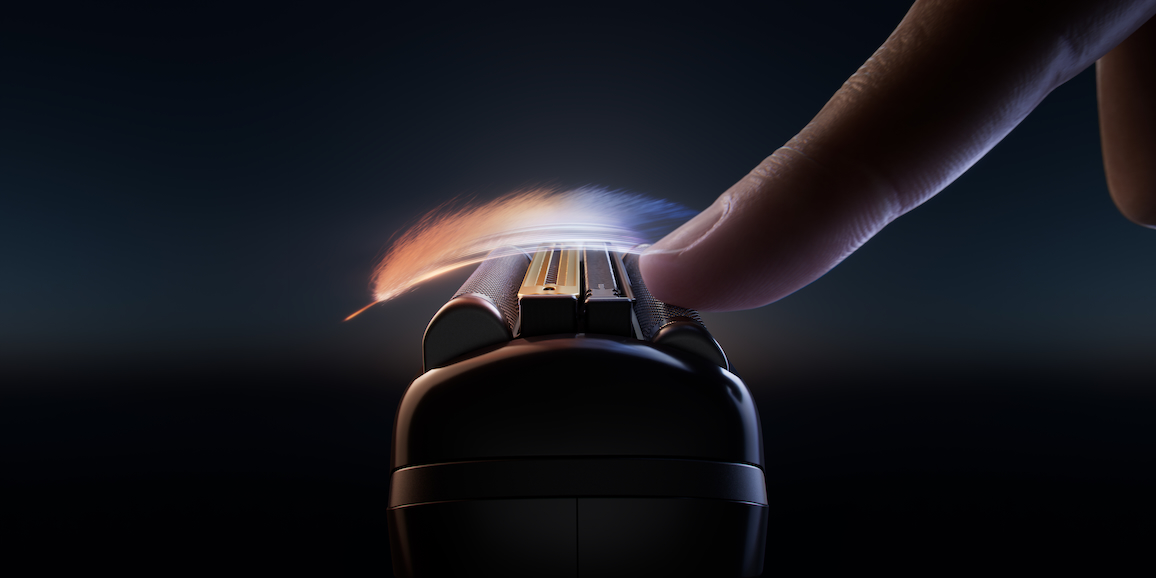
Beyond competition, Andrews’ creativity extends in quieter directions. She paints. She embroiders. She knits. She cooks. If she weren’t a figure skater, she imagines she’d still be in motion. Dance, gymnastics, even synchronized swimming once captures her attention, but currently skating allows her to combine athleticism with her own narrative. That intersection between beauty, performance, and discipline makes the Gillette Venus partnership feel authentic. “Figure skaters have rituals before stepping on the ice,” she says. For her, that includes shaving. Cold air, sensitive skin, dry arenas aren’t just cosmetic concerns but also physical ones. Andrews, who has eczema and dry skin, gravitates toward moisturizing razors with aloe and built-in lubrication which means fewer irritations and fewer distractions. Milano Cortina 2026 represents another chapter in her journey that began with glitter dresses and spotlights. “I started skating because I thought it was shiny and cool,” she says. Today, she steps into the Olympic conversation as a seasoned athlete, artist, and advocate. She is someone who has carved space for herself rather than waiting for it to appear.


Masarin spoke candidly about Ghia’s origins, tracing the brand back to 2018, a time when the idea of a complex, nonalcoholic aperitif barely had a market. Originally planning to launch directly into restaurants in 2020, the pandemic forced a sudden pivot online. What might have stalled the brand instead reshaped it, and Ghia became something people welcomed into their homes, a grounding ritual shared digitally at a moment when connection felt scarce.
That inclusivity has shaped Ghia’s community. What began during lockdown as a personal ritual has grown into a cross-generational audience. While the brand resonates strongly with millennials, Masarin noted that older generations have embraced it just as readily. Today, Ghia appears on more than 1,200 menus across the United States and is carried by thousands of accounts nationwide, its growth driven less by trend cycles and more by restaurants recognizing a genuine shift in how people want to gather.
Felice’s menu grounded the evening with perfect savory pairings. Bruschetta topped with crushed tomato, garlic, sea salt, and Felice’s extra virgin olive oil on toasted bread opened the meal. Arancini was a standout, crisp and familiar, filled with tomato, mozzarella, and oregano. The night ended with fusilli al ferretto, dressed in San Marzano tomato sauce and finished with creamy stracciatella and basil. Each dish paired easily with the drinks, reinforcing the idea that these beverages belong at the table, not just the bar.
On a night when New York felt frozen and hushed, Felice Hudson became a small pocket of warmth and a reminder that celebration doesn’t need alcohol to feel complete, and that some of the most memorable evenings are built around intention. The room remained intimate, with guests mingling over thoughtfully made drinks alongside Masarin and the team, embodying Ghia’s philosophy as a way to gather, mark time, and enjoy complexity without compromise.
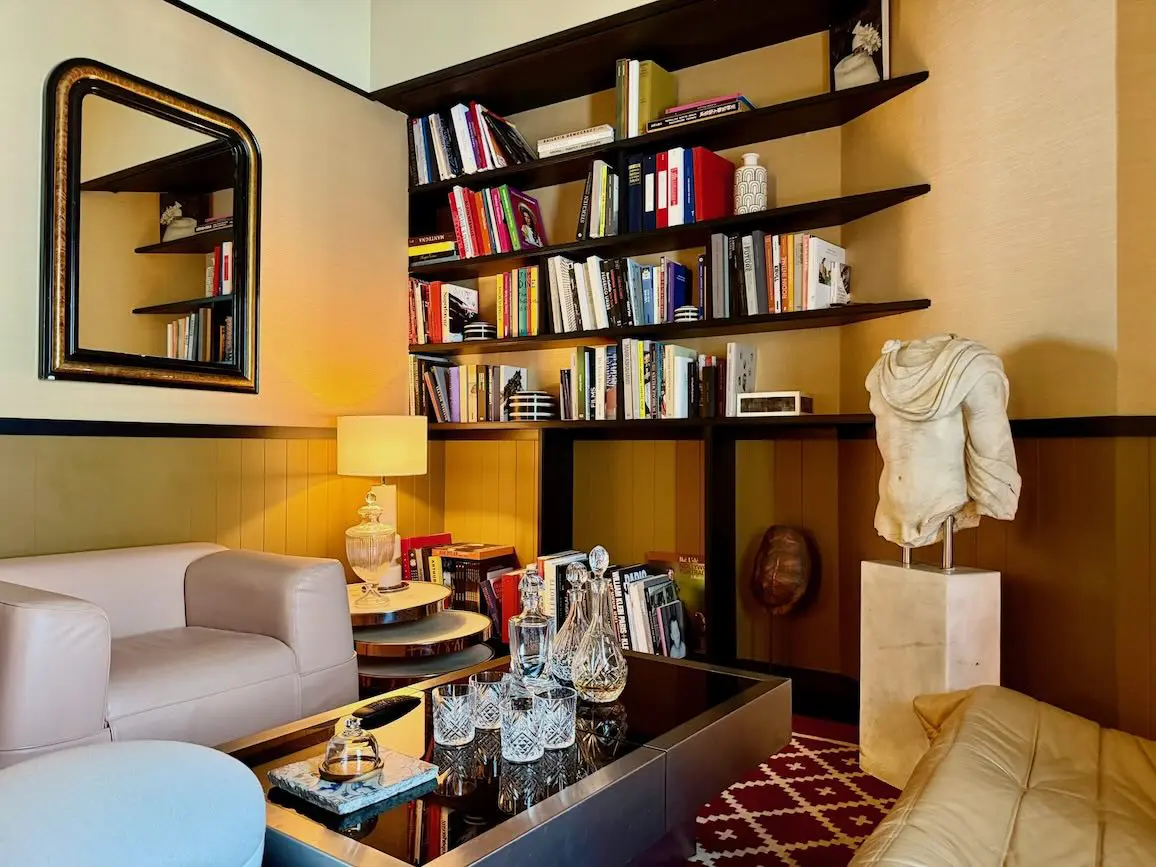
Sound also plays a central role in shaping the environment. An immersive audio program by Bang & Olufsen is integrated throughout the space, with speakers treated as sculptural components rather than visible technology. Audio functions as a material in its own right, influencing the pace and mood of the room. The effect is subtle but deliberate. The lounge feels lived in rather than staged, offering collectors and guests a moment of pause that remains fully in conversation with the fair.