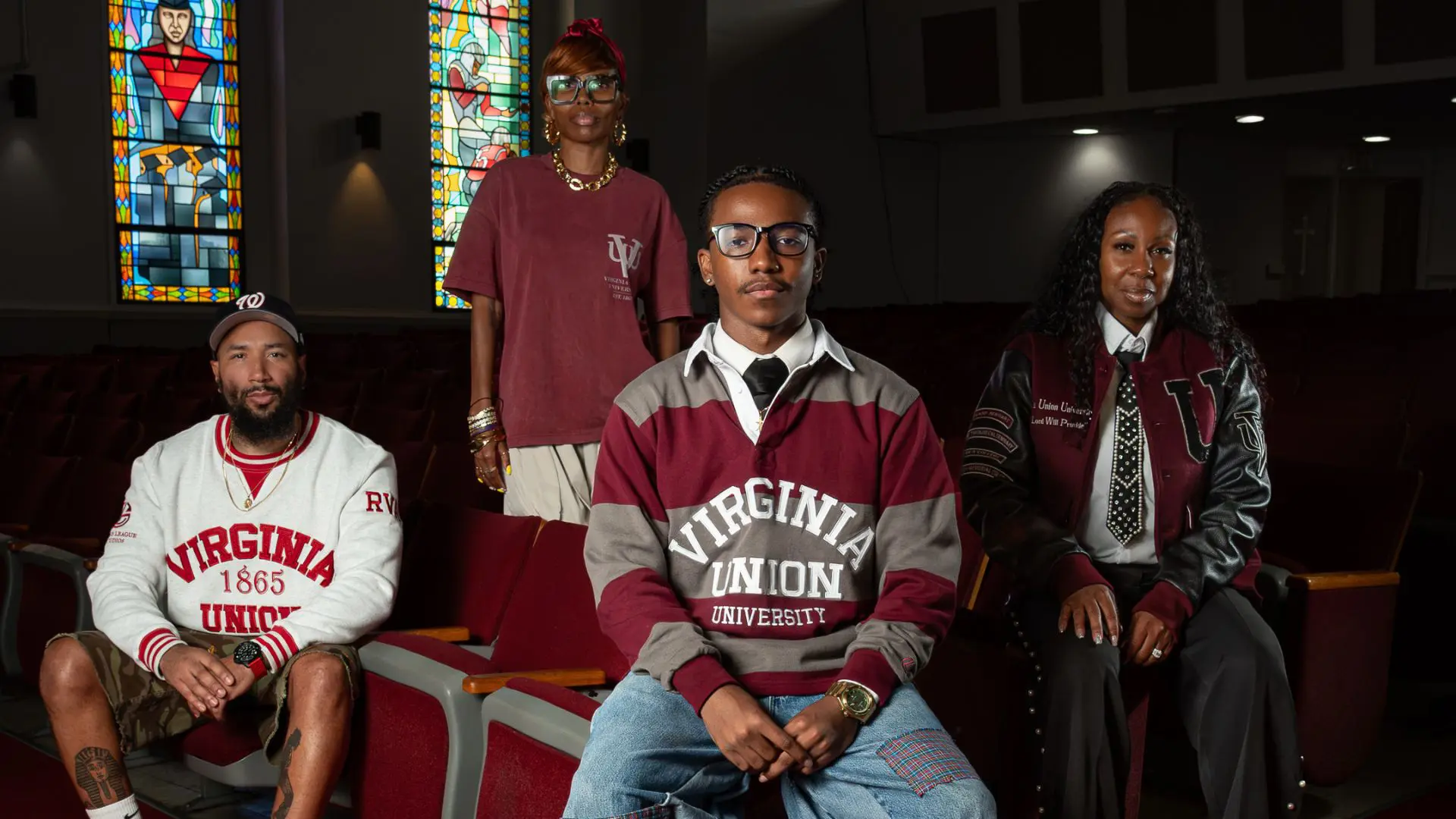
Virginia Union University alumna Pia Roberts is redefining HBCU storytelling by bringing her alma mater’s history to life through fashion, film, and technology.
Through Genius League Studios, Roberts is bringing VUU’s history and legacy to life through fashion, documentary filmmaking, and NFC technology. Ahead of the September 24 launch of the Virginia Union-inspired capsule, Roberts spoke about the inspiration behind the project, the history that surprised her during her research, and her vision for using fashion as a way to preserve stories, spark curiosity, and introduce a new generation to the impact of HBCUs.
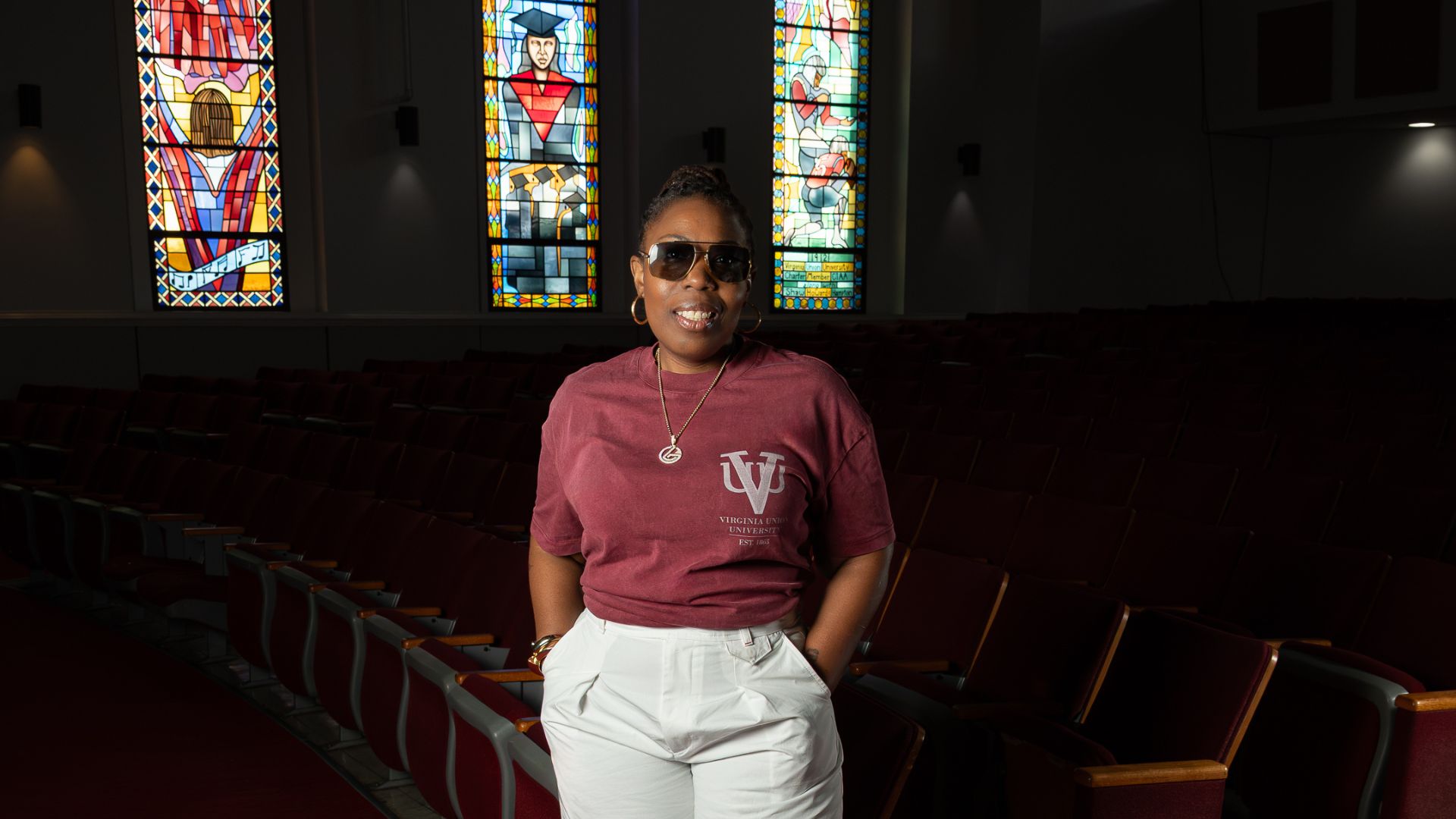
Photo Credit: Pia Roberts
You’re a Virginia Union alumna, so what was the moment when you realized you wanted to turn your personal connection to the university into an entire creative project?
Pia Roberts: The initial idea for a VUU-inspired capsule actually came when I saw the Ralph Lauren x SpelHouse collaboration. There are 106 HBCUs, but it seems as though only about 10 HBCUs are afforded big-deal opportunities. So I thought, if my alma mater wasn’t getting big apparel deals. I’d create a capsule with the same level or even better quality and with a personal connection, considering I went to the school.
When you began researching Virginia Union’s history, what was something you discovered that genuinely surprised you or changed the way you viewed your alma mater?
As a student, we were told that VUU started as a jail. I’m not sure if was stated when I was in school or not, but looking for inspiration AND making sure the designs and stories were accurate. I reached out to a friend who is a historian, and she explained that VUU started as a SLAVE BREAKERS jail. That changed everything for me. How many other students and former students didn’t know this? How can I create a capsule AND tell the history of the school at the same time? That’s where innovation and creativity beyond creating clothes came about.
This project goes beyond traditional HBCU merchandise. What did you want people to feel or understand when they put on one of these pieces?
I wanted people to feel like they were wearing history, not just school colors. There’s nothing wrong with traditional college merchandise. I own it. I wear it. But I wanted this collection to do something different. I wanted someone to look at a jacket, a rugby, a sweatshirt “What does that mean?” Because that question creates an opportunity to tell the story. That’s really what Genius League Studios is trying to explore: the idea that clothing can be a record. It can preserve something. It can start a conversation. In a way, it can become a museum that you wear. So when a Virginia Union alum puts on one of these pieces, I want there to be pride attached to it, but I also want there to be a deeper understanding of what they’re representing.
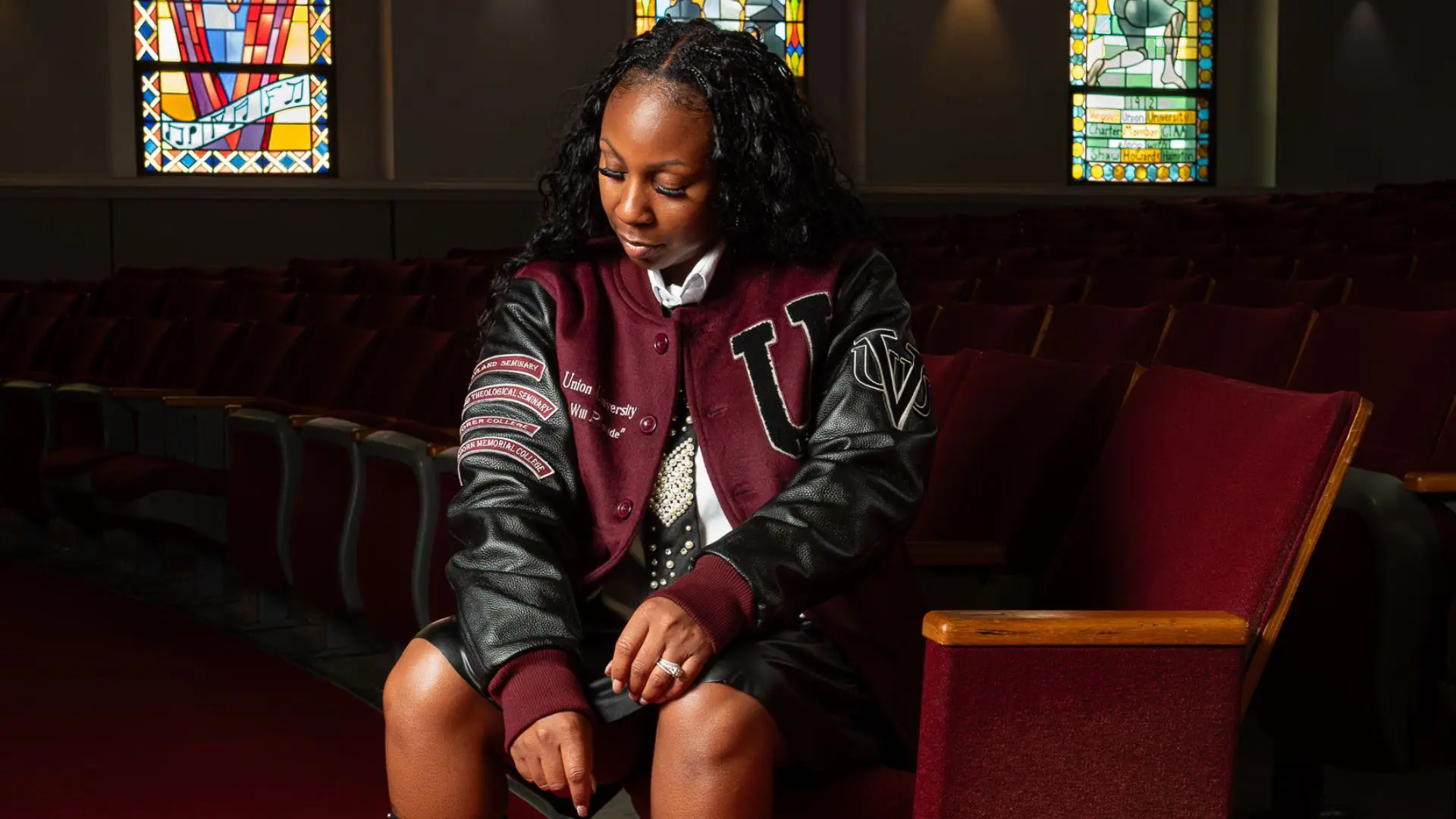
Photo Credit: Pia Roberts
How did you translate specific moments, people, traditions, or elements of Virginia Union’s history into the actual designs?
I approached the capsule almost like I was building chapters of a story.
Instead of starting with, “What would look good on a jacket?” I started with, “What parts of Virginia Union’s story do we need to tell?”
For example, the varsity jacket references the four institutions that eventually came together to form what we know as Virginia Union University. The rugby pulls from the academic and collegiate heritage of the university and that period when Virginia Union was spoken about among some of the most respected Black educational institutions in the country.
Even the more classic collegiate pieces are intentional because I wanted to place Virginia Union visually within the tradition of historic American universities. When people think of heritage collegiate fashion, they immediately think of certain predominantly white institutions. But HBCUs have that history too.
So the design process became about taking those historical references and translating them into something contemporary enough that people actually want to wear it today.
You’re combining fashion with documentary filmmaking and NFC technology. Why was it important for you to tell this story across multiple mediums rather than through clothing alone?
Because the clothing can start the conversation, but it can’t tell the entire story.
A garment has limited space. You can put a symbol, a date, a quote, or an image on it, but there’s so much context behind those things that would be lost if the project stopped there.
The documentary gives us the opportunity to go deeper. You can hear from professors, alumni, students, and people who understand the institution in ways that I don’t. You can see the campus. You can hear the stories.
Then the technology connects everything.
That combination was important to me because people consume information differently now. Someone might discover the project because they love fashion. Someone else might connect with the film. Someone might simply tap the garment because they’re curious.
All of those paths eventually lead back to the same thing: the story.
The NFC technology essentially allows the garments to become gateways into the university’s history. What kind of experience do you hope someone has when they tap a piece and discover the story behind it?
Curiosity first.
I want somebody to tap it because they’re wondering, “What is this?”
And then I want them to fall into the story.
Maybe they watch part of the documentary. Maybe they learn what one of the patches represents. Maybe they hear an alum explain what Virginia Union meant during a particular period. Maybe they discover a part of the university’s history they never knew.
What I love about NFC is that the physical garment can remain timeless while the digital experience can continue growing. We can add interviews. We can add archival material. We can add stories from alumni.
So you’re not just buying a piece of clothing. You’re getting access to a living archive that can continue to evolve.
HBCUs have played an enormous role in shaping Black culture, leadership, art, politics, and entrepreneurship. What do you think people who didn’t attend an HBCU often misunderstand about that experience?
I think people sometimes reduce HBCUs to the things they see publicly: Homecoming, bands, Greek life, step shows, the fashion, the culture. And those things are absolutely part of the experience, but they’re not the entire experience.
What I think is harder to explain is the community.
Almost all the people participating in this project are people I met more than 20 years ago at Virginia Union. I can send a text saying, “I have this idea. Can you help me?” and people show up.
That’s the part that’s difficult to put into statistics.
HBCUs create networks, friendships, mentorships, and a sense of belonging that can follow you for the rest of your life. And historically, these institutions were creating those networks at times when Black people were excluded from so many other institutions.
So when we talk about the impact of HBCUs, we’re not only talking about degrees. We’re talking about ecosystems that have helped produce generations of Black leadership and community.

Photo Credit: Pia Roberts
There’s obviously a deeply personal element to this project, but you’re also building Genius League Studios as a larger creative platform. How does this project represent the future you envision for the brand?
This project is probably the clearest example of what I want Genius League Studios to become.
I love fashion, but I don’t want GLS to simply be another clothing company.
I’m interested in using clothing as an entry point into storytelling. That could be the history of a university. It could be a neighborhood. It could be a film. It could be an organization or a cultural movement.
The Virginia Union project allowed us to bring fashion, filmmaking, research, technology, and archival storytelling together under one idea.
That’s where I see Genius League Studios going. I want us to work with institutions and organizations that have meaningful stories and figure out how to translate those stories into something people can wear, watch, experience, and ultimately preserve.
What do you hope a Virginia Union student, alum, or someone who has never heard of the university takes away from this project?
For a student, I hope they understand the significance of the place they’re attending while they’re still there. I wish I had understood some of this history at 17 the way I understand it now.
For alumni, I hope it reconnects them to the university and maybe even teaches them something they didn’t know.
And for someone who has never heard of Virginia Union, I hope this project makes them curious enough to ask, “What is VUU?”
Because once you start answering that question, you inevitably start talking about Reconstruction, education, faith, Black leadership, Richmond, American history, and the determination of people who believed education could transform what was possible for the generations that came after them.
At that point, you realize this isn’t only Virginia Union’s history. It’s American history.
If this Virginia Union collection is the beginning of a larger conversation about preserving institutional and cultural history through fashion, film, and technology, what do you want Genius League Studios to explore next?
I want to keep exploring places and institutions whose influence is much larger than the amount of attention their stories receive.
Virginia Union is the beginning because it’s personal to me. It gave me the opportunity to develop the model with a place I genuinely understand and care about.
But I don’t think this concept has to stop with HBCUs.
There are Black institutions, neighborhoods, creative communities, organizations, businesses, and even films that have shaped culture and have incredible archives sitting somewhere that younger generations may never encounter.
I want Genius League Studios to help make those archives accessible in a different way.
If we can take history out of a box, an archive, or a textbook and put it into something somebody actually wants to wear, watch, and interact with, we have another way of keeping that history alive.
And ultimately, that’s what this project is about for me: preservation, but in a form that can move forward with the culture.