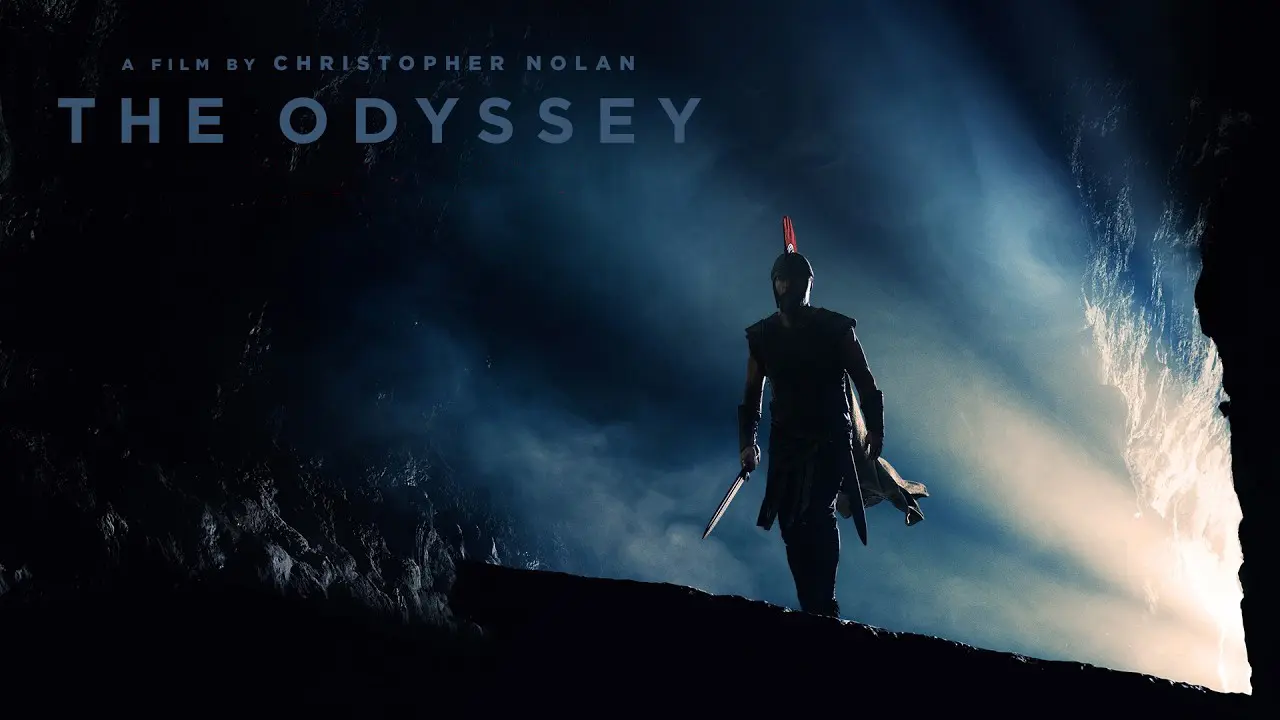
Christopher Nolan’s The Odyssey is a breathtaking cinematic achievement that honors Homer’s timeless epic with stunning IMAX visuals, unforgettable performances, and exhilarating action, making it one of the director’s finest works to date.
Christopher Nolan’s new epic blockbuster The Odyssey has arrived, and it surpasses all expectations with ease.
With every bit of anticipation that the public has had since Nolan’s last film, Oppenheimer, in 2023, The Odyssey has amassed an enormous following of dedicated fans and, with this, high standards to meet. Nolan is known for creating classic blockbuster hits that redefine the industry with every release, but whether he could keep it up was a question fans have been eagerly awaiting the answer to. They can rest assured, because at long last The Odyssey is a soaring, triumphant love letter to the original Greek mythologies, where every detail, every scene, every bit of dialogue, is delicately constructed and arranged to deliver the masterpiece-level film we have today. In a way, this film is the culmination of all of Nolan’s previous works: he uses the strength of dramatic scenes from movies like Dunkirk, as well as the high-octane action beats from films like The Dark Knight, and composes a final piece that has weight, levity, and importance in every single second of its runtime. This is Christopher Nolan at his absolute peak.
I have had a personal relationship with The Odyssey. I first experienced it through Percy Jackson as a child, a modern retelling of sorts, and was immediately fascinated by the monsters and lore. I then read it properly for the first time in high school and was engaged by the mature motivations and fable-like lessons taught to the reader. When it was announced that Nolan was directing a retelling of The Odyssey, I was especially excited to witness something so dear to my heart. The plot of the movie absolutely does Homer’s original text justice. Character motivations are clear and intact, and Nolan takes some creative liberties to deliver several gut-wrenching plot points that drive home his overall theme of the price of victory and whether it is worth it.
For instance, one of the most particularly intense story threads was that of Sinon, the son of a friend whom Odysseus raises and fights side by side with in his army. However, when it comes time to formulate his trick—the Trojan Horse ploy that would get him and his soldiers into Troy—he chooses to use Sinon as a pawn and decides not to inform him of the plan. When it comes time to deliver the horse, Sinon is killed. This was a prime example of a necessary sacrifice in order to win a war, and Odysseus decides to go through with it. He later feels the consequences of his actions when he meets Sinon in the Underworld, who then expresses his frustration with Odysseus for not trusting him and for letting him die to further his own ends. This entire plot point did not exist at all in the original Odyssey, but it helps to develop Odysseus’ character as he faces guilt and ultimately repents at the end of the film. It is masterfully done, and the plot of the movie is among its strongest qualities. There are no slow parts, no pacing issues, and nothing that feels out of place. For a 2-hour-and-52-minute runtime, the story rips thorugh at a tight pace and feels efficient yet exploratory.
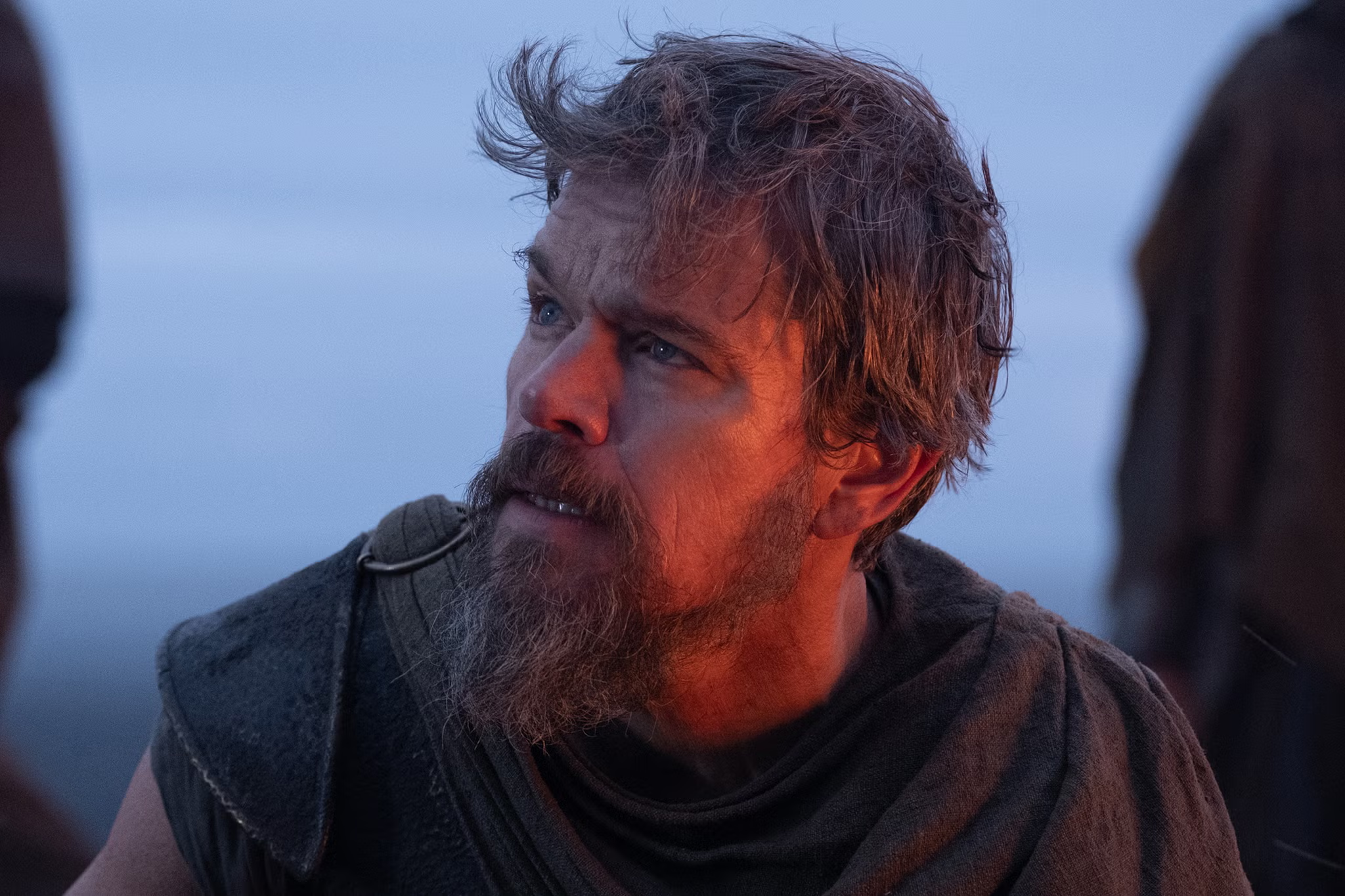
Matt Damon as Odysseus, courtesy of Universal
What I was personally looking forward to were the action sequences. Polyphemus, the Sirens, Circe: Homer’s original text was full of scenes in which Odysseus and his men had to face monsters, witches, and magical beings that made their journey an actual hell. It is all presented absolutely beautifully in this film, and at times, absolutely harrowingly. Take, for example, the sequence with Polyphemus the Cyclops. Most of us have heard the tale, in which Odysseus stabs the monster in the eye, and he and his men hide beneath sheep to escape the creature’s lair. In the movie, however, the monster is presented in the most hellish manner: a humongous, grotesque, human-like demon that looks like something straight out of a nightmare. It is apparent that barely any CGI was used in its creation, as everything about it has a sickening realism that makes me think the performance was done by an actual actor. When Odysseus stabs him in the eye with a hot stake, his cries fill the soundstage, and it might just be the most utterly horrifying thing I’ve heard in recent memory. Loud shrieks—something like a cross between a dinosaur and a whale—express the complete agony he is feeling, and my heart was literally in my throat. The scene is unlike anything I have seen before, and the sound design and mixing of the Dolby Atmos audio in my IMAX theater was pure ear candy.
The film’s performances must also be mentioned. Matt Damon as Odysseus is the perfect casting choice, and he embodies the character in a way that I didn’t think was possible. He conveys sadness, guilt, anger, and desperation, and every emotion is etched into his face, taking the audience with him. Other stellar performances include Anne Hathaway as Penelope and Tom Holland as Telemachus. Both portray the pain and frustration of losing their husband and father very well; Holland’s pleas for any news about his father and Hathaway’s overwhelming sadness from losing the man she loved more than anything in the world are unmistakable. Another performance that needs to be mentioned is Robert Pattinson as the snivelling Antinous, the primary antagonist. His farce and cowardice are extremely well portrayed, and I nearly jumped out of my chair and clapped when he was finally killed at the end. The payoff for his arc is amazing simply because of how well Pattinson portrays the evil suitor. Finally, I want to commend Himesh Patel’s role as the trusty Eurylochus, Odysseus’ right-hand man. He also plays his role extremely well, from his original loyalty to the growing criticisms he expresses about Odysseus, to his final mistrust. It is very well done, and overall, I applaud the excellent casting choices for the film.
At the end of the day, The Odyssey is not just another blockbuster; it is a cinematic achievement that reminds us why Christopher Nolan continues to stand at the very top of the industry. Every frame is crafted with care, every sequence feels larger than life, and every emotional beat lands with incredible force. Nolan’s decision to film the movie entirely with IMAX cameras only elevates the experience further, creating visuals that simply cannot be replicated anywhere else. This is a film that demands to be seen on the biggest screen possible, with the loudest sound system you can find. It is an unforgettable journey, one that will leave audiences in awe from beginning to end and will undoubtedly be remembered as one of the defining films of the decade. I cannot recommend The Odyssey highly enough; it is a film that deserves to be seen as soon as possible and experienced as one of the greatest cinematic spectacles ever put to screen.
