Bughouse, written by playwright Beth Henley and conceived and directed by Martha Clarke, immerses audiences at Vineyard Theatre in New York City in the haunting and imaginative world of outsider artist Henry Darger.
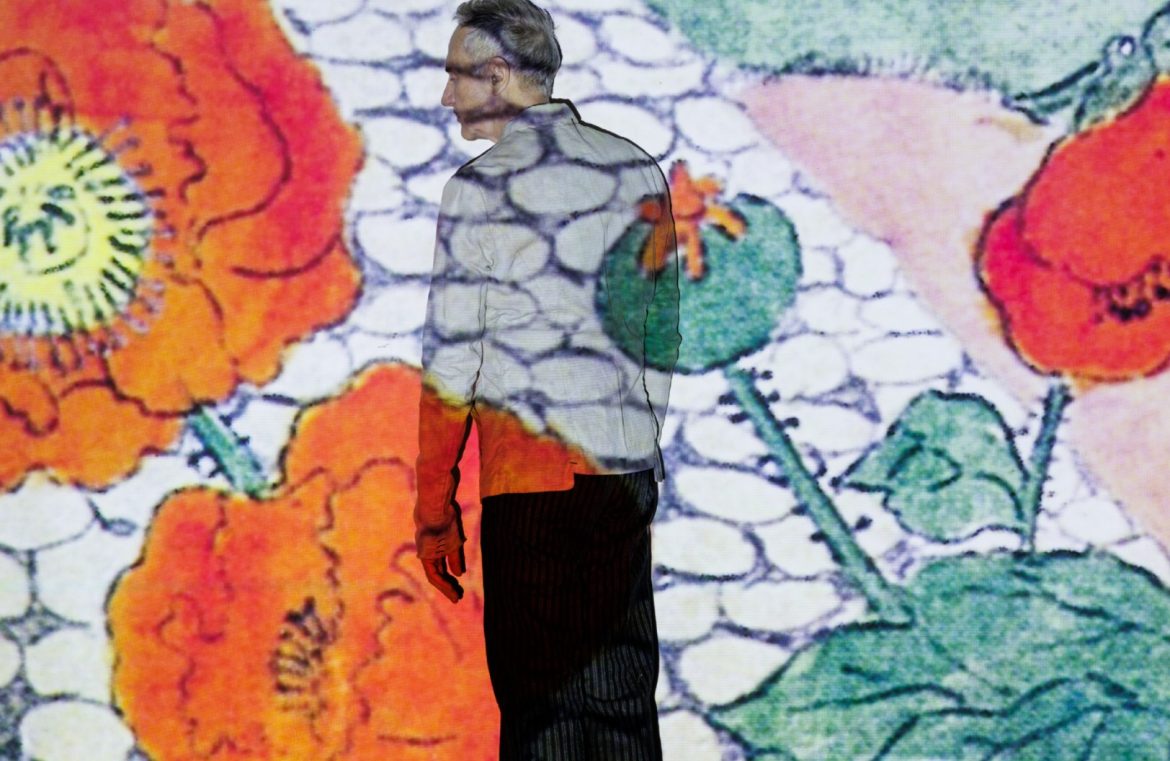
Bughouse, written by playwright Beth Henley and conceived and directed by Martha Clarke, immerses audiences at Vineyard Theatre in New York City in the haunting and imaginative world of outsider artist Henry Darger.
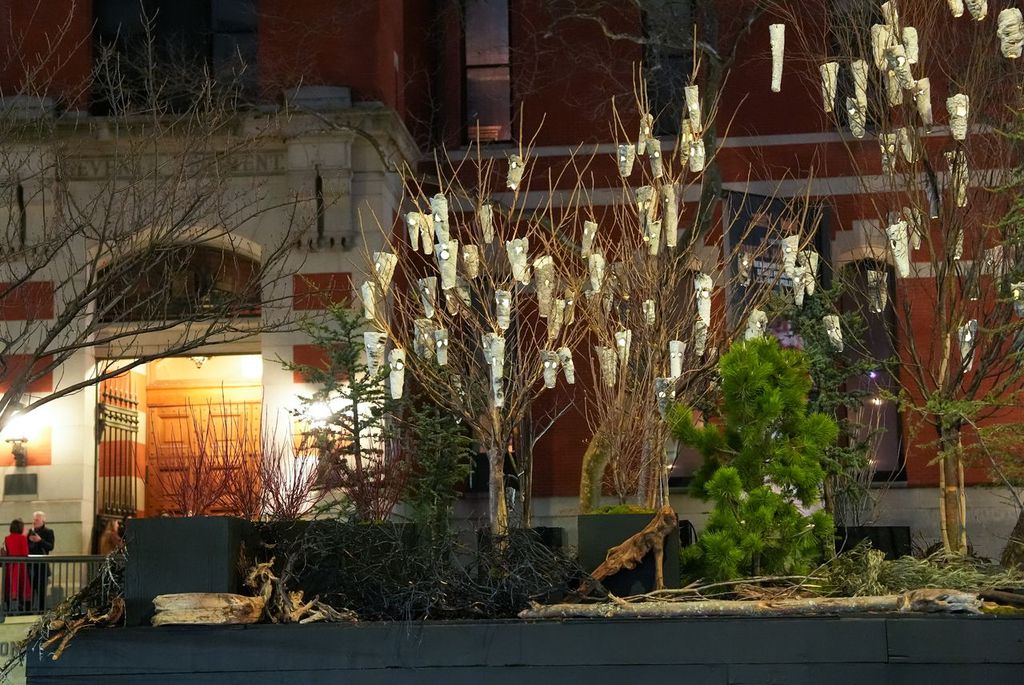 On Tuesday, March 9, a new art installation quietly appeared along the Park Avenue Mall, just opposite The Armory. The piece, entitled Talisman: A Sacred Grove, is the latest vision of artist Michele Oka Doner, whose nature-inspired work has been celebrated for nearly five decades.
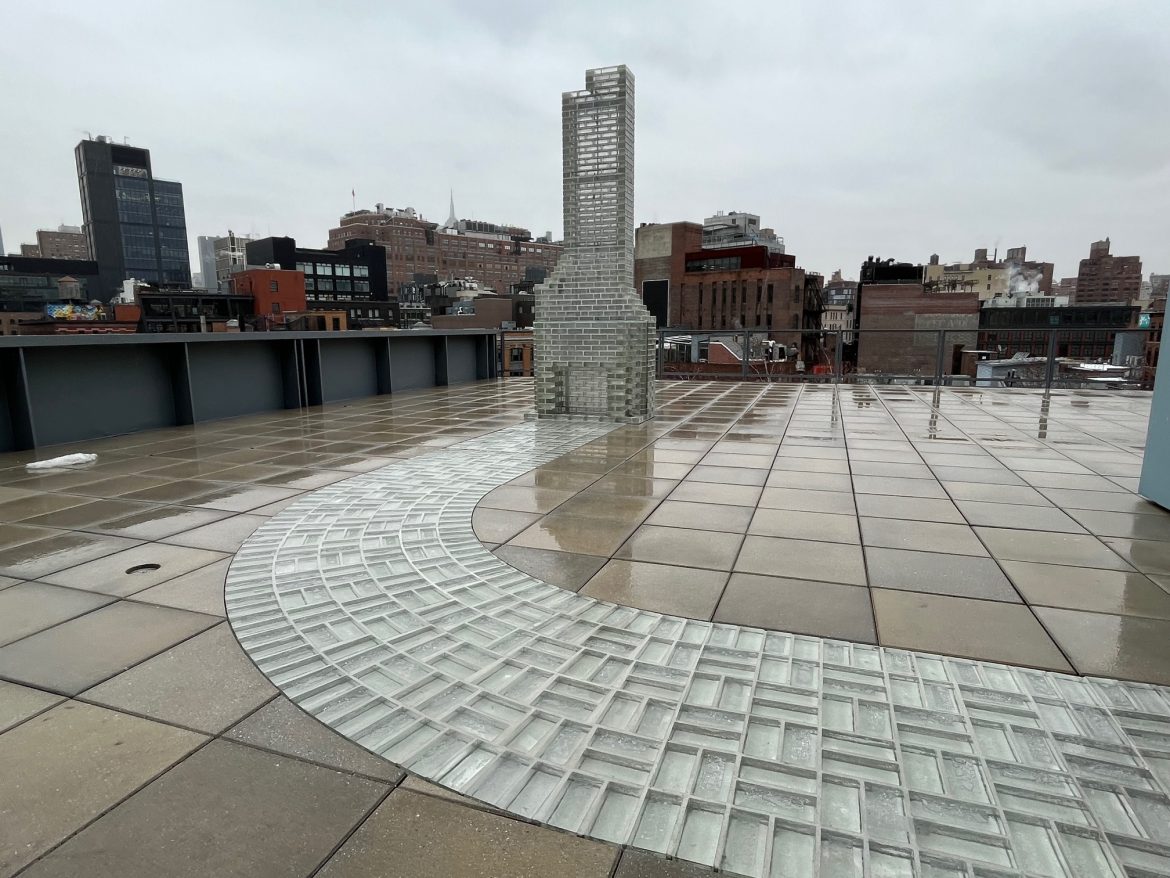
The beloved Whitney Biennial this year revved things up with the 2026 Hyundai Terrace Commission by Los Angeles–born artist Kelly Akashi.
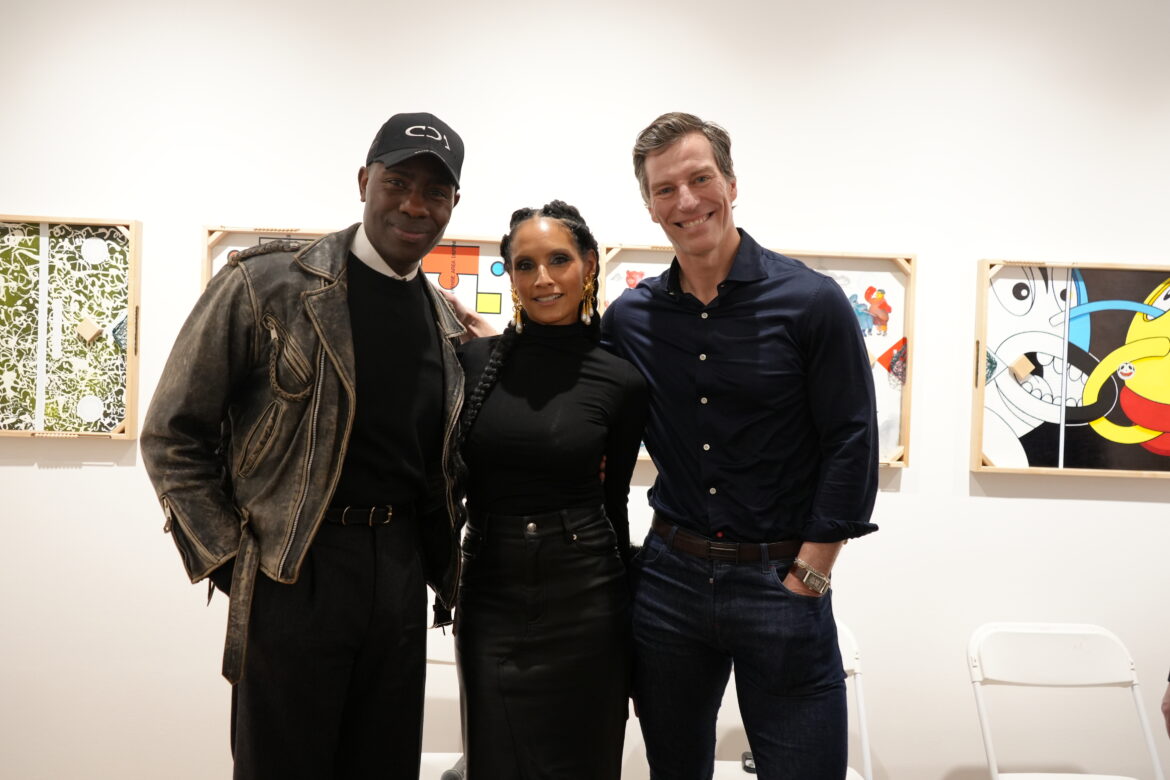
This week, the Carrom x Clarence Ruth Exhibition closed a successful one-month run at Ki Smith Gallery on the Lower East Side. Timed to debut in celebration of Black History Month, the exhibition was curated by fashion designer, author, and artist Clarence Ruth. Widely regarded as the first exhibition of its kind, the multidisciplinary showcase transformed handcrafted Carrom boards into contemporary works of art while preserving their playability.
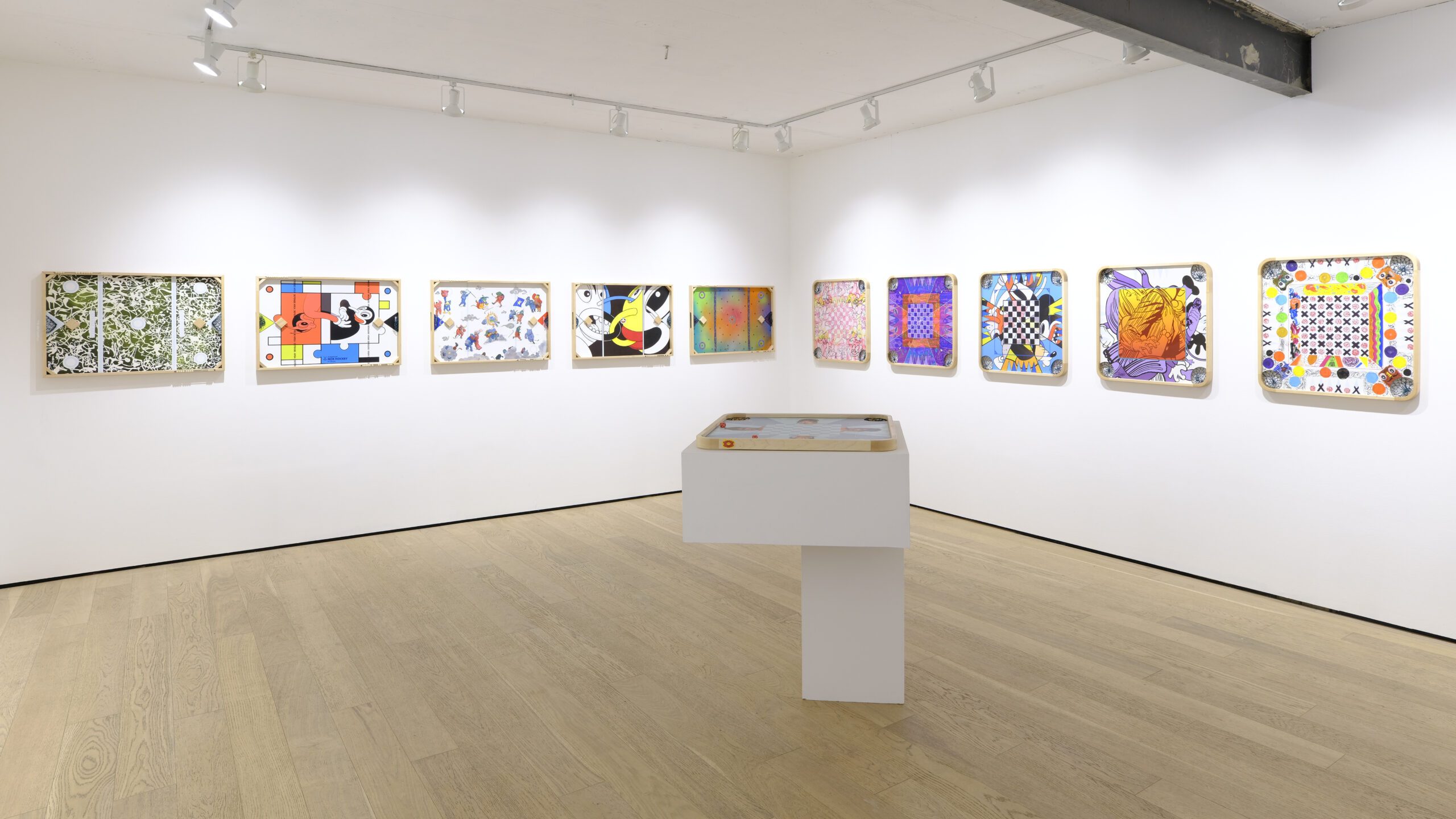
Photo Courtesy: Carrom x Clarence Ruth Exhibition
Toward the end of the run, the gallery hosted the Carrom x Clarence Ruth Panel Discussion, an intimate cultural conversation exploring the convergence of art, fashion, craft, and cultural identity. Art curator, cultural connector, and The Real Housewives of New York City personality Racquel Chevremont moderated the discussion. Together, the panel examined how heritage, materiality, and community shape contemporary creative expression. They also explored creative collaboration, cultural storytelling, and the importance of physical community spaces in an increasingly digital world.
Additional panelists included exhibition curator Clarence Ruth, painter Jeremy Yuto Nakamura, Bradley Taylor, co-owner of The Carrom Company, and Ki Smith, founder of Ki Smith Gallery and a champion of emerging, diverse, contemporary voices.
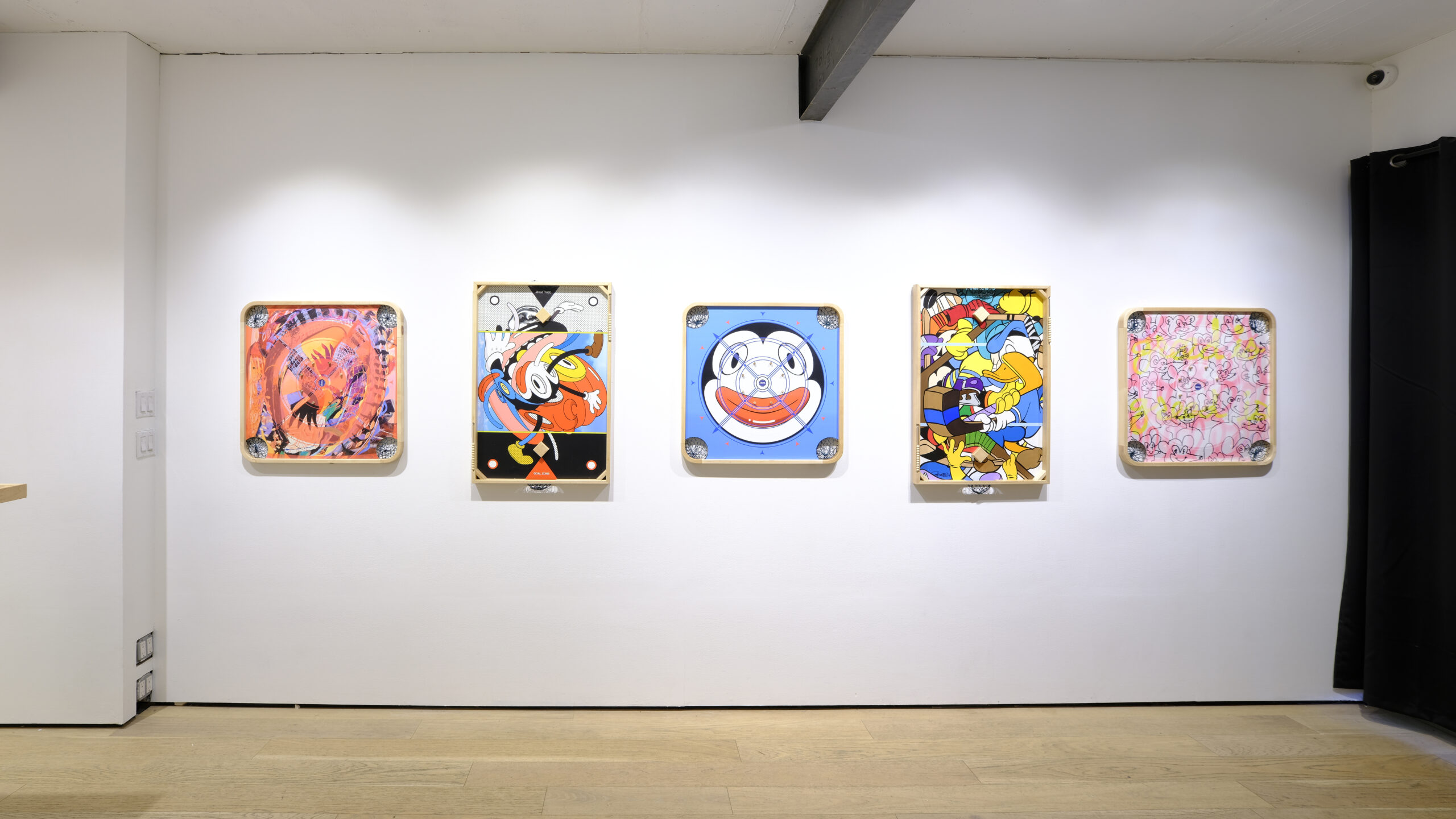
Photo Courtesy: Carrom x Clarence Ruth Exhibition
The exhibition and panel were presented in partnership with RAISEfashion, with a donation of $10,000 to the organization. RAISEfashion provides pro bono strategic and creative support to Black-owned brands and creatives. The evening drew creatives, collectors, fashion insiders, and cultural tastemakers. As a result, the exhibition served as an intentional complement to Fashion Week programming and was featured on the official CFDA Fashion Calendar. Guests enjoyed refreshments courtesy of VOSS Water, Hampton Water Rosé, LVMH, and Algodon Wine.
Originating in the 1800s, Carrom boards have long served as communal objects of craft and play. Clarence Ruth’s reinterpretation introduces a new cultural framework for the historic medium. It brings renewed energy to the form while engaging a younger, design-minded audience and honoring generations of craftsmanship. Each artist worked within the constraint that the boards remain fully functional. This required durability, surface precision, and gameplay integrity alongside visual expression.
Limited-edition prints of the artist collaboration Carrom boards are available at carrom.com while supplies last.
When I first opened Lidia Yuknavitch’s memoir, “The Chronology of Water,” I could not get myself to stop reading. I felt like I was gulping down each chapter, and wouldn’t feel satiated until I had finished them all. I had never read anything like it; nonlinear, feral, unflinchingly honest, poetic, raw, dark as hell, and fascinating, both in the life it chronicled and in the way Yuknavitch chose to tell it.
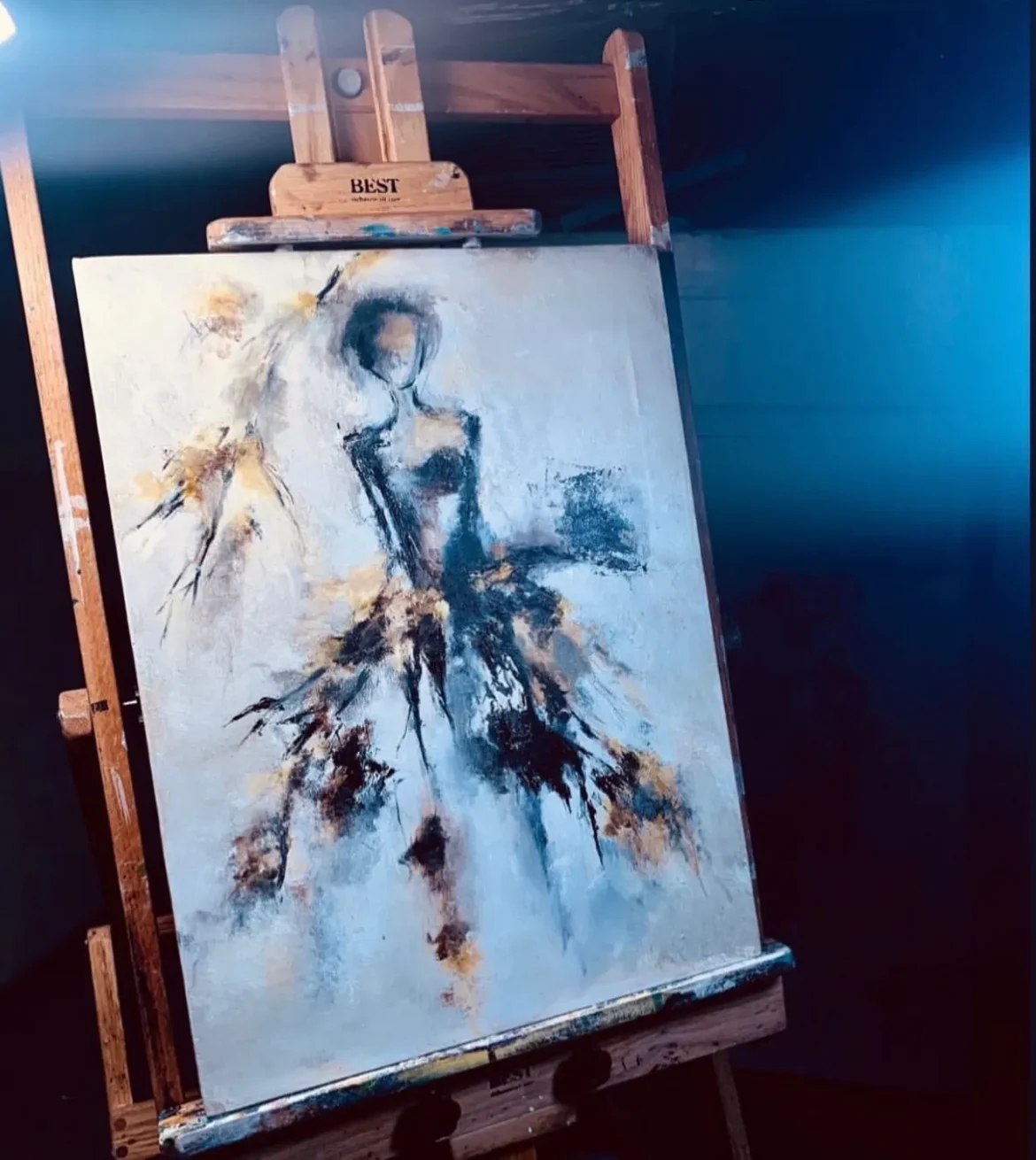
When artist Mari Gior and curator Marina Dojchinov come together, the result is not simply an exhibition; it is a declaration. The Afterlife, debuting December 20 at 219 Bowery in SoHo, marks the unveiling of Gior’s new body of work, The Shadow Dancers. Together, the two women are asserting a form of creative leadership that is intimate, intellectually rigorous, and unmistakably powerful.
At its core, The Afterlife is an exhibition about survival rather than spectacle. Gior’s paintings resist overt dramatization, instead offering ethereal figures suspended between presence and disappearance. Rendered in oil and mixed media, often incorporating deconstructed antique book pages the works feel both archival and immediate, as if memory itself has been pressed into the surface of the canvas.
“I didn’t paint grief,” Gior says. “I painted what survives it. These figures are still moving, still devoted, even when everything else has fallen away.”
A former principal ballet dancer, Gior brings the discipline of choreography into her painting practice. The bodies in The Shadow Dancers are not posed; they are felt. Each canvas captures a moment of transition-movement without destination, reflecting Gior’s belief that the afterlife of love is lived quietly, through continuation rather than closure.
That restraint is precisely what drew curator Marina Dojchinov to the work. Known for crafting exhibitions as immersive narratives rather than static displays, Dojchinov frames The Afterlife as a threshold moment in Gior’s career and in the broader cultural conversation around grief, femininity, and power.
“This show isn’t about loss as an ending,” Dojchinov explains. “It’s about what women build afterward. Mari’s work holds space for tenderness without collapsing into fragility, and that’s where its strength lives.”
Dojchinov’s own trajectory mirrors that ethos. A gallerist and art dealer who opened her first gallery at just 25, she has carved out a reputation for championing emotionally intelligent, narrative-driven work, often by women whose practices defy easy categorization. Her collaboration with Gior follows their earlier success with Down the Rabbit Hole, but The Afterlife signals a deeper, more mature alignment between artist and curator.
“Girl power doesn’t have to be loud,” Dojchinov adds. “Sometimes it’s quiet, precise, and devastating in its beauty. When women lead together, we don’t compete; we amplify.”
Visually, the exhibition unfolds like a whispered confession inside the noise of downtown Manhattan. Blurred figures hover across the gallery walls, layered with fragments of antique texts that read as relics, history colliding with the present tense of paint. A standout work, The Return of the White Rabbit, encapsulates the show’s ethos: romance without nostalgia, devotion without sentimentality.
For Gior, now stepping fully into her voice as a fine artist, The Afterlife represents rebirth. For Dojchinov, it is another example of curatorial authorship that privileges emotional truth over market spectacle. Together, they offer a model of what happens when two female powerhouses meet not to dominate, but to collaborate.
In a city saturated with openings, The Afterlife arrives as something rarer: a sacred pause. A reminder that the most radical power in art often lies not in volume, but in intention.
For Mari Gior, The Afterlife is unmistakably a moment of emergence. Long recognized for her physical intelligence as a dancer and her instinctive visual sensibility as a muse, Gior now claims her place fully as an artist with an independent, emotionally precise voice. The Shadow Dancers are allowed to breathe, hover, and command attention on their own terms, signaling not just a debut, but a declaration of authorship.
Event Details:
Artist: Mari Gior
Exhibition: The Afterlife — Debut of The Shadow Dancers Mari Gior
Curated by: Marina Dojchinov Date: Saturday, December 20, 2025
Location: 219 Bowery, Time to Be Happy Gallery, New York City
Format: RSVP-only
Schedule:
• 5:00–6:00 PM VIP & Press Reception (RSVP required)
•
6:00–9:00 PM – Gallery Viewing (RSVP required)
RSVP: LIFEAFTERSVP@gmail.com

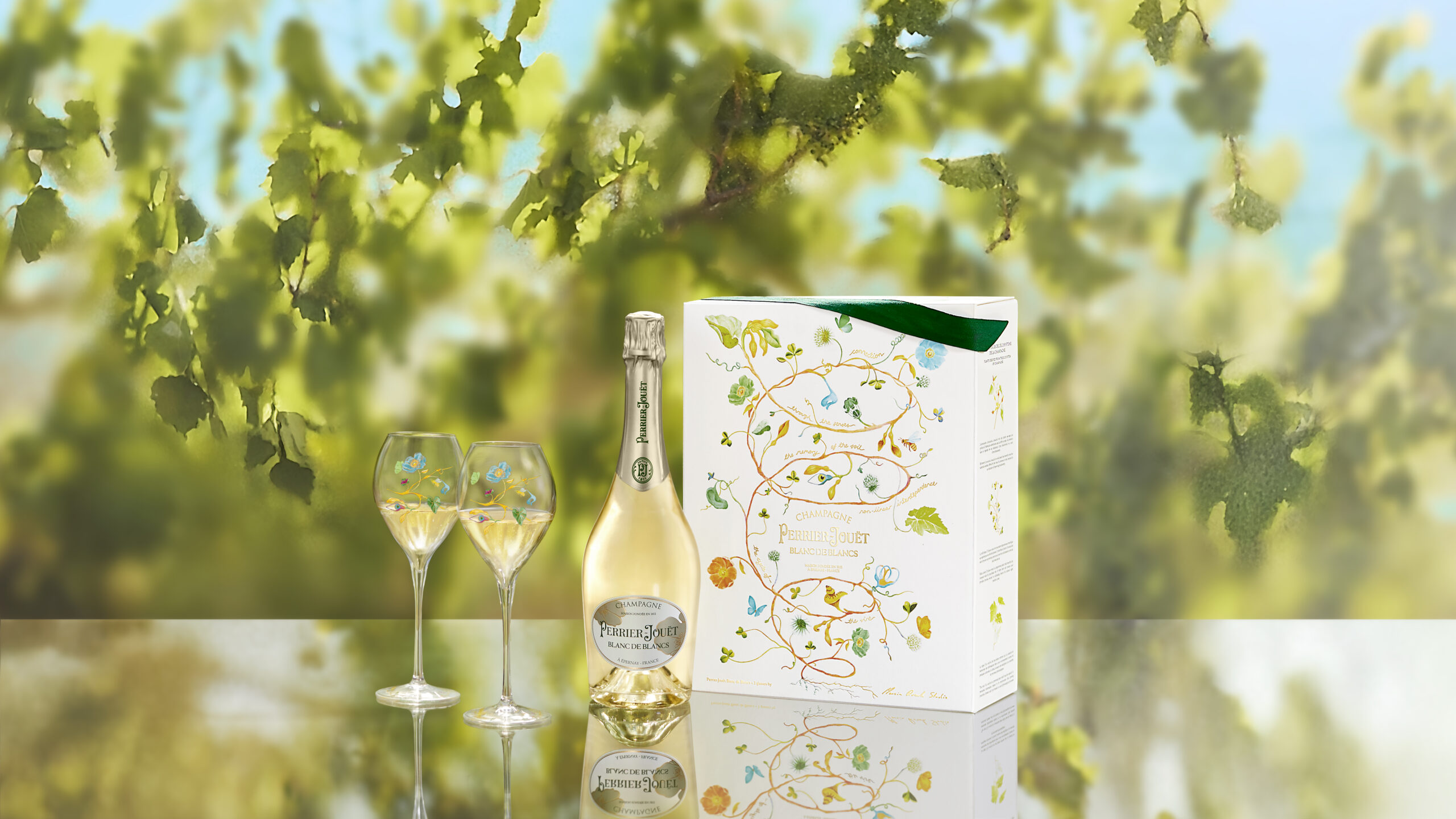
Miami Art Week has never been short on spectacle, but during Art Basel 2025, Maison Perrier-Jouët offered something rarer: a moment of quiet attention. On the sands of Faena Beach, where sound systems usually compete with the ocean, the storied Champagne house unveiled Plant Pulses, a multidisciplinary installation by Polish artist and designer Marcin Rusak that invited visitors to slow down, listen closely, and reconsider what nature has been trying to tell us all along.
Unveiled from December 2–7 as part of Faena Art programming, Plant Pulses translated cutting-edge scientific research on plant communication into an immersive artistic experience — one that blurred the boundaries between art, ecology, and technology.
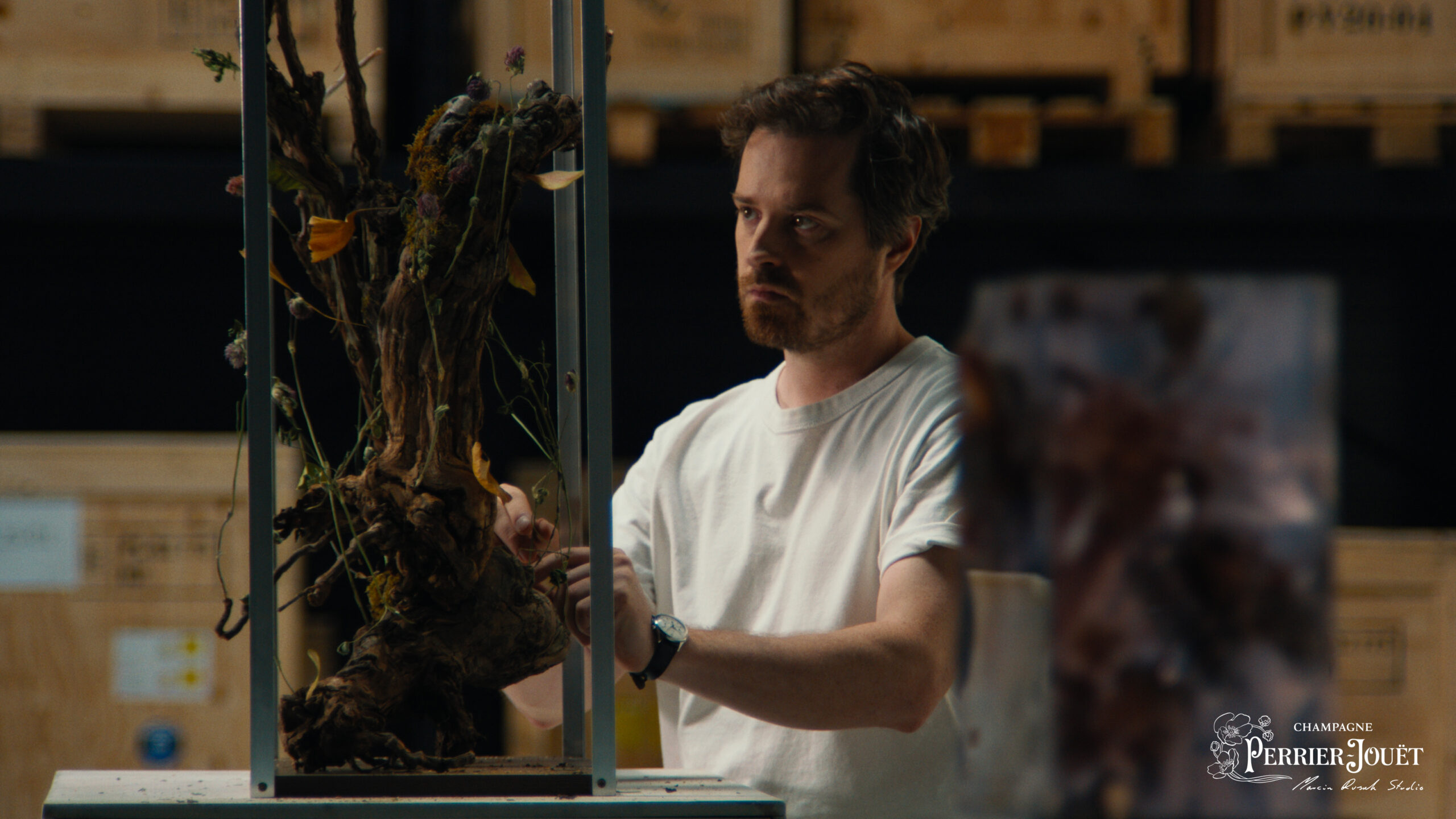
At the heart of Plant Pulses is a collaboration between Rusak and researchers Bartek Chojnacki and Klara Chojnacka of AGH University of Science and Technology in Kraków, whose experiments revealed that plants emit ultrasonic signals when under stress, such as dehydration. These signals subside when the plant returns to a healthy state — a form of communication that has long existed beyond human perception.
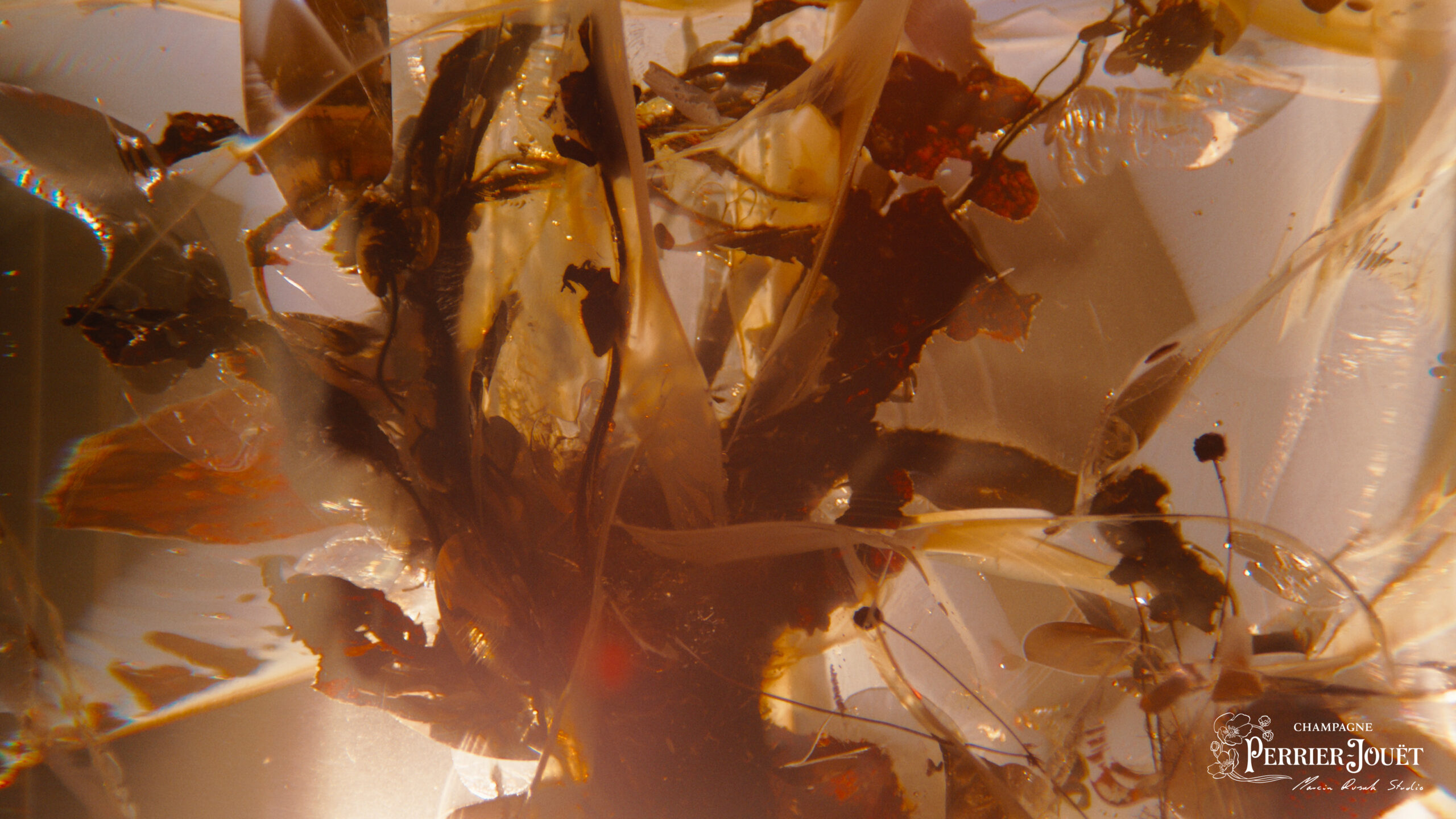
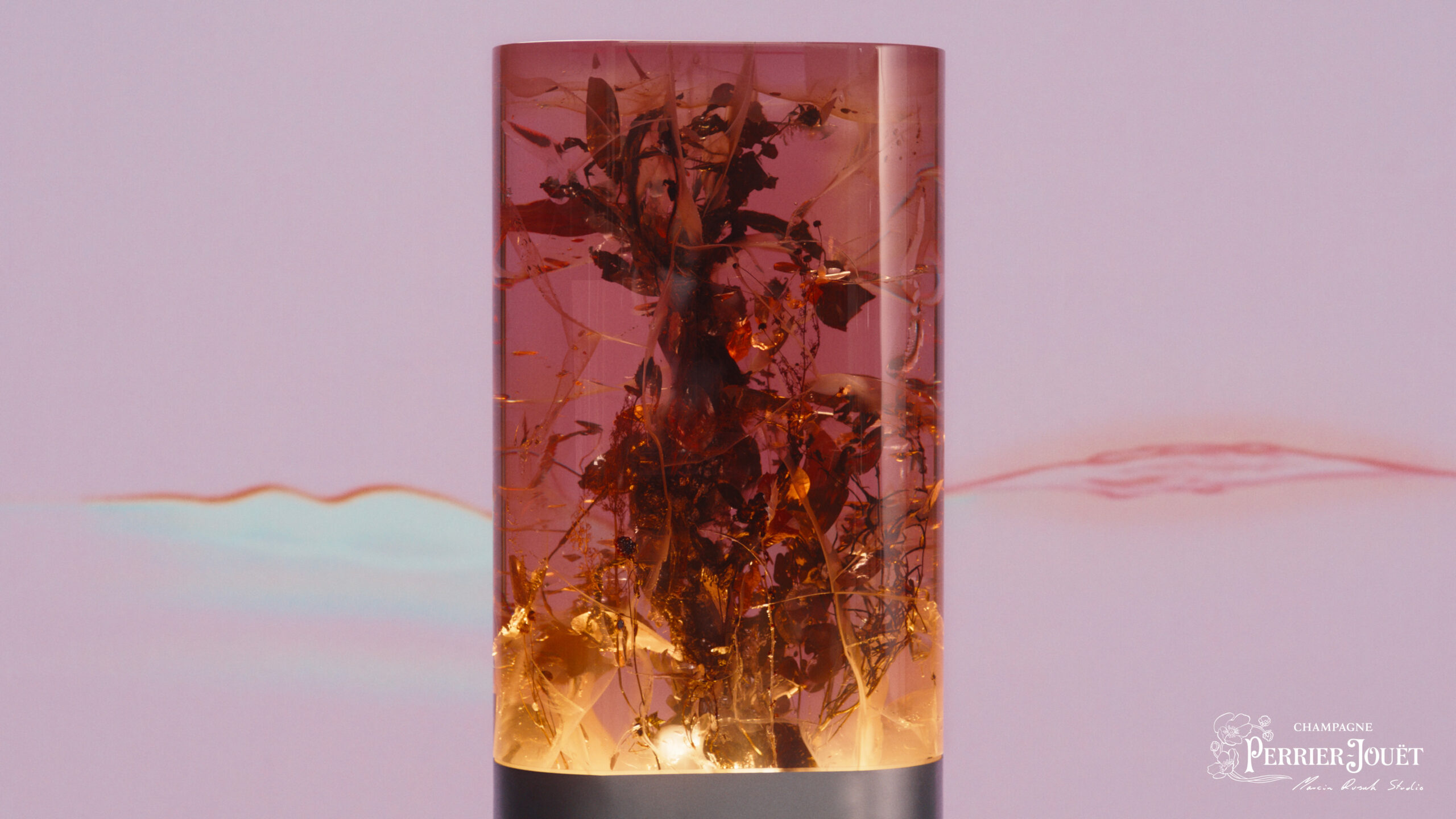
Rusak transformed this data into a soundscape and visual language that made the invisible audible and the inaudible emotional. Inside the installation, visitors were guided by multidirectional sound toward a monumental central sculpture: a contemporary herbarium encasing three “hero” plants vital to the Champagne ecosystem — the vine, European birthwort, and white clover — alongside chalk soil and end-of-life Perrier-Jouët vines. Suspended in resin, the sculpture functioned as a time capsule, preserving botanical matter while symbolizing the fragile continuity of ecosystems across generations.
The soundscape unfolded in three movements — dehydration, inter-plant communication, and rehydration — while circular screens evolved visually from stark linear graphics into organic, bubble-like forms, subtly nodding to Champagne itself. Even the seating, 3D-printed and embedded with plants Rusak collected in Épernay, encouraged visitors to pause, observe, and reflect.
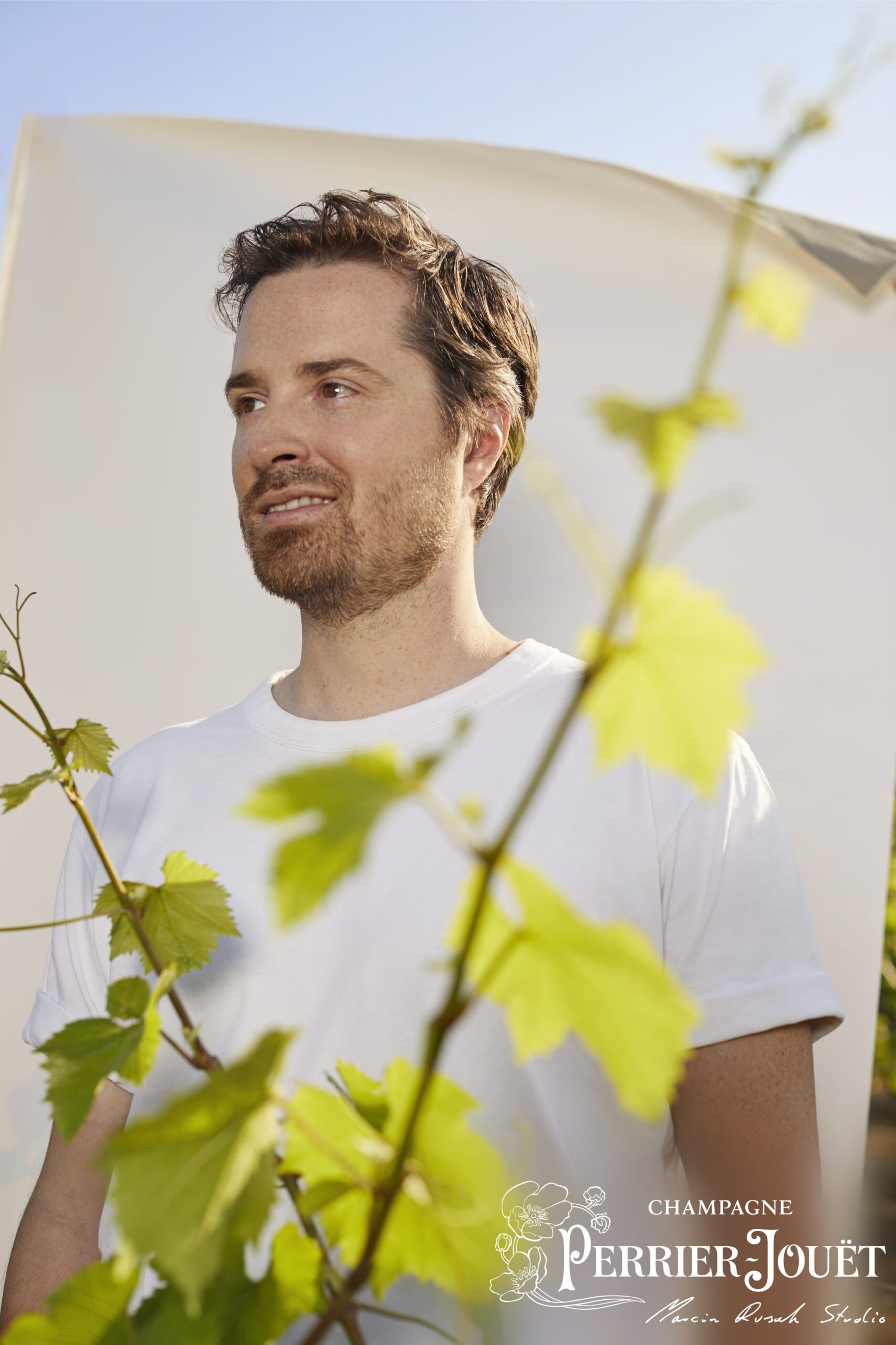
The collaboration felt especially resonant given Perrier-Jouët’s botanical lineage. Founded in 1811 by Pierre-Nicolas Perrier and Rose-Adélaïde Jouët — both passionate lovers of art and nature — the House has long been shaped by horticulture and progressive viticulture. Its iconic Japanese white anemone, introduced by Art Nouveau pioneer Émile Gallé, remains a symbol of the brand’s symbiotic relationship with the natural world.
Rusak’s practice mirrors that ethos. Descended from flower growers, his work often incorporates discarded plants, questioning beauty, decay, and human intervention. As Rusak himself noted, visiting Perrier-Jouët’s vineyards revealed a shared philosophy: “the slow, patient process of creating champagne… much like my practice.”
That philosophy extended beyond the beach and onto the table. On December 2, Perrier-Jouët hosted the Banquet of Nature at Faena’s Mammoth Garden — a four-sequence dinner orchestrated by three-Michelin-star Chef Pierre Gagnaire, the House’s longtime ambassador and creative partner.
Designed in collaboration with experimental Dutch duo Steinbeisser, the dinner explored how design, tableware, and sourcing shape our relationship with food and nature. Guests were invited into conversations with Rusak himself, while vintage cuvées from the Belle Epoque Collection anchored the experience in Perrier-Jouët’s Champagne heritage.
The evening also marked the launch of A Banquet of Nature: Cooking Art and Ideas with Pierre Gagnaire, a new addition to the House’s Enchanting Library. Part cookbook, part cultural dialogue, the book gathers voices including philosopher Emanuele Coccia, botanist Marc Jeanson, novelist Maylis de Kerangal, and biologist Emmanuelle Pouydebat, framing cooking as a profound cultural link between species.
The conversation continued at Design Miami, where Rusak and Axelle de Buffévent, Global Culture & Creative Director of Maison Perrier-Jouët, participated in a public panel moderated by curator Glenn Adamson, exploring biodiversity through the lens of design.
This long-term thinking is central to the House’s mission. Since 2021, Perrier-Jouët has been rolling out an experimental regenerative viticulture program, with ambitions to convert 100% of its vineyards by 2030. Research like that behind Plant Pulses could one day inform real-time vineyard resource management — a tangible example of art contributing to environmental practice.
Fittingly, Art Week also marked the announcement of the inaugural Perrier-Jouët Design for Nature Award, created in partnership with Design Miami. The first recipient: Iris van Herpen, the Dutch haute couturier renowned for merging fashion, science, and living systems.
Van Herpen was awarded a carte blanche to create a design-led experience for Design Miami 2026, recognizing a practice that treats nature not as inspiration alone, but as collaborator. Her most recent couture collection, Sympoiesis, drew from oceanic ecosystems, translating ecological fragility into fluid silhouettes and layered, liquid-like forms.
As de Buffévent noted, the award is meant to push sustainability beyond rhetoric — toward joyful, optimistic experimentation. For van Herpen, it offers space to further explore “the ever-shifting relationship between our body and the living forces of nature.”
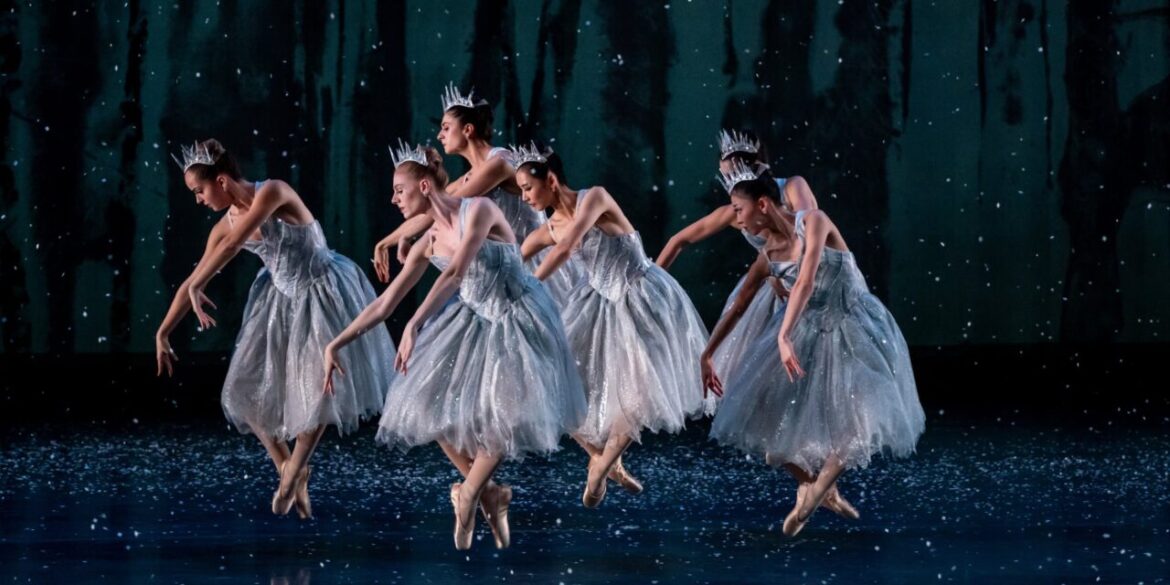
Walking into the International Ballroom at the Beverly Hilton on December 15, it was immediately clear this was not a typical ballet setting. American Ballet Theatre’s annual Holiday Benefit placed the audience unusually close to the dancers, creating a beautiful and intimate environment. Dancers, artists, longtime supporters, and guests including Sterling K. Brown and Ryan Michelle Bathé filled the room alongside ABT leadership and principal dancers, blurring the line between performance and gathering.
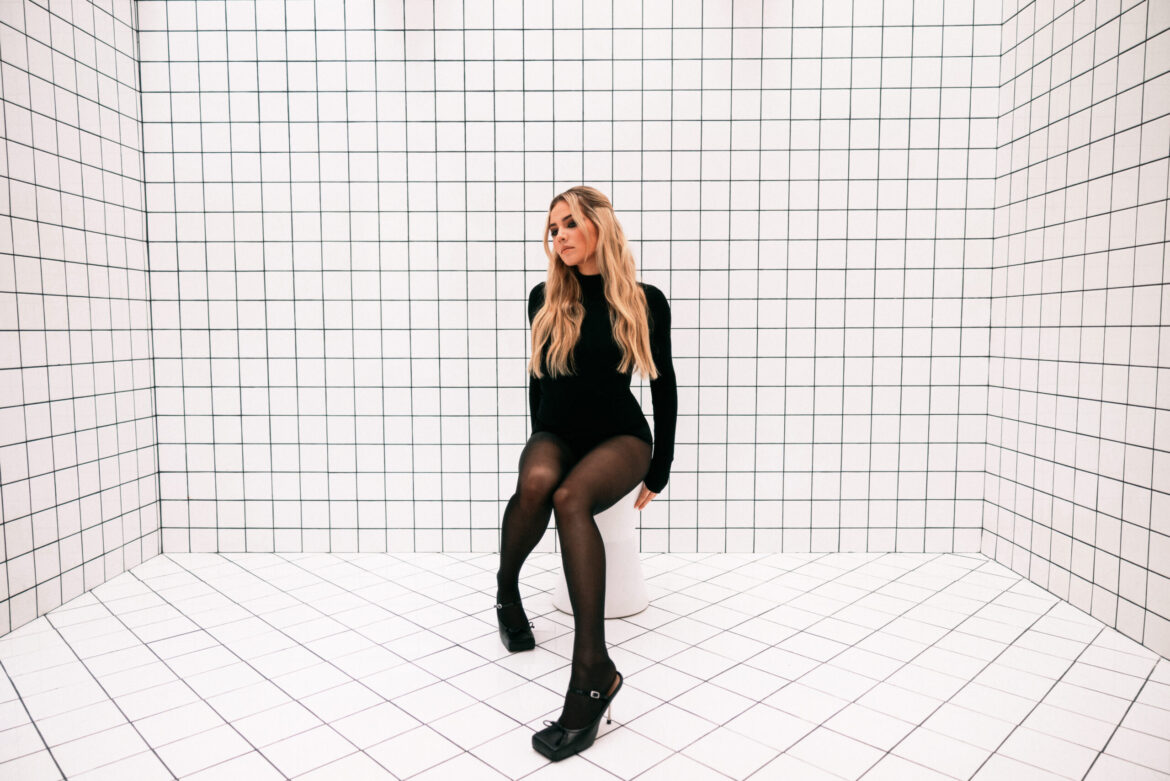
Following the release of her new single “Radio,” rising pop artist Cate Tomlinson spoke with The Knockturnal about embracing authenticity and evolving her sound.
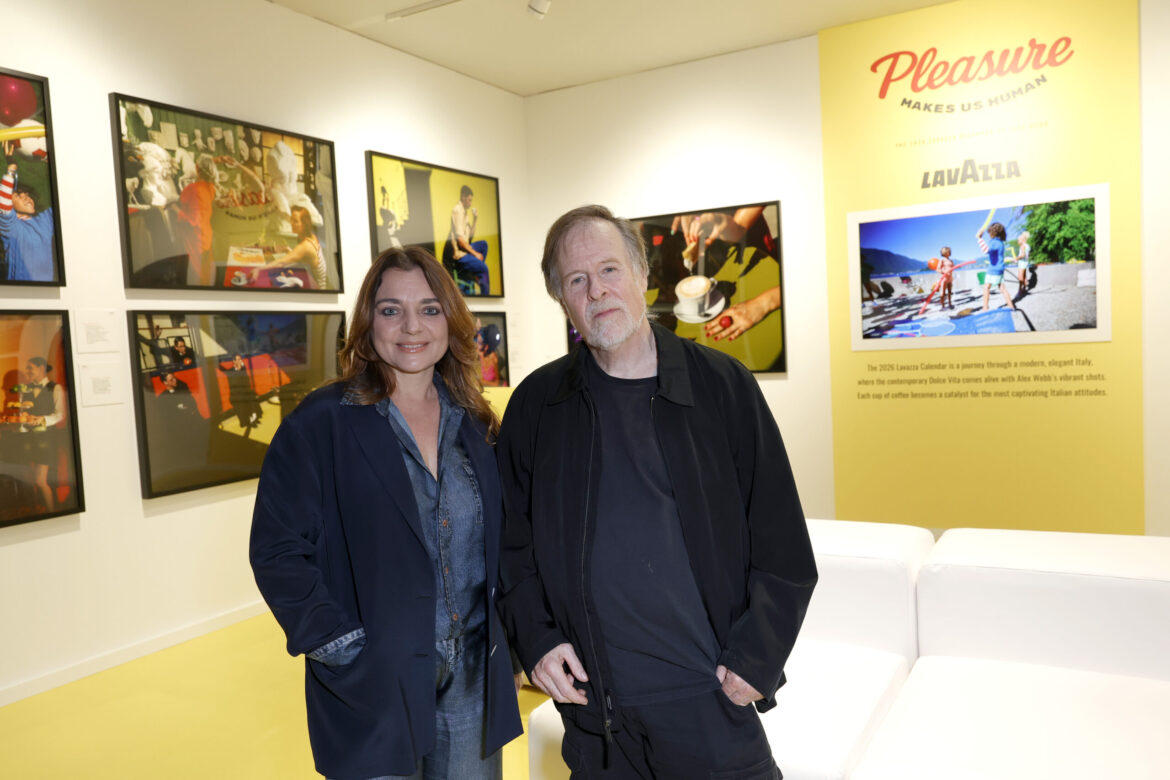
During Miami Art Week, Lavazza delivered one of the most compelling cultural experiences of the season with the debut of its “2026 Pleasure Makes Us Human Calendar“, photographed by acclaimed Magnum photographer Alex Webb.