
There was a time when karaoke was synonymous with sticky floors, dim lighting, and the occasional off key rendition of “Don’t Stop Believin'” performed by someone who may have had one too many drinks.
Today, karaoke looks very different.
The opening of Mic Drop in West Hollywood signals a broader shift in nightlife culture—one where experiences are becoming increasingly immersive, elevated, and built around participation rather than observation. Mic Drop’s arrival feels particularly fitting in the heart of town in a neighborhood deeply intertwined with Los Angeles’ music history. The venue occupies a building that once housed the famed Larrabee Recording Studios, where artists including Prince and Michael Jackson recorded. Rather than leaning solely on nostalgia, Mic Drop channels that legacy through a contemporary nightlife concept built around performance, participation, and high production entertainment.
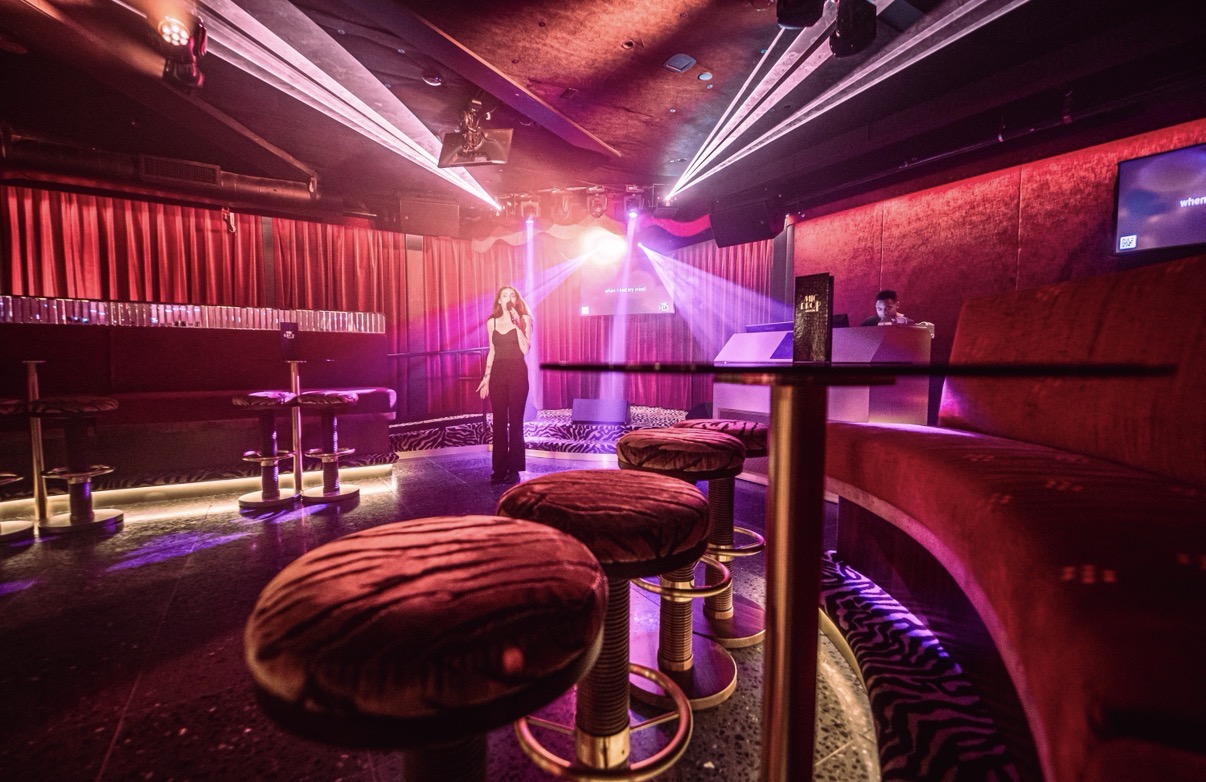
Mic Drop brings a luxury karaoke concept to West Hollywood
Photo credit: Jessica Lee
The sprawling venue combines dramatic interiors, craft cocktails, upscale dining, private karaoke suites, and nightclub energy under one roof. The result is a space that feels equally suited for a birthday celebration, corporate outing, date night, or a spontaneous evening out with friends. The venue’s investment in professional grade sound, immersive lighting, and dedicated performance spaces speaks to a broader shift occurring across nightlife.
For years, bars and clubs largely relied on a familiar formula — drinks, music, and a dance floor. But increasingly, consumers are seeking experiences that offer something more interactive. From immersive art installations and competitive socializing venues to experiential dining concepts, people are gravitating toward environments that encourage participation rather than passive entertainment.

One of Mic Drop’s 13 private karaoke suites, designed for groups seeking a more intimate performance experience.
Photo credit: Jessica Lee
Upon entering the venue, guests are immediately struck by the attention to detail. The design is sleek and theatrical without feeling overly manufactured. Lighting elements create a sense of anticipation throughout the space, while the private suites provide a level of intimacy rarely associated with traditional karaoke bars.
Fortunately, Mic Drop doesn’t rely solely on aesthetics to carry the experience. During a visit, the venue maintained a lively atmosphere without feeling chaotic. The crowd appeared engaged, whether singing in private rooms, enjoying cocktails, or simply soaking in the energy of the space. Rather than relying on karaoke as a gimmick, Mic Drop has built an environment capable of sustaining an entire evening out.
Karaoke succeeds or fails based on whether people feel comfortable letting loose, embracing vulnerability, and occasionally embarrassing themselves in front of friends. Fortunately, Mic Drop appears to understand that balance. The private rooms offer a safety net for more reserved singers, while the venue’s vibrant energy encourages even hesitant guests to participate.
