The Knockturnal
  • Home
  • Entertainment
  • Music
  • Lifestyle
  • News
  • Videos
  • Covers
  • Merch

Art

ArtEvents

Inside Lucinda Childs’ Radial Courses: Embodying Minimalist Precision at Dance Reflections by Van Cleef & Arpels

by Tristen Yang February 28, 2026
written by Tristen Yang

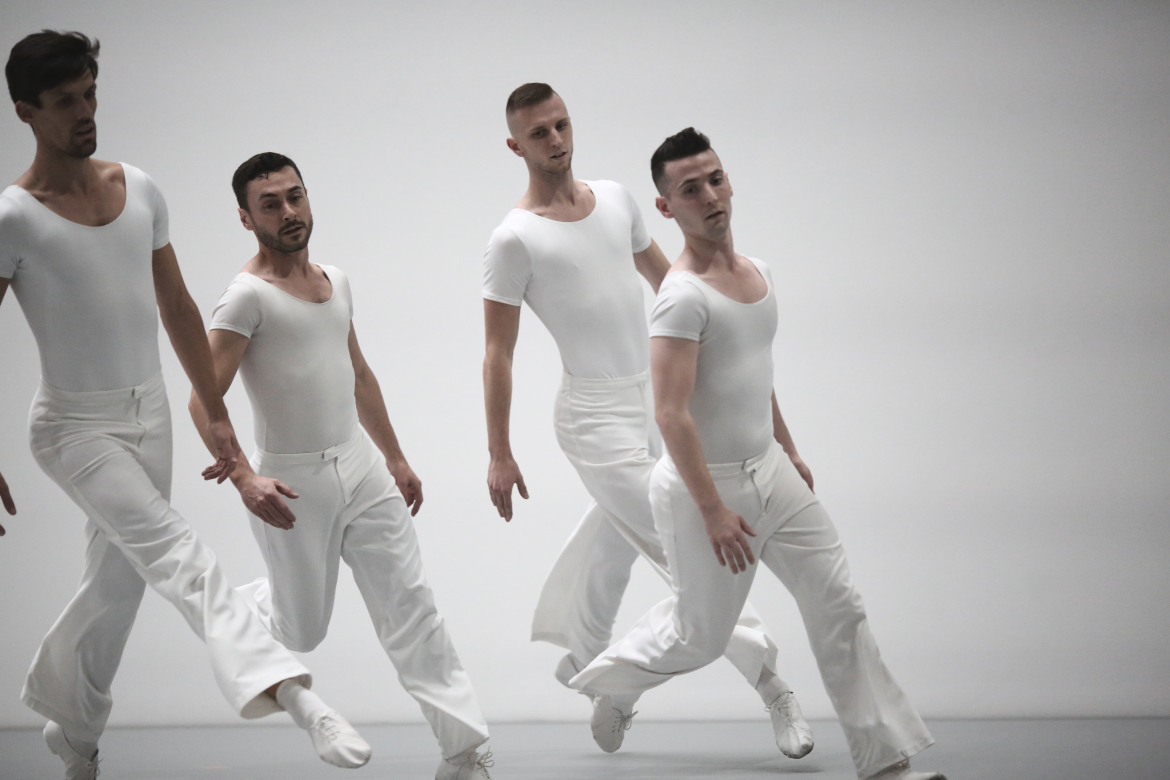
As part of the 2026 Dance Reflections by Van Cleef & Arpels Festival in New York, we had the opportunity to step inside Lucinda Childs’ repertory. On February 26 and 27, at the New York Center for Creativity & Dance, a professional workshop dedicated to Radial Courses offered a rare chance to embody the technical rigor of Childs’ minimalist language. Led by Kyle Gerry, currently dancing with the Lucinda Childs Dance Company, the three-hour session revealed that what appears spare from the audience demands extraordinary mental and physical calibration from within.
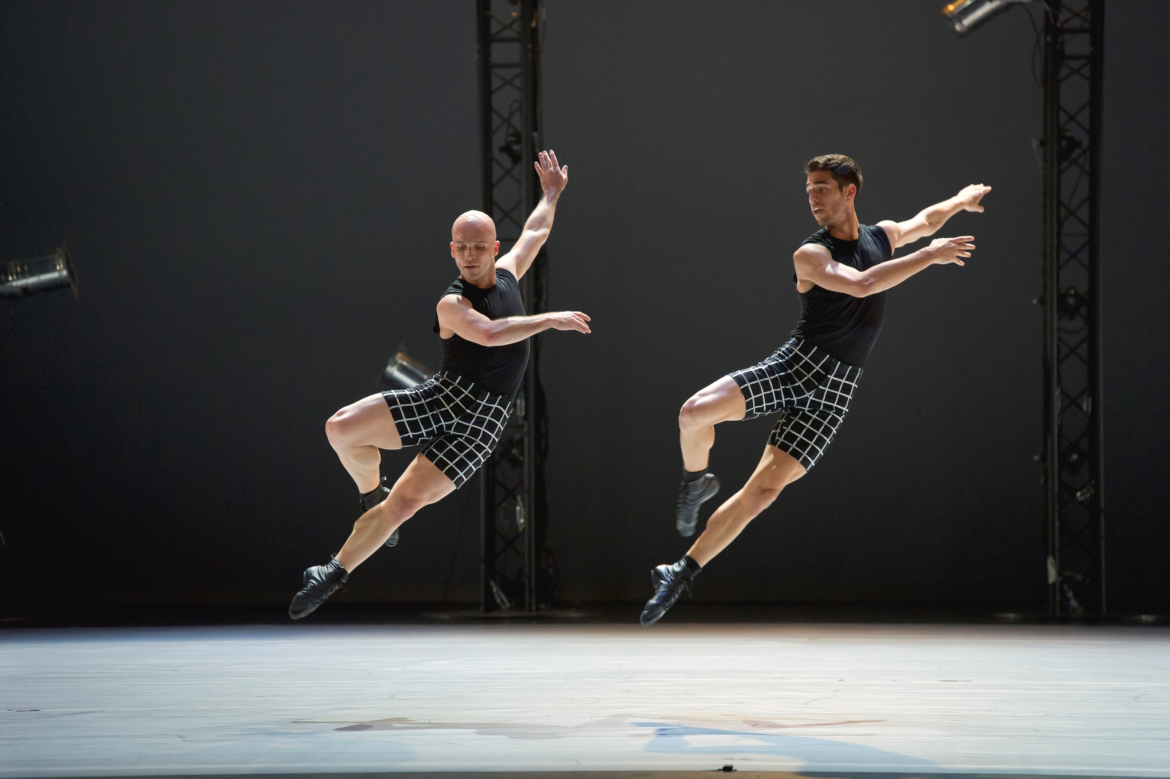
Lucinda Childs’ lineage traces back to the Judson Dance Theater, where alongside Yvonne Rainer, Steve Paxton, and Trisha Brown, she helped redefine postmodern dance. After 1968, she applied a deconstructionist logic to classical vocabulary, developing a minimalist language grounded in repetition and spatial clarity. Her later collaborations with Robert Wilson and Philip Glass expanded that rigor into operatic scale. Yet works like Radial Courses remain foundational, illustrating how restriction reveals depth.

Originally created in 1976 after the formation of the Lucinda Childs Dance Company, Radial Courses is choreographed in silence. Four dancers trace intersecting circular paths, dividing the space into shifting quadrants. The vocabulary is deceptively simple, walking and skipping, yet the structure is unyielding. Rhythm is internally counted and the timing is exact, with spatial awareness absolute.

We were four dancers of similar height, positioned along an imaginary clock. The warm-up was brief and efficient before quickly moving into lines, and then jumps around the dial of the clock, establishing directional clarity and pace. Even this initial exercise hinted at the architecture to come: movement was always relational, always tethered to geometry. Kyle emphasized pathway over performance. In Childs’ work, intention is embedded in adherence to score. We began with the walk phrase. Nine counts that were direct, even, and repeated. The simplicity was immediate, but so was the difficulty. Maintaining the same stride length, the same spatial relationship to the others, and the same internal tempo required intense concentration. Without music, the only markers were breath and the soft percussion of our own steps.

Once the walking pattern settled into our bodies, we practiced it repeatedly, tracing the circular pathway. A shift too far inward or outward altered the geometry of the quartet. Next came the skip phrase, which extended across three-quarters of the dial. The shift from walk to skip disrupted the internal rhythm we had established and precision became more precarious. The counts remained fixed, but the propulsion changed the weight of the movement. Only after isolating these elements did we begin to layer them into sections of the actual dance. In three hours, we reached only two sections. The length and complexity of the full work became apparent quickly. Radial Courses is often described as a “pretzel-puzzle,” and inside the structure, the description felt accurate. Losing one’s place often happened and resetting required mental recalibration. The choreography operates like a geometric engine while dancers followed circular paths with sudden yet precisely calculated changes in direction. Pairings of dancers appearing and dissolving. The repetition creates both order and disorientation. At moments, the intersecting pathways felt like the hands of a broken clock, advancing and stalling in abstract relation to time.

After the session ended, Kyle gathered us to watch archival footage of the work performed by the company. Seeing the full performance clarified what felt repetitive in the studio, as the intersecting circles and simple steps came together into a cohesive visual pattern. Inside Radial Courses, minimalism means discipline and sustaining structure without ornament. It means trusting that within a rigid frame, infinite variation exists. For three hours, we experienced that frame from within and understood why Childs’ silent rigor continues to resonate.

On March 14 and 15, Dance Reflections by Van Cleef & Arpels will present Early Works by Lucinda Childs at the Guggenheim New York in collaboration with Works & Process, revisiting seminal pieces from her Judson Dance Theater era through the early years of her company. Featuring works such as Pastime, Calico Mingling, Reclining Rondo, Katema, and Radial Courses, the program highlights the rhythm, geometry, and restrained movement vocabulary that laid the foundation for her later large-scale creations.

February 28, 2026 0 comments
0 FacebookTwitterPinterestEmail
ArtEvents

Concrete Jungle in Bloom: Inside NYBG’s 2026 Orchid Dinner

by Tristen Yang February 28, 2026
written by Tristen Yang

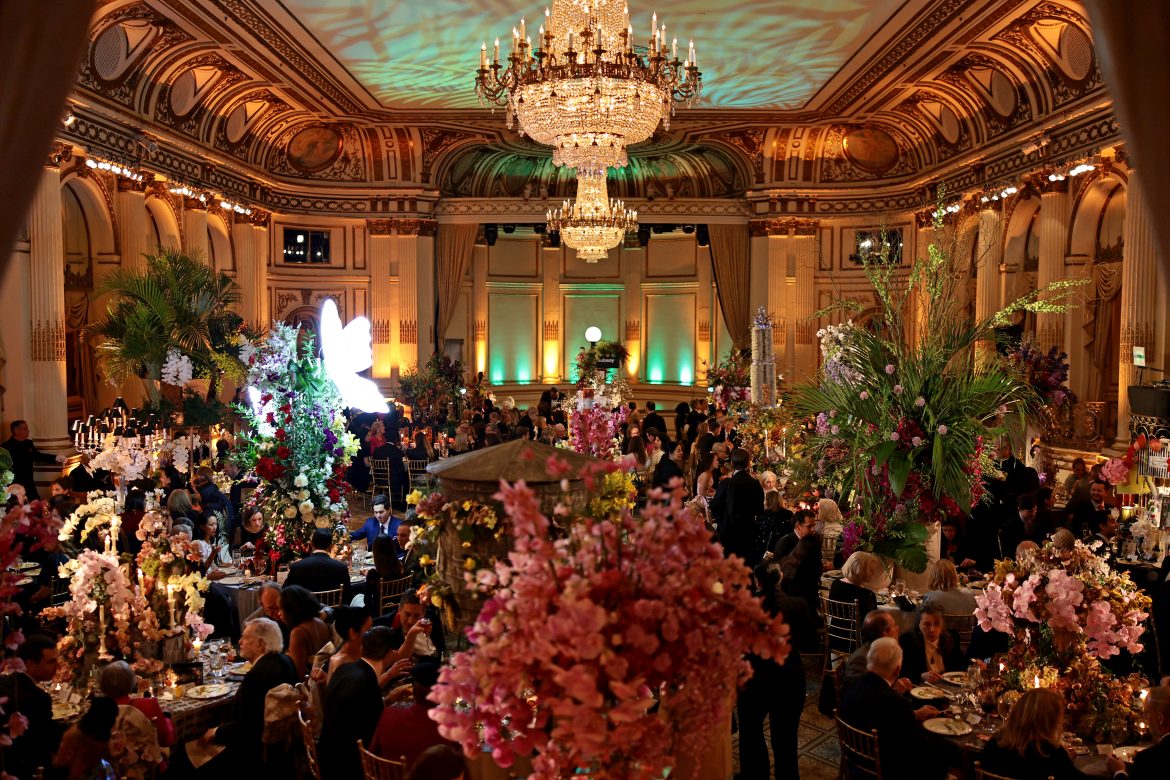
On Thursday night, The Plaza Hotel’s Grand Ballroom bloomed into a vertical city of orchids as the New York Botanical Garden hosted its 2026 Orchid Dinner in celebration of The Orchid Show: Mr. Flower Fantastic’s Concrete Jungle. Under the Plaza’s crystal chandeliers and iconic gilded ceilings, the room filled with a cross-section of New York: Martha Stewart in composed elegance, Alex Newell radiant and commanding, Plant Kween in full botanical glamour, alongside design leaders, philanthropists, collectors, and downtown creatives.
NEW YORK, NEW YORK – FEBRUARY 26: Christopher Griffin aka Plant Kweene>> attends as The New York Botanical Garden hosts The Orchid Dinner at The Plaza Hotel on February 26, 2026 in New York City. (Photo by Dimitrios Kambouris/Getty Images for The New York Botanical Garden)

Lead Chairs Susan and George Matelich welcomed guests alongside an influential roster of Chairs including Sara Arno and Kevin Cornish, Allison and Trent Carmichael, Maureen K. and Richard L. Chilton Jr., J. Barclay Collins II and Kristina Durr, Ravenel Curry and Jane Moss, Gillian Hearst, Sharon and Bill Jacob, Mary and Garrett Moran, Susan and Greg Palm, and Steve and Tina Swartz. Vice Chairs Naeem Crawford-Muhammad, Isabel Leeds, and Anita Saggurti helped steer the evening, while Design Chairs Marc Hachadorian, NYBG’s Director of Glasshouse Horticulture and Senior Curator of Orchids, and VERANDA’s Rachael Burrow Rummel shaped the aesthetic architecture of the night.

NEW YORK, NEW YORK – FEBRUARY 26: Martha Stewart visits the orchid sale during cocktail hour as The New York Botanical Garden hosts The Orchid Dinner at The Plaza Hotel on February 26, 2026 in New York City. (Photo by Bryan Bedder/Getty Images for The New York Botanical Garden)

Upon arrival, guests gathered around an expansive display of orchids available at auction including vivid pink phalaenopsis, citrus-toned cymbidiums, saffron vandas, each labeled and carefully staged while guests enjoyed a cocktail hour before the formal dinner.

NEW YORK, NEW YORK – FEBRUARY 26: Guests visit the orchid sale during cocktail hour as The New York Botanical Garden hosts The Orchid Dinner at The Plaza Hotel on February 26, 2026 in New York City. (Photo by Bryan Bedder/Getty Images for The New York Botanical Garden)

Inside the ballroom, installations rose into sculptural masterpieces of design. Our table was seated beneath a towering centerpiece inspired by New York City taxis and fire trucks, showcasing an urban homage rendered in orchids and foliage. The structure arched upward in traffic-light hues, layered with dense greenery and punctuated by blooms that felt both wild and precise. Beneath it, dinner and drinks  were served while overhead petals framed the table like a living canopy.

Across the room, interpretations varied dramatically. One table spiraled skyward in a cascade of pink orchids orbiting illuminated acrylic forms. Another rooted itself in abundance, apples piled at its base beside crimson taper candles and velvety burgundy foliage. A metallic installation with sculptural vessels reflected distorted glimpses of guests between rust and ochre arrangements. Everywhere, scale was exaggerated and perspective manipulated. Mr. Flower Fantastic, the New York native known for blending street culture with high floristry, approached Concrete Jungle as a meditation on duality of grit and refinement, architecture and nature, movement and stillness, and that tension clearly translated into the room’s energy. Guests arrived in embroidered florals, velvet suiting, silk gowns in orchid tones, and sharply tailored black. It felt social and unmistakably New York with a mix of generations, unified by a floral-forward cocktail dress code and cultural fluency.

NEW YORK, NEW YORK – FEBRUARY 26: A view of atmosphere as The New York Botanical Garden hosts The Orchid Dinner at The Plaza Hotel on February 26, 2026 in New York City. (Photo by Dimitrios Kambouris/Getty Images for The New York Botanical Garden)

The Orchid Dinner remains one of NYBG’s most important philanthropic evenings, supporting the institution’s global research in plant science, fungi, biodiversity preservation, and climate solutions. The celebration may be ornate, but its mission is rooted in sustainability and education. During dinner, the installations functioned as décor helped shaped conversation. Guests leaned upward to examine varieties, discussed design mechanics, compared interpretations across tables. Later, the center of the ballroom shifted organically. Tables remained, orchids intact, but space opened for interactive discussions and new connections. After dinner, a DJ took over and the dance floor emerged at the heart of the room. Guests who moments earlier were seated beneath botanical towers now moved between them and conversations blurred with laughter and movement.

NEW YORK, NEW YORK – FEBRUARY 26: Guests attend as The New York Botanical Garden hosts The Orchid Dinner at The Plaza Hotel on February 26, 2026 in New York City. (Photo by Dimitrios Kambouris/Getty Images for The New York Botanical Garden)


The installations themselves bordered on surreal and fantasy. One vertical arrangement dripped white orchids from a central column like a floral skyscraper. Another stacked reflective metallic forms beneath explosive arrangements in citrus yellow and deep plum. A separate tablescape leaned heavily into organic texture, moss and layered foliage climbing upward like a living monument. By inviting Mr. Flower Fantastic to reinterpret The Orchid Show through the lens of contemporary New York, NYBG positioned itself as both steward and provocateur. The institution’s Bronx conservatory offers sanctuary, and this ballroom installation asserted that botanical culture can occupy the center of social life.

NEW YORK, NEW YORK – FEBRUARY 26: A view of atmosphere as The New York Botanical Garden hosts The Orchid Dinner at The Plaza Hotel on February 26, 2026 in New York City. (Photo by Bryan Bedder/Getty Images for The New York Botanical Garden)

Outside of the dinner, the invitation to step inside Concrete Jungle is still very much open. The Orchid Show: Mr. Flower Fantastic’s Concrete Jungle runs at the New York Botanical Garden’s Enid A. Haupt Conservatory through the season, transforming the historic glasshouse into a vivid, urban-inspired orchid landscape. Visitors can wander immersive floral installations that reinterpret New York iconography through thousands of orchids, experiencing the exhibition by day or during Orchid Nights on select evenings, when music, cocktails, and after-hours access turn the conservatory into a luminous social space of its own. Tickets are available now, and proceeds continue to support NYBG’s work in plant science, education, and climate resilience.

February 28, 2026 0 comments
0 FacebookTwitterPinterestEmail
Art

Benjamin Millepied’s Reflections Comes to New York with Dance Reflections by Van Cleef & Arpels

by Tristen Yang February 23, 2026
written by Tristen Yang

On Saturday night, February 21, the Perelman Performing Arts Center filled steadily. Reflections: A Triptych by Benjamin Millepied, presented by L.A. Dance Project and co-presented with Dance Reflections by Van Cleef & Arpels, arrived in New York as a culmination of the first time the three works were shown together in their entirety. Commissioned by Van Cleef & Arpels across more than a decade, the triptych Reflections (2013), Hearts & Arrows (2014), and On the Other Side (2016) traces a long arc of Millepied’s choreographic language. Seen consecutively, the evening felt like a study in presence: how bodies negotiate time, how dancers remain porous to one another, and how sequencing becomes structure.

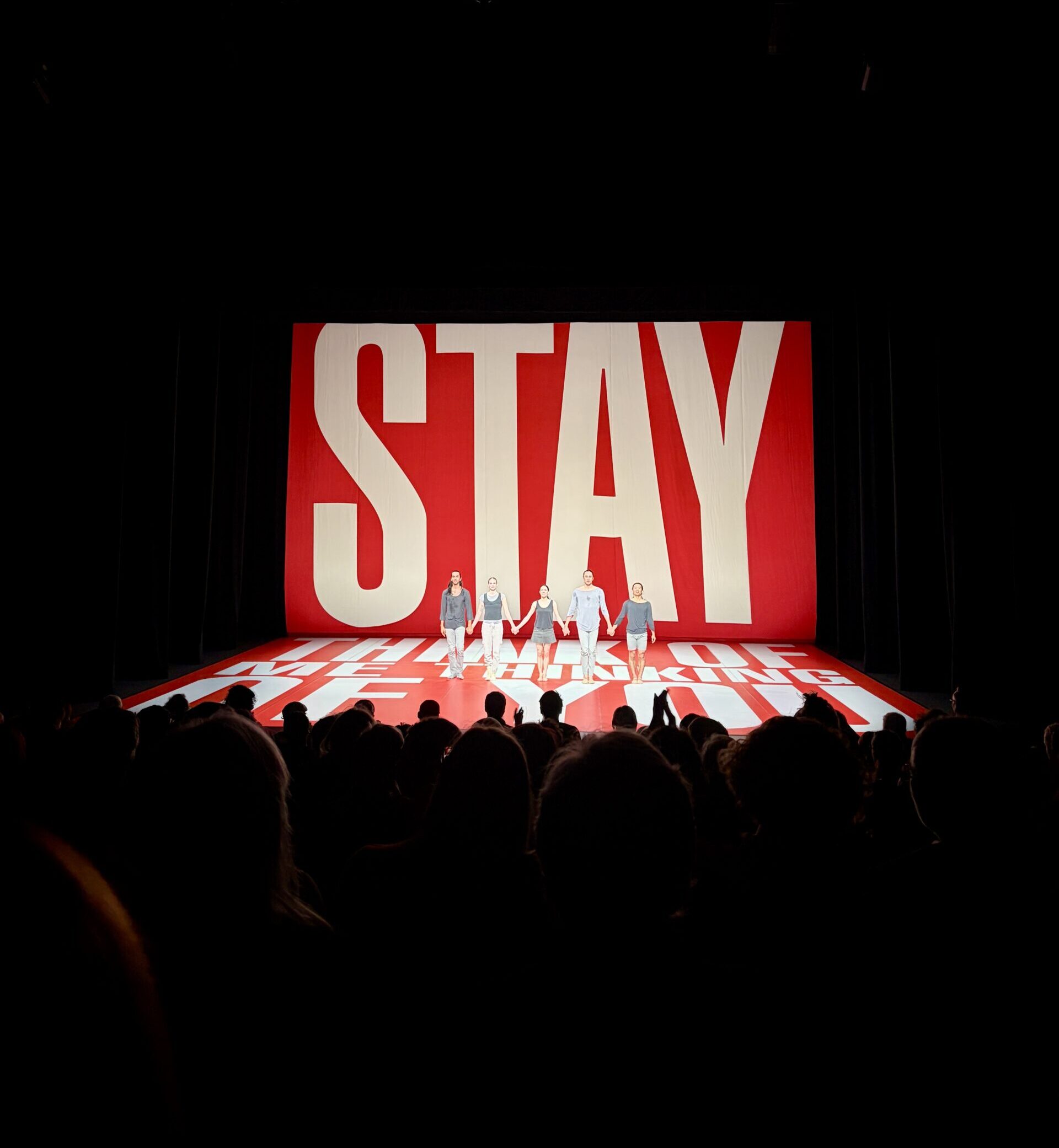
The first piece, Reflections, unfolded against Barbara Kruger’s bold visual design of a stark red and white typographic field that pressed language into the background as both assertion and interruption. Set to David Lang’s score, the choreography oscillated between sensual suspension and sharp-edged fragmentation, where movements began in isolation and then dissolved into fleeting proximity. Timing was precise and almost lyrical. The dancers’ responsiveness to one another felt immediate and effortless, embodying themes of presence and absence. Millepied’s ballet allowed the sequencing to breathe while one dancer initiates a phrase, another absorbs and answers it. The score functions not merely as accompaniment but as atmosphere and a frame within which the dancers improvise micro-adjustments, calibrating weight, and gaze to help the audience visualize the tension between desire and memory.
In Hearts & Arrows, set to the crystalline rhythms of Philip Glass, the pace sharpened. Glass’s music carries a layered insistence, with repetition that accumulates. Dancers entered and exited like shifting facets of a gemstone, while Liam Gillick’s sculptural lighting design became an active partner, carving the stage into zones of tension and release. A cluster of dancers spun through a sequence of lifts and turns that suddenly narrowed into an intimate pas de deux. Here, the sequencing felt architectural, as lines formed, dissolved, and reassembled, and the dancers’ timing created visual counterpoint with one body accelerating while another held suspension, one phrase extending while another contracted. The score, as with much of Glass’s work, invites endurance, as relationships formed and fractured in quick succession.
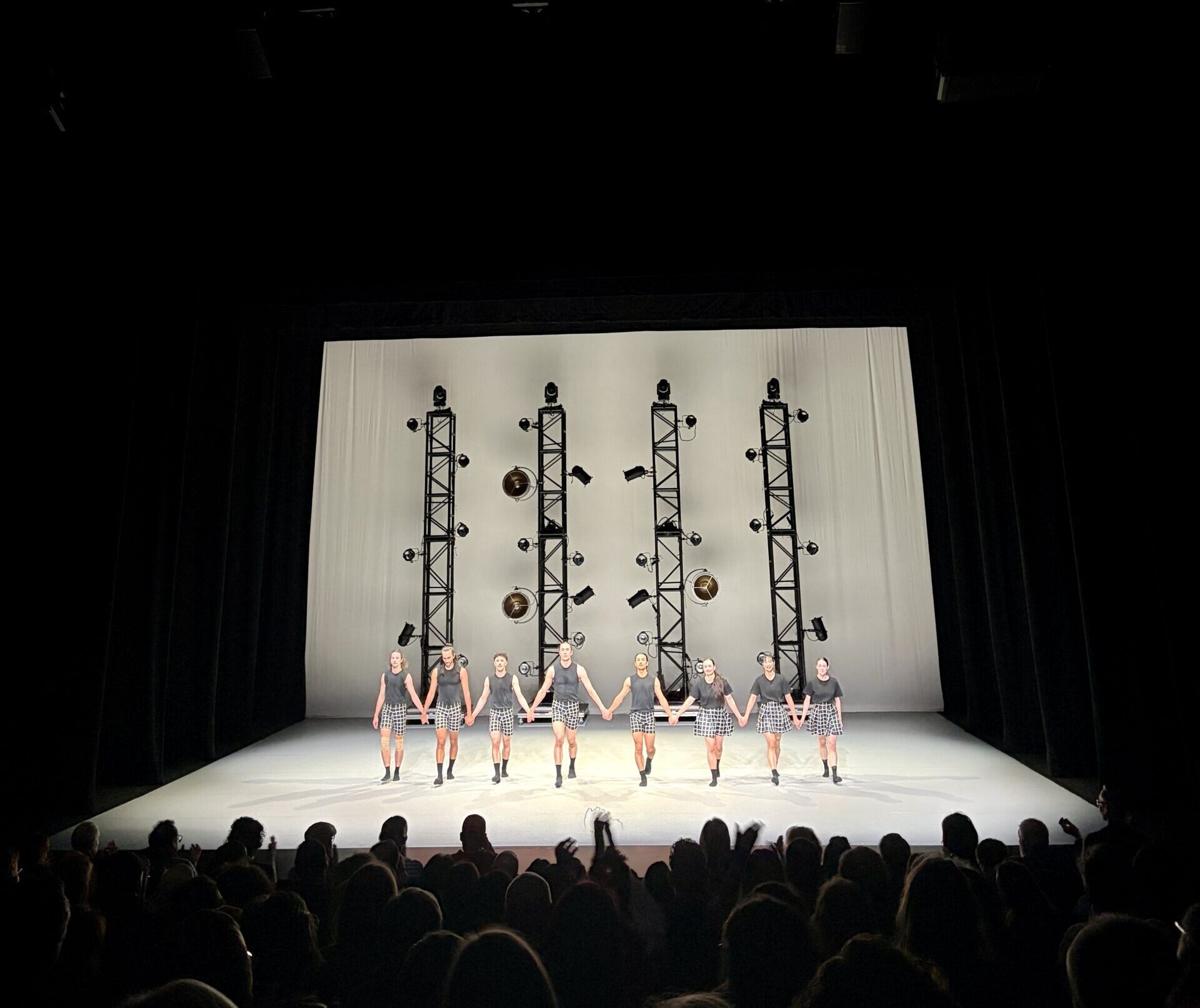
But it was the final work, On the Other Side, that landed most deeply. Set again to Philip Glass, this time to selections from his Piano Études, the piece shifted from crystalline abstraction into something more human, more porous. Dancers arranged themselves in still or near-still compositions that lingered just long enough to register emotionally before dissolving into motion. These held images, like tableaus of bodies angled toward one another, and weight shared through a shoulder or hip, felt almost painterly moving through skin rather than sound. In this final work, it felt like witnessing a single organism expanding and contracting across space. The curtain call was met with sustained applause. The stage, washed in saturated color, framed the dancers hand-in-hand.
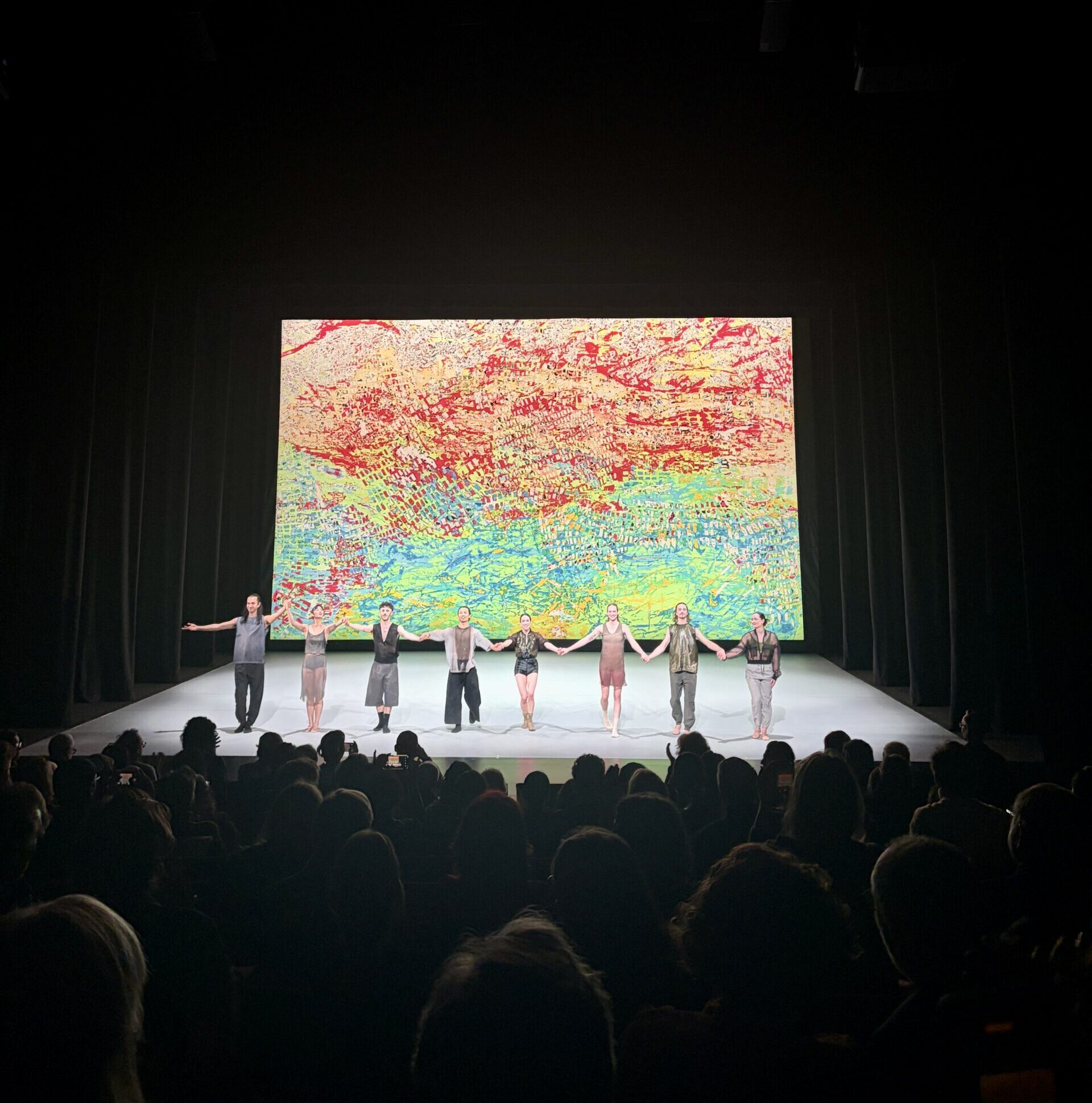
After the performance, Millepied gave a speech during the cocktail party. He spoke first of gratitude for the partnership with PAC NYC and Dance Reflections by Van Cleef & Arpels, whose continued commissioning and support have allowed these works to travel and evolve. He acknowledged the dancers, describing their dedication as essential in a cultural moment where funding for the arts has grown increasingly precarious. “Money for culture,” he noted, “is clearly more difficult everywhere.” Yet the full theater in New York stood as counterpoint,  proof that audiences remain hungry for live performance.

Dance, he suggested, is often considered the least popular of the performing arts. It lacks the narrative clarity of theater or the mass familiarity of music. And yet, in cities like Paris and New York, theaters continue to fill. That persistence, he implied, is not accidental. It is evidence of belief.
February 23, 2026 0 comments
0 FacebookTwitterPinterestEmail
ArtEventsLifestyle

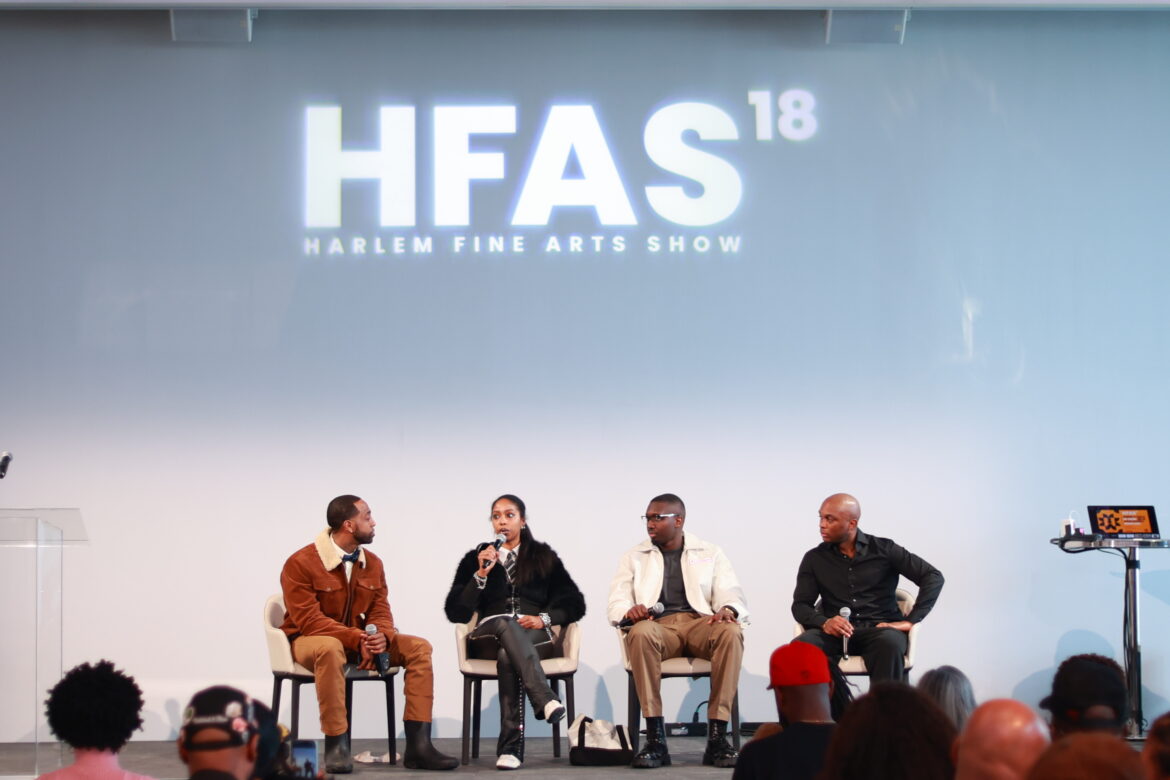
Inside the 18th Annual Harlem Fine Arts Show: Art, Technology, and the Future at The Glasshouse

by Briana Boateng February 23, 2026
written by Briana Boateng

The 18th Annual Harlem Fine Arts Show transformed The Glasshouse into a convening space centered on innovation, ownership, and cultural authorship.

Continue Reading
February 23, 2026 0 comments
0 FacebookTwitterPinterestEmail
ArtFashion & BeautyFeaturedLifestyleThe Latest

From Style to Substance: J Bolin’s Journey of Growth, Fashion, and Identity

by Rebecca Eugene February 11, 2026
written by Rebecca Eugene

Fashion is all about self-expression, allowing a person to show how they feel and their story through various textures, patterns, and fabrics. That’s where talented people like J Bolin thrive, and he has built an exceptional career doing just that. 

Continue Reading
February 11, 2026 0 comments
0 FacebookTwitterPinterestEmail
Art

Design, Books, and Legacy at The Winter Show

by Tristen Yang January 30, 2026
written by Tristen Yang

Each January, The Winter Show returns to the Park Avenue Armory with a familiar mix of museum-quality antiques, fine art, and design. Long known for its scholarly rigor, the fair has typically rewarded historical fluency. This year from January 23rd to February 1st, the experience feels slightly recalibrated. Alongside connoisseurship, there is a greater emphasis on atmosphere, narrative, and how visitors move through the space. Two presentations in particular help define that: a design-led collectors lounge by frenchCALIFORNIA and a literary showcase by Peter Harrington Rare Books that treats books as both cultural artifacts and sculptural objects.

This year, frenchCALIFORNIA has designed the VIP Collectors Lounge, titled The Modern Salon. Rather than functioning as a branded pause point, the lounge reads as a fully realized interior. Furniture, lighting, sound, and spatial rhythm are treated as equal elements, creating an environment that feels composed rather than decorative. The installation brings together contemporary Italian design through Dexelance, featuring works by Meridiani, Saba, Turri, and Davide Groppi, unified by an emphasis on proportion, material quality, and human scale.

The lounge responds directly to the architecture of the Armory’s Veterans Room, originally realized under the artistic direction of Louis C. Tiffany. Instead of competing with the room’s historic presence, frenchCALIFORNIA works in dialogue with it. Modern silhouettes and restrained palettes sit comfortably against the building’s ornate bones, creating a quiet tension between past and present. Seating arrangements are intentionally relaxed, encouraging conversation without formality and reinforcing the salon’s role as a place for exchange rather than display.

Sound also plays a central role in shaping the environment. An immersive audio program by Bang & Olufsen is integrated throughout the space, with speakers treated as sculptural components rather than visible technology. Audio functions as a material in its own right, influencing the pace and mood of the room. The effect is subtle but deliberate. The lounge feels lived in rather than staged, offering collectors and guests a moment of pause that remains fully in conversation with the fair.

If frenchCALIFORNIA’s presentation centers on how design is experienced in real time, Peter Harrington Rare Books offers a counterpoint grounded in history, craftsmanship, and intellectual legacy. One of the world’s leading antiquarian book dealers, Peter Harrington arrives at The Winter Show with a tightly curated selection that favors depth over volume. The display encourages lingering, inviting viewers to consider books as objects shaped by labor, time, and cultural context.

Among the most significant highlights is The Science of Climate Change, a landmark collection assembled over more than a decade by collector David L. Wenner. Tracing the evolution of climate science from the fifteenth century to the present, the collection includes incunabula, handwritten observational data, and foundational research papers where ideas such as the greenhouse effect first appeared in print. Presented together, the works form a restrained but powerful narrative about how scientific knowledge accumulates over centuries and how long it can take for evidence to enter public consciousness.

Another focal point is a unique illuminated manuscript of Dante Gabriel Rossetti’s The Blessed Damozel, produced between 1910 and 1929. Illuminated by Alberto Sangorski and bound by Rivière & Son, the manuscript represents a high point of Arts and Crafts bookmaking. A full-page miniature inspired by Rossetti’s painting anchors the volume, while a certification leaf confirms the work “will not be duplicated.” The manuscript is presented less as a literary document and more as a singular artwork, blurring the boundary between book and fine art.

187638_4_Rossetti.jpg

The booth also offers moments of levity. An archive of letters from P. G. Wodehouse to his American editor reveals the author’s humor and vulnerability late in life, touching on everything from royalties to adaptations and aging. Nearby, a complete set of first editions of The Chronicles of Narnia, bound in custom morocco with designs reflecting each volume’s themes, reframes a familiar series as a cohesive sculptural library.

187638_2_Rossetti.jpg

Together, these two presentations point to what feels newly resonant about The Winter Show this year. The fair continues to reward expertise and close study, but it also opens itself to a wider range of entry points. Design-minded visitors are drawn to the lounge’s sensory intelligence and spatial restraint. Literary collectors and history enthusiasts can engage deeply with manuscripts and archives that connect past debates to present concerns. Even casual attendees encounter moments that invite curiosity rather than intimidation.

January 30, 2026 0 comments
0 FacebookTwitterPinterestEmail
ArtEntertainmentEventsEventsLifestyleMusicThe LatestTheater

Christmas Night Opera Fills Carnegie Hall with World-Class Voices

by Tristen Yang January 7, 2026
written by Tristen Yang

On December 27, The Christmas Night Opera filled Carnegie Hall with an audience made of longtime opera enthusiasts, devoted fans, and first-time listeners drawn by the holiday program. Set inside the Stern Auditorium, the evening brought together world-renowned vocalists and the American Symphony Orchestra for a concert that felt both celebratory and focused, offering a year-end gathering rooted in tradition rather than spectacle.

Continue Reading
January 7, 2026 0 comments
0 FacebookTwitterPinterestEmail
ArtLifestyleThe Latest

Two Female Powerhouses Converge in exhibit ‘Life After’ at Time to Be Happy Gallery

by Dira M. December 19, 2025
written by Dira M.

When artist Mari Gior and curator Marina Dojchinov come together, the result is not simply an exhibition; it is a declaration. The Afterlife, debuting December 20 at 219 Bowery in SoHo, marks the unveiling of Gior’s new body of work, The Shadow Dancers. Together, the two women are asserting a form of creative leadership that is intimate, intellectually rigorous, and unmistakably powerful.

At its core, The Afterlife is an exhibition about survival rather than spectacle. Gior’s paintings resist overt dramatization, instead offering ethereal figures suspended between presence and disappearance. Rendered in oil and mixed media, often incorporating deconstructed antique book pages the works feel both archival and immediate, as if memory itself has been pressed into the surface of the canvas.

“I didn’t paint grief,” Gior says. “I painted what survives it. These figures are still moving, still devoted, even when everything else has fallen away.”

A former principal ballet dancer, Gior brings the discipline of choreography into her painting practice. The bodies in The Shadow Dancers are not posed; they are felt. Each canvas captures a moment of transition-movement without destination, reflecting Gior’s belief that the afterlife of love is lived quietly, through continuation rather than closure.

That restraint is precisely what drew curator Marina Dojchinov to the work. Known for crafting exhibitions as immersive narratives rather than static displays, Dojchinov frames The Afterlife as a threshold moment in Gior’s career and in the broader cultural conversation around grief, femininity, and power.

“This show isn’t about loss as an ending,” Dojchinov explains. “It’s about what women build afterward. Mari’s work holds space for tenderness without collapsing into fragility, and that’s where its strength lives.”

Dojchinov’s own trajectory mirrors that ethos. A gallerist and art dealer who opened her first gallery at just 25, she has carved out a reputation for championing emotionally intelligent, narrative-driven work, often by women whose practices defy easy categorization. Her collaboration with Gior follows their earlier success with Down the Rabbit Hole, but The Afterlife signals a deeper, more mature alignment between artist and curator.

“Girl power doesn’t have to be loud,” Dojchinov adds. “Sometimes it’s quiet, precise, and devastating in its beauty. When women lead together, we don’t compete; we amplify.”

Visually, the exhibition unfolds like a whispered confession inside the noise of downtown Manhattan. Blurred figures hover across the gallery walls, layered with fragments of antique texts that read as relics, history colliding with the present tense of paint. A standout work, The Return of the White Rabbit, encapsulates the show’s ethos: romance without nostalgia, devotion without sentimentality.

For Gior, now stepping fully into her voice as a fine artist, The Afterlife represents rebirth. For Dojchinov, it is another example of curatorial authorship that privileges emotional truth over market spectacle. Together, they offer a model of what happens when two female powerhouses meet not to dominate, but to collaborate.
In a city saturated with openings, The Afterlife arrives as something rarer: a sacred pause. A reminder that the most radical power in art often lies not in volume, but in intention.

For Mari Gior, The Afterlife is unmistakably a moment of emergence. Long recognized for her physical intelligence as a dancer and her instinctive visual sensibility as a muse, Gior now claims her place fully as an artist with an independent, emotionally precise voice. The Shadow Dancers are allowed to breathe, hover, and command attention on their own terms, signaling not just a debut, but a declaration of authorship.

Event Details:

Artist: Mari Gior
Exhibition: The Afterlife — Debut of The Shadow Dancers Mari Gior


Curated by: Marina Dojchinov
Date: Saturday, December 20, 2025


Location: 219 Bowery, Time to Be Happy Gallery, New York City


Format: RSVP-only

Schedule:
• 5:00–6:00 PM VIP & Press Reception (RSVP required)
•

6:00–9:00 PM – Gallery Viewing (RSVP required)

RSVP: LIFEAFTERSVP@gmail.com

December 19, 2025 0 comments
0 FacebookTwitterPinterestEmail
ArtFeatured

At Art Basel Miami Beach, Perrier-Jouët Let the Plants Speak

by Avyana Chapman December 19, 2025
written by Avyana Chapman

Miami Art Week has never been short on spectacle, but during Art Basel 2025, Maison Perrier-Jouët offered something rarer: a moment of quiet attention. On the sands of Faena Beach, where sound systems usually compete with the ocean, the storied Champagne house unveiled Plant Pulses, a multidisciplinary installation by Polish artist and designer Marcin Rusak that invited visitors to slow down, listen closely, and reconsider what nature has been trying to tell us all along.

Unveiled from December 2–7 as part of Faena Art programming, Plant Pulses translated cutting-edge scientific research on plant communication into an immersive artistic experience — one that blurred the boundaries between art, ecology, and technology.

When Plants Communicate, Humans Finally Listen

At the heart of Plant Pulses is a collaboration between Rusak and researchers Bartek Chojnacki and Klara Chojnacka of AGH University of Science and Technology in Kraków, whose experiments revealed that plants emit ultrasonic signals when under stress, such as dehydration. These signals subside when the plant returns to a healthy state — a form of communication that has long existed beyond human perception.

Rusak transformed this data into a soundscape and visual language that made the invisible audible and the inaudible emotional. Inside the installation, visitors were guided by multidirectional sound toward a monumental central sculpture: a contemporary herbarium encasing three “hero” plants vital to the Champagne ecosystem — the vine, European birthwort, and white clover — alongside chalk soil and end-of-life Perrier-Jouët vines. Suspended in resin, the sculpture functioned as a time capsule, preserving botanical matter while symbolizing the fragile continuity of ecosystems across generations.

The soundscape unfolded in three movements — dehydration, inter-plant communication, and rehydration — while circular screens evolved visually from stark linear graphics into organic, bubble-like forms, subtly nodding to Champagne itself. Even the seating, 3D-printed and embedded with plants Rusak collected in Épernay, encouraged visitors to pause, observe, and reflect.

A Shared Botanical Heritage

The collaboration felt especially resonant given Perrier-Jouët’s botanical lineage. Founded in 1811 by Pierre-Nicolas Perrier and Rose-Adélaïde Jouët — both passionate lovers of art and nature — the House has long been shaped by horticulture and progressive viticulture. Its iconic Japanese white anemone, introduced by Art Nouveau pioneer Émile Gallé, remains a symbol of the brand’s symbiotic relationship with the natural world.

Rusak’s practice mirrors that ethos. Descended from flower growers, his work often incorporates discarded plants, questioning beauty, decay, and human intervention. As Rusak himself noted, visiting Perrier-Jouët’s vineyards revealed a shared philosophy: “the slow, patient process of creating champagne… much like my practice.”

From Installation to Table: The Banquet of Nature

That philosophy extended beyond the beach and onto the table. On December 2, Perrier-Jouët hosted the Banquet of Nature at Faena’s Mammoth Garden — a four-sequence dinner orchestrated by three-Michelin-star Chef Pierre Gagnaire, the House’s longtime ambassador and creative partner.

Designed in collaboration with experimental Dutch duo Steinbeisser, the dinner explored how design, tableware, and sourcing shape our relationship with food and nature. Guests were invited into conversations with Rusak himself, while vintage cuvées from the Belle Epoque Collection anchored the experience in Perrier-Jouët’s Champagne heritage.

The evening also marked the launch of A Banquet of Nature: Cooking Art and Ideas with Pierre Gagnaire, a new addition to the House’s Enchanting Library. Part cookbook, part cultural dialogue, the book gathers voices including philosopher Emanuele Coccia, botanist Marc Jeanson, novelist Maylis de Kerangal, and biologist Emmanuelle Pouydebat, framing cooking as a profound cultural link between species.

Design Miami and a Long-Term Vision

The conversation continued at Design Miami, where Rusak and Axelle de Buffévent, Global Culture & Creative Director of Maison Perrier-Jouët, participated in a public panel moderated by curator Glenn Adamson, exploring biodiversity through the lens of design.

This long-term thinking is central to the House’s mission. Since 2021, Perrier-Jouët has been rolling out an experimental regenerative viticulture program, with ambitions to convert 100% of its vineyards by 2030. Research like that behind Plant Pulses could one day inform real-time vineyard resource management — a tangible example of art contributing to environmental practice.

A New Cultural Prize Is Born

Fittingly, Art Week also marked the announcement of the inaugural Perrier-Jouët Design for Nature Award, created in partnership with Design Miami. The first recipient: Iris van Herpen, the Dutch haute couturier renowned for merging fashion, science, and living systems.

Van Herpen was awarded a carte blanche to create a design-led experience for Design Miami 2026, recognizing a practice that treats nature not as inspiration alone, but as collaborator. Her most recent couture collection, Sympoiesis, drew from oceanic ecosystems, translating ecological fragility into fluid silhouettes and layered, liquid-like forms.

As de Buffévent noted, the award is meant to push sustainability beyond rhetoric — toward joyful, optimistic experimentation. For van Herpen, it offers space to further explore “the ever-shifting relationship between our body and the living forces of nature.”


December 19, 2025 0 comments
0 FacebookTwitterPinterestEmail
ArtEntertainmentEventsEventsLifestyle

Inside American Ballet Theatre’s Intimate Holiday Benefit in Los Angeles

by Eliana Arian December 16, 2025
written by Eliana Arian

Walking into the International Ballroom at the Beverly Hilton on December 15, it was immediately clear this was not a typical ballet setting. American Ballet Theatre’s annual Holiday Benefit placed the audience unusually close to the dancers, creating a beautiful and intimate environment. Dancers, artists, longtime supporters, and guests including Sterling K. Brown and Ryan Michelle Bathé filled the room alongside ABT leadership and principal dancers, blurring the line between performance and gathering.

Continue Reading
December 16, 2025 0 comments
0 FacebookTwitterPinterestEmail
Newer Posts
Older Posts

Digital Cover No. 19

The Knockturnal Merch

Follow Us On The Gram

Follow on Instagram

About The Site

We are a collective of creative tastemakers made up of fashion, music and entertainment industry insiders. It’s all about access. You want it. We have it.

Terms Of Use

Privacy Policy

Meet The Team

CONTACT US

For general inquiries and more info on The Knockturnal, please contact our staff at:
info@theknockturnal.com
fashion@theknockturnal.com
advertising@theknockturnal.com
editorial@theknockturnal.com
beauty@theknockturnal.com

  • Facebook
  • Twitter
  • Instagram
  • Linkedin
  • Youtube

© Copyright - The Knockturnal | Developed by CI Design + Media

The Knockturnal
  • Home
  • Entertainment
  • Music
  • Lifestyle
  • News
  • Videos
  • Covers
  • Merch