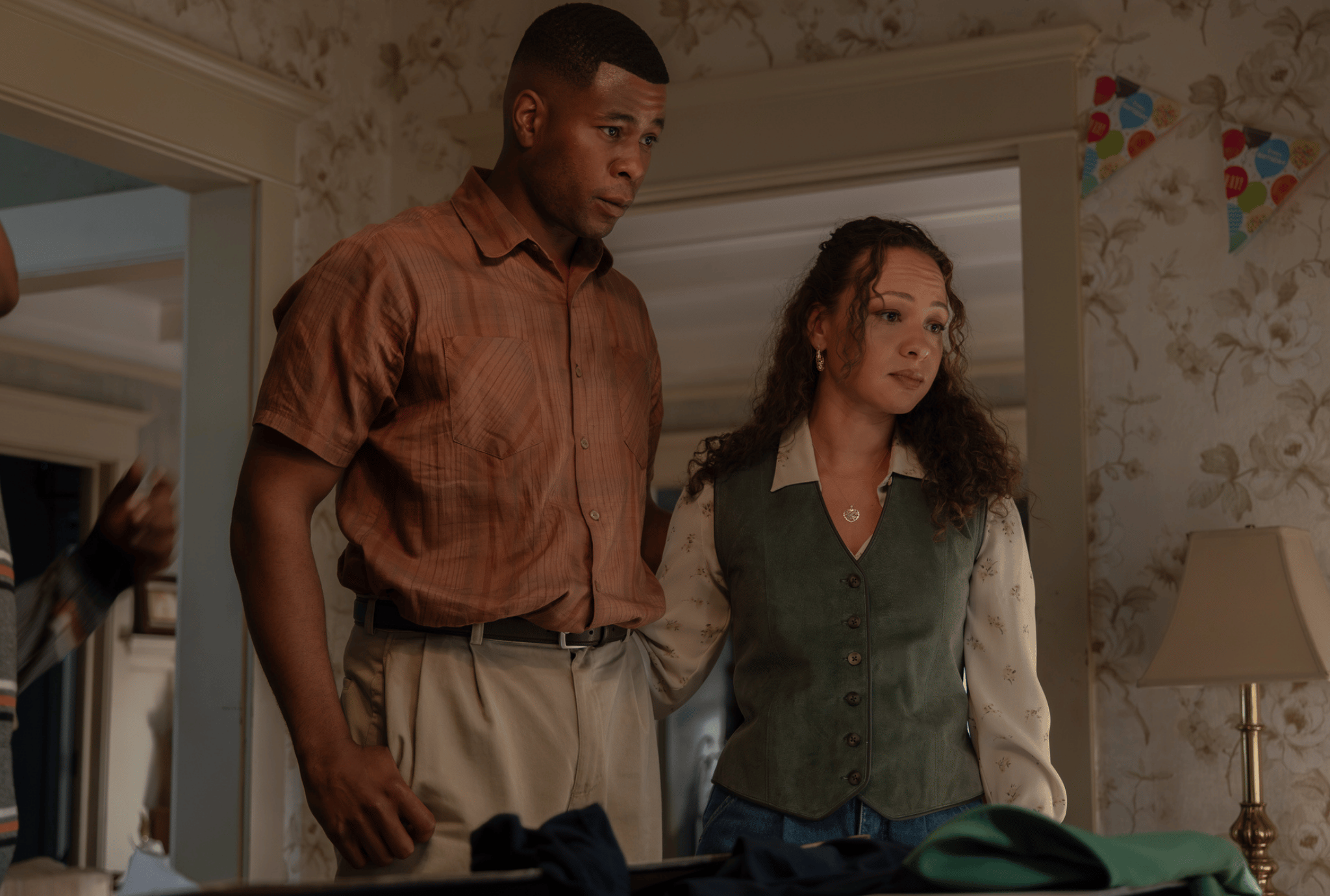
HBO Max’s Lanterns has taken the internet by storm with its latest installment of Episode 3. The Knockturnal got a chance to talk to two of the episode’s stars. We sat down with J. Alphonse Nicholson, who plays the role of John Stewart Sr., and Jasmine Cephas Jones, who plays the role of Bernadette Stewart. We dived deep into the complex layers of the episode and what it meant to play the parents of the soon-to-be Green Lantern.
This interview has been edited for length and clarity.
Episode 3 reveals that John Sr. wasn’t chosen by the Guardians, Hal Jordan was. And that selection depended on each of their answers to one question: “Are you afraid?” J., you’re playing a man who’s building his son to survive the very rejection that broke him. Where’s the line for you when preparing John and reliving your own wound through him, as your son?
Nicholson: That’s a great question. I think the easiest comparison for me would be a football player who received a career ending injury […] There’s a part of that father who doesn’t want his son to play football. “I don’t want you to go out there and get hurt. I don’t want you to experience the things that I’ve experienced. But I also know that you’re gonna be great.” So he has to pour into his son, even though he knows there’s a possibility of him getting hurt, and that’s a very surface-level analogy. Obviously, being a black man in the world can’t compare to playing football. I think starting there for me it’s like, “Okay, it’s not about me, it’s about our son.”
Then also having a partner and being able to trust [John Sr.’s] wife and being able to trust her decision making, even when he’s afraid, it really allowed [John Sr.] to show up for little John, and I think it showed up on screen in a beautiful way: how complex it could be to navigate those worlds.
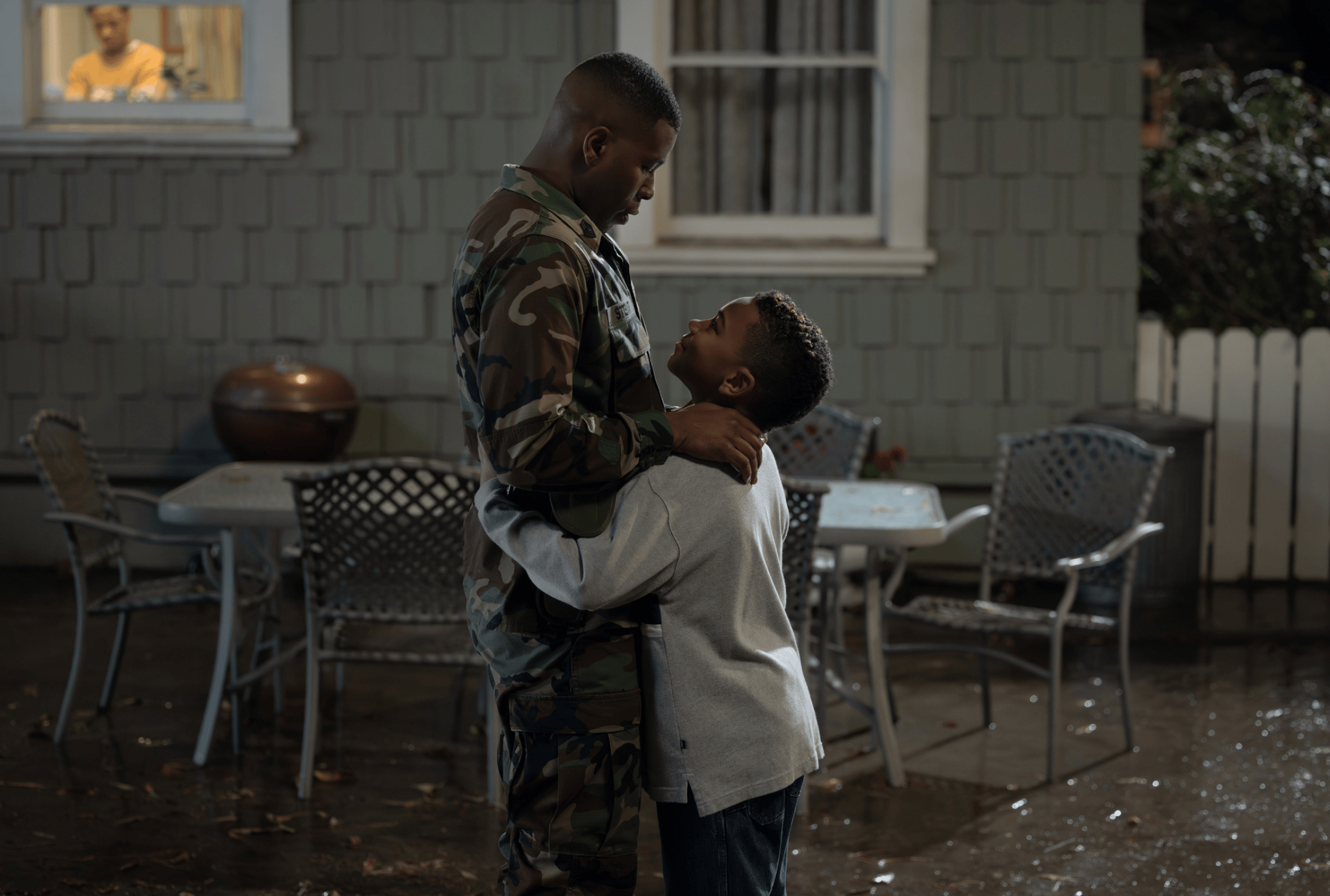
Photo Courtesy: Warner Bros. Discovery
Absolutely. And I think you’re spot on with it showing through the screen, especially the 2nd time we see you take the shot off John’s head. So, Jasmine, episode one prepared us for John Sr. Nothing prepared us for the determination and foresight of Mrs. Stewart. The episode makes John’s mom an architect, not a bystander. She watches her husband break, and then she makes the resolution with her husband that their son will be the best possible candidate when his turn comes. What was it like playing a mother who turns grief into strategy?
Jones: It was really fun to play. Vanessa, who wrote that episode, is an absolute genius, and really put all the beats together, made sense of every single scene that came after the other, where I didn’t have to look in or analyze too much. It was really coming from a place where I could understand why [Bernadette] is making these decisions. [There is] trauma that John Sr. goes through, and also the guilt once [Bernadette] finds out that he’s actually been telling the truth the whole time.
That’s her getting her power back. She is a Jill of all Trades, just like, so many mothers are. To me, when I read this episode, this is a love letter to the unsung hero of the mother. And especially black mothers and making the possible out of the impossible. She is the superhero without the cape. The biggest thing is her deciding to, in that moment, take the power back for her and her family. And in order to do that, she has to make some really, really hard decisions, but we wanted to make sure that she’s not going complete psycho. We still see why she’s doing it and still showing love to her family and her sons. So that was really important as well.
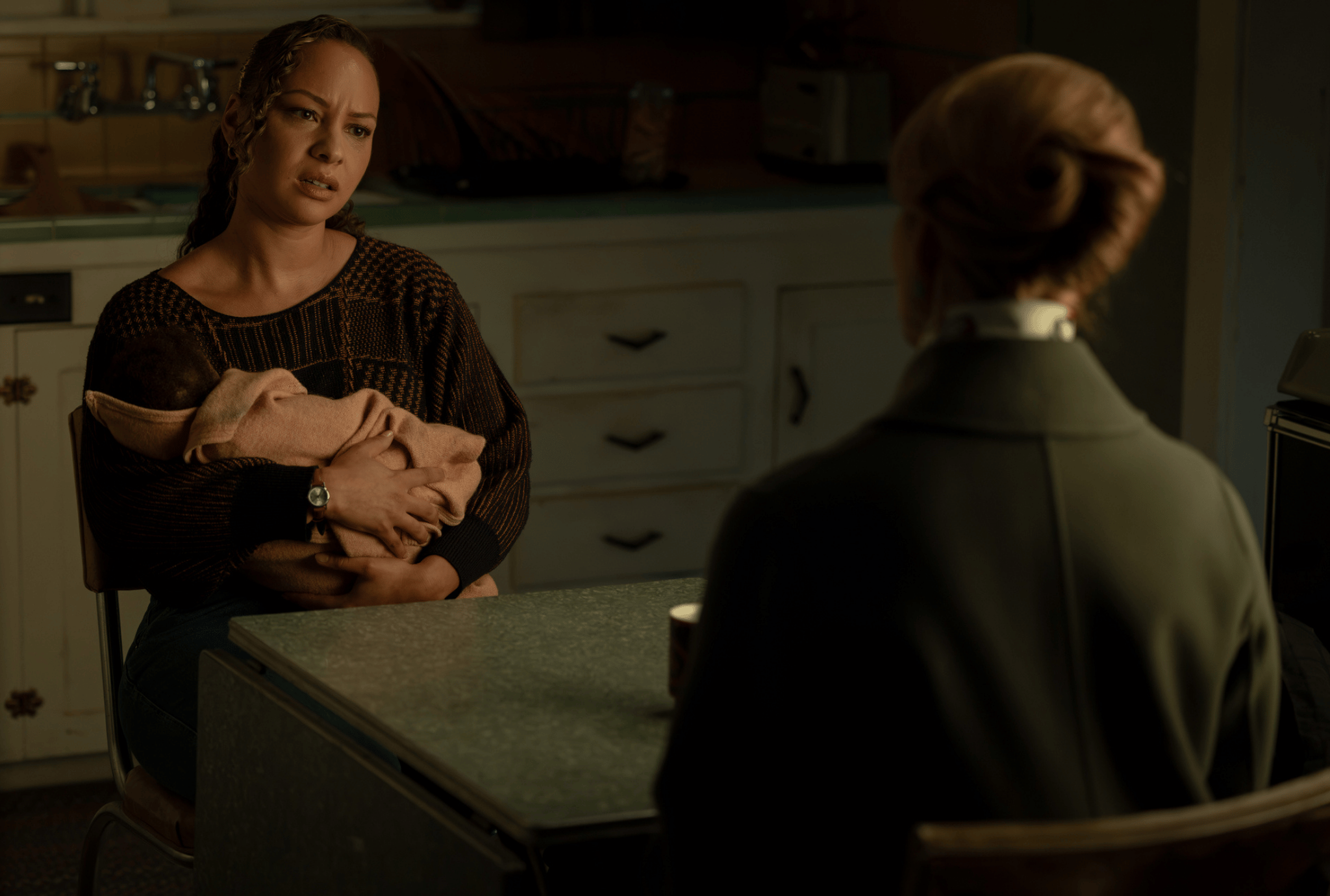
Photo Courtesy: Warner Bros. Discovery
John doesn’t get a say in his purpose. His parents decide this for him. It’s set before he’s old enough to even choose it for himself. And we see this in the scene where he’s disappointed that he didn’t get the crayons that he asked for. He gets a superhero suit and he’s just like, “I asked for crayons.” And that’s a real pattern in a lot of black families where a child’s purpose sometimes can get defined early. Often out of love, or fear, or both. Did either of you think about that bigger pattern when you built these characters and how you’d bring them to life? Or did it feel specific to you for just this family you were portraying on screen?
Nicholson: Another great question. Because I’m playing a father in this role, the first go to is to pull from my real experience. Understanding, pushing your child to go in a direction that either they may not want to go, or they don’t know how beneficial it’s going to be for them just yet, is tough, either way.
It’s a push and pull, and you don’t want them to be upset about what you want them to do, or what you’re asking them to do. But you know it’s going to build a certain type of skill set that they can carry for life. And for little John, we know that it’s going to build a set where he’ll be able to protect us and protect other people and possibly be one of the greatest Green Lanterns of all time. I think it’s a huge responsibility.
But I think we did a great job at still making it somewhat childlike. You know, you got the little baby Green Lantern suit, a little BB gun.
[All laugh]
You know, we ramped him up into it. And still gave him those experiences that are somewhat childlike, but also having to push him towards his purpose and his mission very quickly.
Jones: I thought about my father a lot. I was extremely close with my father, but he also became my mentor and my acting mentor. I went through some training sessions with him of how to analyze a script. When I had auditions, I would come to him, and talk to him about it, and he would help me analyze that. He was very much the biggest cheerleader and mentor for me.
He didn’t train me that intensely, but I did think about his words a lot. There wasn’t one moment where I ever felt that my father didn’t love me throughout him mentoring me. And that was really important for him and me to know. He gave me such an emotional safe space that I could call him anytime, for any questions, and talk about him about anything.
I thought about him a lot during filming, even though it was very different types of training. I had a kind of training-mentor-guide that was a parent in my life growing up, helping me find out my purpose and how I wanted to use my art and to affect other people and make change.
Absolutely. Jasmine, you noted that the episode was written by Vanessa Baden Kelly, and she has a collection of essays that discuss what it’s like to raise a black son, amid racial violence. On set, as you guys were getting ready for the scene, like, did these conversations come up when you were in the room, in her notes? How was it working with Vanessa on developing this scene and bringing it to life?
Nicholson: It was great. You know, I think before even reading the title page of the episode, I may have just been reading through and immediately, I was like, “Oh, this written by black woman.”
[All laugh]
I was grateful that HBO gave her the leeway to carve out this show. Obviously, she has the resume to go with it. You know, black women who are qualified don’t always get the opportunities, and I’m so glad that she got it. So when I first saw her, I just said, “Thank you. Thank you for seeing us. Thank you for writing this for us. Thank you for this incredible opportunity.”
And she’s so humble. She’s a mom, so it’s knowing that she moves through her career and through her art with that, and what it’s like to protect the black man and the young boy. But also what it’s like to have the black woman be seen completely. She did that very well, so I was grateful for her for that.
All right. Last questions for both of you: if John Stewart, as an adult, could ask either one of you a question right now, about your time together as his parents, what do you think he would ask you about your time together raising him? And is there a question he could ask that you might not want to answer?
Jones: I think “Why did you start so early with using you guys [the parents] as targets with the apple? Why did it have to be you guys?”
Nicholson: Man, I think, for sure, he would ask, you know, “Why were you shooting those apples off my head?”
Jones: Like, you could’ve picked a friend of our friends first.
[All laugh]
Nicholson: I think a more light and fun question that he may ask his dad is, “how did you get your shot so perfect?” He’s a sniper himself, and he wants to learn to get his shots where it needs to be, and so now those conversations go even further as a grown man, with me telling him what I’m thinking about, how I’m holding my breath before I release it. And so maybe in season two, we have a little bit of those conversations.
The tough question I don’t think [John Sr.] would be able to answer is, why was he afraid? I think that would be a tough one for him to answer, but he would have to answer, nonetheless. But that would be hard for him, for his son to say, “Man, why are you scared?”
Thank you both. Looking forward to seeing the rest!
Episode 3 is now streaming on HBO Max.
