On Friday morning, ahead of practice sessions and race-day, we sat down with Jaguar TCS Racing drivers António Félix da Costa and Mitch Evans, alongside team principal Ian James, for a roundtable conversation during media day. The discussion offered a moment to understand how the team thinks about performance, energy, and competition before the race.
Miami, despite its reputation, did not feel like a holiday backdrop that morning. The air was unexpectedly cool, more winter than vacation, and the track had yet to assert itself as the dominant presence of the day. For the drivers, location operates less as spectacle and more as a variable. Da Costa, now in his first season with Jaguar, spoke about the ocean as a mental reset rather than an escape. Being near water, he explained, offers a subtle recalibration that sharpens focus.
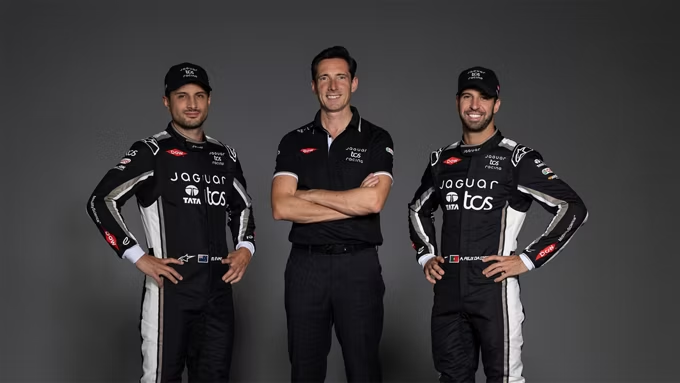
Outside of racing, both drivers turn to physical movement not as training in the strict sense, but as a way to stay balanced during a season defined by constant travel. For da Costa, surfing and golf occupy the margins of an already crowded calendar. Evans, who grew up in New Zealand, pointed to rugby as a formative influence, less for its tactics than for the rhythm and discipline it instills. Neither framed these activities as escapes, instead, they function as anchors, ways of staying connected to their bodies while living in near-constant motion.
Ritual came up early in the conversation, though not in the way one might expect with no rigid superstitions. Da Costa described a simple pre-race sequence: stretching, skipping rope, twenty minutes of physical readiness before stepping into the car. Evans emphasized visualization over routine, constantly replaying the track in his mind and adapting to schedule changes rather than resisting them.
The ease between da Costa and Evans surfaced repeatedly. Although new to the team, da Costa is not new to Evans. The two have known each other for years, competitors who understand each other’s instincts without needing translation. They mentioned a philosophy of different experiences, different approaches, but a shared willingness to learn with a goal on alignment. This dynamic becomes especially important in Formula E, where races are not won by pushing flat out from start to finish. Da Costa explained it plainly. If drivers were to race at maximum output for the full duration, the battery would not last. The challenge is not speed alone, but energy management. Regeneration, timing, positioning, and restraint all shape the outcome. Drivers cycle between attack and conservation, sometimes literally following one another closely to minimize energy loss, a comparison da Costa likened to the peloton in the Tour de France.
This is where Formula E diverges most sharply from other forms of motorsport, and where it can be hardest to read from the outside. It is engineered because no one runs away with the race early. Strategy unfolds in layers, and the margin between winning and finishing mid-pack can be measured in decisions made minutes, or even seconds, apart. Evans described it as a form of art, a balance between performance and patience that rewards awareness as much as aggression.
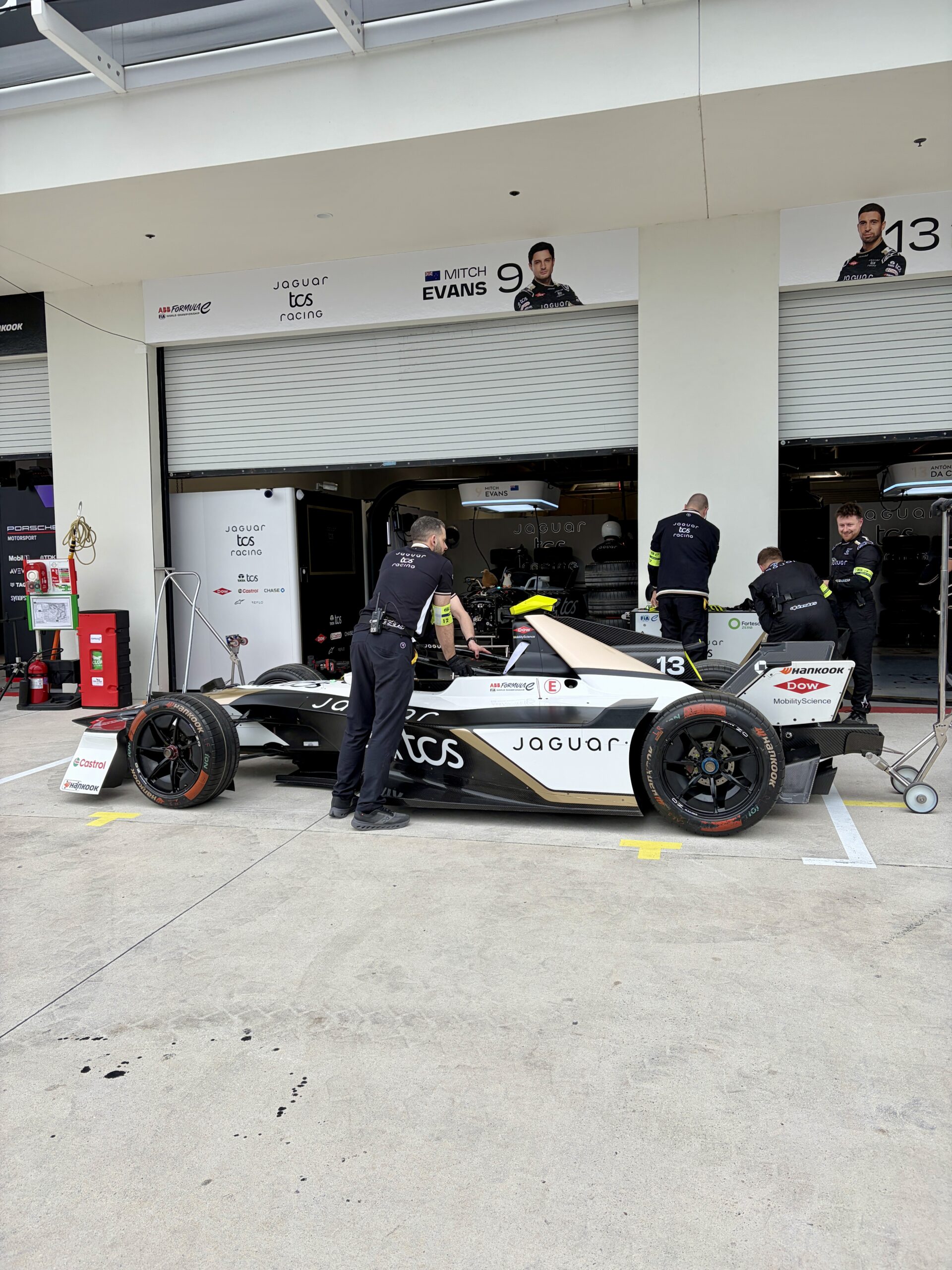
For fans accustomed to Formula 1, where dominance can stretch across seasons, Formula E requires a different way of watching. The sport has been around for over a decade now, and its core audience understands the language. What remains is translating that experience to a broader public, particularly as sustainability moves from concept to constraint across motorsport. Da Costa noted that Formula E has effectively been living the future for years. That framing carried into the second half of the roundtable, where team principal Ian James joined the conversation. Where the drivers spoke about flow and instinct, James spoke about systems. Pressure, he explained, exists everywhere in the organization, not just in the cockpit. James has moved fluidly between disciplines. In Formula E, the role is far more active. The team is constantly responding, adjusting, supporting. Influence is not about overriding expertise, but about creating the conditions for it to operate effectively during simulations.
In terms of team culture, James spoke at length about the importance of collaboration, particularly between drivers. Talent alone is not enough. In a championship where the car is constantly evolving, drivers must be able to articulate what they feel, translate instinct into feedback, and work together rather than against each other. When garages split, development suffers. Alignment, even without friendship, is non-negotiable.
Behind the scenes, much of that alignment is built long before race weekend. Simulation plays a central role in preparation, not just for drivers, but for the entire team. Engineers, strategists, and performance staff are brought into the process, rehearsing scenarios, stress-testing decisions, and effectively gamifying strategy. While no simulation can account for every variable, the confidence it builds carries into the race. By the time the cars arrive at the circuit, most of the work has already been done. This is where sustainability becomes less of a talking point and more of a framework. Operating under cost caps has reshaped internal dynamics, bringing finance teams into direct conversation with performance goals. Where spending was once viewed as a limitation, it now becomes a strategic tool. Knowing where to allocate resources, where to extract the most value from each decision, creates competitive advantage.
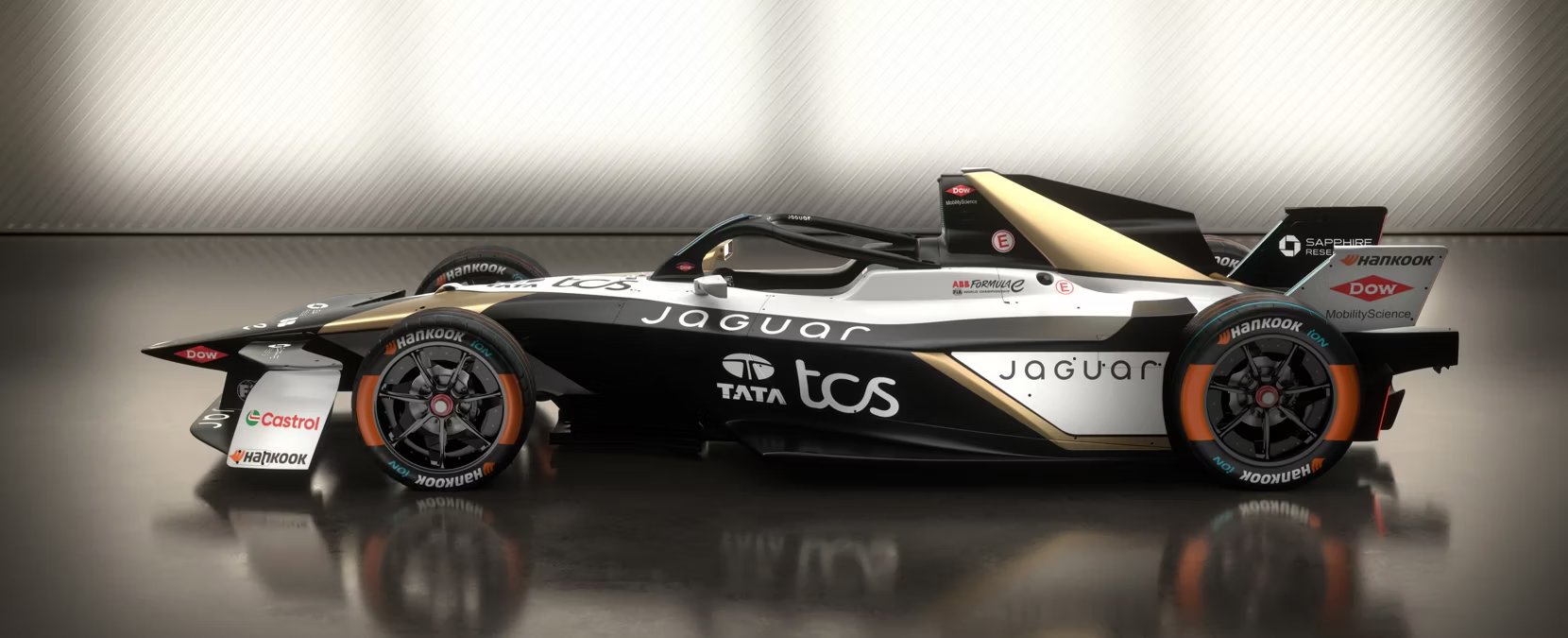
The conversation eventually widened to Jaguar’s broader motorsport legacy. Drivers and leadership alike referenced Le Mans, the Silk Cut era, and the visual language that once defined Jaguar on the world stage. James recalled an early experience at Jaguar’s headquarters, driving an E-Type from 1960, followed by modern performance vehicles and future concepts. Across generations, he noted, the throughline remained tangible. The cars moved like Jaguars and they felt like Jaguars. That continuity matters as the brand moves deeper into the electric age. The question is no longer whether electric racing can be exciting, but how to carry identity forward within new constraints. Engagement, James suggested, will increasingly depend on how well that story is told, not just on track, but through experiences like this one. As the roundtable wrapped, the schedule pressed on. Formula E, viewed through Jaguar TCS Racing, reveals itself as a sport built on awareness, energy, people, and limits.
