On Saturday, February 7, the Human Rights Campaign convened LGBTQ+ advocates, artists, and allies at the New York Marriott Marquis for its annual Greater New York Dinner. The event, one of the organization’s most prominent regional gatherings, came at a moment of heightened political pressure for LGBTQ+ communities nationwide, and the evening reflected that urgency in both tone and programming.
The night brought together leaders across entertainment, fashion, activism, and politics to honor individuals whose work has shaped visibility and advocacy in tangible ways. This year’s honorees included actress, singer, and dancer Jane Krakowski, New York–based fashion designer Daniella Kallmeyer, and transgender activist Juli Grey-Owens, founder and executive director of Gender Equality New York. Rather than framing the evening as a celebration removed from current events, speakers repeatedly acknowledged the political and cultural climate shaping LGBTQ+ life in 2026, including legislative attacks on transgender rights, censorship efforts, and growing threats to press freedom.
One of the evening’s highlights was surprise appearance by journalist Don Lemon, who delivered an impassioned speech on press freedom and democratic accountability. Speaking to the room as a journalist rather than a media personality, Lemon framed the First Amendment as essential to both democracy and LGBTQ+ liberation. “The First Amendment is not just a legal guarantee,” he said. “It is the breath in the lungs of democracy.” Lemon warned against the normalization of attacks on journalists and the erosion of truth in public life, describing witness, not rebellion, as the greatest threat to unchecked power. “The free press does not exist to reassure the nation,” he said. “It exists to reveal it to itself.” His remarks drew extended applause and positioned journalistic integrity as inseparable from broader civil rights struggles.
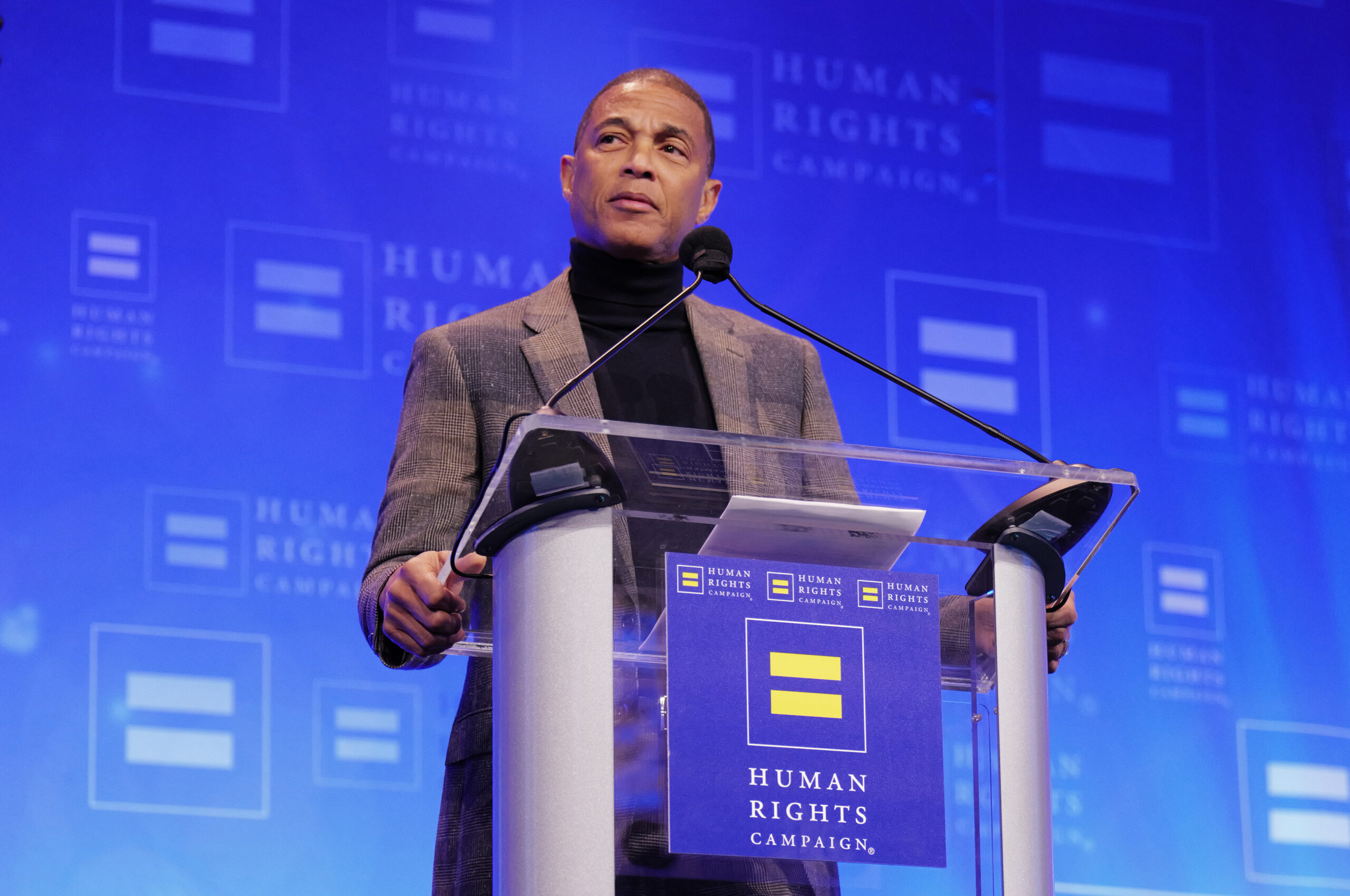
NEW YORK, NEW YORK – FEBRUARY 07: Don Lemon speaks onstage during the Human Rights Campaign 2026 Greater New York Dinner at Marriott Marquis Times Square on February 07, 2026 in New York City. (Photo by Craig Barritt/Getty Images for Human Rights Campaign)
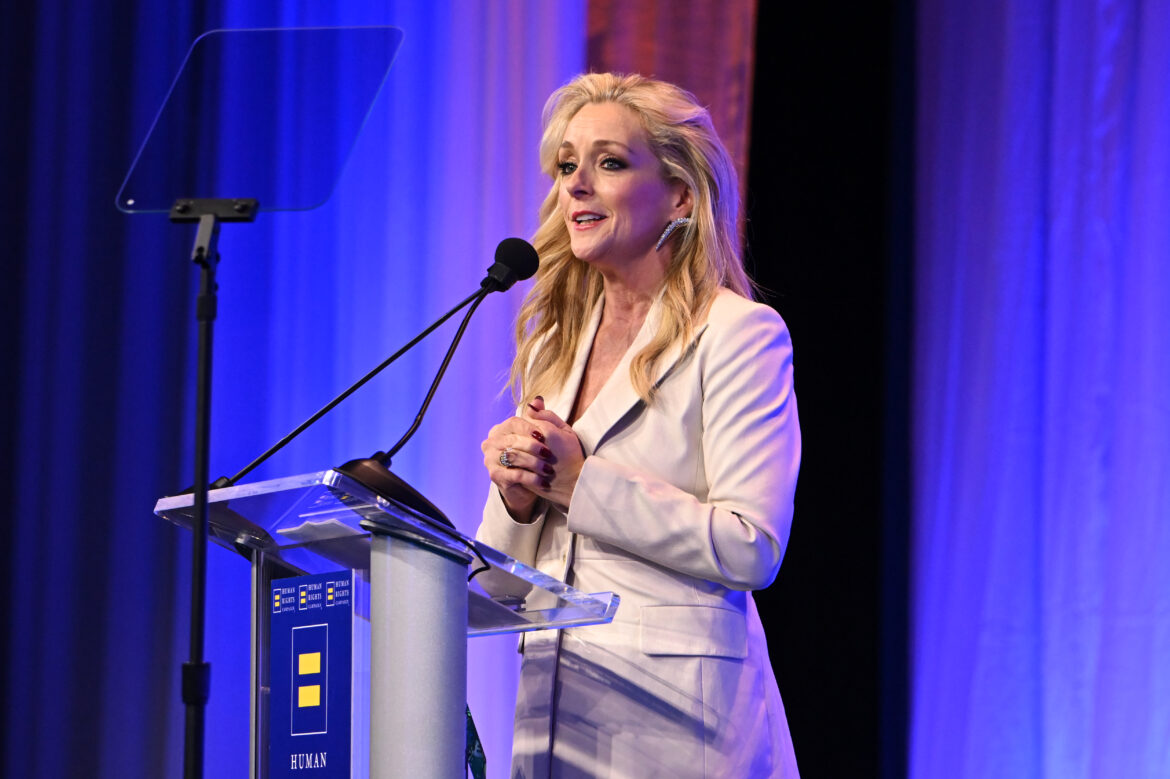
Jane Krakowski received HRC’s Ally for Equality Award for her long-standing support of LGBTQ+ communities through both advocacy and cultural work. In her remarks, Krakowski addressed the room directly, referencing renewed government hostility toward LGBTQ+ people and particularly toward transgender youth. “Here we are in 2026, and the government has again turned its back on this community,” she said, citing book bans, the amplification of hate speech, and legislation targeting trans children. Her speech emphasized continuity, noting that she has witnessed the community respond to adversity with solidarity and creative force before. “You refused to be silent when the government turned its back,” she said. “You refused to hide when the world tells you to be ashamed.”
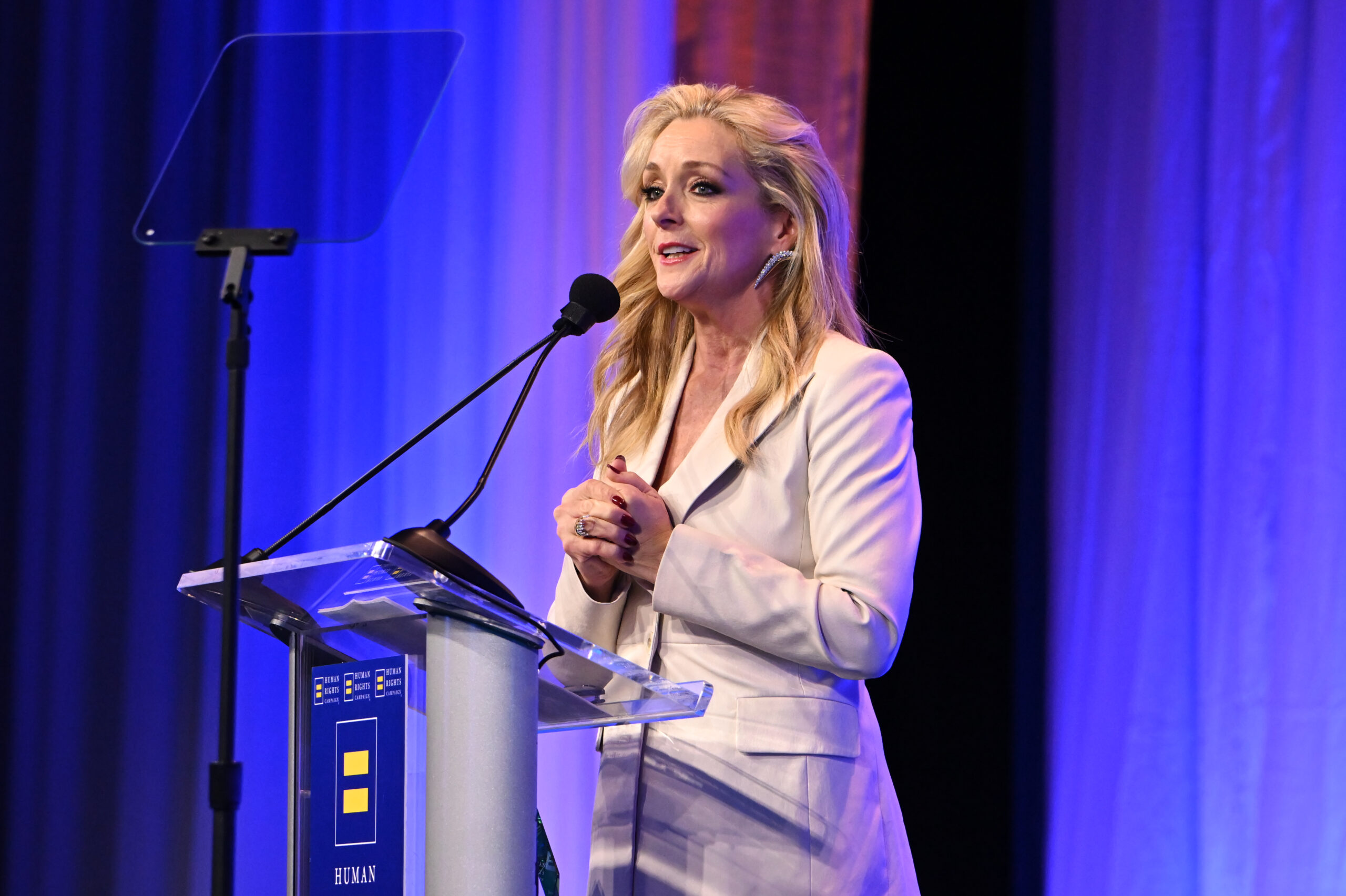
NEW YORK, NEW YORK – FEBRUARY 07: Jane Krakowski accepts the Ally for Equality Award onstage during the Human Rights Campaign 2026 Greater New York Dinner at Marriott Marquis Times Square on February 07, 2026 in New York City. (Photo by Bryan Bedder/Getty Images for Human Rights Campaign)
Designer Daniella Kallmeyer was honored with HRC’s Visibility Award for her impact as a queer woman shaping contemporary fashion. Kallmeyer used her remarks to acknowledge the communities that supported her career and challenged her accountability. “Thank you to those who kicked doors open,” she said, emphasizing that visibility is not an individual achievement but a collective one that carries responsibility. Her recognition highlighted the expanding role of fashion as both cultural expression and platform for representation.
Juli Grey-Owens received the Community Impact Award for her work advancing transgender rights across New York State. Earlier in the evening, Grey-Owens spoke on the blue carpet about the importance of recognition for communities that have historically been pushed into hiding. “When people are forced into invisibility, normalization becomes impossible,” she said. Grey-Owens emphasized the value of local action, noting that while federal change can feel distant, meaningful progress often begins at the state and community level. Her organization has been instrumental in advocating for transgender protections in New York, including mobilizing rallies and legislative efforts on Long Island.
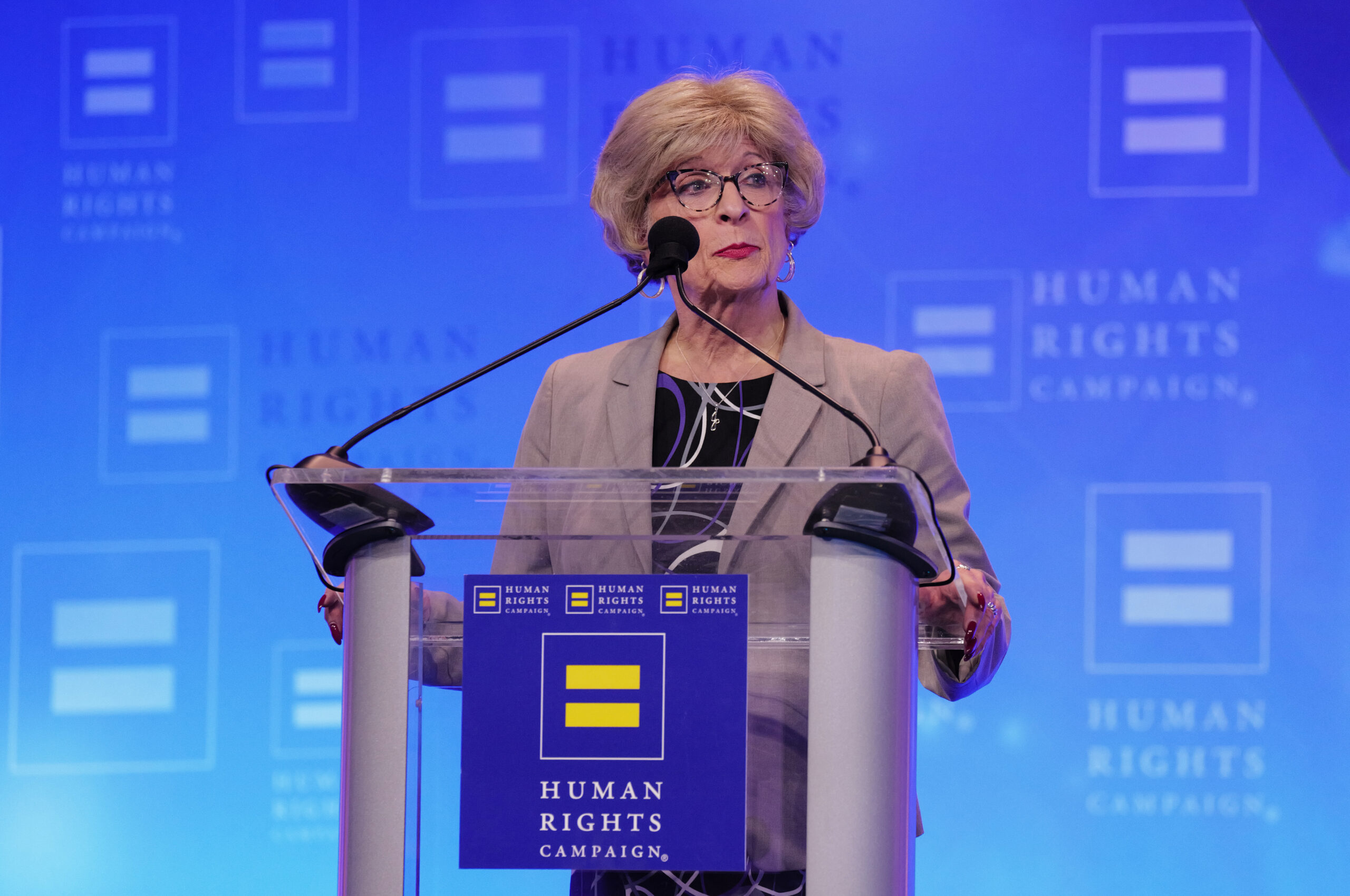
NEW YORK, NEW YORK – FEBRUARY 07: Juli Grey-Owens accepts the Community Impact Award onstage during the Human Rights Campaign 2026 Greater New York Dinner at Marriott Marquis Times Square on February 07, 2026 in New York City. (Photo by Craig Barritt/Getty Images for Human Rights Campaign)
HRC President Kelley Robinson followed with a speech that emphasized collective action and long-term vision. Robinson spoke about choosing hope and courage amid political setbacks, urging attendees to remain engaged rather than discouraged. “The question is not whether or not we can win,” she said. “The question is what are we willing to do.”
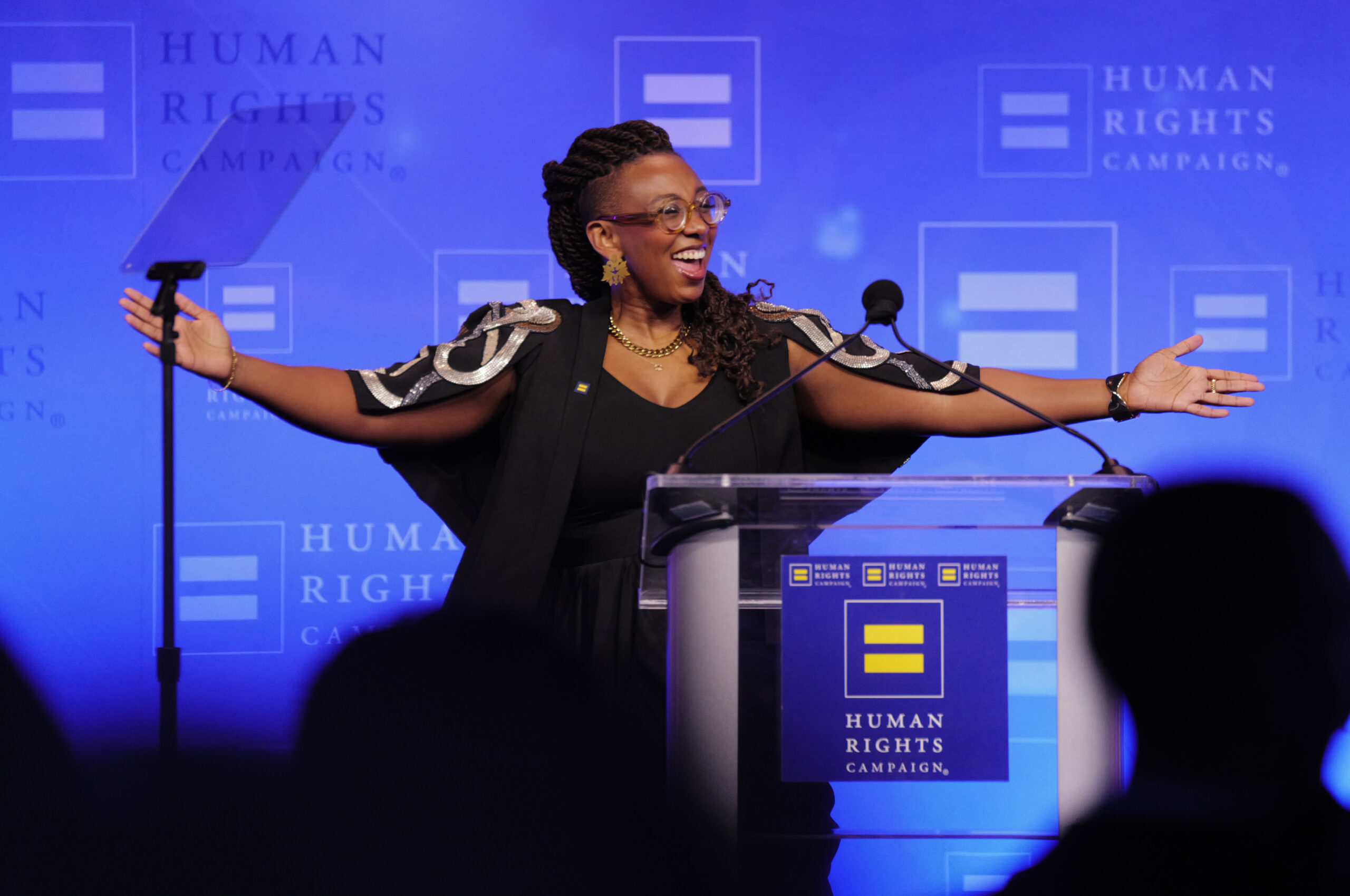
NEW YORK, NEW YORK – FEBRUARY 07: Kelley Robinson, President, HRC & HRC Foundation, speaks onstage during the Human Rights Campaign 2026 Greater New York Dinner at Marriott Marquis Times Square on February 07, 2026 in New York City. (Photo by Craig Barritt/Getty Images for Human Rights Campaign)
Elected official Senate Minority Leader Chuck Schumer spoke about recent electoral challenges and the need for continued vigilance against policies that threaten equality. Senator Cory Booker framed the current moment as one that has historically produced renewed empathy and social progress, emphasizing interconnectedness across movements. The guest list reflected the event’s intersection of culture and advocacy, attendees included actor and singer Tituss Burgess, The Gilded Age actress Louisa Jacobson, iconic NYC subway announcer Bernie Wagenblast, and comedian Dana Goldberg, among others. Their presence underscored the role of cultural figures in sustaining visibility beyond formal political spaces.
Throughout the evening, speakers returned to a shared theme that visibility remains both necessary and contested. The event resisted spectacle in favor of substance, prioritizing testimony, accountability, and coalition-building over celebration. The Greater New York Dinner reaffirmed HRC’s role not only as a civil rights organization but as a convening force at a time when LGBTQ+ communities continue to face coordinated challenges. The message echoed across speeches and conversations alike: progress is not linear, rights are not permanent, and presence whether through art, activism, journalism, or policy remains essential.


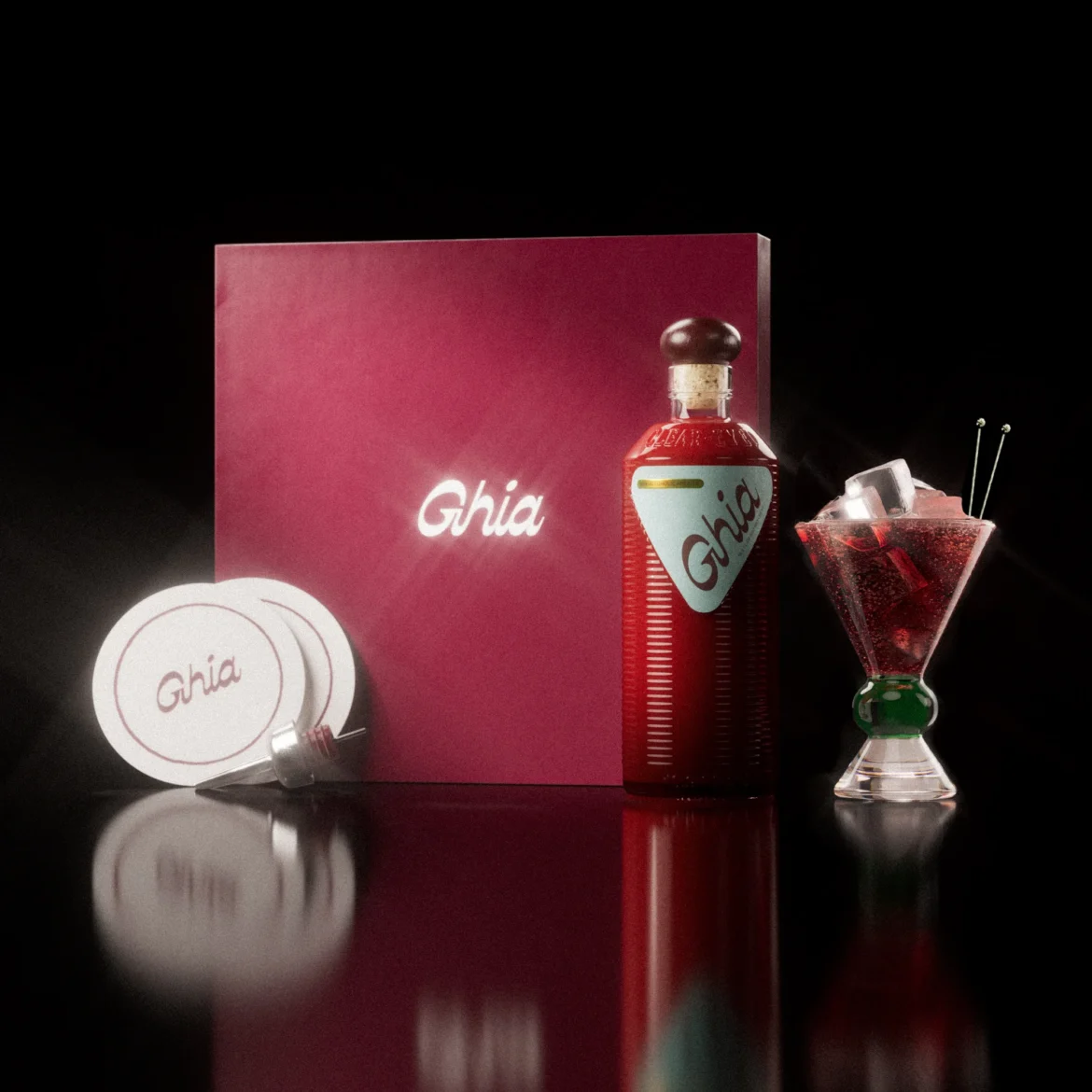
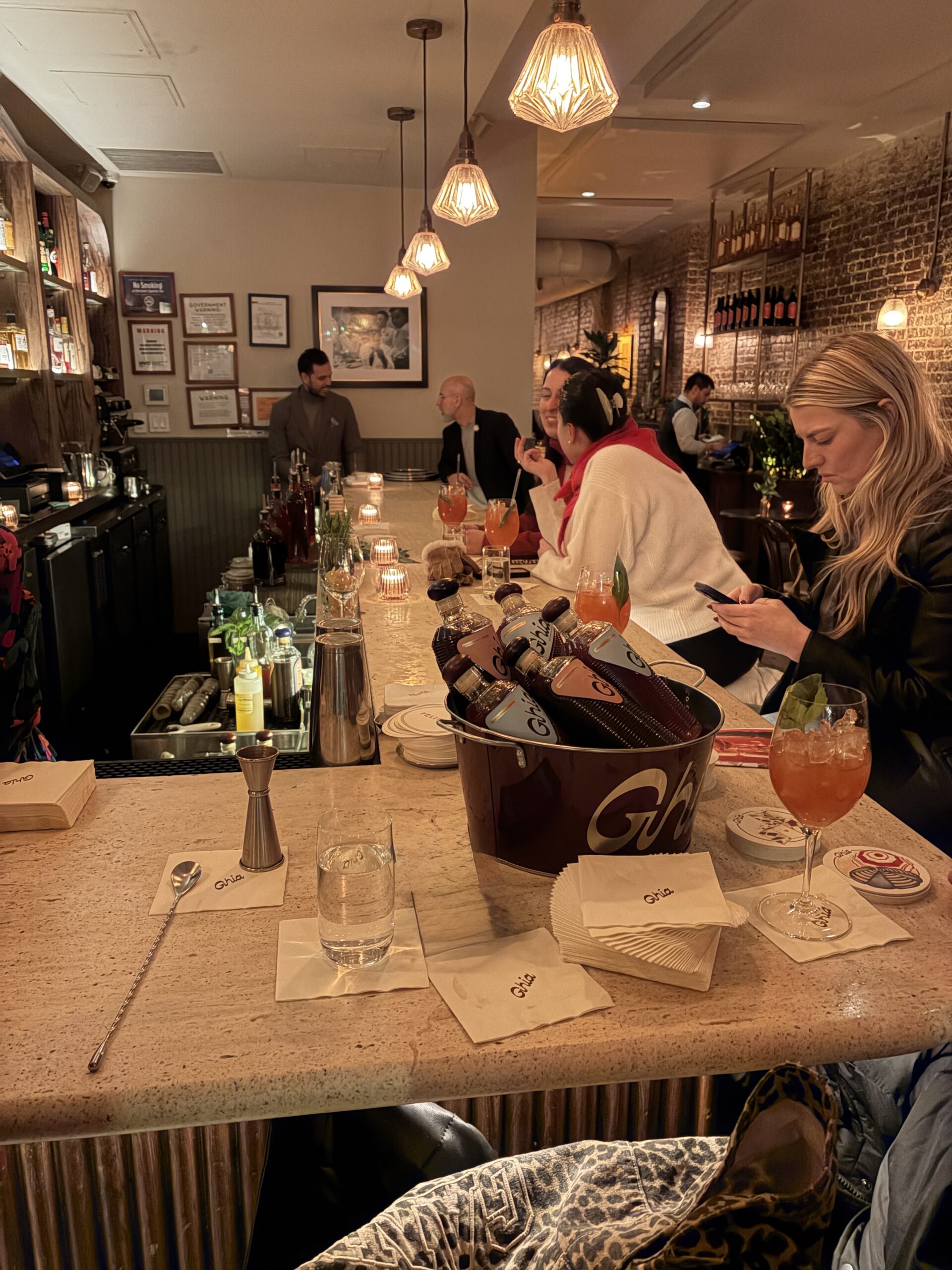
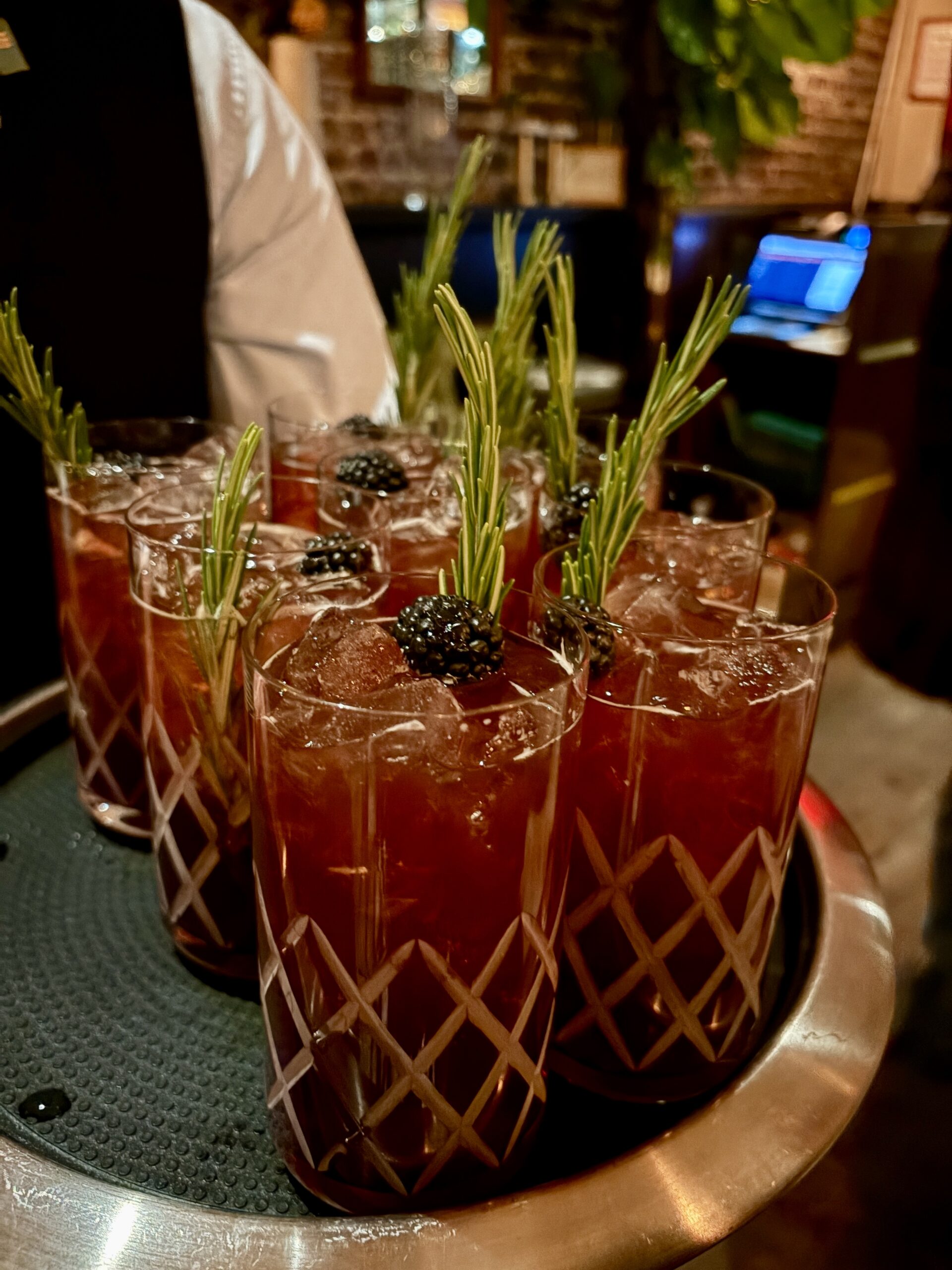 Masarin spoke candidly about Ghia’s origins, tracing the brand back to 2018, a time when the idea of a complex, nonalcoholic aperitif barely had a market. Originally planning to launch directly into restaurants in 2020, the pandemic forced a sudden pivot online. What might have stalled the brand instead reshaped it, and Ghia became something people welcomed into their homes, a grounding ritual shared digitally at a moment when connection felt scarce.
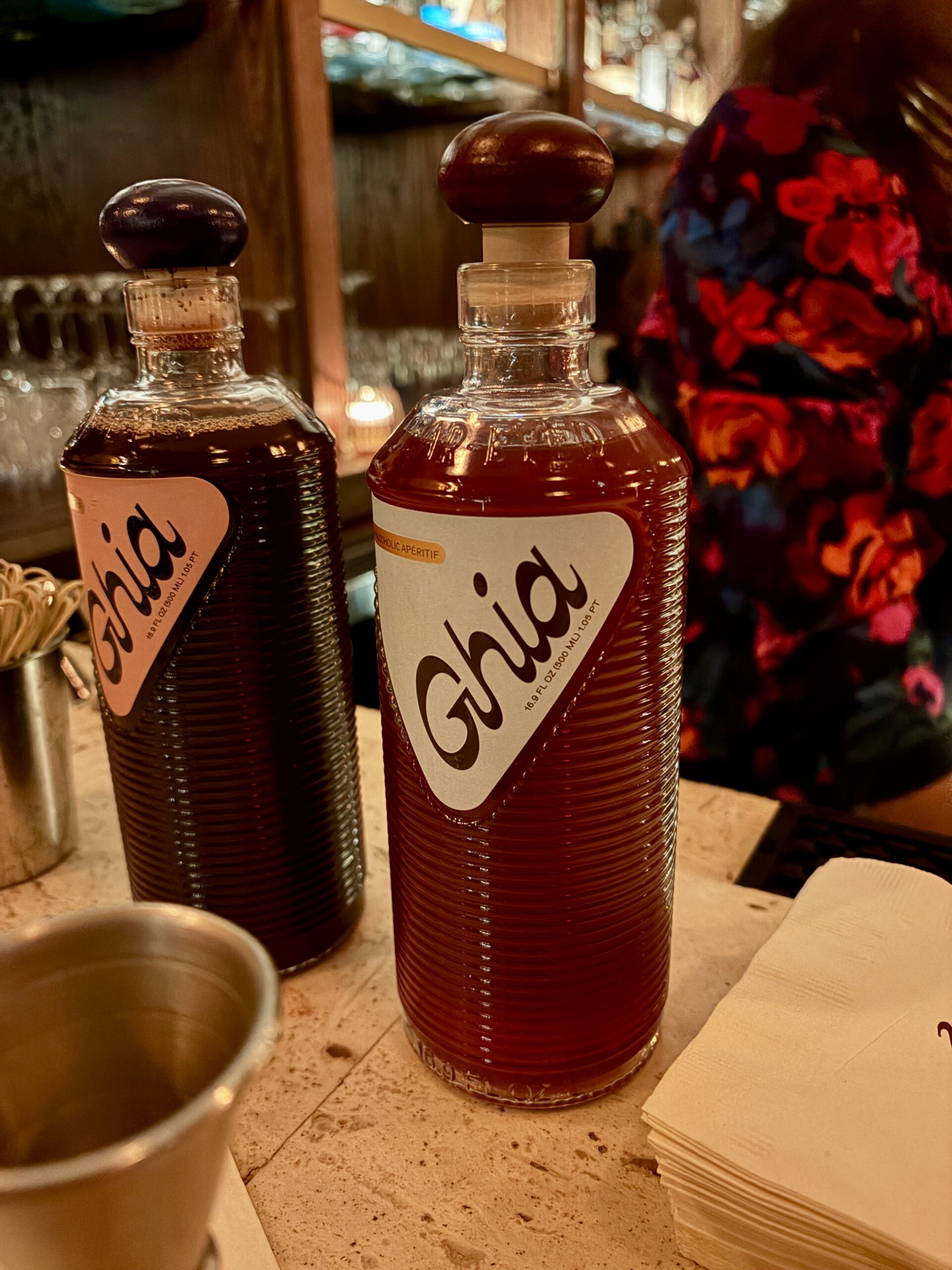 That inclusivity has shaped Ghia’s community. What began during lockdown as a personal ritual has grown into a cross-generational audience. While the brand resonates strongly with millennials, Masarin noted that older generations have embraced it just as readily. Today, Ghia appears on more than 1,200 menus across the United States and is carried by thousands of accounts nationwide, its growth driven less by trend cycles and more by restaurants recognizing a genuine shift in how people want to gather.
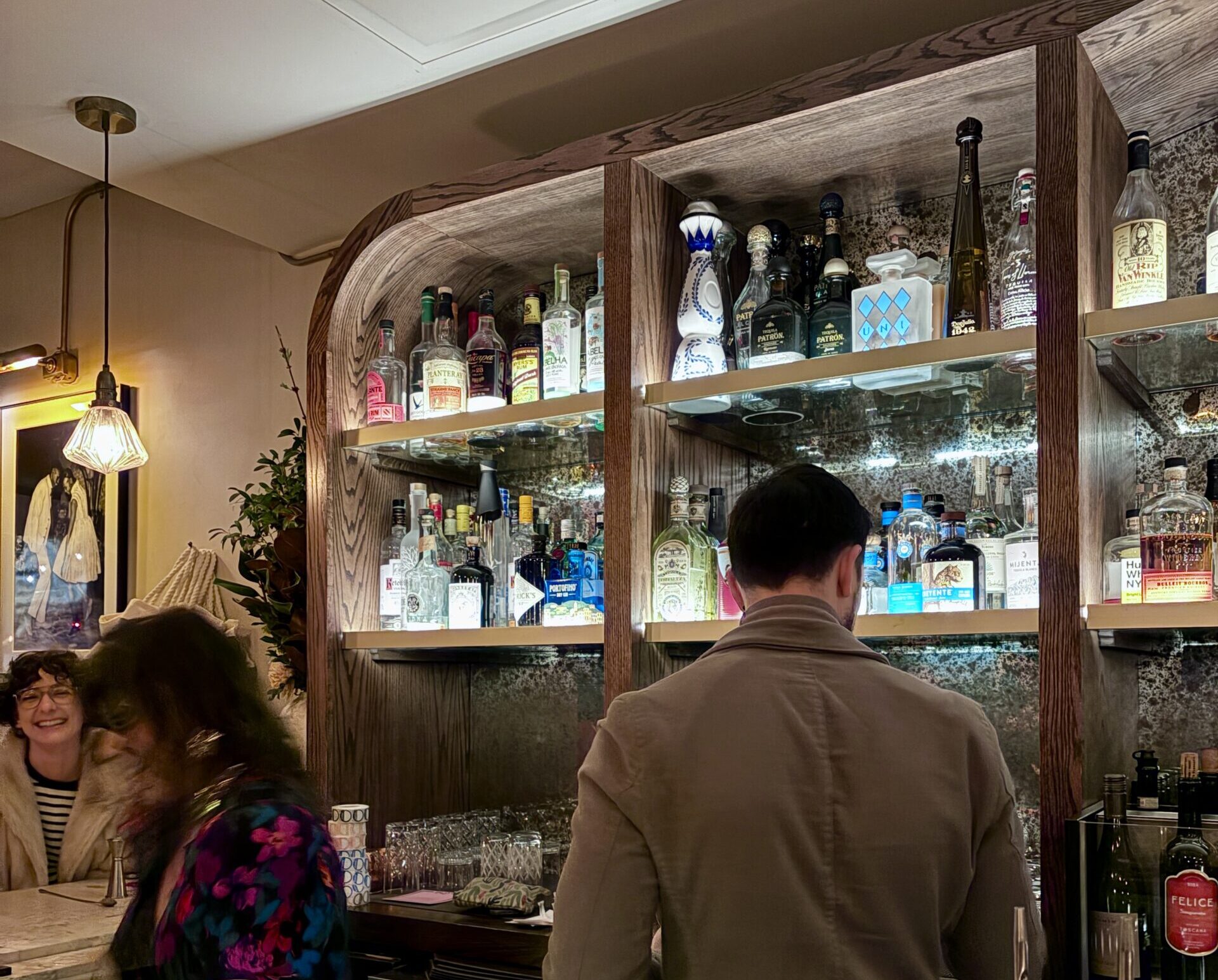 Felice’s menu grounded the evening with perfect savory pairings. Bruschetta topped with crushed tomato, garlic, sea salt, and Felice’s extra virgin olive oil on toasted bread opened the meal. Arancini was a standout, crisp and familiar, filled with tomato, mozzarella, and oregano. The night ended with fusilli al ferretto, dressed in San Marzano tomato sauce and finished with creamy stracciatella and basil. Each dish paired easily with the drinks, reinforcing the idea that these beverages belong at the table, not just the bar.
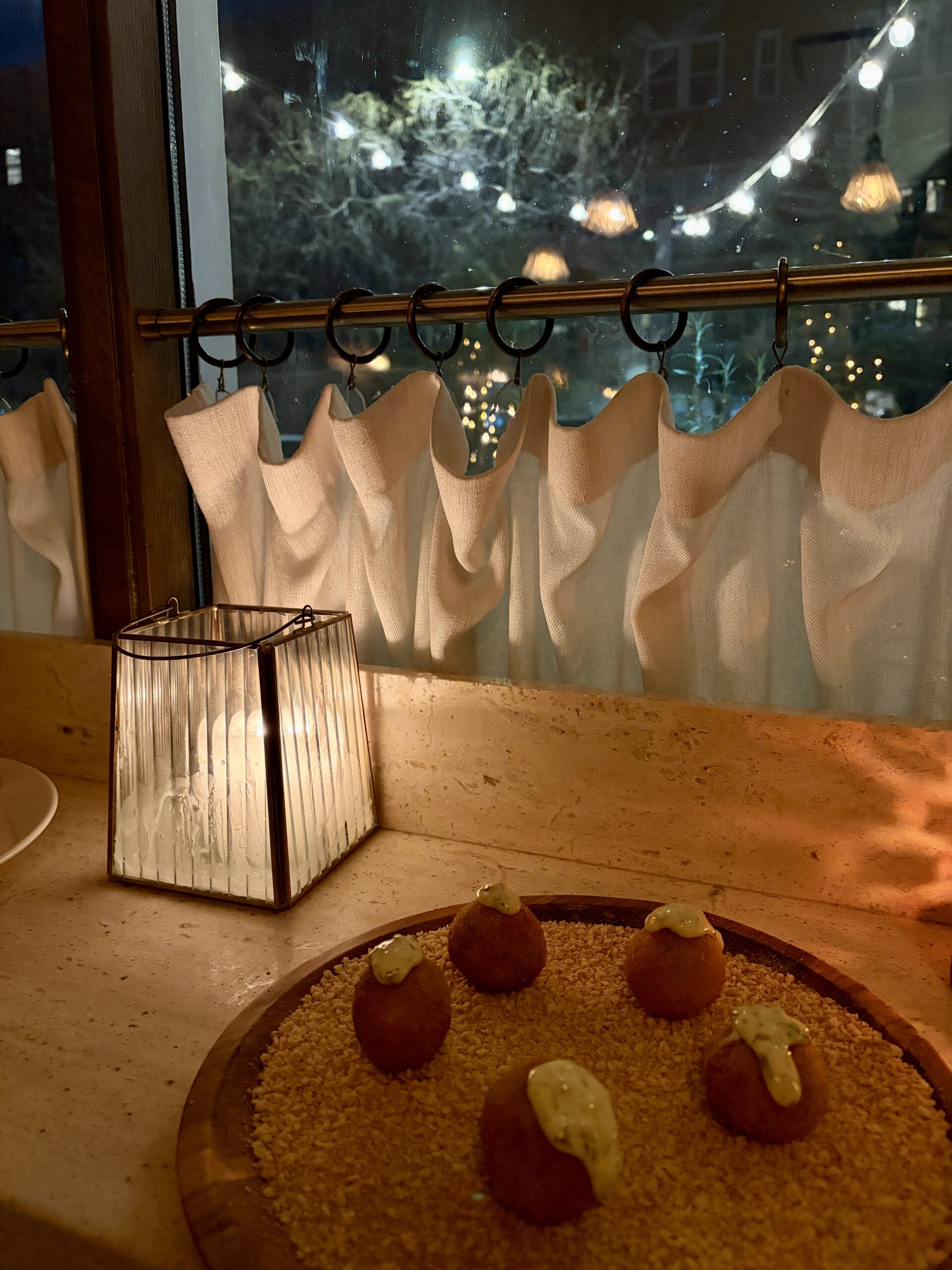 On a night when New York felt frozen and hushed, Felice Hudson became a small pocket of warmth and a reminder that celebration doesn’t need alcohol to feel complete, and that some of the most memorable evenings are built around intention. The room remained intimate, with guests mingling over thoughtfully made drinks alongside Masarin and the team, embodying Ghia’s philosophy as a way to gather, mark time, and enjoy complexity without compromise.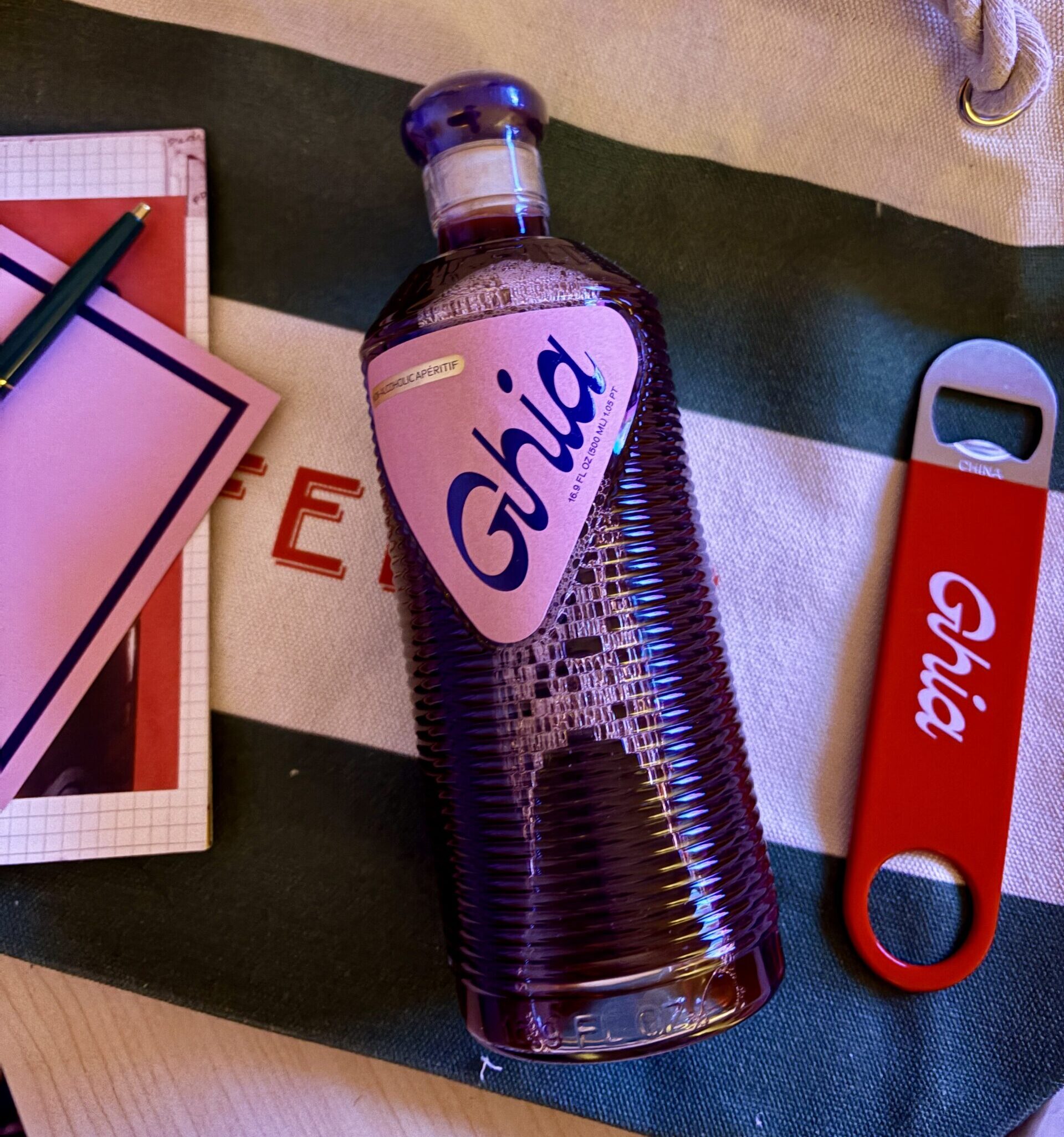

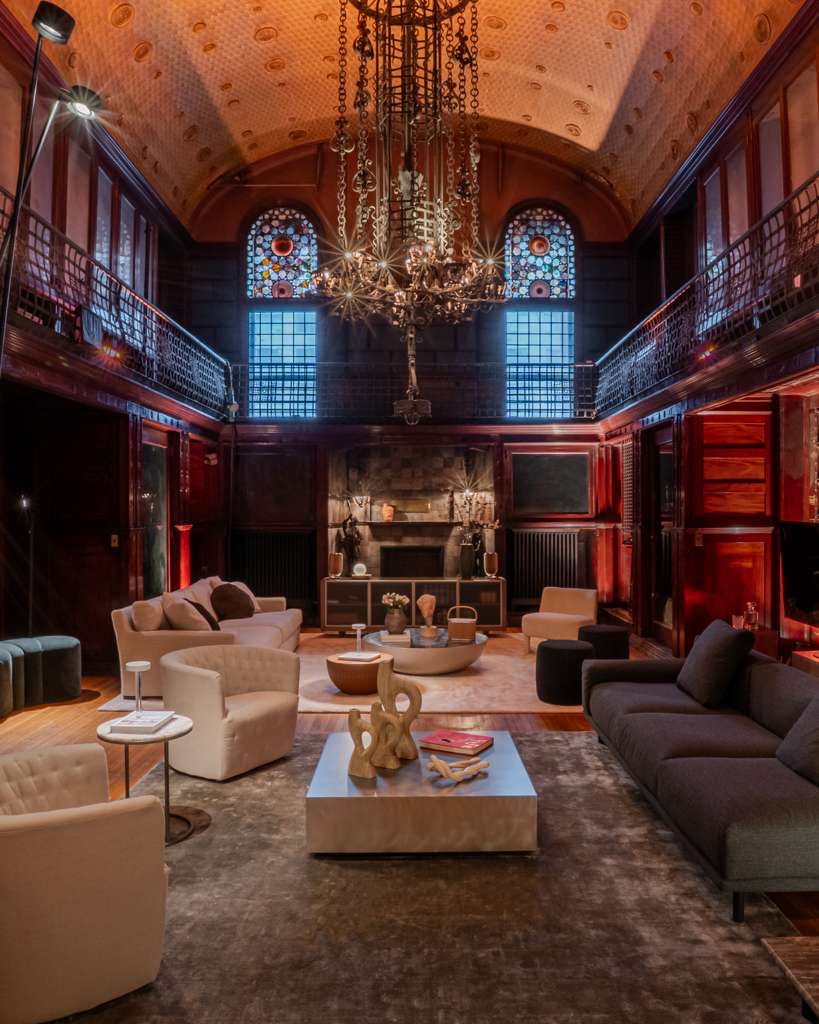 Sound also plays a central role in shaping the environment. An immersive audio program by Bang & Olufsen is integrated throughout the space, with speakers treated as sculptural components rather than visible technology. Audio functions as a material in its own right, influencing the pace and mood of the room. The effect is subtle but deliberate. The lounge feels lived in rather than staged, offering collectors and guests a moment of pause that remains fully in conversation with the fair.