In 1959, John Knowles released the coming-of-age novel A Separate Peace, depicting the relationship between two young men at a New England boarding school in the 1940s. Though World War II rages on in the background, the story is focused on the fractures in their relationship versus those inflicted by bombs. Yet throughout the story, the seemingly protected spaces the teens occupy begin to reflect the haunting realities of the time.
Tori Lancaster’s Mother Future Self, a story ignited in part by Knowles’ novel, has premiered at a similarly tumultuous time and offers a depiction of friendship that channels the way writers during turbulent historical periods used intimate stories to explore broader anxieties.
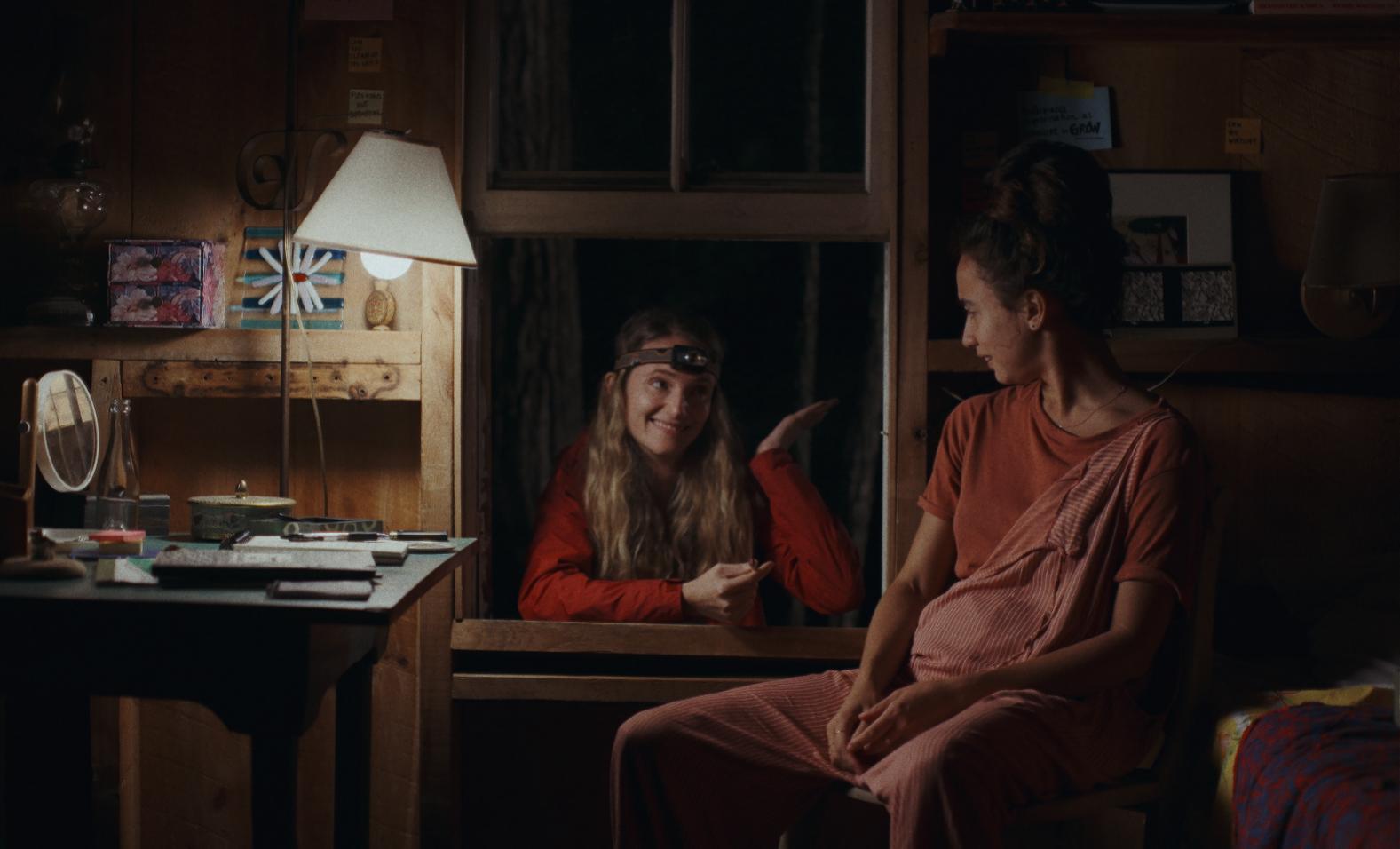
Lancaster’s debut feature, which debuted at the Tribeca Festival, follows estranged friends Sofi and Jordan (Imani Jade Powers and Betsey Brown) as they reconnect at an experimental dance camp in rural Maine. Nestled in an isolated space, the story feels cut off from the chaos of the current climate, yet drops of outside realities seep in.
“I really wanted to feel this campus, like this little protected microcosm inside this world that’s crazy and not that,” Lancaster told The Knockturnal. “I think maybe it is also just people knowing what the world is like today, suddenly stepping into the world of this film and feeling the contrast. It’s like the audience brings the awareness of the outside world.”
That contrast became especially meaningful because of the film’s own development history. Filming began in 2021 but was halted when a surge in COVID cases forced production to shut down. It’s no surprise then that Lancaster considers each movie “an insane miracle.”
The film ultimately took seven years to complete, a period during which Lancaster recalls that persistence was essential to the process.
“One of my mantras throughout the years with this has been: keep moving forward in service to the delusion,” she said with a laugh. “Everybody’s having some delusion in life of being like, this is the thing that’s most important. We all have that. So I had to continue, rather than being like, how is it all going to totally fall into place in the end? It was just, okay, next step, next step, next step.”
Lancaster spent years in various areas of production, building a career as a production designer and art director. It was work she continued while simultaneously trying to finish the film.
“It took seven years to make. A lot of that is because I had to support myself to be able to keep making this thing,” she added. “That is my experience of making art. You’re hustling, trying to make ends meet.”
Those realities are reflected in Sofi, the film’s central character, who serves as an artist-in-residence at the camp while simultaneously caring for the people around her.

(Courtesy Tribeca Fest)
The filmmaker was inspired to make the film after her own experiences at a unique summer creative arts camp reawakened her love of performance-making. Throughout the story, she repeatedly returns to questions of nourishment, caretaking, and sacrifice, particularly in a key scene involving a tick.
“What is the line between nurturing someone, feeding someone, versus being leeched off of? “There are obviously the motifs with the tick and the leeches, but even the act of feeding and Sofi’s actual role of feeding and caring for all these people,” she said.
That sentiment echoes throughout Mother Future Self, which touches on notions of invisible labor. In one of the film’s most impactful sequences, two performers depict the immense physical and mental strain caused by unacknowledged domestic work.
“The relationship between art and labor was something that was built into it,” she says. “To get to make art and spend time with it is a privilege and a rarity that you have to find. It’s like, how can I survive and be able to do that?”
The discussion arrives amid renewed scrutiny of how film crews are compensated. A recent post by Sally Choi, who served as the production designer of the horror film Obsession, detailed her modest compensation for the box-office smash. Her experience sparked broader conversations about how below-the-line craftspeople are compensated and credited for their contributions. Lancaster believes these online conversations will give audiences a glimpse into the vital work that creatives like Choi perform on set.
“With the rise of AI, especially for things like art departments and special effects, so much stuff can continue to be like, ‘Oh, it’ll just be AI,'” Lancaster says. “If viewers are interested in how things are made, they can actually move the needle. If people are excited by practical effects and real sets, that speaks to studios. Those are the livelihoods of so many working people in the industry.”
Mother Future Self feels like an extension of that message, illustrating the care and labor behind artistic creation while foregrounding the work of the crew who helped bring the film to life.
Beyond completing the film and seeing its debut at Tribeca, Lancaster hopes the piece will serve as a snapshot of a complicated era.
“It feels really important to me to be like, okay, here’s a stamp. A record of the time,” she says. “Whether nothing’s ever going to be perfect, this film isn’t perfect, but to me it has a lot of value being that record.”
