
The film follows the journey of Israa, a Syrian refugee who flees Aleppo with her family through Turkey and the Mediterranean to start a new life in Germany.
Through the years, we witness Israa’s life being permeated by the initial cultural shock and tensions surrounding her family traditional values and her own endearing rebelliousness. This family intimate evolution and process assimilation unfold alongside growing conflict with her father and political shifts in Syria. We see our main character navigate life with, as director MacInnes described in the post-screening talk, “a capacity for humor, love and forgiveness.”
The feature documentary, which took ten years to shoot, premiered at Sundance Film Festival of 2026 where Francie; Mullen, Co-CEO and Executive Director of Shine Global, saw it for the first time. “I think it is such a unique telling of this kind of story: it’s about belonging, about growing up,” said to the Knockturnal during the reception right after the screening.
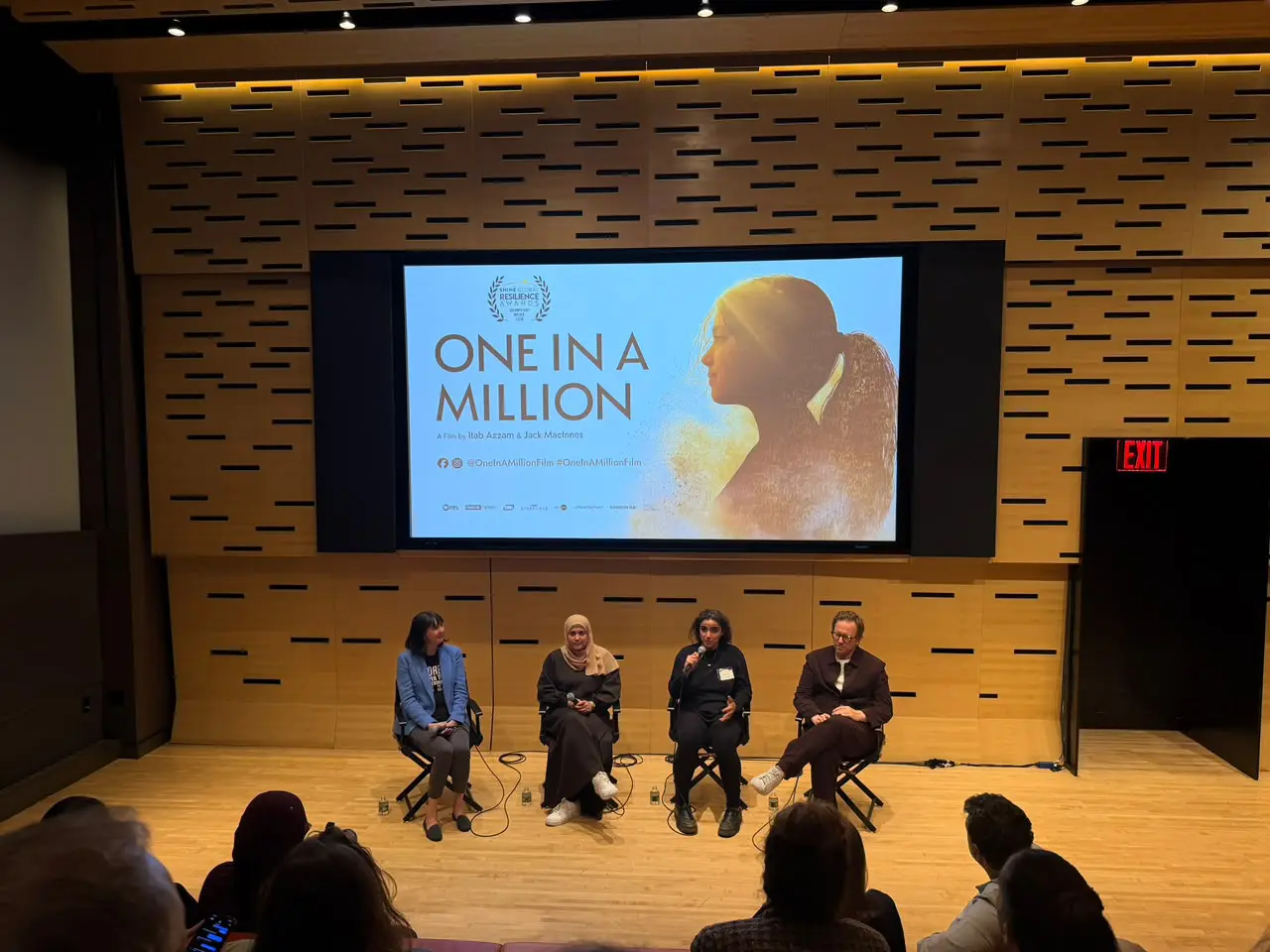
Director Jack MacInnes and protagonist Israa participate in a post-screening Q&A for ‘One in a Million.’ Photo by The Knockturnal.
During the a post-screening Q&A, MacInnes shared about the process he carried out with fellow director and partner Itab Azzam, “we were a young couple deeply invested in the Syrian story. Then, I was more like uncle Jack. We were spending a lot of time with her and there was some need to stay part of our lives. The film evolves out of that.” He added, “we felt that the reality that we were seeing and that we knew about was not matched by the media which tended to be very polarized.”
This documentary’s impact relies on Israa’s forward-looking and open-minded attitude, which offers a counterpoint to the horror and struggles of “navigating two different world and the breakdown of your family”, quoting the director’s take on the film’s exploration of resilience.
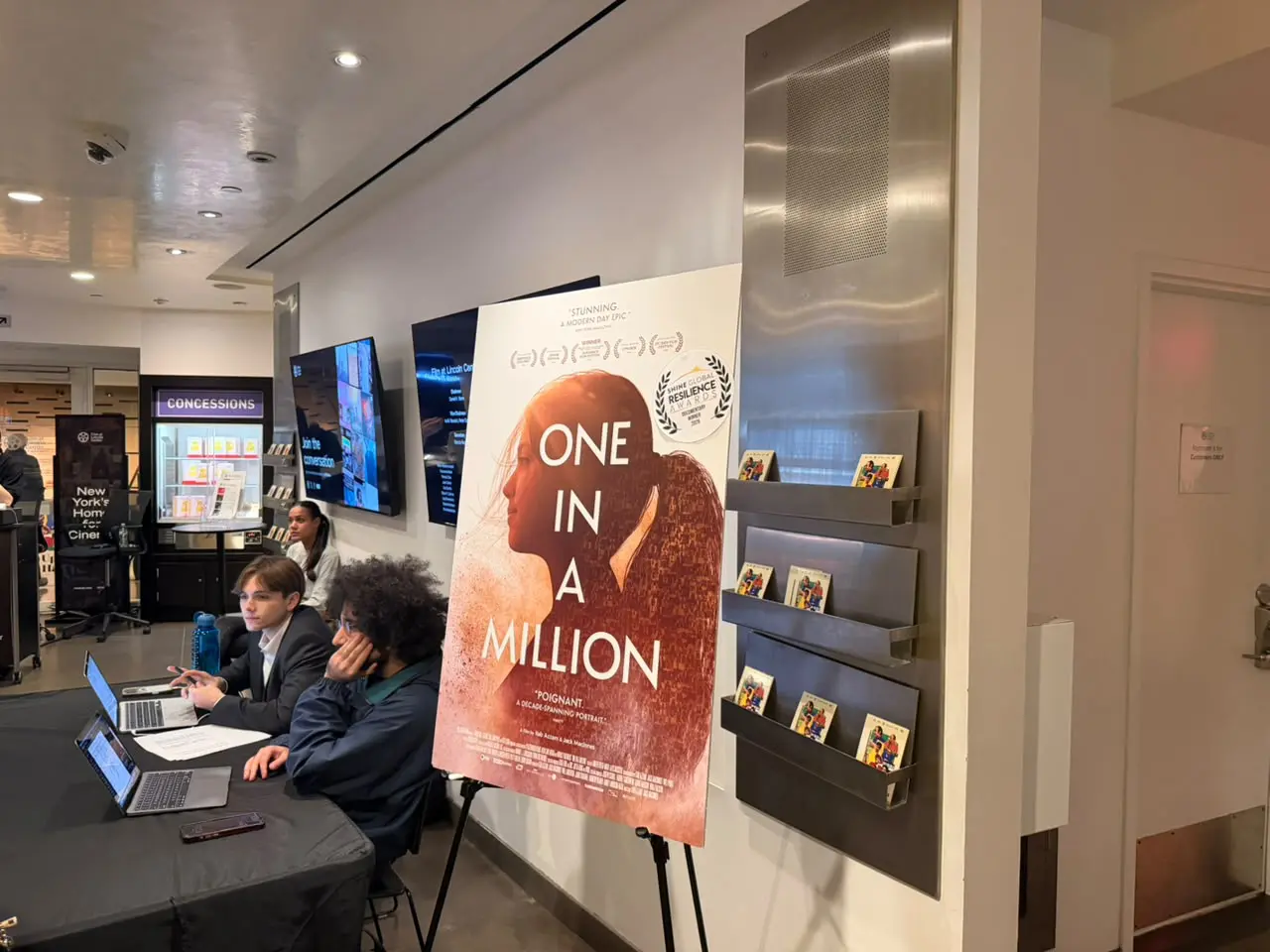
The poster for ‘One in a Million’ welcomes audiences to the Elinor Bunin Munroe Film Center for a special screening. Photo by The Knockturnal.
Israa’s own words underscore the importance of telling her story. “Refugees and displaced people mostly don’t have a voice. I felt I wanted to keep going so that I have an opportunity to raise my voice,” she said when asked why she chose to continue sharing her life story. MacInnes reflects on the significance of Israa’s journey, describing it as a reminder of “the privilege of not having to make that decision of where home is” —an idea that feels increasingly relevant today.
