Someone once described theater to me as escapism in its purest artistic form a place where audiences can shed inhibitions and fully immerse themselves in the show. So, we must ask the question: How does the mastermind behind New York City’s hottest new theatrical experience push this idea even further, past the point of no return? The answer isn’t as clear as it might seem.
In fact, it may require us to look beyond the mask.
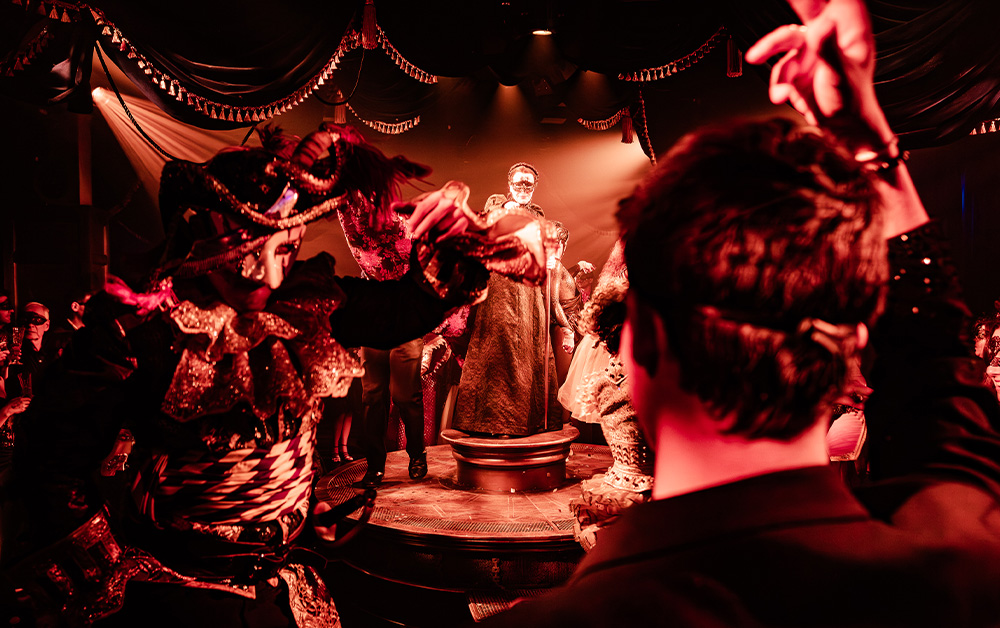
Tucked inside what appears to be just another historic building in New York City is Randy Weiner’s newest creation, Masquerade, a reimagining of Andrew Lloyd Webber’s Broadway juggernaut The Phantom of the Opera. But Masquerade does more than bend the rules of theater, it breaks them, dissolving the traditional boundaries between audience and performer. Here, spectators are not merely observers; they are placed directly inside the story, immersed in Christine Daaé’s haunting encounter with the Opera Ghost.
For Weiner, the seeds of this immersive vision were planted early. Born in New York City and raised by a devoted theater enthusiast, he spent his childhood steeped in performance. His father often took him to see two shows a day, embedding in him a deep connection to the Broadway world. By the time he reached college, Weiner was already experimenting with form turning his dorm room into an unconventional performance space.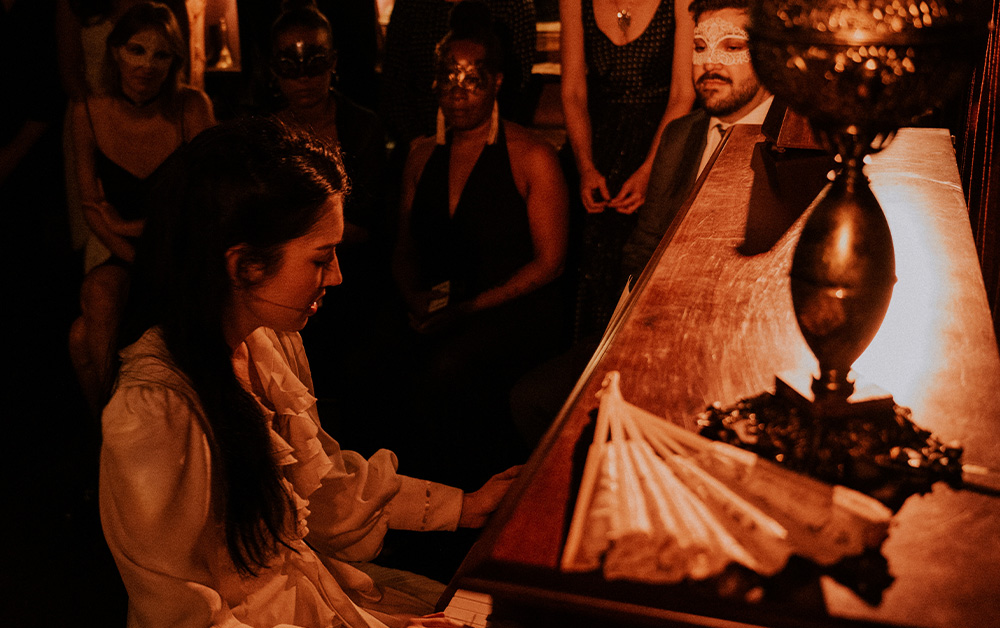
And does he succeed in that goal? Well, as the doors swung open and the hands of a woman we would soon recognize as our Christine Daaé (Riley Noland) guided us into a party once reserved for the stage, a sense of freedom lifted us. I glanced over at my friend, saw him smiling, and in that moment, I knew we would carry this moment with us for the rest of the night. From being sacrificed at a hellish carnival to an improvised dance class taught by Madame Giry herself, we were invited deeper into the mind of Weiner, falling more in love, like Daaé and Raoul. We were left wanting to live permanently in this world.
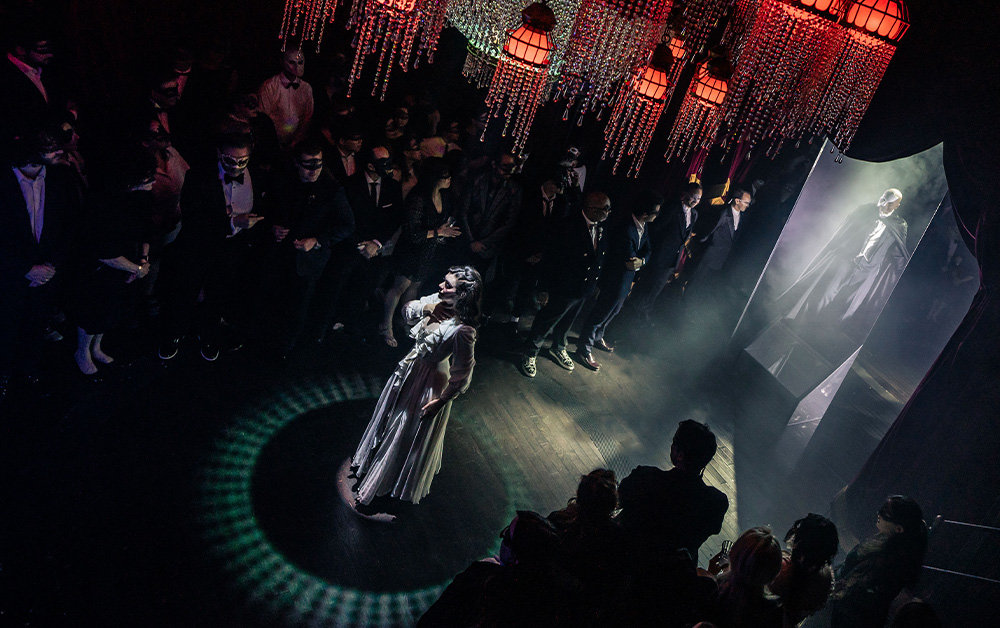
“You are used to actors interacting with each other, not them interacting with you. The way people would describe my experience is like it happened to them. And they would describe it like a vacation in another city like I did this and I did that, as opposed to they did that on the stage.”
Masquerade is not just a retelling, but a transformation of a classic tale. One that challenges audiences to step inside the story itself, blurring the line between spectator and participant. In Masquerade, the mask is no longer a barrier. It is an invitation.