The Drama is a darkly offbeat exploration of love, commitment, and the unraveling of carefully constructed facades.

The Drama is a darkly offbeat exploration of love, commitment, and the unraveling of carefully constructed facades.
The Knockturnal exclusively spoke to executive producers Roy Lee and Steven Schneider of the upcoming horror film “undertone” during the 2026 Sundance Film Festival in Park City, Utah.

British pop sensation Charli XCX (Charlotte Emma Aitchison) reflects on the worldwide success of 2024 album ‘brat’ with a film that doubles as a mockumentary and insight into the singer’s life that examines the meaning of success and an artist’s struggle to preserve both their integrity and identity.
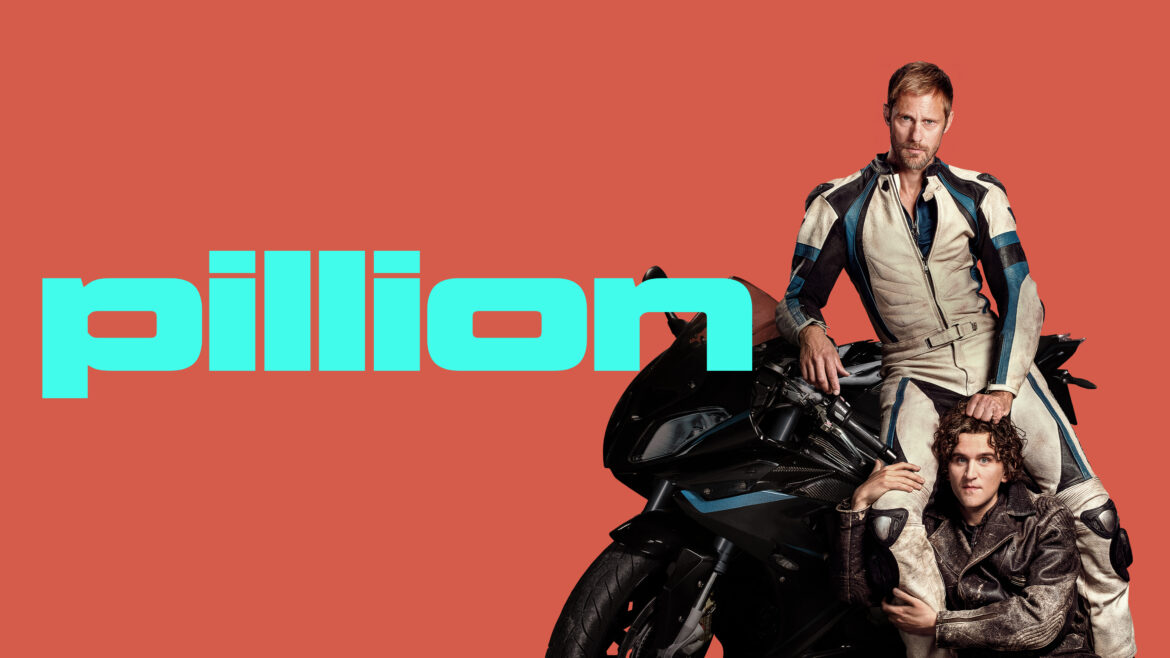
Harry Lighton’s Pillion is a striking debut feature that announces its intentions early: this is a film unafraid of discomfort, ambiguity, or contradiction. Starring Alexander Skarsgård and Harry Melling, it explores intimacy, power, and self-discovery with a candor that is rare in mainstream cinema. While its subject matter may narrow its audience, Pillion distinguishes itself through careful performances, tonal control, and a clear refusal to simplify the emotional terrain it enters.
The story centers on an unlikely connection between two men whose lives operate on very different frequencies. Melling plays a socially awkward, emotionally guarded young man whose routines provide structure but little fulfillment. Skarsgård portrays his counterpart as confident, commanding, and opaque, a figure who seems entirely comfortable occupying space and setting terms. The film’s tension arises not from plot mechanics but from the evolving dynamic between these two personalities, as attraction, curiosity, and uncertainty intertwine.
Melling delivers a performance of considerable sensitivity. His character could easily have been reduced to a collection of familiar traits—shyness, insecurity, passivity—but Melling resists caricature. Instead, he conveys a quietly observant interior life, suggesting intelligence and self-awareness beneath the hesitancy. Small physical choices—hesitant posture, fleeting eye contact, nervous humor—build a portrait of someone both fearful of and hungry for transformation. It is a performance that asks for patience from the audience and rewards it with emotional credibility.
Skarsgård’s role is more enigmatic by design. His character exerts control not only through physical presence but through restraint, often revealing little about his inner world. Skarsgård leans into this opacity, crafting a figure who is charismatic yet difficult to read. At times, this distance can feel frustrating, but it also mirrors the perspective of the other character and reinforces the film’s themes around imbalance, projection, and desire. Skarsgård’s stillness becomes a narrative tool, allowing the audience to feel both the allure and the unease of such authority.
Lighton’s direction is measured and confident, particularly notable given the potentially sensational nature of the material. Rather than pushing for shock value, the film often emphasizes awkwardness, negotiation, and emotional consequence. Scenes that could have been played for provocation are instead grounded in character psychology. The camera frequently lingers at a respectful distance, allowing moments to unfold without editorializing. This restraint helps maintain a tone that is reflective rather than exploitative.
Visually, Pillion favors muted palettes and uncluttered compositions, reinforcing the emotional isolation of its characters. The cinematography avoids overt stylization, opting instead for a naturalistic look that keeps attention focused on faces, gestures, and silences. The pacing is deliberate, sometimes even austere, which may test viewers accustomed to more conventional narrative momentum. However, this rhythm aligns with the film’s interest in incremental change rather than dramatic revelation.
One of Pillion’s most notable strengths is its refusal to instruct the audience on how to feel. The film presents a relationship shaped by clear imbalances—emotional, experiential, and interpersonal—but it does not frame these dynamics in simplistic moral terms. Instead, it invites viewers to sit with ambiguity and consider how agency, consent, and self-definition can coexist uneasily. This approach will resonate strongly with some and alienate others, but it reflects a thoughtful commitment to complexity.
The film also benefits from moments of dry, sometimes uncomfortable humor. These touches prevent the tone from becoming overly solemn and highlight the absurdities that often accompany vulnerability. Humor here is not used to deflate tension but to humanize it, acknowledging that intimacy is frequently strange, embarrassing, and inconsistent.
That said, Pillion is not without limitations. Its narrow focus and emotional reserve may leave some viewers feeling distanced, particularly those seeking clearer insight into all characters involved. The film’s restraint, while admirable, occasionally borders on withholding, and certain emotional beats may feel underdeveloped as a result. These choices appear intentional, but intention does not always translate into satisfaction.
Ultimately, Pillion is a film that prioritizes emotional honesty over comfort and observation over explanation. It is anchored by strong performances and guided by a director willing to trust both his material and his audience. While it may not offer broad appeal or easy takeaways, it stands as a confident, thought-provoking work that lingers precisely because it refuses to resolve its tensions neatly. For viewers open to challenging subject matter and understated storytelling, Pillion offers a distinctive and quietly compelling experience.

Reader beware, a few spoilers ahead.
Chants across social media scream “’Marty Supreme’ on Christmas Day,” but who exactly is Marty — and what’s his obsession with orange ping pong balls? That was the question I walked in with ahead of A24’s screening at Cinépolis in Inglewood, California, introduced by Hawthorne’s very own Tyler, The Creator.

Harry Lighton’s “Pillion” made its New York debut at the New York Film Festival. Lighton, Alexander Skarsgård, and producer Emma Norton attended the premiere.

What do you get when you combine a 1960s classic noir film with the hustle and bustle of the New York music scene?
A new series from Amazon and A24 follows college freshman Benny as he navigates his new environment and attempts to make friends—, ll while remaining closeted.

Meet Ramy Youssef’s latest project, a coming-of-age adult-animated series called #1 Happy Family USA. Although this show premiered this week on Amazon Prime, Ramy showcased at SXSW last month and premiered the first 3 episodes.
In a raw and revealing conversation, journalist Terzel Ron from The Knockturnal sat down with the cast of A24’s Warfare, the gritty, immersive war film co-directed by Alex Garland and former Navy SEAL Ray Mendoza. With its unflinching portrayal of a real 2006 mission during the Iraq War, Warfare is less about glorifying combat and more about exposing the emotional and physical toll of it.