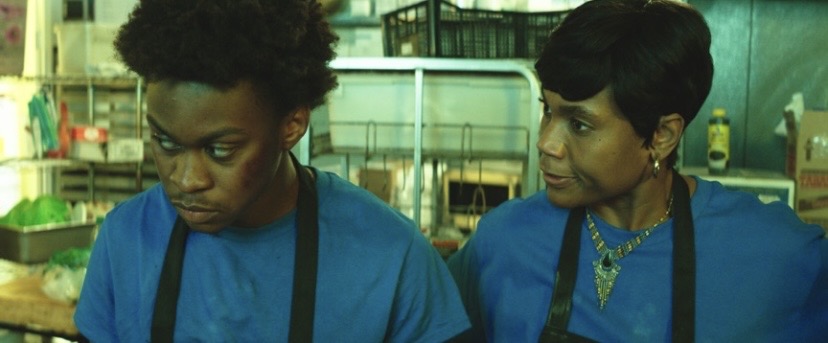
As part of the American Black Film Festival’s (ABFF) 30th anniversary celebration, the festival’s Series Selection category continued its mission of amplifying the unique voices of Black, Caribbean, and African filmmakers.
With May recognized as Haitian Heritage Month, one standout pilot that captured audience attention was Ti Blan, written and produced by recent New York University Tisch School of the Arts graduate Noah Petion Laforest.
Ti Blan follows a Haitian-American teenager who is sent to live with his estranged grandmother, where reconnecting with his culture through his family’s restaurant forces him to navigate family expectations, identity, and belonging.
Laforest developed the project as his NYU thesis film, assembling a cast made up primarily of emerging Haitian talent. Rooted in his own experiences growing up Haitian-American, Ti Blan explores the journey of reconnecting with one’s heritage, family, and sense of identity.
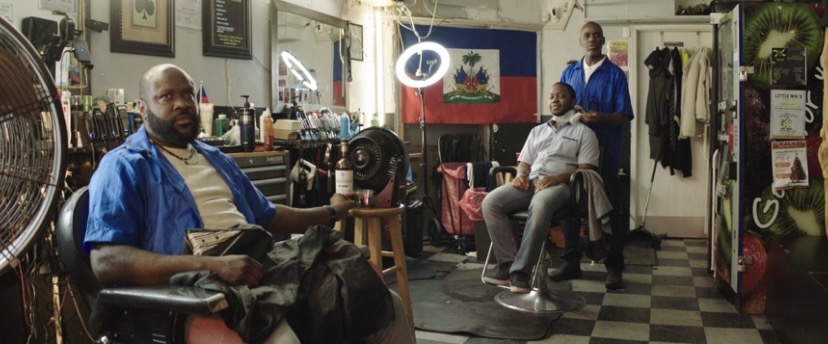
Director of Photography: Dre Monteros
First of all, great job on the pilot! The title Ti Blan is even more hilarious given the context of the story. What inspired this project?
Thank you so much! The story of Ti Blan all started a few summers ago when I was working at my family’s restaurant. The title comes from a moment in the kitchen, which is actually a scene in the pilot, when one of the chefs called me “Ti Blan.” I asked my cousin what it meant, and she explained that it was because I didn’t speak Creole.
Laforest go on to say The idea stuck with him immediately which sparked the foundation for what would later become the film.
I really enjoyed seeing highlights of the beautiful Haitian culture throughout the film — the food, the importance of family, and the language. Why was it important for you to show those elements?
For decades, a lot of the narratives about Haiti have focused on struggle, poverty, or crisis, and while those realities exist, they don’t tell the full story. I wanted to highlight the beauty that’s always been there: the food, the language, the traditions, the sense of community, and the importance of family. Those are the things I grew up around and the things that have shaped me. By showing these everyday moments and traditions, I wanted to present a more authentic and human portrayal, one that celebrates the richness of the culture rather than reducing it to the misconceptions people may have.
In the film, I noticed there was a language barrier between the main character, Junior, and his father’s side of the family — specifically his grandmother and aunt. I think a lot of kids who grew up in America with immigrant parents can relate to that experience. Why did you want to shed light on that dynamic?
It felt very personal to me. Being the child of immigrants often means navigating two worlds at once. There’s the pressure to assimilate and be American, while also feeling a responsibility to stay connected to your culture and where your family comes from. The language barrier is one of the clearest examples of that tension. Through Junior, I wanted to explore what it feels like to reconnect with a culture that can sometimes feel distant and show that connection isn’t just about speaking the language; it’s about understanding where you come from and finding your place within it.
You touched on a common Caribbean parents’ mindset when it comes to their children pursuing careers in the arts instead of becoming doctors or lawyers. Can you speak on your personal experience with that?
I was extremely fortunate to have Haitian parents who’ve always supported my creativity, but I’m aware that it’s not always the case. As a kid, I went through many phases, but my parents always invested in my interests and nurtured them.
Laforest credits his parents’ consistent encouragement for shaping his creative journey. He adds that their enthusiasm for Ti Blan reflects a deep family investment in his work.
You mentioned the “3 L’s,” which is a cultural staple in the Haitian community: Lekòl, Lakay, Legliz. Growing up Haitian, we often joke about how much our parents emphasized those values, but now that we’re adults, do you better understand why they ingrained them in us as kids?
Totally. I think even when I was younger, I understood where it was coming from, even if I didn’t always appreciate it. Looking back now, I realize those values were really about creating a strong foundation. Education, family, and faith were seen as the things that could guide you no matter what challenges you faced. As I’ve gotten older, I’ve come to appreciate that those three pillars really encapsulate so much of what you need in life. They provide structure, identity, and purpose. Even if every Haitian kid jokes about hearing those words growing up, I think many of us eventually realize how much they shaped who we are.
Lastly, Griot or Tasso?
Griot 100%.
