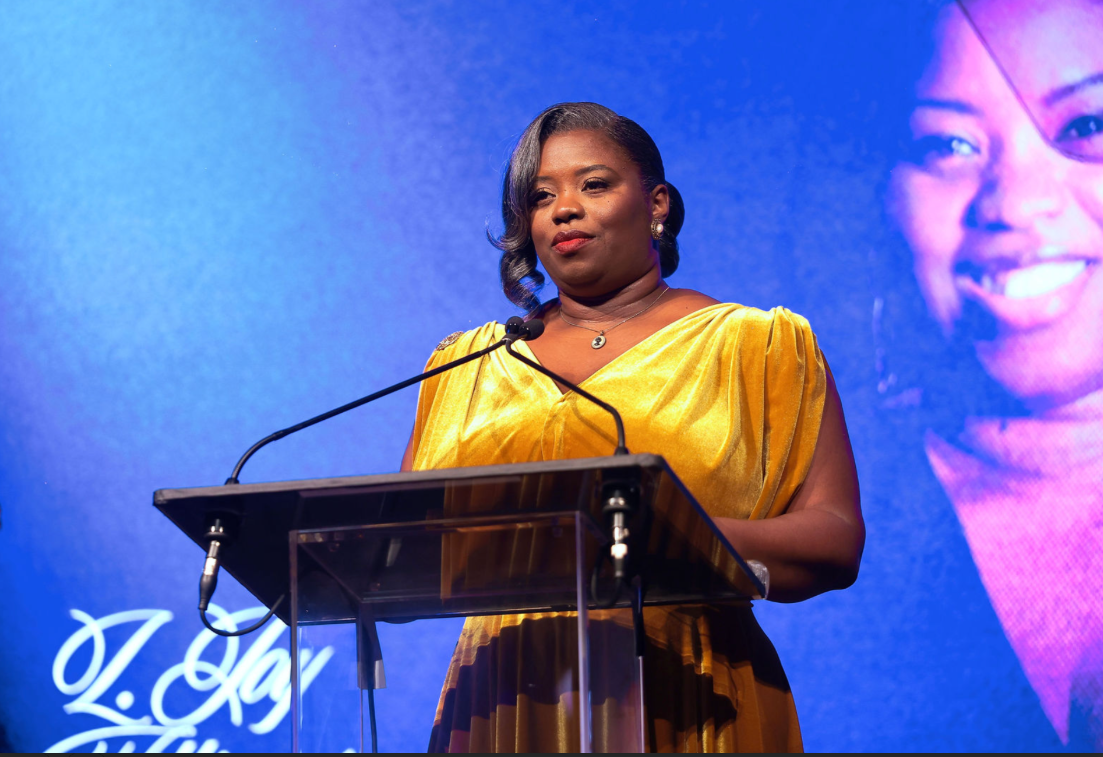
The NAACP NYS Conference celebrated 90 years of civil rights advocacy, community leadership, and social impact at its Generations of Justice Gala on October 9, at Capitale NYC in Manhattan.
The milestone event was hosted by Radio Hall of Fame host, four-time Gracie award recipient, and media entrepreneur Angela Yee, whose work has consistently amplified voices, fostered community, and created pathways to empowerment. The evening brought together industry leaders, social and civil advocates, and cultural changemakers to honor the generations who helped advance the movement while reaffirming a commitment to equity and justice for the future.
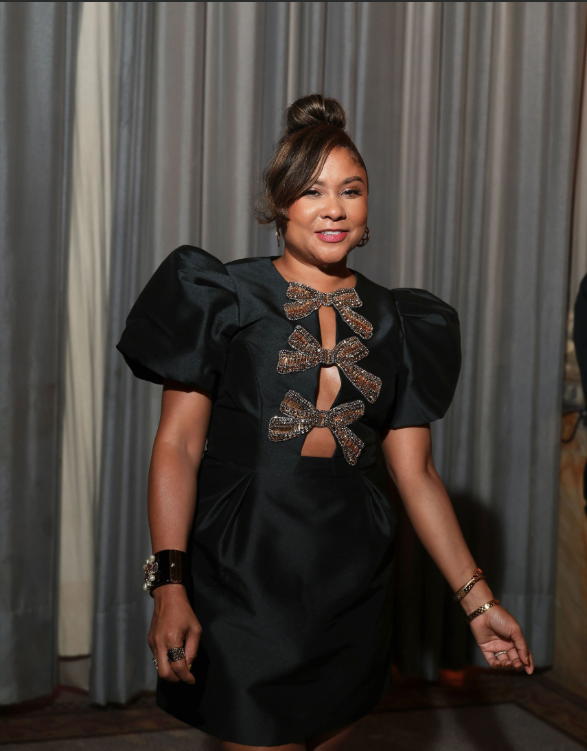
Angela Yee hosts the 2026 NAACP Generations of Justice Gala
The evening recognized four distinguished honorees whose work spans fashion, healthcare, Broadway, and labor advocacy. Fashion designer Brandon Blackwood received the Design & Distinction Award; healthcare executive Andrew L. Davis, MBA, received the Health & Humanity Award; three-time Tony Award-winning producer Lamar Richardson was presented with the Stage & Story Award; and labor leader, Candis Tall received the Labor & Legacy Award.
Blackwood, founder and creative director of Brandon Blackwood New York, has built a prominent fashion brand rooted in his Brooklyn beginnings. Davis, president and CEO of Erie County Medical Center Corporation, was recognized for his healthcare leadership. Richardson continues to champion underrepresented voices through theater and film, while Tall, the promising executive vice president of 32BJ SEIU, has helped advance worker protections and labor initiatives across multiple states.
On the blue carpet, The Knockturnal spoke with honorees and organizational leaders about the importance of advocacy, representation, and building a lasting legacy for Black New Yorkers.
In an interview with Candis Tall, recipient of the Labor & Legacy Award, the conversation centered on the relationship between labor advocacy and economic justice. Tall was asked, “What does economic justice look like for working Black New Yorkers, and what still needs to change?”
“Economic Justice looks like us having a ‘bigger share of the pot’. We have fought at 32BJ to lift the standards for workers. Just a few months ago, we helped pass legislation in the city council that raises wages for Security officers, a majority of black workforce. It wasn’t just about the wages (because yes, people need money) but people also need paid time off and people also need healthcare. A lot of folks that are filing bankruptcy are people who can’t afford their healthcare; or get procedures and then they get a bill that they can’t afford. We were able to shift that in legislation and that’s what economic justice looks like. Its lifting standards, it making sure people have benefits and its making sure people are able to retire with some dignity. For example, 401Ks, they look scary right now; so, these unions are put in place to make sure workers have a pension. More and more people are realizing the power of unions and how they can have a real life and a real living wage and actually be able to take care of their families. I am so proud to be doing that work at SEIU 32BJ to lift up black workers in particular.”
Additional questions explored what it takes to turn labor campaigns into lasting policy changes that improve workers’ lives, as well as how the labor movement can create stronger opportunities for Black workers and the next generation of leaders.
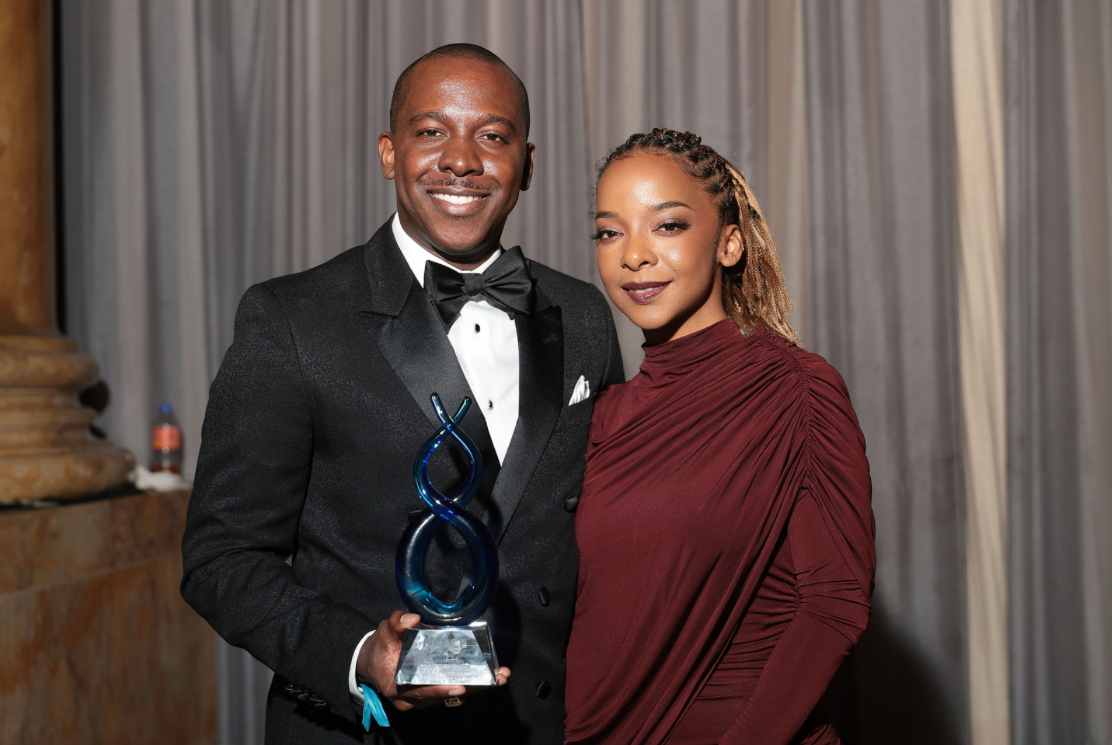
Actress Kara Young presents Tony Award winning producer Lamar Richardson, the Stage & Story Award
Lamar Richardson, recipient of the Stage & Story Award, expressed his gratitude and discussed the significance of storytelling and representation in the arts. Richardson was asked what Black stories still need to be told and preserved for future generations. Richardson answered confidently, “There’s so many. We’re a diaspora. We’re not a monolith. My family is from the Caribbean, Antiqua, and there are the ones of us, our people, who are Foundational Black Americas and our African brothers and sisters and there’s room at the table for all of us. The one that gets through the door does not represent the ‘many’. That’s not the case at all. It’s my job to nudge that door open and make sure that those people are able to come through those doors and tell their stories.” The conversation also explored what the NAACP means to him personally and its impact on the culture.
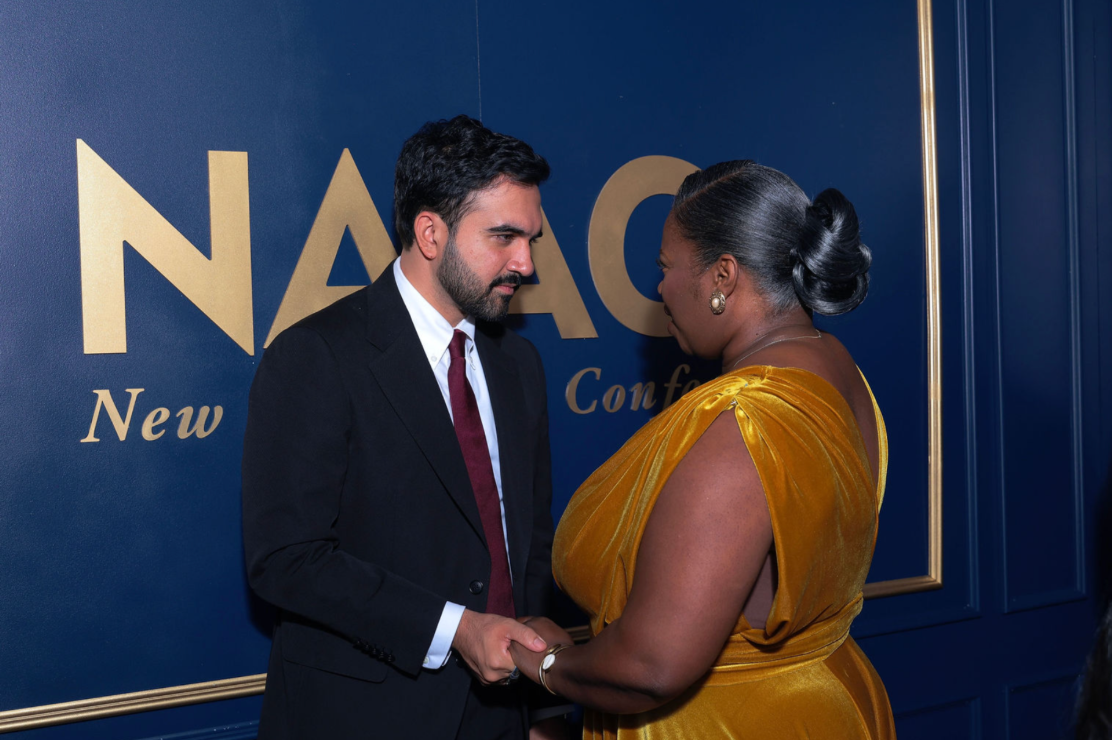
Mayor Mamdani shares a moment with LJ Williams ahead of the NAACP Generations of Justice Gala, which he helped kick off with opening remarks.
Additional blue-carpet conversations included LJ Williams, president of the NAACP New York State Conference, and Charles Johnson, Esq., the Conference’s Political Action Chair, highlighting the leadership and civic engagement central to the organization’s mission. LJ Williams shared that the most important part of carrying the legacy of the NAACP forward, “I think making sure that we have the recommitment and knowing that we are the caretakers of our own history. We are to preserve our history and teach it to future generations and to tell an accurate story of who we are and what we’ve done. The next thing is to make sure we are dedicating ourselves to the work and positioning it so that the next generation can take up the baton and go further than we’ve gone.”
Upon the closing of the blue carpet, guests entered into an open hall, while dining on lite bites and sparkling champagne. Special guest appearances included Mark Levine of the New York City Comptroller Office; Jumaane D. Williams of District 45, Williams served as Deputy Leader of the New York City Council, and chair of the council’s Committee on Housing and Buildings. He also co-chaired the Council’s Task Force to Combat Gun Violence, and a founding member of the Progressive Caucus, and is a member of the Black, Latino & Asian Caucus. Presenters and attendees included Two-time Tony Award Winning Actress Kara Young, Governor Kathy Hochul, Attorney General Leitia James. Also in attendance, New York City’s prized Mayor, Zohran Mamdani opened the gala with an inspiring forwarding message of hope and celebration for the NAACP, black new yorkers and the resilience of the five boroughs of New York City to impact change. The gala featured inspiring storytelling, tributes to trailblazers and emerging leaders, live entertainment, and star-studded performances. A Legacy Vault served as a time capsule of historical items and artifacts documenting the Conference’s 90-year history. Guests also experienced a silent auction and the Generations of Style VIP Lounge, hosted by legendary media personality Bevy Smith.
As the Conference celebrated this milestone, the evening honored its history while emphasizing the continued work required to advance civil rights, economic opportunity, and justice for generations to come.
To learn more about the NAACP and its fight to end racial inequality, be sure to visit the website at NAACP.org
