On December 2, the American Austrian Foundation hosted its Music for Medicine fundraiser event among a mix of supporters, artists, and medical leaders.
The Open Medical Institute, the program at the center of the evening, has a mission that trains physicians from low-income countries and sends them back equipped with skills their home systems rarely have room to teach. Since the early nineties, it has awarded more than thirty thousand fellowships.
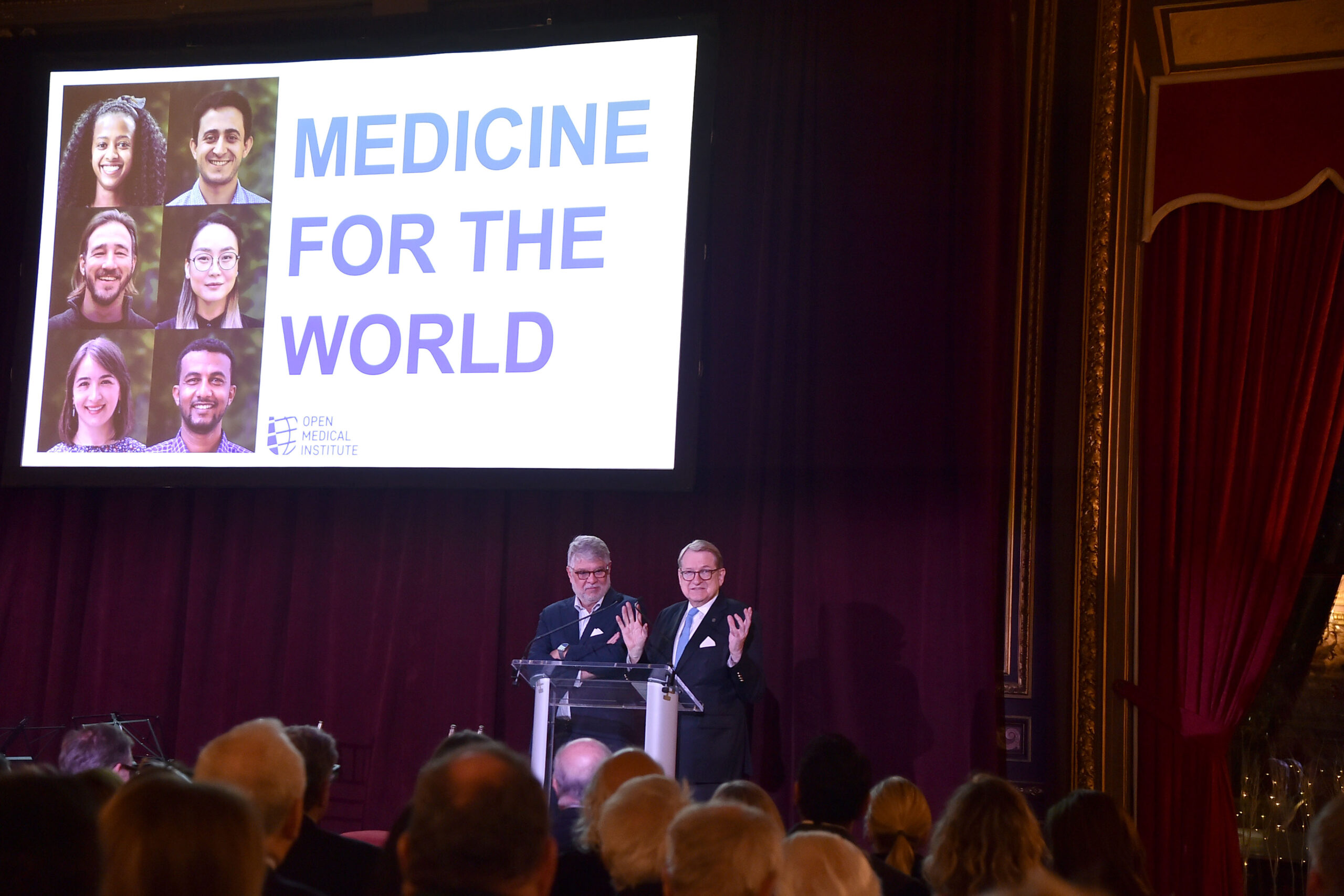
Pablo Legorreta and Dr. Wolfgang Aulitzky (Photo by Patrick McMullan/PMC)
When AAF President Robert P. Wessely reminded the crowd that trust in medical expertise shifts while demand for training does not, his comments resonated with the audience. CEO Wolfgang Aulitzky followed with a story about a Nigerian doctor who attended OMI’s early otology sessions in Salzburg and returned home to build the busiest cochlear implant team in the country.
This shift set up the night’s most anticipated moment. Three members of the Vienna Philharmonic took their seats in front of an audience that had settled into a kind of focused quiet. Violinist Yamen Saadi, violist Sebastian Führlinger, and cellist Bernhard Naoki Hedenborg opened with Schubert’s String Trio in B-flat Major. The playing was clean and steady, with a sense of exactness carried without strain. Beethoven’s String Trio in C Minor followed. The piece has more grit and momentum, and the trio caught its shape quickly. Saadi’s lines were clear and direct, and Führlinger’s tone added an even warmth, while Hedenborg kept the sound grounded with a sense of control that never felt heavy.
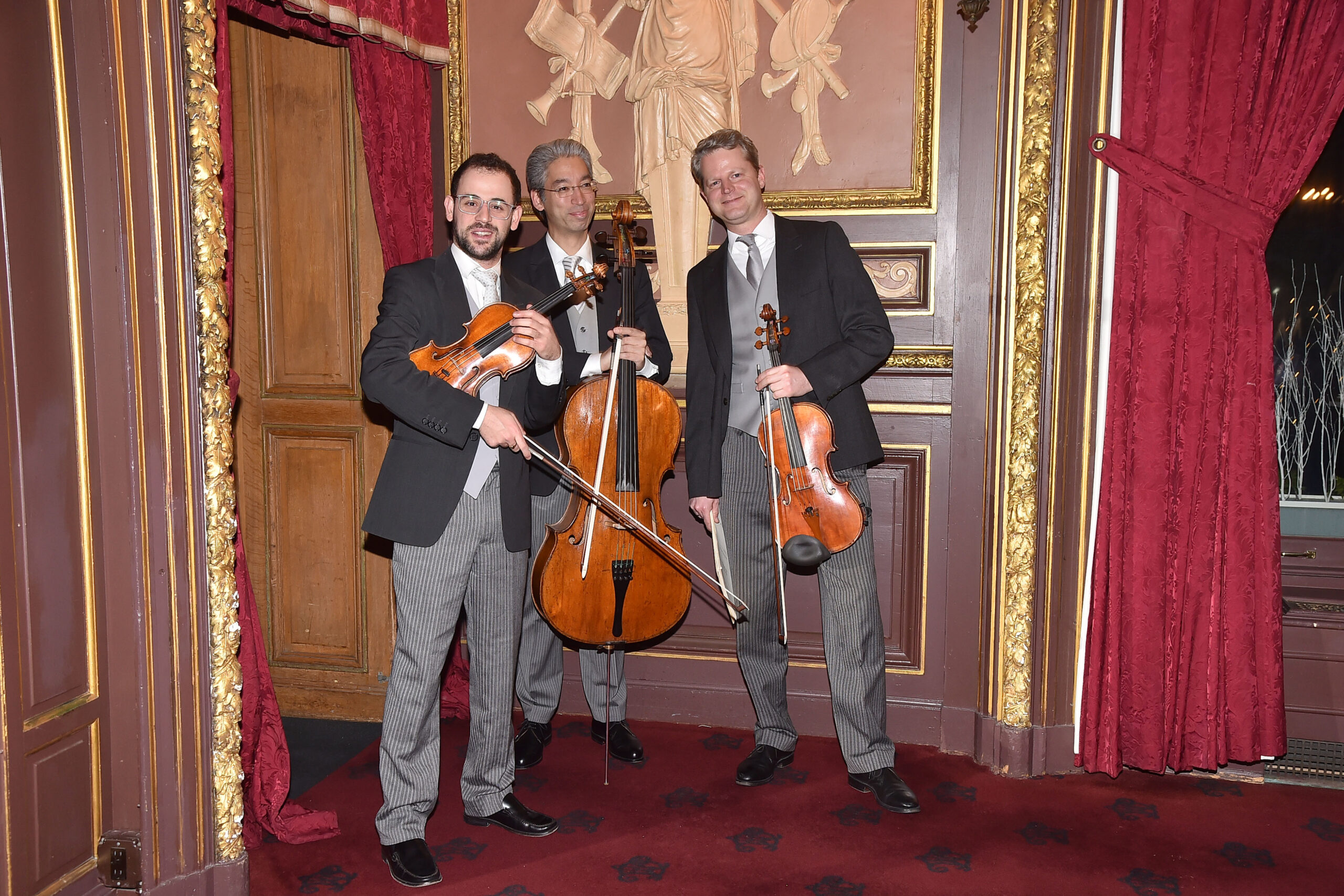
Yamen Saadi, Bernhard Naoki Hedenborg and Sebastian Fuehrlinger (Photo by Patrick McMullan/PMC)
The trio kept the audience captivated during the performance, with heads angled slightly forward and hands resting still.
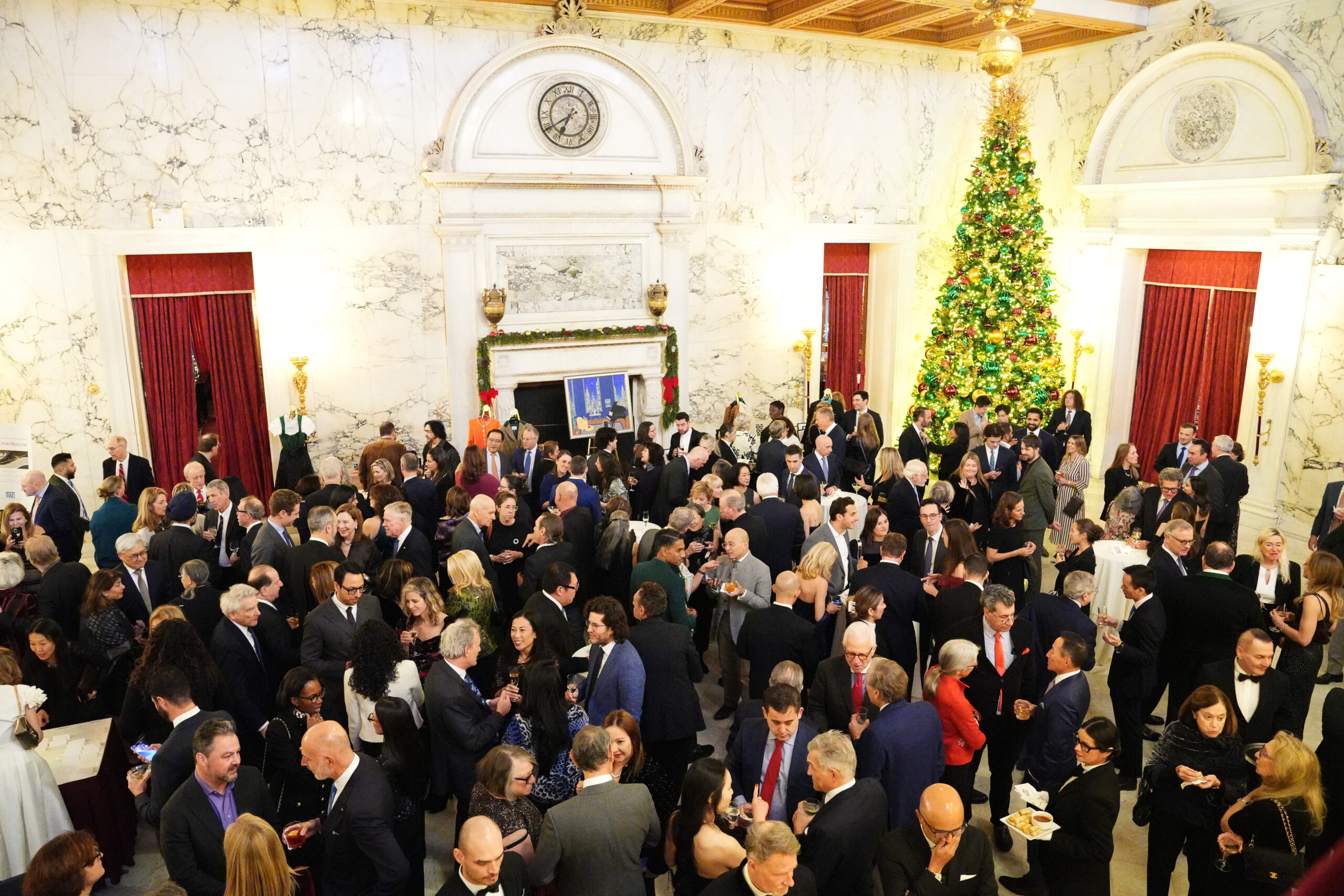
The crowd included a mix of AAF board members and New York regulars who understand the rhythm of nights like this. Jeanne Andlinger and Margaret Crotty were present along with Antonio M. Gotto and Mathias Bostrom. American Ballet Theatre’s Skylar Brandt and Vladimir Rumyantsev were also in the room. Conversation between pieces moved from the music to the growing reach of OMI’s work. Pablo Legorreta, chairman of AMDA, spoke about the Mexico-based partnership that has brought more than five thousand doctors to Salzburg for training and has grown into a national program that trained more than five hundred physicians last year.
What stood out was how the music and the mission echoed each other. Both depend on expertise shared in close quarters. Both rely on small groups doing precise work that scales far beyond the room. Nothing during the night tried to inflate that connection. It appeared naturally in the way the audience listened, the way the musicians played, and the way the organization described its impact.
(Photo by Jared Siskin/PMC/PMC)
By the time people began to leave, the atmosphere had shifted again. The club was still elegant but felt less formal and more aware. Music for Medicine ended without spectacle, but it did not fade. It left the impression of an evening that understood its purpose and delivered on it with clarity rather than volume.
