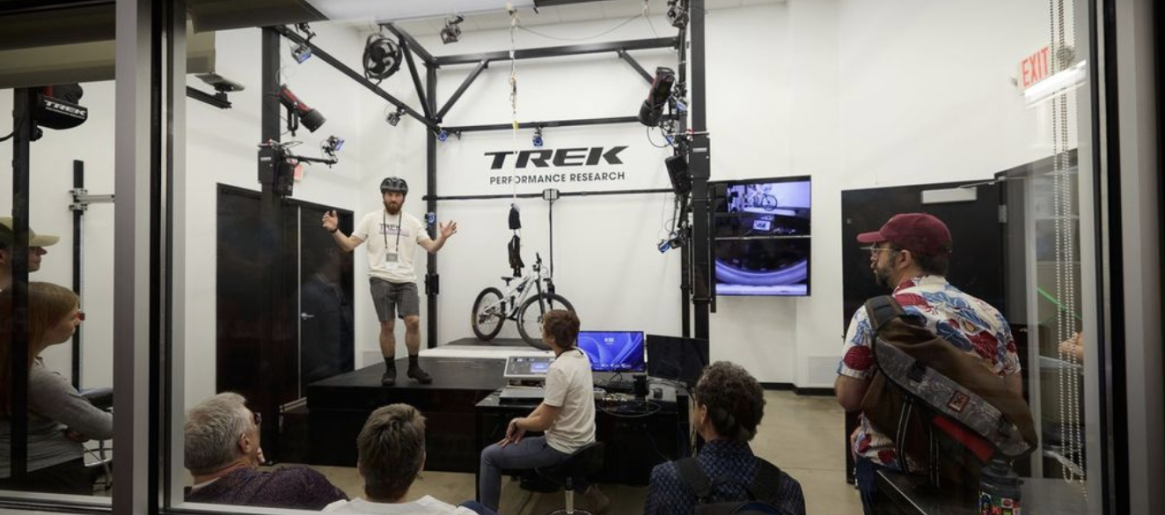
Ahead of the 50th anniversary of Trek, the bike company unveiled a documentary entitled ‘The Journey: The Untold Story of Trek‘ that detailed exactly how it came to be named to how it became the cycling powerhouse it is today.
In that doc, which is out now on Youtube, fans find out that the name almost wasn’t Trek.
Bevil Hogg wanted Kestrel, or maybe Odyssey. Dick Burke’s list, Hogg recalled recently, sitting across from Burke’s son John for the first time in 40 years, “was a disaster.” Contenders included American Bicycle Company, Eagle Bicycle Company, and United Bicycle Company. “I just looked at him, and I said, Dick, you’ve got to be kidding me,” Hogg said. “There’s no way we could call this thing United Bicycle Company. How are you going to sell any bicycles?”
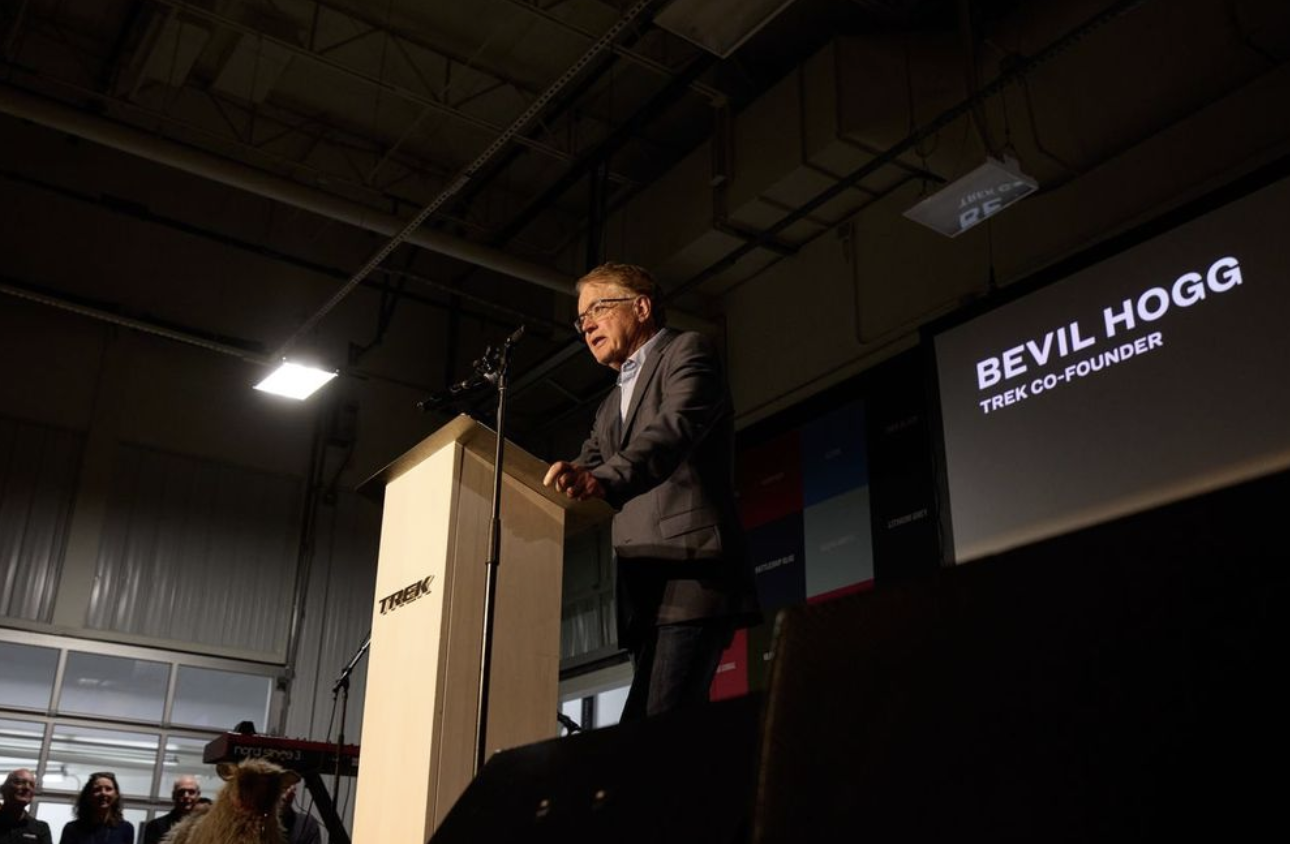
Trek’s co-founder Bevil Hogg (Courtesy of Trek)
The name Trek came from Tom French, a friend of Hogg’s who’d been working at their Madison bike shop. When Dick Burke saw it on Hogg’s list, and the two agreed almost immediately. “It’s a South African word,” Hogg told him. “It means what we’re all about. Trek is journey. And it’s not some dude’s name. This is not a Cinelli bicycle or a Klein bicycle. This is a Trek.”
That conversation is what kicks off “The Journey: The Untold Story of Trek,” the documentary Trek screened at Madison’s Orpheum Theatre as the opening act of its 50th anniversary celebration. John Burke had reached out to Hogg because, as he said in the film, “so many people have spent their lives building this company, and people want to know more.”
Bevil Hogg grew up barefoot in Zimbabwe, Tanzania, Kenya, Zambia, and South Africa as the son of a British colonial civil engineer who moved the family across the continent as the work demanded. “I don’t think I wore shoes until I was 10 or 11 years old,” he said. “So I was a wild monkey, kind of like Mowgli in ‘The Jungle Book,’ until I was tamed by boarding school.” The boarding school, modeled on the English style, was “beat first and ask questions second.”
When his family relocated to England when Hogg was 14, he refused to enroll in an English boarding school because he had read too many books about them. Instead, he traveled to Switzerland alone, found a local government school, and finished his secondary education in French. He then went to Paris, enrolled at the Sorbonne to study French literature, and spent six years there before concluding that what he actually wanted was to start a business.
It was a New York Times article that required him to drive cross-town in Paris to obtain of a shortage of bicycles in America. “France has got bicycles and America doesn’t have bicycles,” Hogg reasoned. “Maybe I could export some bikes from France to the United States.” He arranged a supply deal with the Stella Manufacturing Company, an old French bicycle maker and drove around the United States looking for bike shops that could buy a full container, about $15,000 worth, of bikes. After an initial deal fell through, he was told to try Madison, Wisconsin, where the university meant everyone rode bikes. He opened a shop, then another, and then, went to Milwaukee and met Dick Burke.
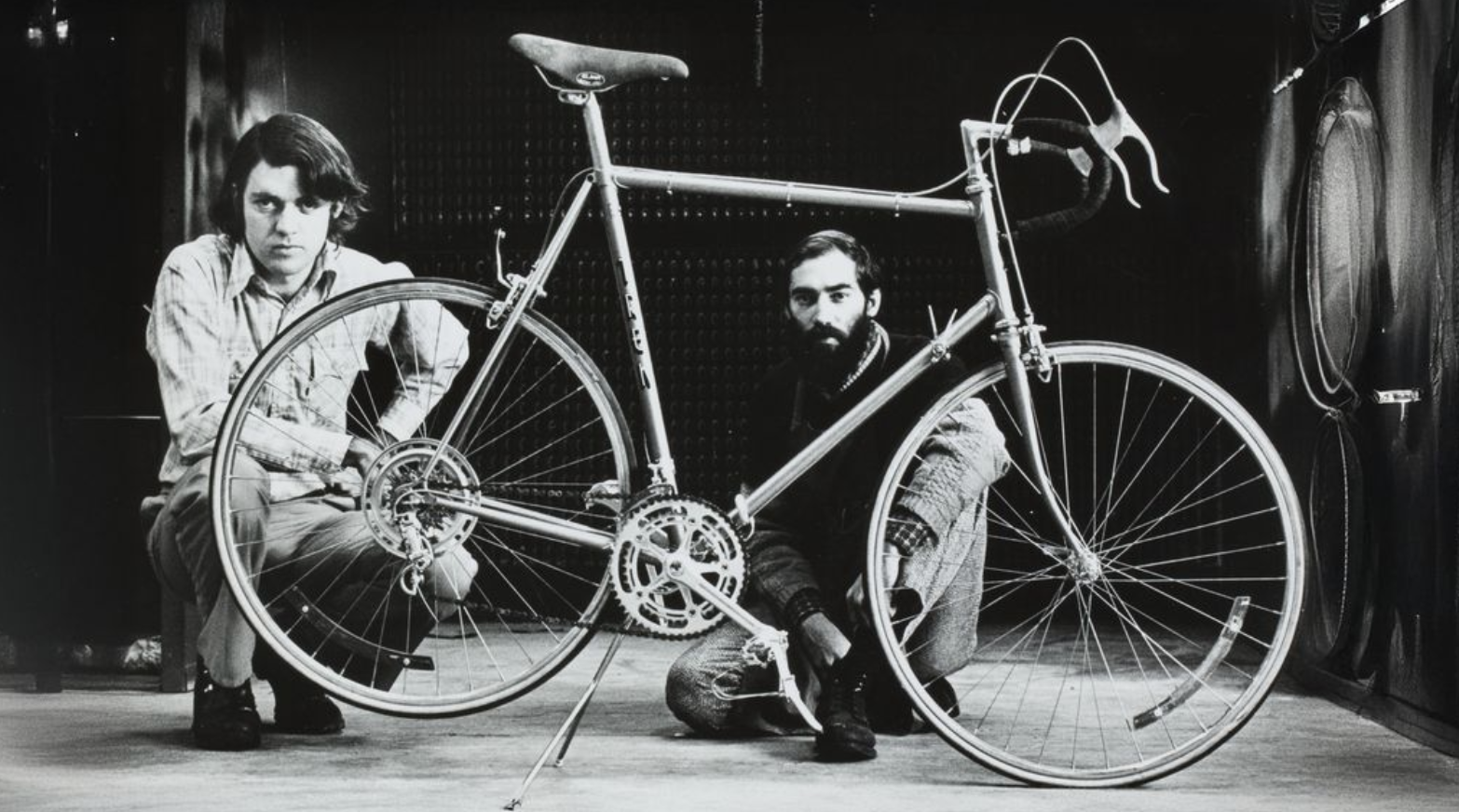
The creation of a beautiful bike. (Courtesy of Trek)
Dick Burke’s path was more conventionally Midwestern. Growing up in Elmhurst, Illinois, he hated college enough to come home two days after starting, and had to be physically driven back to school. He graduated a C student before going on to work at the Milwaukee appliance distributor called Roth, which sold refrigerators and any other odd or even kitchen item. When the owner passed away, Burke bought the business.
As Roth grew (first Milwaukee, then Minneapolis, St. Louis, Denver, Salt Lake, California), the business growth allowed Dick Burke to work with Hogg on the bike shop. “That’s where my father accumulated some money to make Trek possible,” John Burke said. “No Roth, no Trek.” And during that time, Dick Burke became obsessed with running, and took a liking to marathon winner Frank Shorter who was a former pipe smoker who ended up winning on the world stage. “That’s the only reason why Trek exists,” John Burke said, “is because he knew what running did to him.”
When Hogg came to Milwaukee to pitch expanding the bike shop chain, Burke invested. When the chain failed because the shops, according to Hogg, “weren’t profitable and it was really hard,” the two decided to hone in on what they were good at. “Bad news is retail doesn’t work for us. This is a disaster. Good news is we’re going to build bicycles, if you agree,” Hogg said in the film.
The two hired five people, brought them to a freezing barn in Waterloo, and made an ecosystem of Wisconsin custom frame builders whom Hogg called “crazy cowboys …who designed and built their own bicycles with their own names on them, on the outer edges of what had been done, what was thought of as how to produce a bicycle.” In 1976, Trek produced 904 touring frames. “These were custom made bikes. They were beautiful because they were custom made.”
Being custom-made was an issue, Hogg said, because Dick Burke wanted to build 80,000 of them. “To me, that was an unimaginably large quantity of bikes that I thought would be cheap junk,” Hogg said. “His vision was for a business. Mine was for an adventure and artwork.” That tension would define the company’s first decade, and ultimately end their partnership. “America worships sincerity,” Hogg said. “Europe worships hard-nosed cynicism. I was a European with everything that entails.”
“Your dad was generous,” Hogg told John Burke. “I don’t mean financially generous. He was emotionally generous in that he would allow you to have your say, and he would not interrupt or forbid.” Dick Burke was also, Hogg said, wrong as often as he was right and generally admitted it. “He was as honest as the day is long,” Hogg said. “And totally sincere.”
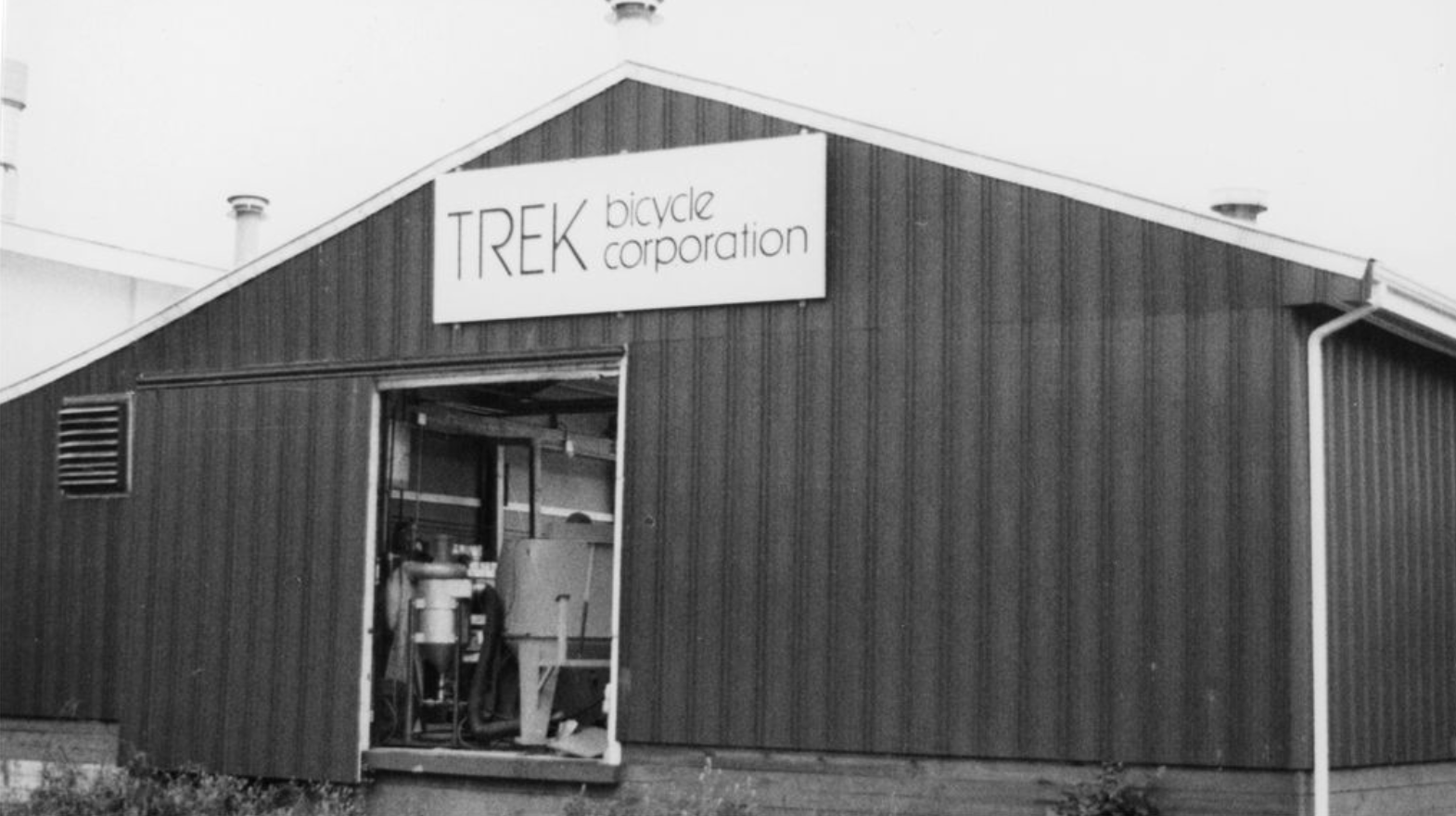
The Red Barn that started it all. (Courtesy of Trek)
Hogg left Trek in 1986 as the differences in vision had become irreconcilable. “The clash between our visions was too great,” he said. “Obviously Dick had to have his way because it was his company. But I didn’t greatly disagree with that either.” A year earlier, John Burke joined the company full time. By 1990, 80% of Trek’s sales were mountain bikes. It went on to sign Lance Armstrong and won seven Tours de France. John has run the company since his father Dick Burke’s passing in 2008.
“We may have been the first stage rockets that got this thing off the ground,” Hogg said of himself and Dick Burke. “But in my view, Trek really began in 1985, when you joined the company,” he told John Burke. “You brought your own vision. Your direction allowed the company to surge forth, give or take blips here and there, and challenges here and there, to become what it is today.”
It seems to have taken on a new vision. Burke launched the Trek 100 in 1990, raising more than $23 million for the MACC Fund, which supports childhood cancer and blood disorder research. Trek went on to fund PeopleForBikes, a national cycling advocacy nonprofit which comes out with a City Ratings program annually. Now, 50 years later and as it nears a $2 billion valuation, Trek still pays it back to its humble beginnings.
“Stick to beauty,” Hogg said. “Hire good, kind people, and be scared because change is coming like a tsunami. And you’re going to have to dodge and weave, and dance and prance, to avoid the worst and to conquer the best.”
John Burke, at the press event, reiterated the sentiment. “As Trek has become bigger, as Trek has become more competent, our ability to create change and our ability to do great things has multiplied,” he said. “We have a long way to go, but we’re on that journey.”
