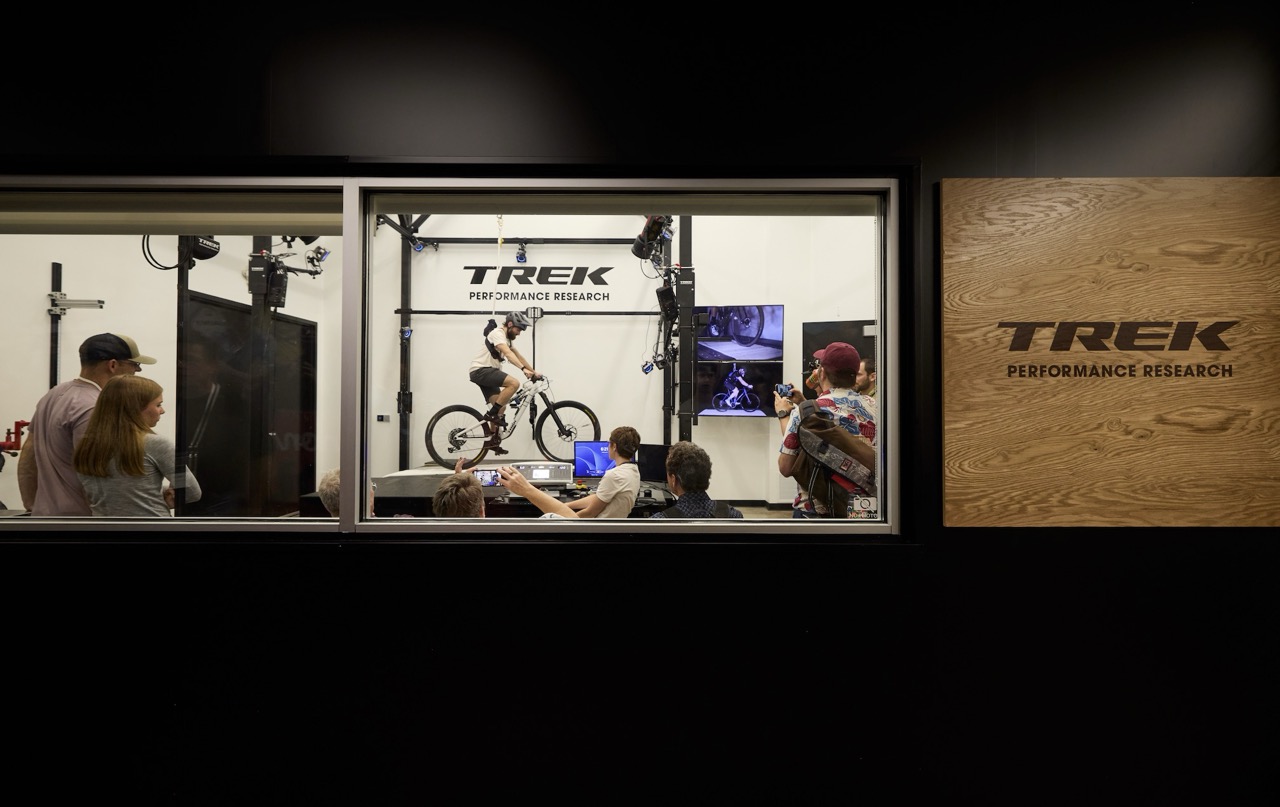
Waterloo, Wisconsin is not, by any reasonable geographic or cultural metric, where you’d expect to find the epicenter of a global bike empire.
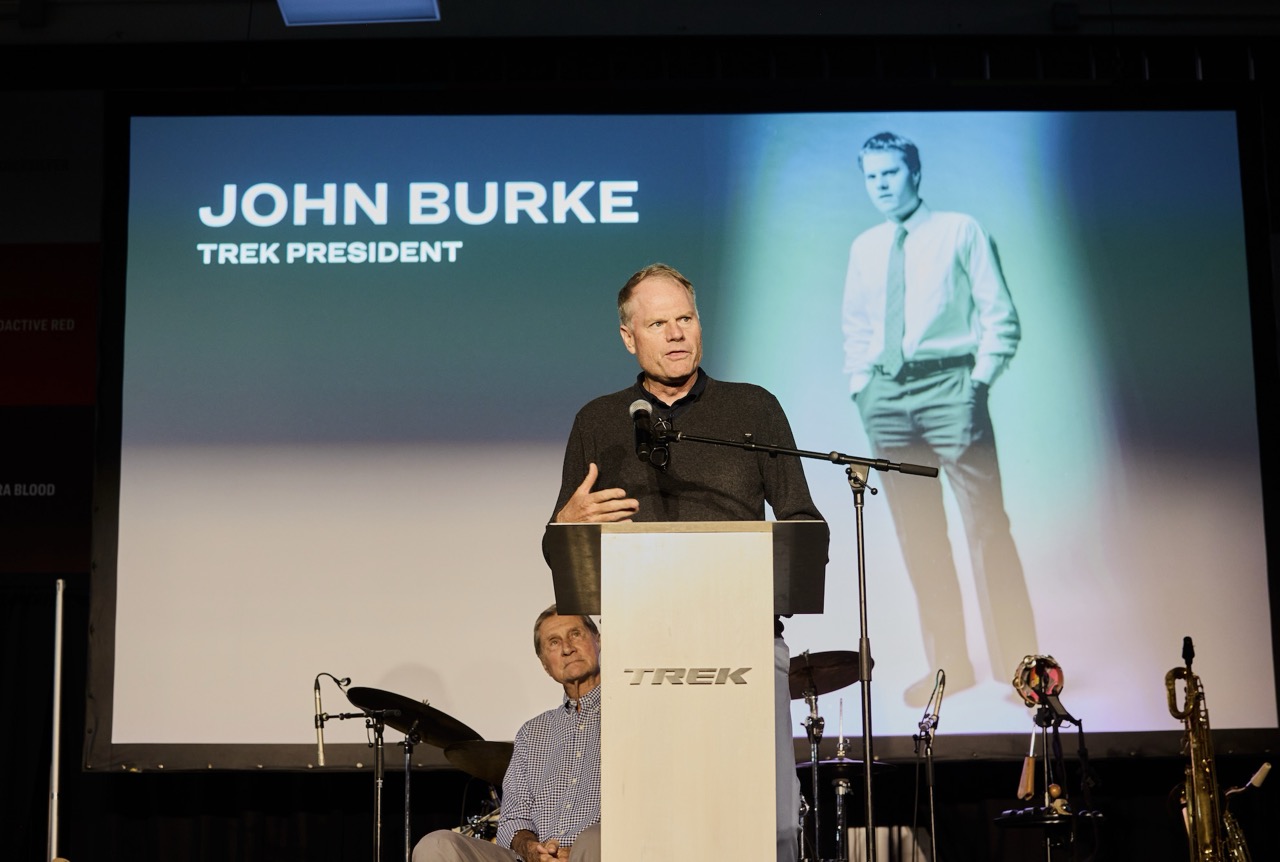
Trek President John Burke. Courtesy of Trek.
It’s small, relatively flat (save for the few climbs this out-of-shape author huffed and puffed through), and forty minutes from Madison — which is itself not exactly a metropolis, but at least has a farmers market that gets written about. And yet: Trek Bicycle, which turns 50 this year and has spent those five decades becoming one of the most recognized bike brands on the planet, has called Waterloo home since Dick Burke and co-founder Bevil Hogg took a chance on a red barn and a hunch in 1976.
Last weekend, Trek threw itself a half-century-old party, complete with a documentary entitled “The Journey: The Untold Story of Trek,” which premiered at the Orpheum Theatre in Madison. The esteemed bike company held an open house at its headquarters, inviting in any and everyone excited to see what goes on behind the scenes as the latest bike technology hits the road. And like other years, Trek put on the Trek 100 charity ride, raising money for childhood cancer research and the Wisconsin Bike Fed. Trek President John Burke, when introducing former Milwaukee Bucks player Jon McGlocklin (who co-founded the MACC Fund the same year Trek was founded to help those fighting childhood cancers), announced the Trek 100 is the MACC Fund’s largest annual fundraiser, having raised over $23 million since the charity race first began in 1990. This year, like the previous years but probably even more especially given it’s Trek’s 50th birthday, the event drew thousands of cyclists to those Wisconsin roads for distances ranging from 20 to 100 miles.
But those roads were the exception, not the rule, to what the average cyclist in the country encounters daily. Trek, Burke told reporters, can only make so many strides in the bike space if people still feel uneasy riding a bike on the road.
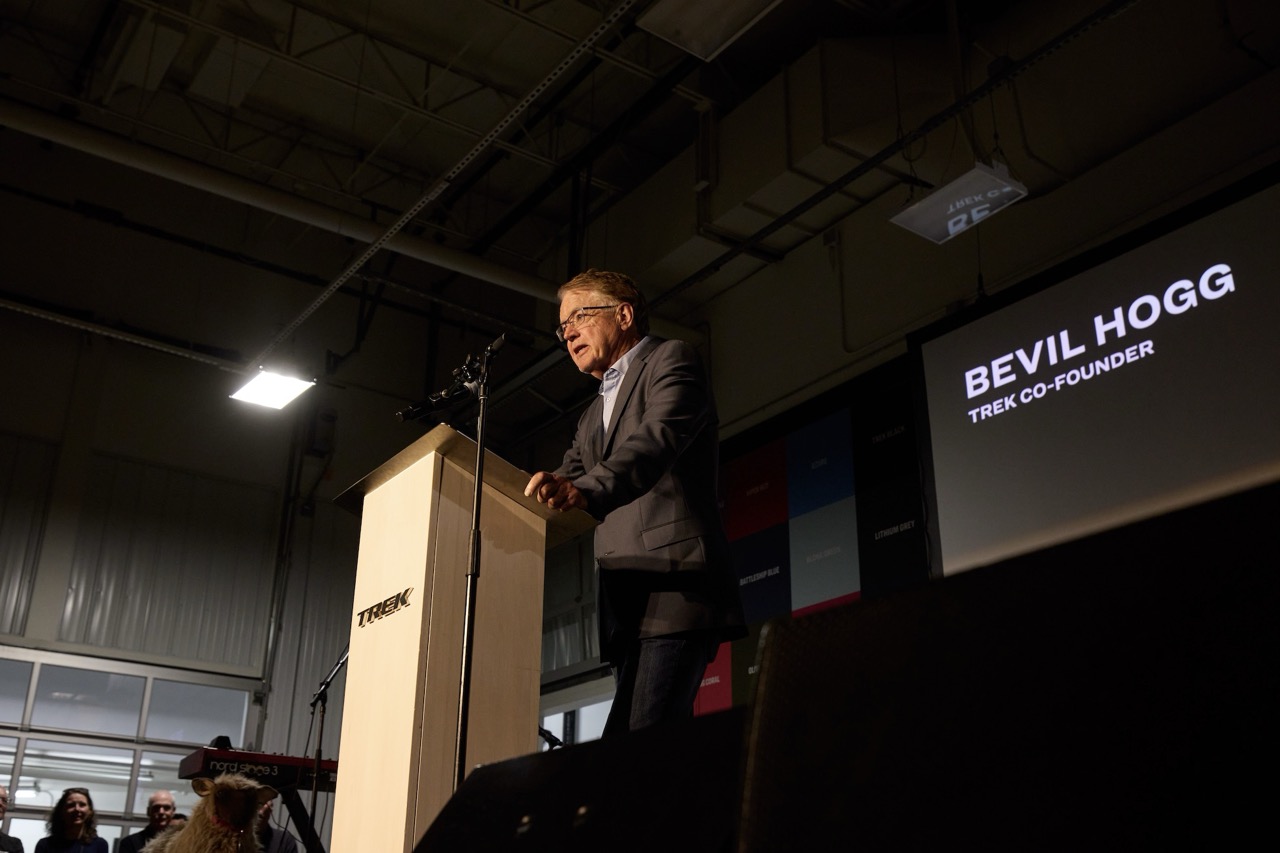
Trek co-founder Bevil Hogg. Courtesy of Trek.
“If you can’t safely ride your bike, cycling is decreasing,” Burke said, seated alongside Hogg at a press Q&A tied to the anniversary. “There are so many great things going on all over the country to create more, better, and safer places to ride. The amount of investment the government’s making is significant — but it’s not fast enough.”
Bike safety and overall road safety is the number one reason why people forgo riding bikes. The fear of getting hurt, or worse, keeps people from picking up the very thing they used constantly as a kid. It’s two wheels of pure joy: of feeling the wind through your hair during a downhill, of the satisfaction of making it uphill without getting off, of getting from point A to B all by being outside and not in a car or catching three train transfers. There’s something joyous of being a cyclist, whatever the word means to you, from those who wear matching lycra suits racing to beat their personal best to the person with a sunhat riding a cruiser with a basket full of groceries.
Trek has been delivering that joy for the last 50 years. From a drafty red barn in Waterloo, Wisconsin, where five employees brazed 904 steel frames by hand in 1976, to a nearly $2 billion global company with offices in 20 countries, Trek has spent five decades finding new ways to put more people on bikes. It pioneered OCLV Carbon (a carbon fiber manufacturing process borrowed from aerospace engineering) that produced frames so light and strong they changed what a road bike could weigh. Trek launched the first mass-produced 29-inch wheel mountain bikes with Gary Fisher, a wheel size that gave riders more speed and control on rough terrain, which is now the industry standard. It won nine Tour de France titles. It invented Daytime Running Lights (bike lights bright enough to be seen in full daylight), and saw the electric future in 1999, a full two decades before the rest of the industry caught up.
(Trek bought Electra in 2014, another step in the company’s mission to remove obstacles and deterrents from whatever prevents people from picking up the two wheeled mechanism. Nearly a decade ago, I rode my first e-bike, an Electra, and wrote about it for The Knock. My writing, much like the innovations surrounding e-bikes, thankfully, has improved).
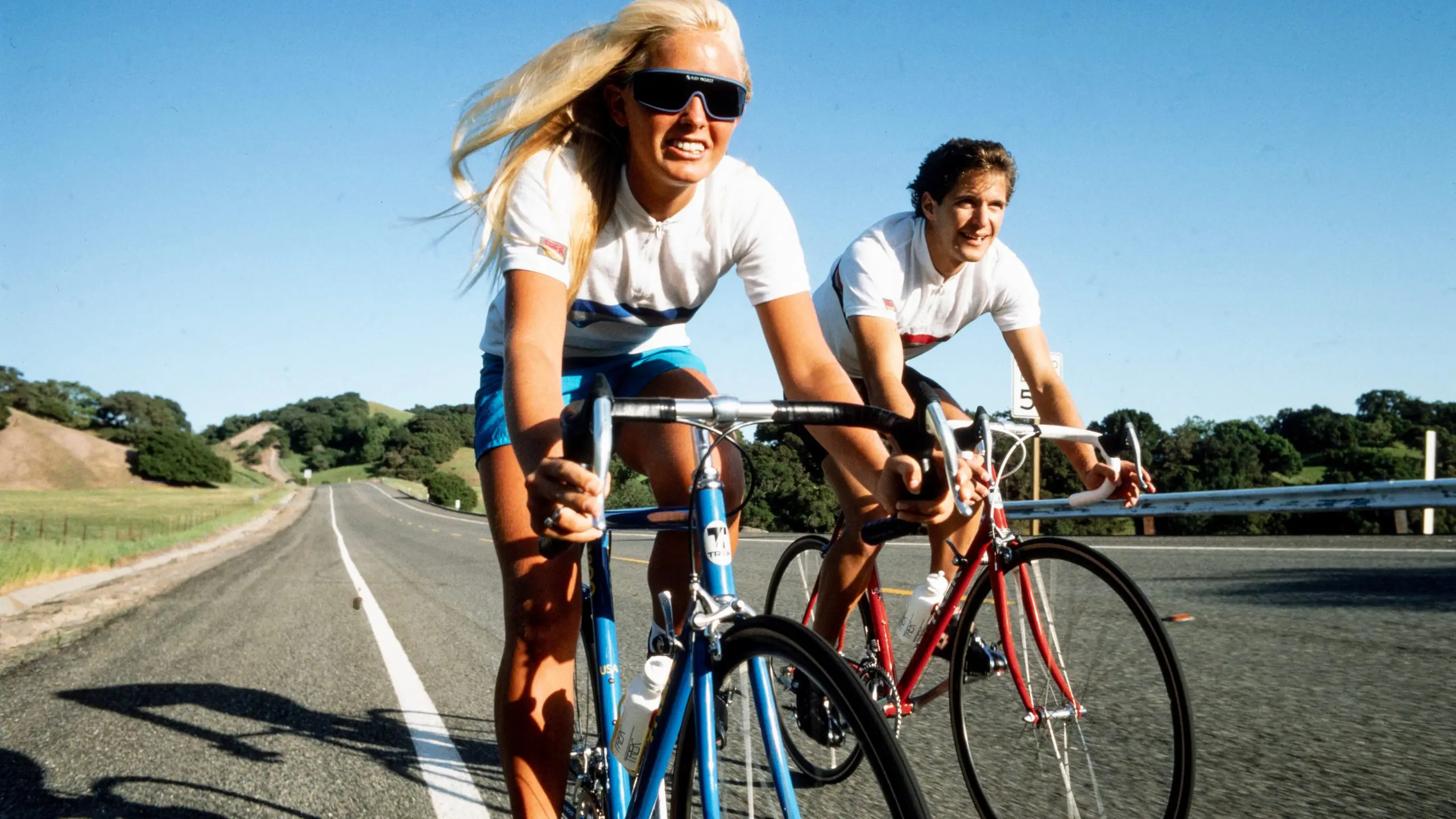
These roads pretty much are unchanged since this photo was taken. Courtesy of Trek.
Trek’s been doing as much off the bike as it has on. The company helped launch PeopleForBikes, the national advocacy coalition that has unlocked billions in federal infrastructure funding for bike lanes and trails across the country. It taxed itself at a dollar per tire and ten per mountain bike, and turned those self-imposed fees into tens of millions for trails and youth riding programs. It made World Cup Waterloo the first UCI World Cup to offer equal prize money to men and women. Trek even signed Lizzie Deignan to a contract she negotiated while pregnant, and watched her come back to win the inaugural Paris-Roubaix Femmes (one of cycling’s most brutal cobblestone classics) with an 80km solo break.
And through all of it, the mission has never changed: build something beautiful, take care of the people who ride it, and get more of them on bikes.
So when it comes to building the infrastructure, Trek can say it is. The company has been funding the City Ratings program through PeopleForBikes, even bankrolling an annual evaluation of thousands of cities on the safety and connectivity of their bike networks, scored on a scale of 0 to 100. The 2025 edition dropped the day before the Trek 100, in what was either impeccable timing or the most on-brand birthday gift in the history of corporate advocacy, and showed a tremendous improvement: 234 U.S. cities now score 50 or higher, up from just 33 in 2019. It’s progress, but the national average across all U.S. cities is 25.
“We go out and rate over 500 cities in the US and 2,500 globally,” Burke said. “You can see the progress. In the U.S., the progress is significant. But it’s not fast enough.”
The cities scoring below 50, which are the vast majority of them, are where most Americans live, work, and are often opting not to pick up a bike in the first place.
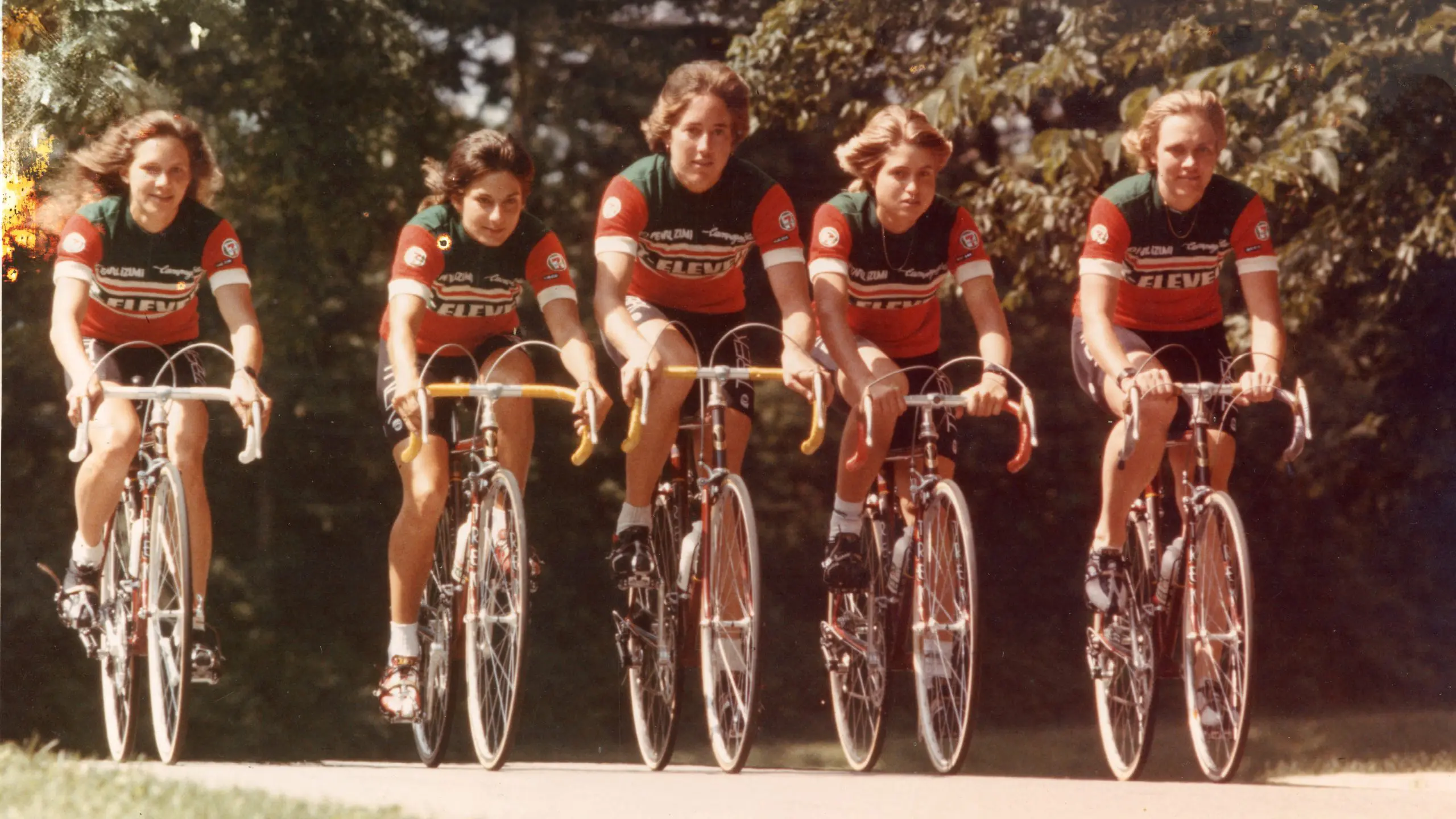
The bikes have improved but the infrastructure sure hasn’t. Courtesy of Trek.
Trek co-founder Bevil Hogg, sitting alongside Burke as he made those comments, couldn’t agree more. The Trek co-founder, who has watched the bicycle industry transform itself roughly four times over in fifty years, described what he sees in his neighborhood with the matter-of-fact delivery of someone who has genuinely stopped being surprised by it: no kids on regular bikes. Not a few but actually zero.
“I haven’t seen a teenager on a human-powered bicycle for a couple of years,” Hogg said. “I would stop and look if I saw one. I’d have to get out and talk to them and ask what happened.”
For Hogg, e-bikes are an opportunity, an industry-wide mandate to rethink what a bicycle even is before the market does it for them. “Is a bicycle an electric-assisted vehicle? Is it an electric-powered vehicle that goes 50 miles an hour or 25 miles an hour? All of these things have to be defined and considered,” he said.
The problem is that the infrastructure conversation is still several years behind the product conversation. Class III e-bikes — the fast ones, legal up to 28 mph in most states — share the roads with massive two-plus ton vehicles. The physical and regulatory reality of most American cities hasn’t caught up to the hardware already on the street. Protected lanes that barely worked for traditional cyclists are genuinely inadequate for the vehicles people are actually riding.
Burke has written three books about the future of the country. He speaks publicly on corporate responsibility with the confidence of someone who has decided that silence is worse than blowback, and described the infrastructure problem not as intractable but as slow. A tipping point is coming, he argued — all the trail investments, the protected lanes, the city ratings, the federal dollars eventually connect into something that resembles a network.
“At some point in time you’ll see a tipping point where you get all these trails connecting,” he said. The 2025 City Ratings support the trajectory, even if the average score does not. Cities that invest in protected lanes and lower speed limits show measurable improvement year over year. The GBIP — PeopleForBikes’ Great Bike Infrastructure Project, new for 2025 — now tracks bike infrastructure from proposal through completion, linking political commitment and pavement explicit for the first time.
What it doesn’t do is close the gap between a good trail and the next good trail. That gap, in most of the country, still looks like a four-lane state highway with no shoulder and a 55-mph speed limit. It looks like the reason people load their bikes into cars and drive to the trailhead. It looks like a 25 out of 100.
As Trek turns 50 and continues looking not at the previous five decades but the next five to come, maybe the U.S. and our cities should think of the same and redesign our streets for the people who actually are on it.
