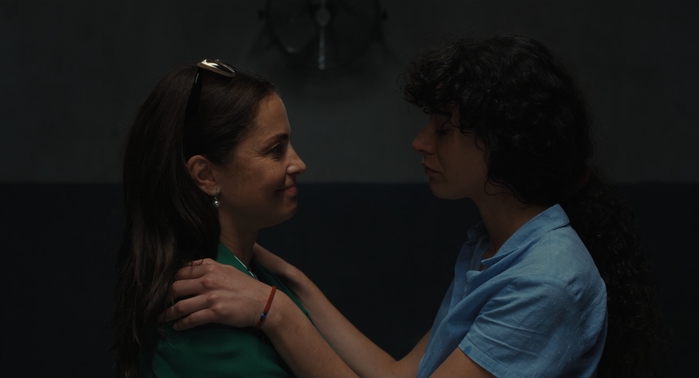
Dolores Fonzi spoke with the Knockturnal about her film “Belén.”
The film follows the true story of its titular character, a young Argentine woman who miscarries a pregnancy and is charged with an illegal abortion. Fonzi plays Soledad Deza, the lawyer who represents Belén. She also directed the film.
The interview has been edited for concision and clarity.
I want to start with the very first scene. It’s very thrilling and fast-paced and has a very different tone from the rest of the film. So tell me, as a director, because that’s one of the few scenes you’re not in, right? What was it like creating that feeling at the beginning of the film?
The long shot?
Yes. The very first scene in the hospital.
We chose to tell the story of the night, the nightmare of that night. So for me it was very important to put it all together in a long shot, to be very direct to the issue and also to play with the camera, with the actors. And this long shot was very complex and I had to learn how to do it. So we did it in three days. For me, it was important to put the case very clear in the first moment. And then I knew that after two years in the story, you will be relieved of that tense long shot that I chose to put in the beginning. It was very important to show how it was, how it works: the health care in this city and the judgment that a woman faces.
Can you tell me what it means for this film to be your country’s submission for the Academy Awards? You’re representing your country on one hand, and the other hand, this is a look at a very dark, recent past of the very country that the film is representing. So tell me about that. What does that mean?
Yes, it’s a reality that’s not far away, but it’s not finished. You know, the real lawyer is now attending to a case that is very similar to the Belén case nine years ago. So for now, for us, she’s showing that fight that we have to do at that moment. But, of course, it’s not an ending story. Yesterday we were here in Los Angeles and they were talking about a case of a Georgia woman who went to jail because of the same thing. You know, we are living in a world that is coming back hate and machismo and racism and misogyny. Sadly, it’s not a past. It’s a present also.
Your film really does touch on very intense, serious subjects, but there is levity, there’s humor. I don’t want to spoil exactly what happens in the scene, but there’s a scene where you have a very popular pop song playing. And I just want to know what your process was of including a song like that. And have you ever thought like, oh, maybe I should leave it in, maybe cut it out? Having that fun little scene that works so well with the serious subject matter.
I find everything from my life or my friends’ life. So I took from reality. The year before the movie my daughter was finishing primary school. And I did my first movie that year so the fathers of the school were like, “Okay we have to do the video. You know who will do the video?” And everybody pointed at me because I was the only one that was in the cinema world. I had to do the final video for the school in my real life. It was with that song Gangnam Style. It was interesting to put in, to show, to expose the reality of a lot of women that we are mothers, workers, and then we have to do the video in the school, you know, we can do like a hundred things at the same time. Plus, attending a case of injustice. That is very emblematic of how we can deal with everything at the same time. It’s showing the mental charge that we have as mothers, women, and of course, laughing about that, because I think humor, it’s a very important and intelligent tool to make people laugh. There are a lot of things that are from real life, from my life, from Soledad’s real life, because we have a very close relationship. Today she’s my lawyer now for some cases, in some things that we are planning. She’s amazing. So we merged. We did like a merge between what I wanted to expose of my intimate life, like religion, how is the relationship with God. And it was very interesting for me to put those layers like,religion, God, abortion and justice and how this merge would make this conversation more open. Everything you see in the movie, it’s like from reality – from a friend or Soledad Deza, or Belén.
Well, I did not know that that episode was taken directly from your life, so I guess that leads me to my next question. How are you and Soledad different and similar in real life and the character of Soledad we see on the screen different from you in real life?
We are very different. We have very different lives. Soledad, when she watched the movie, was very impressed because she could see herself in me. And that is because, of course, she was very open with me all the time. And it’s like when you have a friend that you are watching, that you are hanging out a lot. And then you started talking like him or her, you know, like this contagious way of talking. I think it was really important to make sure that there was a natural interaction with these characters and make sure that the interaction also felt organic and alive.
Last question I have for you. Maybe this is just a personal opinion, but I think often a director’s second movie is the most exciting and a band’s second album is the most exciting. It’s not their first try. They’ve learned something, but they’re still fresh. What was your experience like as a second time feature director and maybe what did you learn from the first film that you brought into this film. And then what’s next? What have you learned that you’ll bring to your third and hopefully many films after that?
It’s a crazy thing to think that this is a second movie. It was more responsibility because there were many more actors, much more like this serious way of telling a story because it was a trial movie. It’s different. Did you see “Blondi”?
No.
I can think about the similarities, because in “Blondi,” what I really wanted, as I act in the movie, is how to manage the feelings of the actors and myself in front of the camera and build the scene together. It’s like a very collective work.The story of Belén also is a collective work. It’s showing how the collective union, the union of people can make a change everywhere. Belén is much bigger than the first one that I did. So for the second one, I had to be very serious about the way of shooting, like long shots and trying to show the story in a real way. I think the thing that I repeat from one film to the other is that the communication with the crew and the actors must be a loving thing. Everybody has to be very convinced and trustful. I’ve been an actress since I was 17 and I am 47, so 30 years of acting. And it’s very difficult, very different when you start to direct from acting. You are used to being a tool of the universe that a director proposes. But when you have the opportunity to propose the universe plus acting in it, it’s like a gift. I feel blessed to do both things. I enjoy it too much. It’s double the fun.
