Drawing on journal entries and memories from her late twenties, IS THIS THE END? documents a period of change that Cutler was still trying to make sense of as she lived through it.
Chelsea Cutler first began releasing music on SoundCloud before going on to build a catalogue that spans four studio albums. Alongside her solo work, she’s collaborated with Jeremy Zucker on the brent EP and their 2024 album brent iii. Now, she returns with her fourth studio album, IS THIS THE END?, written over the course of two years. The album’s track list follows the two years it took to make, moving from moments of distraction and escapism towards a more deliberate attempt to sit with difficult feelings. Cutler was looking back to the electronic pop she listened to growing up, drawing on those early influences alongside the energy of New York City, where much of the record was written.
Rather than tying it all up in a neatly bow-wrapped conclusion, the album captures the uncertainty of moving through different versions of yourself. The Knockturnal caught up with Chelsea to talk about writing her way through her twenties, coming to terms with getting older and figuring out what comes next.
Read The Knockturnal’s full interview with Chelsea Cutler below.
When you look back at what you were writing about in your late teens and early twenties compared with what you’re writing about now, what do you think is the biggest shift in the things that matter to you or the topics you find yourself writing about?
I think in your late teens and early 20s, obviously some people are more evolved probably than I was at this time, but it was really easy for me to be one-dimensional in songwriting. I feel like I was writing much more about these straightforward topics, and I was doing so in a really direct way as well. If I was sad or heartbroken, I would just write a song about being sad and heartbroken, whereas I think now when you’re heartbroken over something, you’re also considering your role in it, or you’re considering how you want to move forward. There’s so much more to think about when you have hopefully a little bit more experience and more wisdom. I think with this record, I wanted to kind of write about those more nuanced things.
I feel like this album captures a really specific period of your life. The track list itself is definitely a storyline of its own. Why did you decide to format it this way? Was it intentional?
I wanted the track listing to feel chronological in how it reflected the years I spent making the record. The front half of the record is very much, girl who is going out and trying to, maybe dissociate from her feelings, numb them, and find pockets of joy and levity where she could, and I think the back half of the record is kind of like this also chronological representation of the second year of making this record where I was a little bit more serious about growing up and healing and kind of sitting in these feelings and confronting them. I think when you get to the end of the record with a song like “CAR RIDE HOME,” you’re vaguely under the impression that I’m gonna be okay. It was super intentional to have it structured that way because the record just feels like such a real-time documentation of the last two years of my life, predominantly being 27 and 28. I made it just as this total coping mechanism, and it felt really honest to structure it that way.
There’s a line early on in “is it everything you wanted?” about watching your parents get older that really stayed with me. You’ve explored that changing relationship with your parents before in “parent song,” and now you’re a few years further into your twenties. Has getting older changed the way you see your relationship with them?
I think the passage of time in general and the concept of impermanence are these two things in life that just totally haunt me, for better or for worse. They’re both these really fixed and inevitable things about being alive. I think one of the biggest ways in our lives that time really presents itself or is totally ruthless is with aging and with us getting older. Your whole life you think your parents are going to be around forever, – if you’re fortunate, the concept of losing a parent is somewhere off in the distance. Obviously, not everyone has that experience. At least for me, it just seemed like this faraway thing. As I’m confronting my own mortality, and as you’re leaving your 20s, you start to realize your own life is this thing with an end. I think watching our parents get older is like one of the most clear and like prevalent reminders of that. It’s just had such an impact on me.
There are so many really specific details of your songwriting — memories, places, people, seasons, even the way someone smells. Your details in all of your music are so descriptive. When you’re writing about something from your past, how do you decide which little details are important enough to hold onto and put into a song?
I actually have fundamentally thought of myself as someone who is not amazing at capturing specific details in my songwriting. Coincidentally, I’ve always felt like that’s something I could be better at, but with this record specifically, we pulled so much from my journal entries, and I still feel like this record is a bit more broad. I’m trying to decide if that’s something I could get better at or if that’s just my style. But the things that did feel specific, whether it was a feeling or it was something literal or environmental, we were pulling a lot from my journal entries… Which was kind of scary, like, I’d come into the session and plop my laptop down and be like, “Okay, you guys can read all of this if you want.”
Did they actually read your journal? Or did you read through it on your own and tap into certain memories in the sessions?
I keep my journal on a Google Doc actually, I just find it easier. I’m more consistent with journaling if I type instead of handwriting. I wouldn’t give the Google Doc and be like, “Free range, read everything you want,” but I would go through typically the morning of or the night before and pull entries. If we were going into the studio, if we had a 2-week lockout, then I would go pull my journal entries from the weeks leading into it, things that I wanted to write about or things that I felt comfortable sharing. The short answer is yes, I would bring that [the journal] into the room with my collaborators and they would read it straight up. […] You know, in your own journal, you’re like, “My life is over. This is the worst thing ever,” and then your journal entry the next day is like, “I’m obsessed with my life.” It’s such a place where you have free rein to be so volatile, which I think lends itself to some interesting songwriting for sure.
I’m curious about the musical side of this record — were there any artists that you really tapped into while making IS THIS THE END?, or any albums that you kept coming back to that influenced the sound?
When I was conceptualizing what I wanted this record to be, I was leaning back into a lot of the music that I was listening to when I was in high school and like early college days for me, which is like a lot of SoundCloud electro-pop. I love electronic music, and I think that there was such an incredible wave on SoundCloud in that era because anyone could upload any remix and there’s such interesting stuff happening sonically. I think that whatever you’re listening to kind of inevitably shapes what you’re going into the studio to create. I’ve had the fortune in my career of making all kinds of music, from electronic features to doing brent with Jeremy [Zucker]. I felt inspired by New York City a lot. The majority of writing was done either in New York or while living there. The way that you feel like walking around the city and experiencing the energy of the city, the sunset, the grit of it, that feeling that it gives me and that energy was something I really wanted to kind of package into this record somehow too.
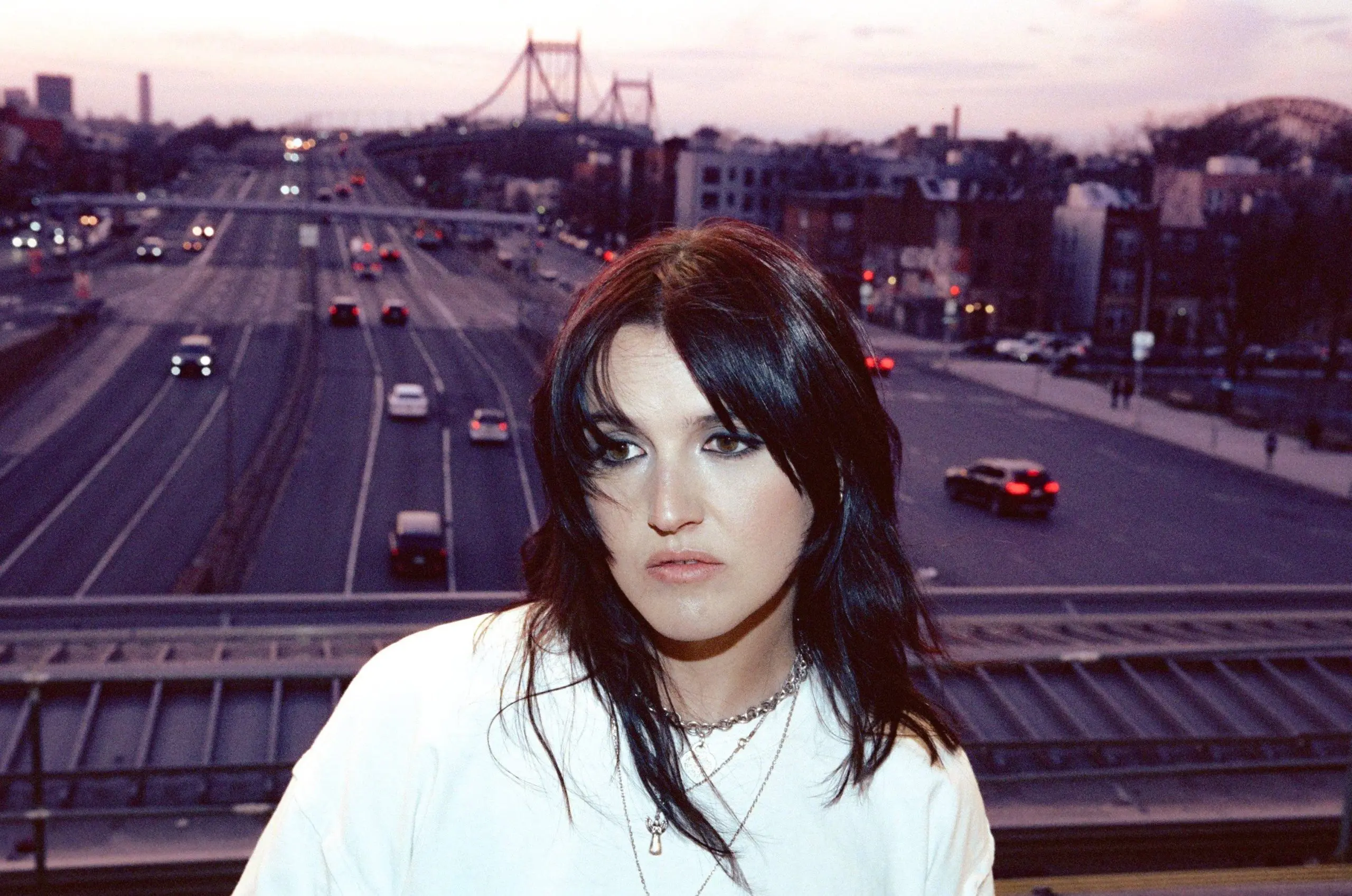
Credit – Dillon Matthew
You’ve said that this album includes versions of yourself that you don’t necessarily like or feel proud of. What about those particular eras or moments didn’t you like about who you were at the time? Did writing about them afterwards ever make you step back and think, “Oh wow, that actually wasn’t really me,” or realize that you’d been acting out of character?
I think who we are, identity as a concept, there’s so many pillars of our identity that stay fixed, and then there’s so many parts of an identity that are malleable and ever-changing. I think writing this record really helped me embrace that and be comfortable with fluidity around my identity. Some days I like to do nothing, and some days I feel like I need to be really productive. Some months I read 4 books in a month, and then I go 3 months without reading at all. I think there are just so many elements of our identities that are, just in flux at all times. Writing this helped me really embrace that and get really comfortable with it. I think it’s totally natural for us to go through periods of time where we maybe pendulate one way. When I was writing songs like “BAD,” I definitely was in this era where one of my core values was experimenting and saying yes to a lot of stuff and letting myself pendulate and go there.
When you think about those early shows that you were doing and meeting people after shows compared to with where you are now, what do you think has kind of been the biggest change between you and your audience?
We did a string of these pop-up shows throughout the last year, and we did them in smaller capacity rooms. Maybe 200 to 400 [capacity rooms], and with most of those shows, we stayed after and hung out and chatted with anyone who wanted to stay after. It felt like such a kind of interesting touchpoint to see that in a lot of ways it felt exactly the same as doing those early shows where we were playing rooms where we could stay after and talk to all 200 or 300 people. It was just amazing to see that connection is still the basis of all of this. I think something that does change is when you’re first starting out as an artist, you develop a fan base because you’re this one thing, and I think the longer your career is, the more time you have to experiment, try different things and grow as a person outside of the music you’re making. I think figuring out how to grow together is a really fun thing to do with a fan base and with the community.
The title IS THIS THE END? feels like such an open-ended question. After everything you’ve experienced personally and creatively over the last few years, even though this could represent a chapter closer, what do you feel like you’re actually beginning now, whether that is creatively or personally?
I think that putting out a record is always really interesting because you spent all this time creating it behind the scenes and living it, and then it goes into the world and you transition into now iving it publicly. I think for me that is going to be in the form of touring it. I haven’t done a headline tour [in] three years, which is so unbelievable. I never want to take that much time away again. I think what’s interesting conversely is then privately you start figuring out what the next project is to work on, and that’s always a really exciting stage of creativity. It’s the most nerve-wracking thing ever. I remember reading this Charli XCX essay she published on Substack where she was like, “when you finish a project, every creative goes through this moment of existential panic.” Like, am I ever going to be creative again? Am I ever going to get an idea again? It’s a really interesting space to be in because I’ve been making music for ten years and somehow a new project emerges. I always figure out what I want to do next, but when you’re in this liminal space before knowing what that is, it’s stressful in a good way. So I’m excited to conceptualize whatever’s next and start making music again.
IS THIS THE END? is out via Mercury Records – listen here