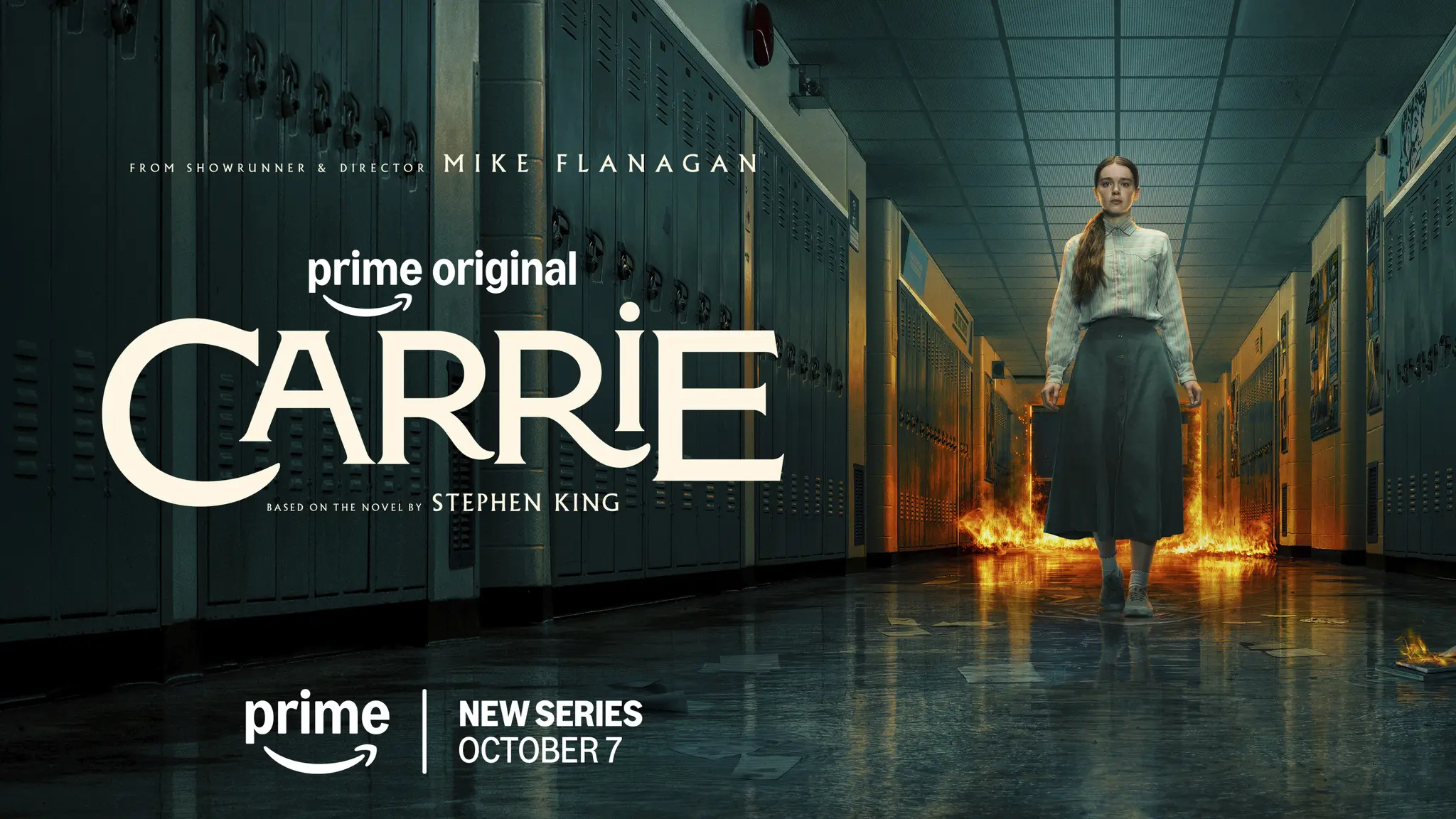
Mike Flanagan’s Carrie arrives on Prime Video with an impressive cast, an expanded mythology and a clear desire to give Stephen King’s classic story a new life for a modern audience. The eight episode series has plenty going for it, particularly in the performances and its exploration of Carrie White’s telekinetic abilities.
However, the decision to move the story so aggressively into the present day creates more problems than it solves. Trust me, I saw the 1976 original, the 2002 version, and whatever they tried to do in the 2013 remake so I can assure you that there are a ton of divisive changes,
Summer H. Howell gives Carrie a vulnerable and emotionally complicated performance. She captures the character’s innocence while also showing how years of isolation have left Carrie completely unprepared for the social world around her. That becomes especially important because this version of Carrie has been homeschooled her entire life before entering high school. Watching her try to understand basic teenage interactions makes some of the bullying especially uncomfortable because she genuinely does not understand the rules of the environment she has been thrown into.
The problem is that this interpretation sometimes makes Carrie feel too far removed from the character audiences already understand. She is so disconnected from the world around her that it becomes difficult to believe she can navigate some of the situations the series places her in. The original story works because Carrie is an outsider, but she is still recognizable as a teenager living within the same world as everyone else. Here, the series makes her isolation such a major part of her identity that she occasionally feels like she has been dropped into high school from another planet as she was homeschooled up until her first week there.
Samantha Sloyan, however, completely owns the series as Margaret White. She is easily the best character in the show. Sloyan gives Margaret a frightening intensity while also making her feel like a real person rather than simply a monstrous mother. Her religious obsession, controlling behavior and complicated relationship with Carrie give the performance plenty of room to breathe. Whenever Margaret is on screen, Carrie feels much closer to the psychological horror that made the original story so effective.
The decision to expand the other characters is where the series begins to lose me. Characters who were primarily defined by their relationship to Carrie now receive much more extensive backstories and motivations. I understand the intention. The series wants viewers to understand why these characters behave the way they do and perhaps even care about them before everything falls apart.
For me, it has the opposite effect. Some of these characters are bullies, and giving them lengthy explanations for why they became bullies can feel like the show is trying too hard to make viewers sympathize with them. Their personal histories are sometimes more interesting than their actual connection to Carrie, which takes attention away from the central story.
The biggest issue is how drastically the series changes the world around Carrie. Updating the bullying to include social media makes sense on paper. Prime Video’s version specifically places Carrie inside a viral bullying scandal, reflecting how humiliation can spread far beyond the walls of a school. But there is way more to that and this time around, there are consequences from the bullies that I cannot explain.
The execution, however, becomes very complicated. Eventually, the changes feel less like an adaptation of Carrie and more like an Avengers team up. There are so many characters with their own connections, abilities and expanded histories that the story begins to feel like it is building a larger universe around Carrie. It reminded me of when Stranger Things attempted a backdoor pilot by introducing another group of characters with abilities similar to Eleven. Instead of making the central story stronger, it makes the audience wonder where all these additional pieces are going.
There is one major area where the expansion works. The series gives Carrie’s telekinesis considerably more room to develop. Rather than treating her powers as something that suddenly appears when she becomes overwhelmed, the show spends more time exploring what Carrie can actually do and how her abilities evolve. That gives the supernatural side of the story a stronger presence and creates some genuinely interesting moments.
Unfortunately, by the time the major supernatural events arrive, I did not feel the urgency I wanted. That is a major problem for a story that is building toward an explosive climax. Carrie should feel inevitable as it approaches its final moments. Instead, the expanded storytelling has made the journey so broad that the central threat occasionally feels buried underneath everything else happening around it.
There is plenty to admire in Prime Video’s Carrie. Howell is excellent, Sloyan is outstanding and the expanded telekinetic mythology gives the story something new to explore. The series clearly comes from filmmakers who have enormous respect for King and want to do something different with the material. Flanagan has also been open about the fact that this version required significant changes and recontextualization.
The problem is that some stories can withstand major reinvention better than others. Carrie is a story about isolation, abuse, bullying and what happens when someone who has been pushed beyond their breaking point finally snaps. By expanding the world around Carrie so much and giving so many other characters their own stories, this version sometimes loses sight of the simplicity that made the original so powerful.
The cast deserves a lot of credit for making those changes watchable. I just wish the series trusted Carrie’s story enough to let her remain at the center of it.
