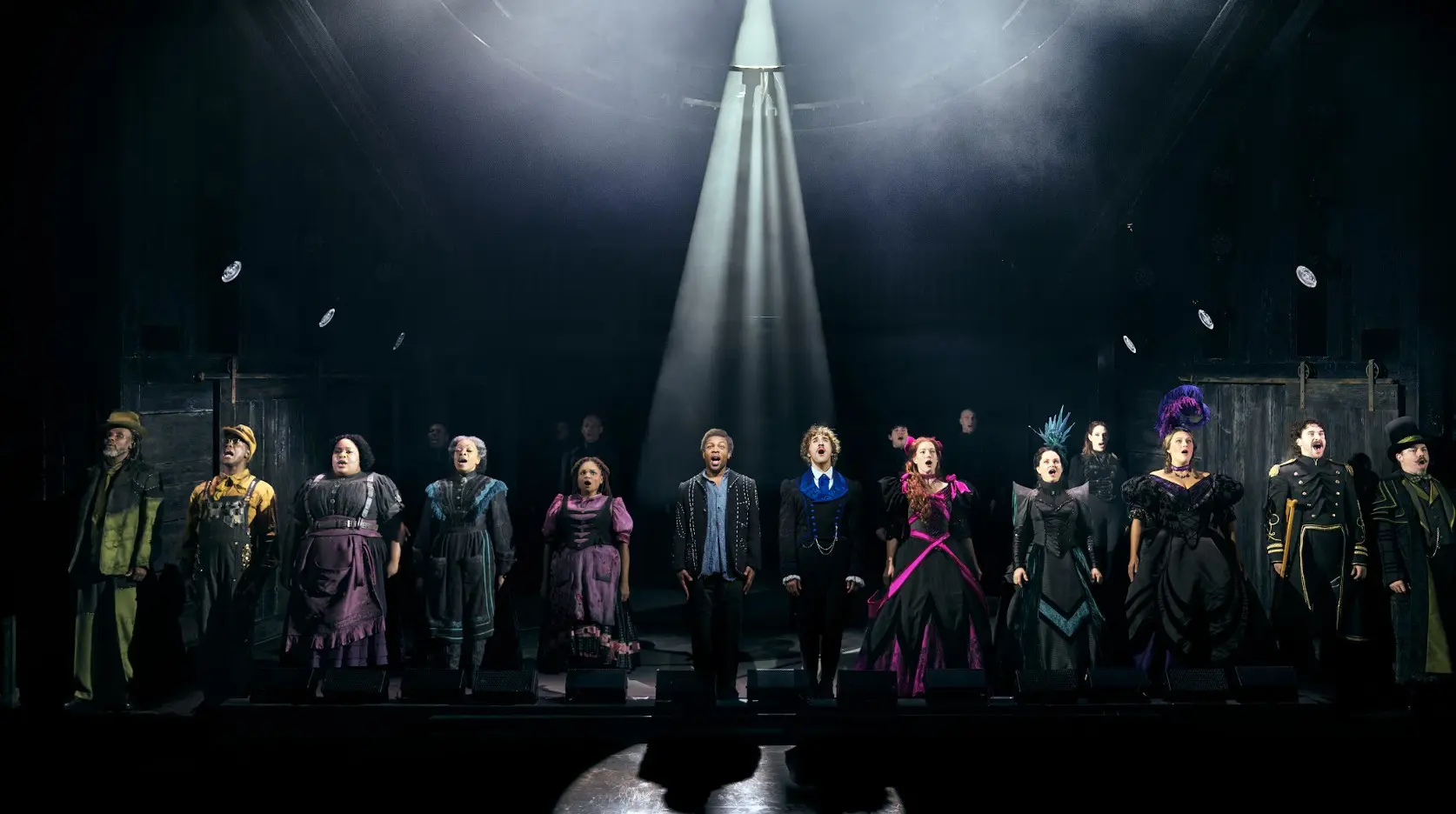
From powerful performances to elaborate costumes and thought-provoking storytelling, MIDNIGHT proves that big theatrical moments don’t always need a Broadway-sized stage.
MIDNIGHT
Sometimes, the biggest theatrical experiences happen in the smallest venues. And that’s certainly the case with Todrick Hall’s MIDNIGHT, now playing at New York City’s Daryl Roth Theatre. We caught the show and quickly discovered this isn’t your typical Off-Broadway production.
From its powerful vocals to its elaborate costumes and ambitious storytelling, MIDNIGHT delivers a surprisingly grand theatrical experience. And clearly, the production isn’t slowing down. Following considerable buzz, the show recently announced an extension through January 3, 2027.
One of the most interesting aspects of MIDNIGHT is its setting. The Daryl Roth Theatre offers a much more intimate experience than a traditional Broadway house. However, don’t let the venue’s size fool you. This production feels enormous.
Between the elaborate costumes, impressive musical numbers, and constant movement, the stage comes alive with energy. In fact, we were told things get pretty chaotic in the lobby during performances. With so many grand costume changes, the space apparently becomes an extension of the backstage hustle.
It’s a fascinating reminder of just how much goes into creating theatrical magic. Meanwhile, the intimate setting allows audiences to experience the performers up close. That connection becomes especially important during the show’s emotional moments.
Let’s face it, audiences can’t seem to get enough of queer love stories right now. From the growing obsession with Heated Rivalry to the increasing visibility of LGBTQ+ romances, these stories are having a major cultural moment. Meanwhile, Broadway has developed its own fascination with rewriting the rules of familiar stories.
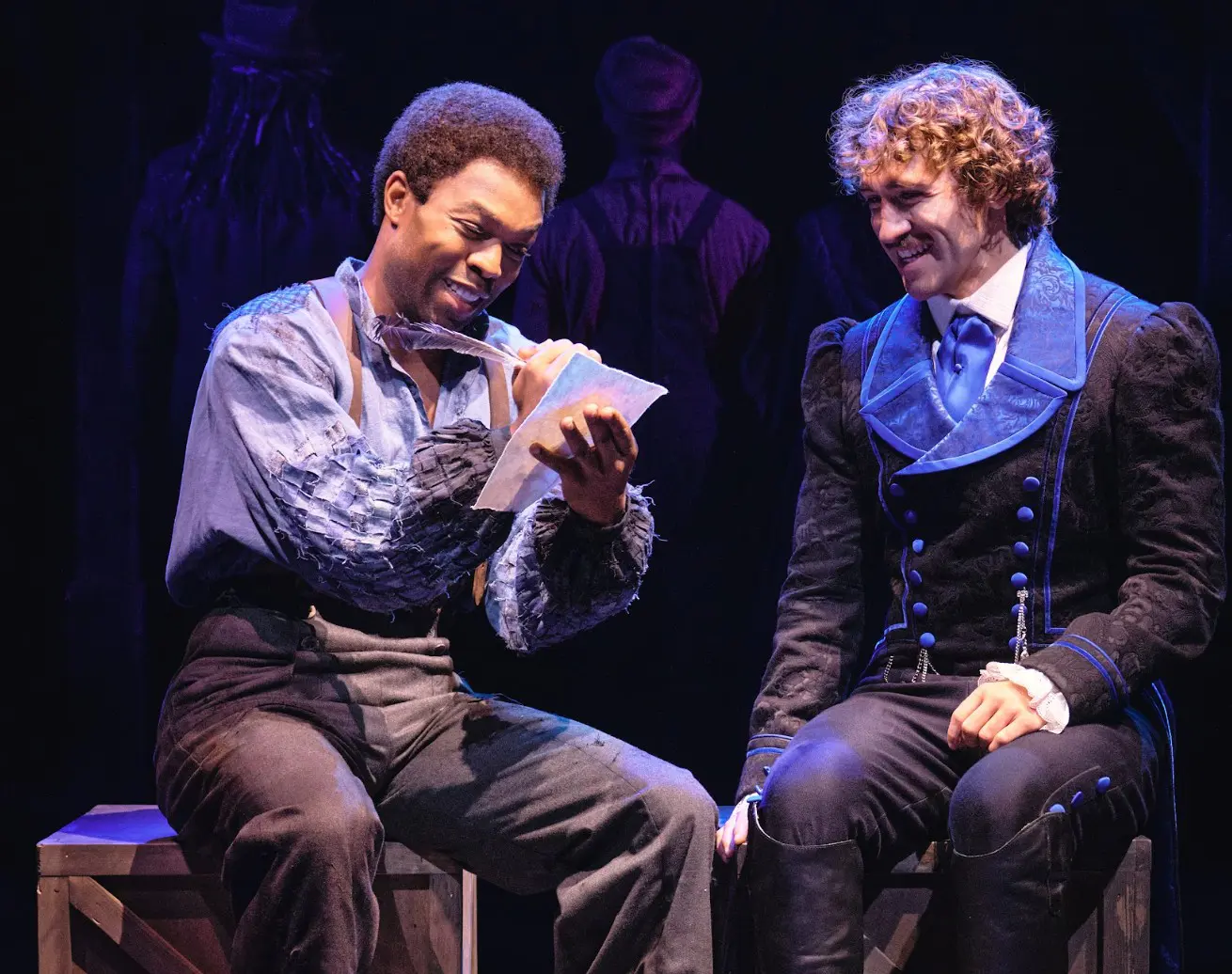
Todrick Hall and Jeremy Beloate © Valerie Terranova
Hamilton transformed American history through hip-hop and a diverse cast. & Juliet gave Shakespeare’s famous heroine a chance to rewrite her ending. Even Cinderella received a modern makeover with Andrew Lloyd Webber’s Bad Cinderella, which challenged traditional fairy-tale expectations.
And in many ways, MIDNIGHT brings these cultural conversations together. Set against the backdrop of the 19th-century American South, the musical explores race, identity, love, and human connection. However, rather than retelling a familiar story, MIDNIGHT introduces original characters and asks audiences to reconsider whose perspectives have historically taken center stage.
At the center of it all is Todrick Hall as Rail. And let’s just say he steamrolls his way through this performance. From his commanding stage presence to his powerful vocals and choreography, Hall brings undeniable energy to the production. He certainly knows how to command a room, even when that room is an intimate Off-Broadway theater.
Written, directed, choreographed, and starring Hall, MIDNIGHT represents an ambitious creative undertaking. The musical tells its story entirely through song, blending gospel, R&B, pop, rock, folk, and opera. With a character named Rail, perhaps it’s fitting that Hall keeps this production moving full steam ahead. While Todrick Hall may be the name drawing audiences to MIDNIGHT, the remarkable ensemble deserves just as much attention.
The music is particularly moving, with rich choral harmonies, heart-wrenching emotion, sweet hymns, and meaningful lyrics that resonate long after the final notes. At times, the voices come together with such power that it’s hard to believe they’re performing in such an intimate space. Other moments are softer and more tender, allowing the emotion behind the music to take center stage. While some songs feel a little longer than necessary, the talent never wavers. Toward the end, several moments feel like they could serve as the show’s grand finale.
There’s certainly no shortage of conversation surrounding MIDNIGHT. The production has generated considerable buzz, earning enthusiastic praise while also prompting deeper discussions about its themes and storytelling. And perhaps that’s part of what makes the show so interesting.
Tackling subjects like slavery, race, identity, and love is no small undertaking. Especially through a musical that relies entirely on song. Naturally, audiences may walk away with different interpretations of the material. Some may connect with its emotional message. Others may find themselves examining the creative choices and how these complicated themes unfold.
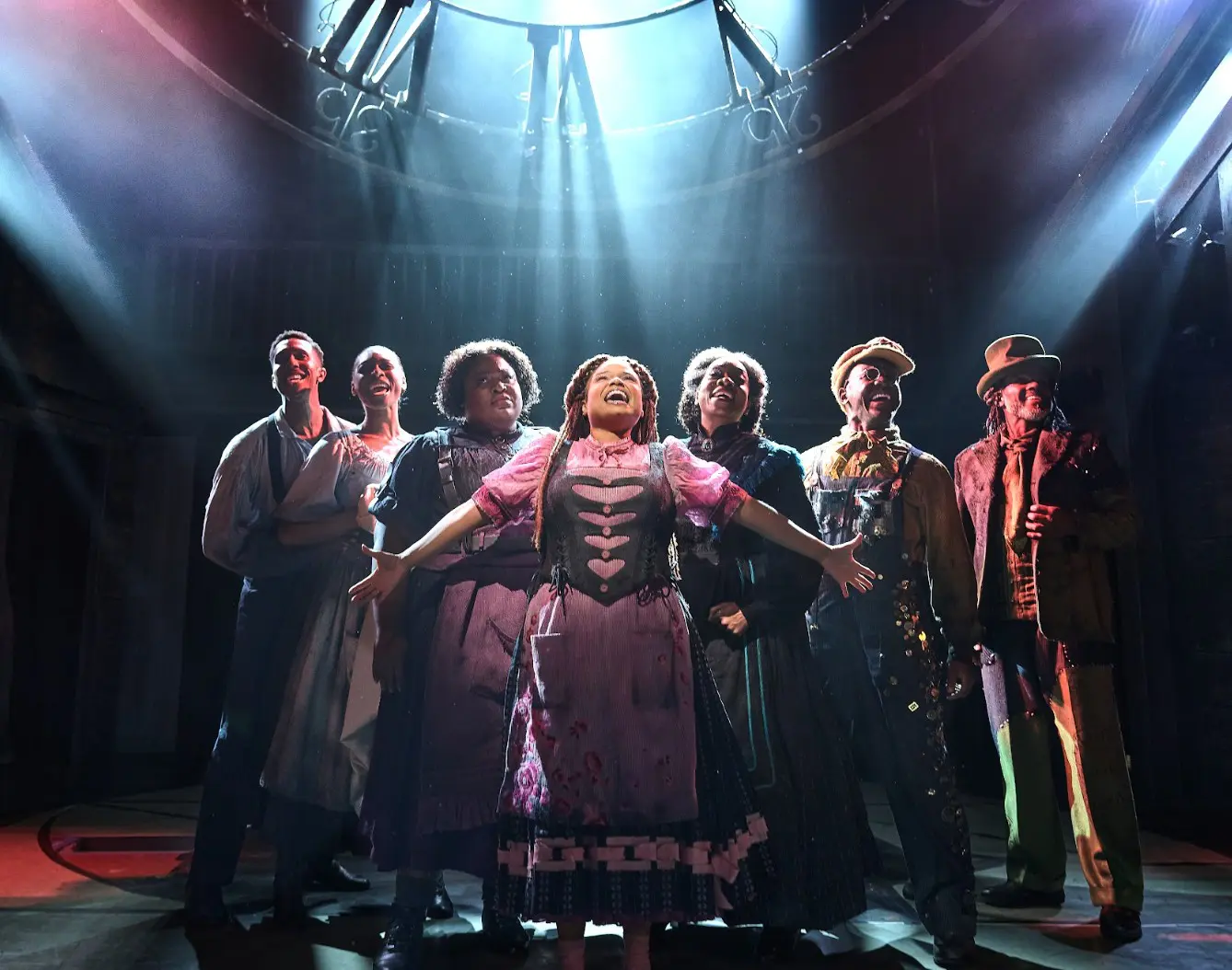
Charlotte Odusanya and The Company of MIDNIGHT © Valerie Terranova
However, one thing is difficult to overlook: the sheer ambition behind the production. Whether audiences agree with every artistic decision or not, MIDNIGHT offers plenty to discuss long after the final curtain.
One of the most interesting parts of seeing MIDNIGHT wasn’t just what happened onstage. It was also the audience around me. As a white woman, I found myself in the minority among a predominantly nonwhite audience. Growing up with a mother who taught in inner-city schools, being in a diverse room felt completely natural to me. However, I was also aware that my experience watching this particular story might differ from those sitting beside me.
After all, we don’t all walk into a theater carrying the same histories, experiences, or perspectives. A story exploring race, slavery, identity, and love can resonate differently depending on the person watching it. But the laughter was still there for me. The tears still brimmed in my eyes, and the message was no less poignant. I simply experienced it through a different lens.
And perhaps that’s one of the most powerful aspects of MIDNIGHT. We can sit side by side, watch the same performance, and walk away with entirely different perspectives. Yet the emotion, the music, and the humanity of the story can still connect us. And whether you leave talking about the performances, the story, or the conversations it inspires, MIDNIGHT certainly gives audiences something to think about.
