
Virginia Woolf’s stream of consciousness writing has flowed across continents and eras, making its way to modern day Nigeria.
Clarissa, the latest film from twin Nigerian brothers Arie and Chuko Esiri, is an adaptation of Woolf’s classic Mrs. Dalloway set in contemporary Lagos.

Chuko (left) and Arie Esiri (right)
The Knockturnal attended a screening at the New York Film Festival, where the cast and directors sat for a post-film Q&A.
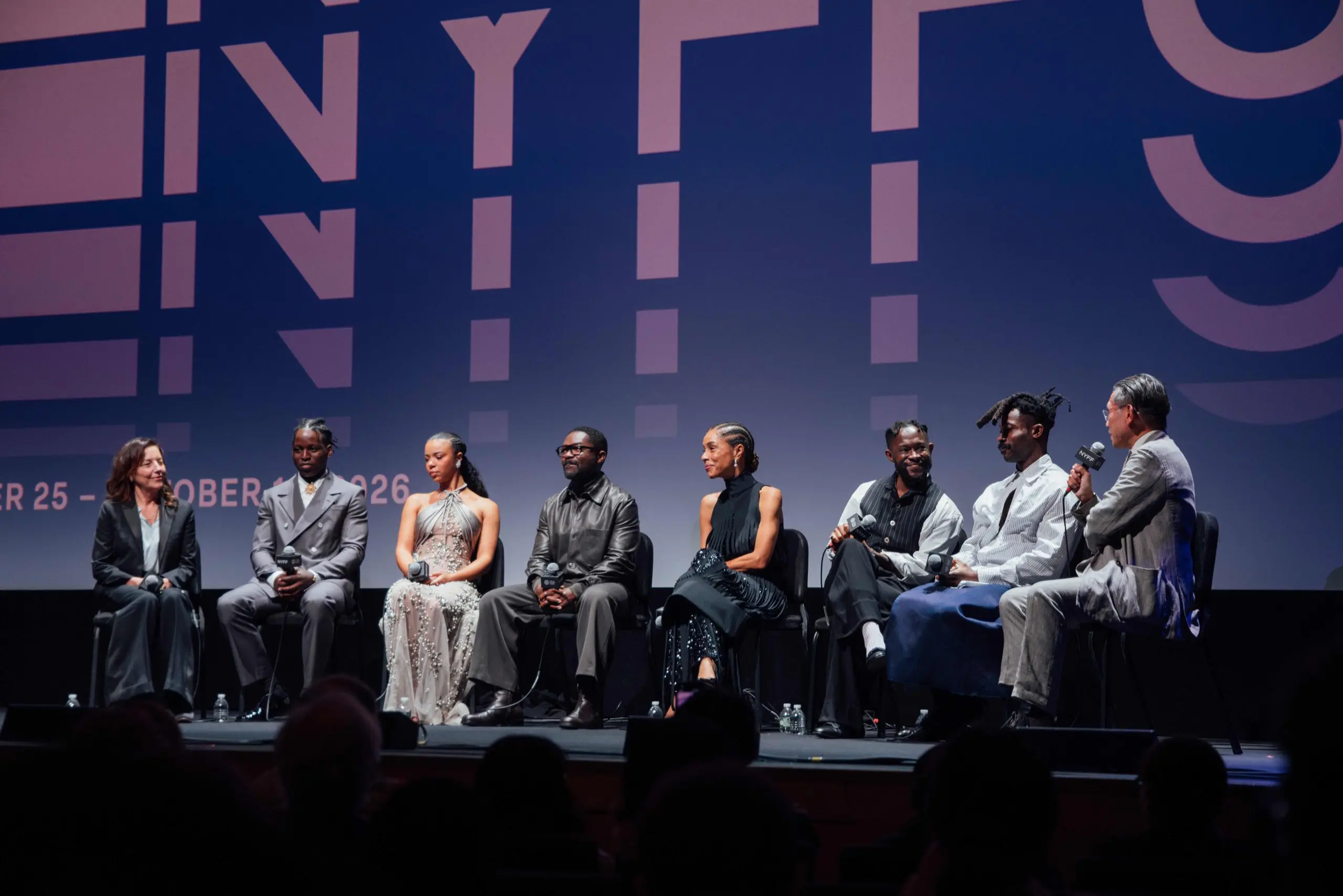
The film bridges past and present – depicting the Nigerian Mrs. Dalloway and her upper crust socialite friends in their current middle age form as well as in their twenties.
The story of Mrs. Dalloway has always been about aristocratic circles. So too is this latest adaptation. And it’s a milieu of which the fillmakers are quite familiar, the two having been born wealthy in Nigeria and having went to elite schools in the West.
But the characters in the margins make the story. The attention given to the servants, soldiers and street vendors paint a rich tableau of Nigerian life, one that works in concert with the centerpiece of Mrs. Dalloway’s fancy party.
This is not to say the ancillary characters are more compelling than our protagonist and her clique. Rather, Mrs. Dalloway and company are compelling because of them. Backdropping the central narrative with slices of life from how the other half lives in the country and floating the camera steadily through urban sonder totally recontextualizes the main story.
We understand Mrs. Dalloway differently (if we ever really understood her at all) in light of this gentle, loving and sometimes heartbreaking representation of the country the Esiri brothers grew up in.
The book is famous for its unwieldy narration that slips from thought to thought, character to character and moment to moment. This does not particularly lend itself to an easy text to screen adaptation. But for a source material that is so interior, Arie and Chuko masterfully visualize that inner lives of the characters.

India Amarteifio (left) and Sophie Okonedo (right)
It’s slow and pondering for sure. At times scene drag. Some performances outshine others. We tend to get better turns from the elder actors versus their younger counterparts. Vets Sophie Okonedo and David Oyelowo are gripping. And a special acknowledgement to a member of the younger cohort, Ayo Edebiri, who plays completely against type and loses all of her goofy stage persona in this seriously good serious role.
The film is a bit uneven in both pacing and performances, but could we expect a totally even interpretation of a book so beautifully disjointed?
Clarissa premiered at Cannes Film Festival and will release in theaters Dec 11.
