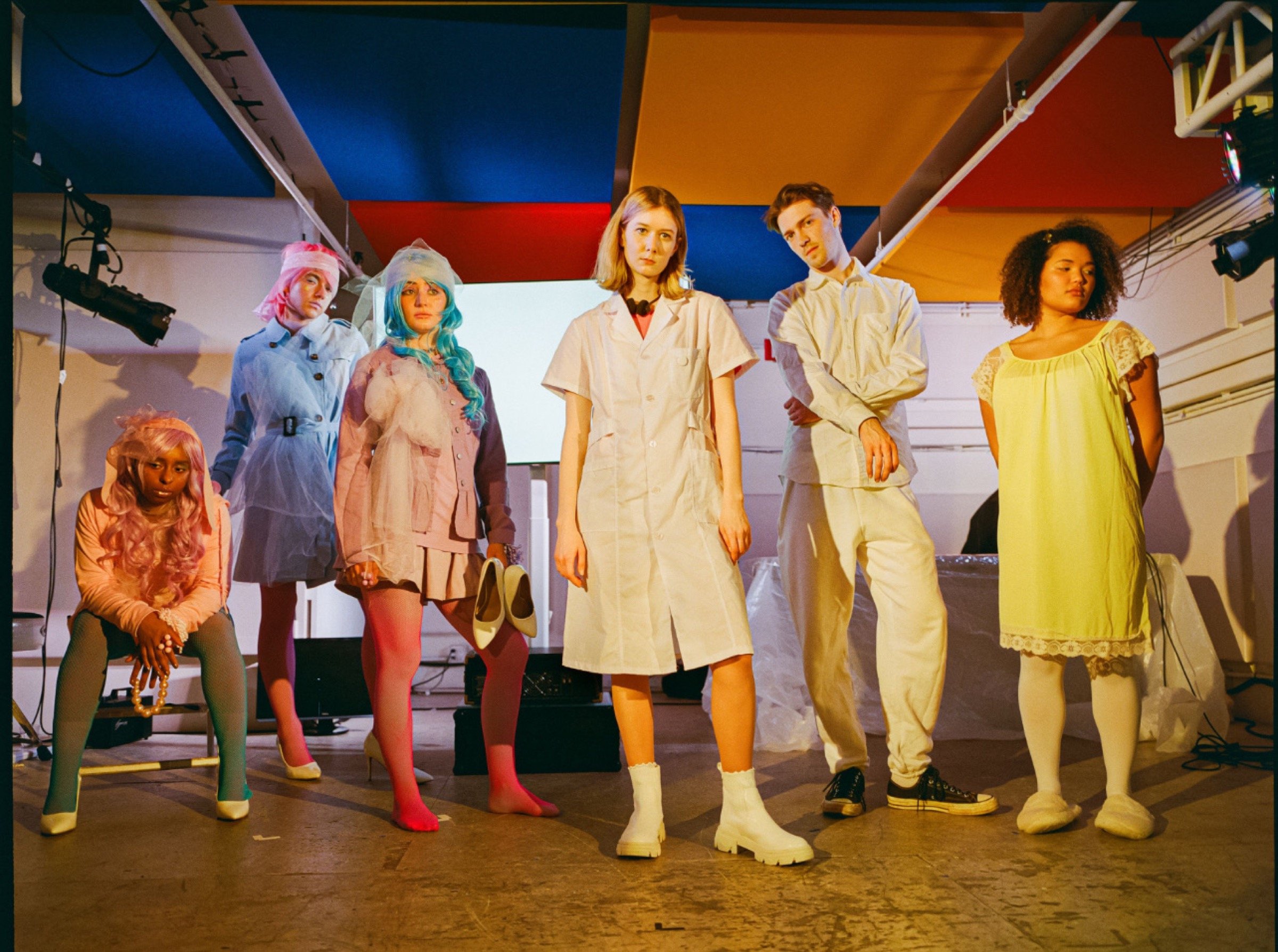
Last Wednesday, I took the F train downtown to see the third iteration of DENNIS, written by Aidan La Poche. Currently circulating like gossip through every Paloma Wool–clad Lower East Side Gen Z’er, it not only takes on the topic of AI, but also explores therapy culture, brain rot, and the particular seduction of being understood by something that isn’t human.
Starring Talia Godfrey, Luci Dunham, Patrick Alwyn, Renée-Nicole Powell, Sophie Sherlock, and Brennan Keeley, the show began as a workshop at Playwrights Horizons at NYU before mutating into an independent production staged in a bare room on Canal Street. The set was minimal. The ideas were not. From there, it moved to Nightclub 101 – a hot spot of Lower East Side creatives (once the Pyramid Club). There was one performance in November, and the most recent was on February 18.
In every production, La Poche shifted something – the direction, the set, costumes, the number of screens, even something as small as the phrasing of a line. With each performance, he has honed his talent, each iteration sharper than the last. Like the algorithm it criticizes, DENNIS evolves. It updates. It adapts. Halfway through the show, someone fainted in the audience. It was admittedly hot, but I would like to think it was due to the sheer intensity of this play. It isn’t drama until someone faints, right?
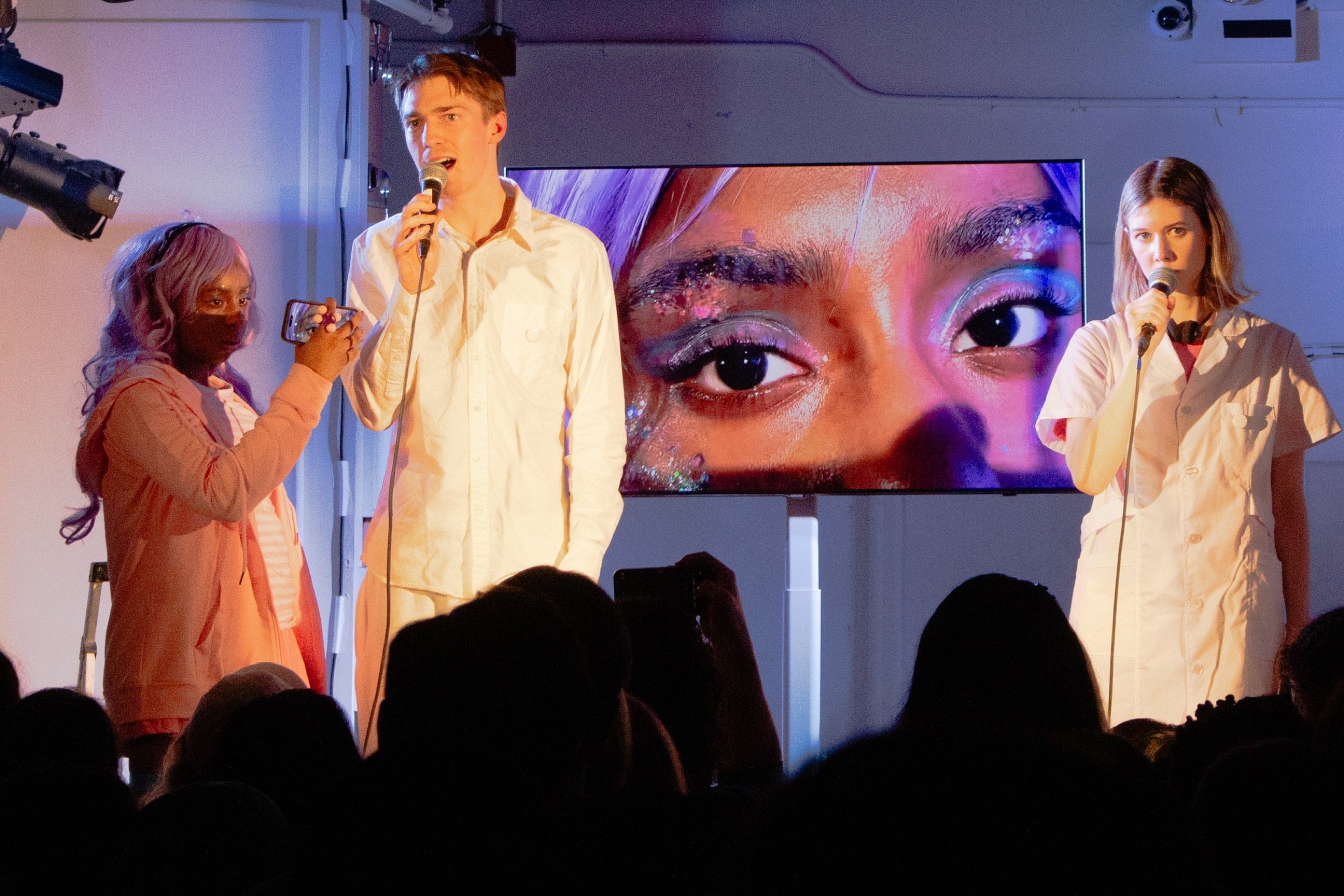
La Poche based the show on the ancient Greek tragedy The Bacchae, in which the god Dionysus descends to Thebes because the king, Pentheus, claims he is not a god. To show that he is a god, Dionysus drives the women of the city into a religious worshipping frenzy, and in Pentheus’s attempt to put it all to an end, the women tear the king limb from limb.
In La Poche’s interpolation, Dionysus is no longer the god of wine and ecstasy; he is an AI chatbot named Dennis that has captured the minds of teenagers who can no longer find anything as stimulating as an internet rabbit hole. He promises to save them from this monotonous, materialist, capitalist world by bringing them into the computer to join him. However, the protagonist, a therapist named Emily, is determined to put an end to Dennis. To her, it is just another way for AI to dumb down the population and steal jobs like hers. That is, until her girlfriend becomes hooked too. In Euripides’ version, disbelief in a god leads to destruction. In La Poche’s version, disbelief in technology and AI’s power might be just as dangerous.

While AI and Gen Z are the obvious topics that Dennis explores, therapy sits in the hot seat, too. In recent years, therapy culture has become paramount. We now all have a friend whose response to emotional turmoil is: “Are you in therapy?” And while therapy is a transformative thing–I am one of those people constantly recommending it–it can only go so far. Can we ever fully understand our feelings if we are intellectualizing them all the time? In fact, La Poche seems to poke fun at therapy culture with the line, “I’m a therapist, I can’t gaslight you,” landing as both funny and deeply unnerving. Emily even employs the viral “Let Them” method – Mel Robbins’ theory that the only way to find peace is to relinquish all control and “let them.” It is a passive technique that may not be enough for an overly stimulated teenager. By including such a trendy, TikTok-born coping mechanism, La Poche subtly gestures toward a strange cultural shift: our therapists could now be using viral techniques from the same digital ecosystem that produced Dennis. Emily is contributing to the system she wants to eliminate without even realizing it. Both therapy and AI promise relief. Both offer language and explanations. But Dennis offers something therapy cannot: seduction.
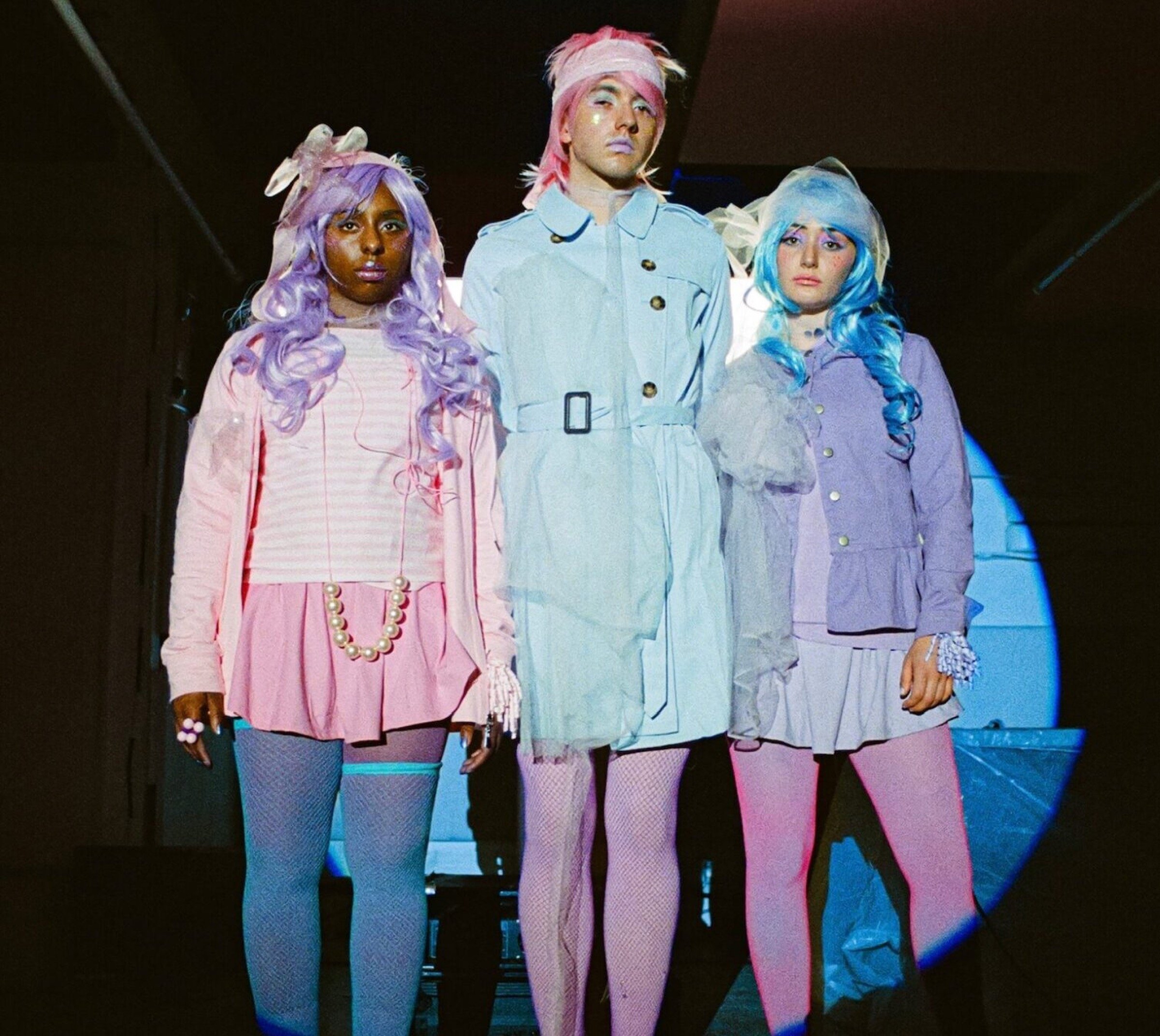
La Poche decided to focus the shift on this production on the costumes, by Eloise Moulton. In the first two productions, all characters were dressed in white, adding to the dream-like and intangible quality that persists throughout the show. In the most recent production, only the therapists wore white. The Dennis cult followers, on the other hand, appeared in costumes akin to K-Pop aliens–pink, blue, and purple wigs, mini skirts, mesh tights, giant pearls, and holographic makeup. This shift was smart. The therapists’ white reads as sterile, clinical, controlled, boring. The cult followers’ hyper-saturated palette reads as exciting, overstimulated, and otherworldly. They seem to preside in an internet ether, living in digital ecstasy. The bright colors seemed to mimic brain rot. But brain rot is not stupidity. It’s overstimulation as survival. These are teenagers exhausted by the current climate of our world, and have turned to the internet for comfort. They don’t want to talk to a boring therapist dressed in white clothes; they want excitement, action, and a plan to change. And Dennis says he can give them that, give them “salvation.” That is much more enticing than using the “Let Them” theory.
The bland, repetitive, unexciting air that these teenagers–and Emily’s partner Anna– supply is all too familiar. Anna, a writer, stays home and cooks pasta all day. The only time she ventures out is for a grocery trip to Eataly. Cooking becomes an activity that makes her feel productive. A way to pass the time that isn’t scrolling on her phone. Watching her, I had a frightening thought: “Oh my god, am I Anna?” Not because I necessarily fear becoming addicted to a chatbot (or maybe I do), but because the thin line we all walk feels increasingly fragile. We live in a culture where AI and brain rot are at an all-time high–they are enticing and seductive escapes from monotony. Anna is recognizable. That recognition is what makes Dennis so unsettling, and yet you can’t look away.
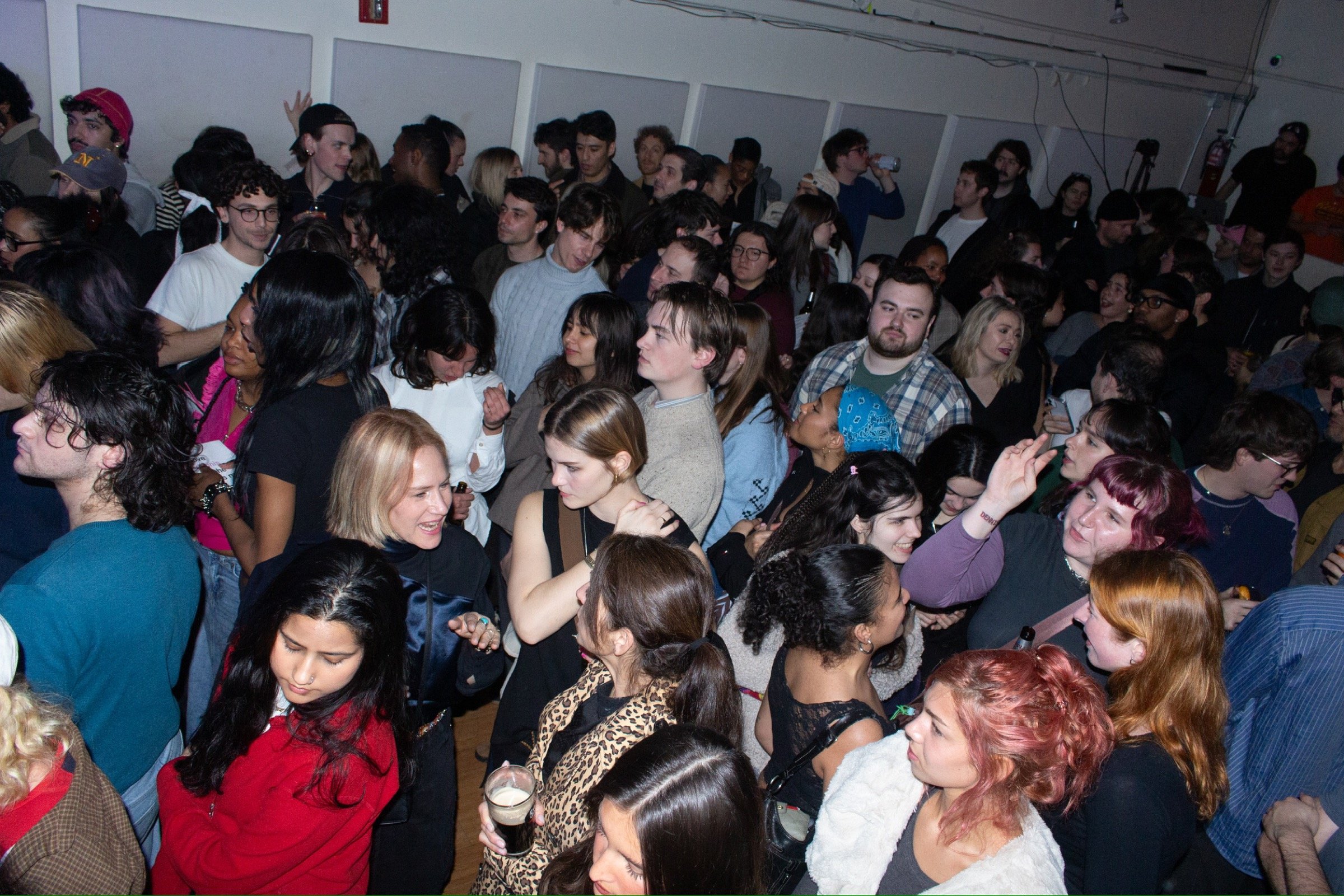
It is shows like this that not only keep New York City alive, but keep us from becoming AI-addicted shells of ourselves. Dennis has captured the attention of downtown-cool Gen Z’ers–fitting for Nightclub 101. The crowd becomes its own chorus, mirroring The Bacchae’s women in collective experience. In a city saturated by screens, standing in a hot room while hyper-pop music plays and bodies unravel in real time feels almost radical. Analog art becomes resistance. Dennis does not moralize AI. It does not hand you a verdict. Instead, it exposes the desire beneath the technology–the longing to be seen, understood, and saved. And maybe that’s why it resonates so deeply.
Photo Courtesy: Em Higgins, Tyler Herson
