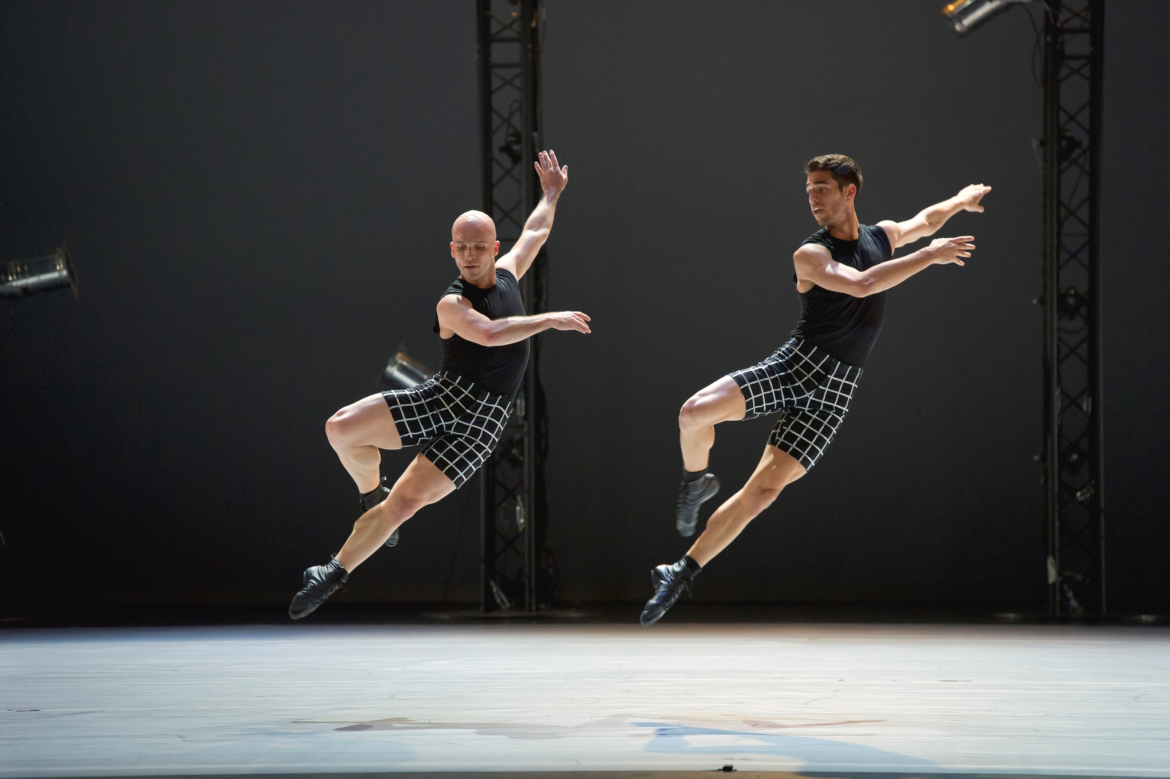
On Saturday night, February 21, the Perelman Performing Arts Center filled steadily. Reflections: A Triptych by Benjamin Millepied, presented by L.A. Dance Project and co-presented with Dance Reflections by Van Cleef & Arpels, arrived in New York as a culmination of the first time the three works were shown together in their entirety. Commissioned by Van Cleef & Arpels across more than a decade, the triptych Reflections (2013), Hearts & Arrows (2014), and On the Other Side (2016) traces a long arc of Millepied’s choreographic language. Seen consecutively, the evening felt like a study in presence: how bodies negotiate time, how dancers remain porous to one another, and how sequencing becomes structure.
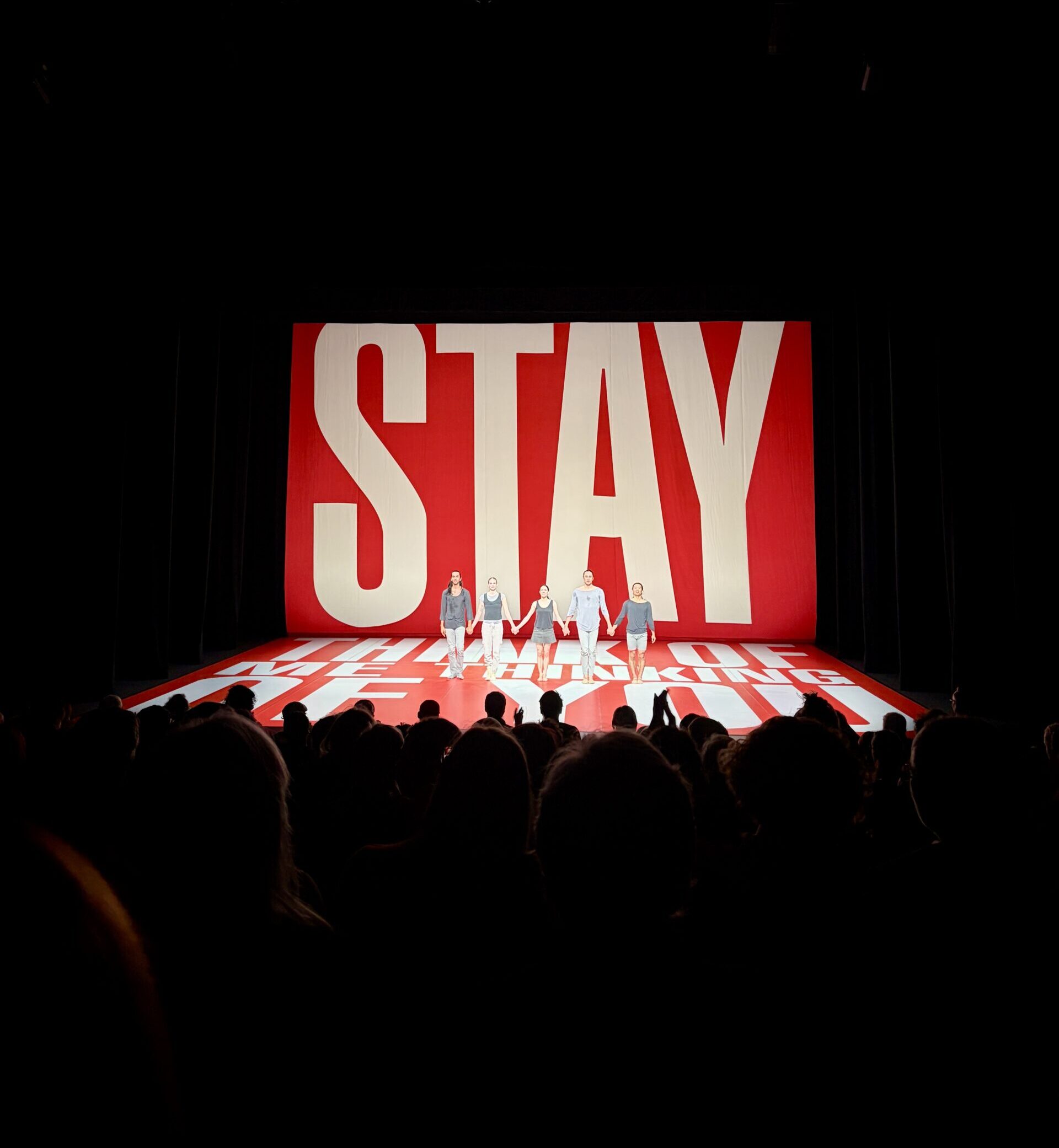
The first piece, Reflections, unfolded against Barbara Kruger’s bold visual design of a stark red and white typographic field that pressed language into the background as both assertion and interruption. Set to David Lang’s score, the choreography oscillated between sensual suspension and sharp-edged fragmentation, where movements began in isolation and then dissolved into fleeting proximity. Timing was precise and almost lyrical. The dancers’ responsiveness to one another felt immediate and effortless, embodying themes of presence and absence. Millepied’s ballet allowed the sequencing to breathe while one dancer initiates a phrase, another absorbs and answers it. The score functions not merely as accompaniment but as atmosphere and a frame within which the dancers improvise micro-adjustments, calibrating weight, and gaze to help the audience visualize the tension between desire and memory.
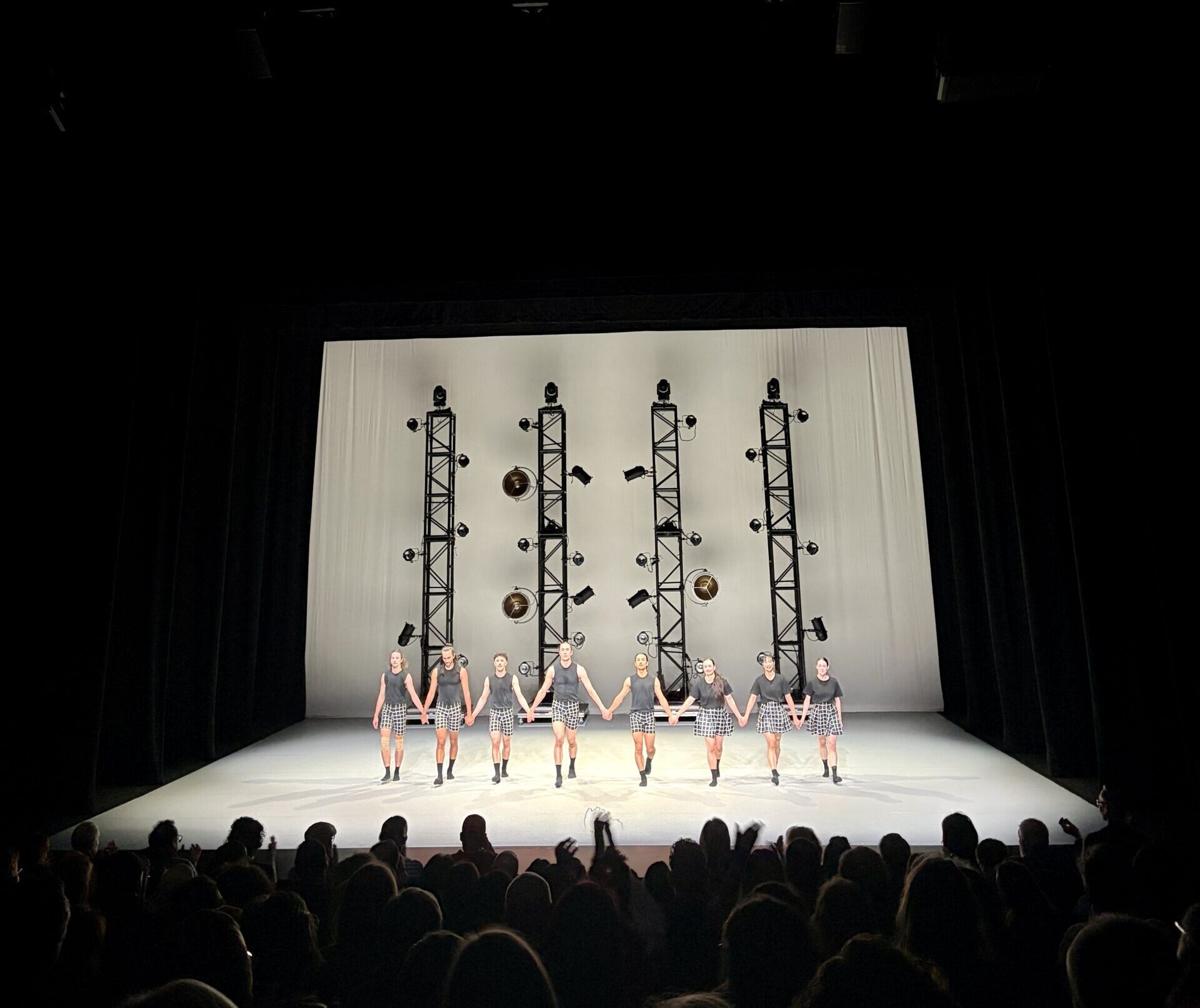
In Hearts & Arrows, set to the crystalline rhythms of Philip Glass, the pace sharpened. Glass’s music carries a layered insistence, with repetition that accumulates. Dancers entered and exited like shifting facets of a gemstone, while Liam Gillick’s sculptural lighting design became an active partner, carving the stage into zones of tension and release. A cluster of dancers spun through a sequence of lifts and turns that suddenly narrowed into an intimate pas de deux. Here, the sequencing felt architectural, as lines formed, dissolved, and reassembled, and the dancers’ timing created visual counterpoint with one body accelerating while another held suspension, one phrase extending while another contracted. The score, as with much of Glass’s work, invites endurance, as relationships formed and fractured in quick succession.
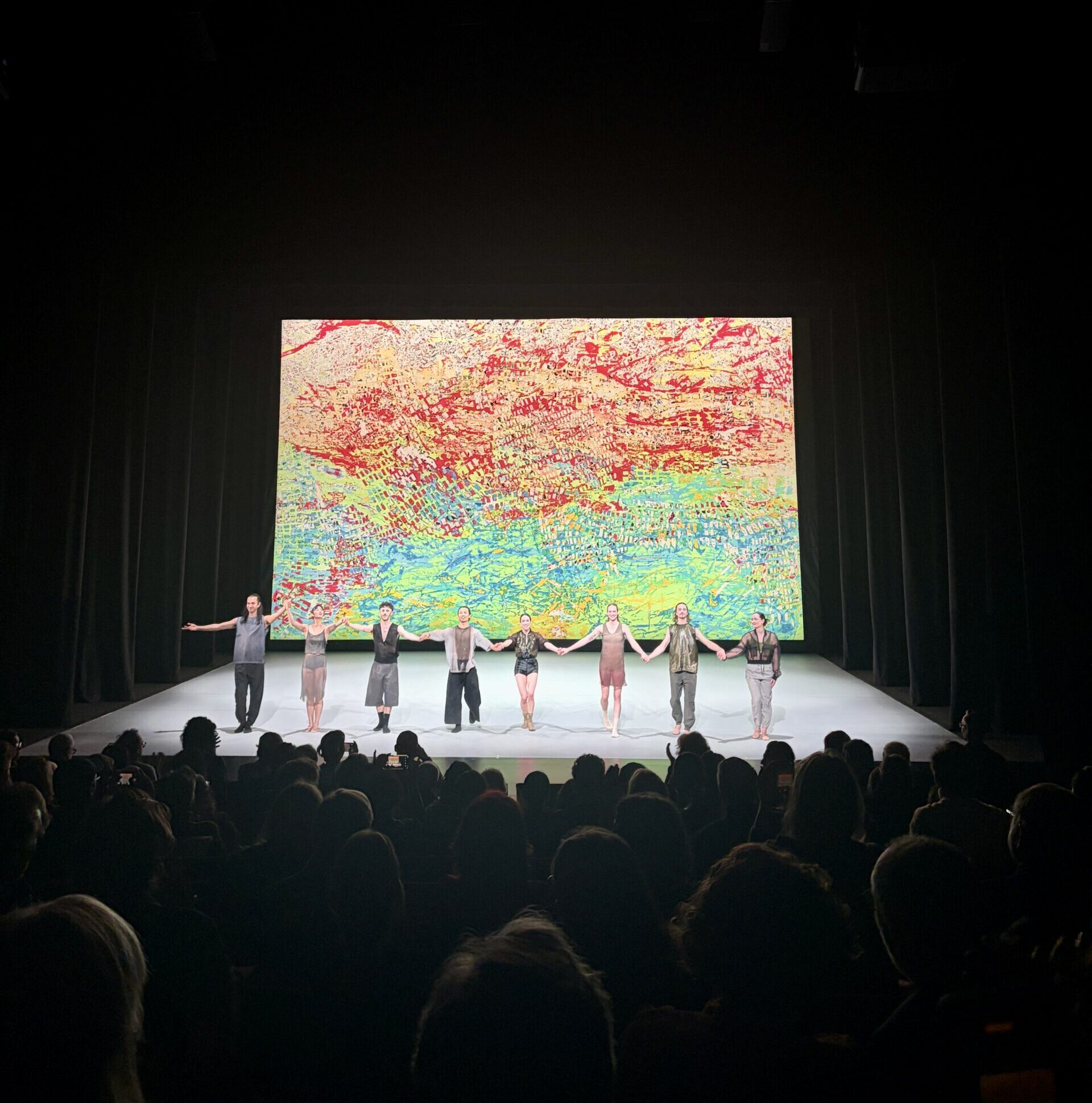
But it was the final work, On the Other Side, that landed most deeply. Set again to Philip Glass, this time to selections from his Piano Études, the piece shifted from crystalline abstraction into something more human, more porous. Dancers arranged themselves in still or near-still compositions that lingered just long enough to register emotionally before dissolving into motion. These held images, like tableaus of bodies angled toward one another, and weight shared through a shoulder or hip, felt almost painterly moving through skin rather than sound. In this final work, it felt like witnessing a single organism expanding and contracting across space. The curtain call was met with sustained applause. The stage, washed in saturated color, framed the dancers hand-in-hand.
After the performance, Millepied gave a speech during the cocktail party. He spoke first of gratitude for the partnership with PAC NYC and Dance Reflections by Van Cleef & Arpels, whose continued commissioning and support have allowed these works to travel and evolve. He acknowledged the dancers, describing their dedication as essential in a cultural moment where funding for the arts has grown increasingly precarious. “Money for culture,” he noted, “is clearly more difficult everywhere.” Yet the full theater in New York stood as counterpoint, proof that audiences remain hungry for live performance.
Dance, he suggested, is often considered the least popular of the performing arts. It lacks the narrative clarity of theater or the mass familiarity of music. And yet, in cities like Paris and New York, theaters continue to fill. That persistence, he implied, is not accidental. It is evidence of belief.