The Knockturnal
  • Home
  • Entertainment
  • Music
  • Lifestyle
  • News
  • Videos
  • Covers
  • Merch
Tag:

Jai Singh Nanda

EntertainmentFeaturedTV

A Show Few Have Seen: Inside The Savant

by Jai Singh Nanda March 17, 2026
written by Jai Singh Nanda

There are shows you watch along with everyone else.

And then there are shows that, for one reason or another, never fully make it out into the world.

The Savant falls into the second category.

Originally developed as a limited series for Apple TV+, the crime thriller—created by Melissa James Gibson and inspired by a real-life article about a woman infiltrating online extremist groups—was set for release before being pulled back entirely. No rollout. No weekly drops. No real audience reception in the traditional sense.

Which makes the experience of watching it—and speaking to the people who made it—feel different from the start.

Because this is a show that exists, but in a way, also doesn’t.

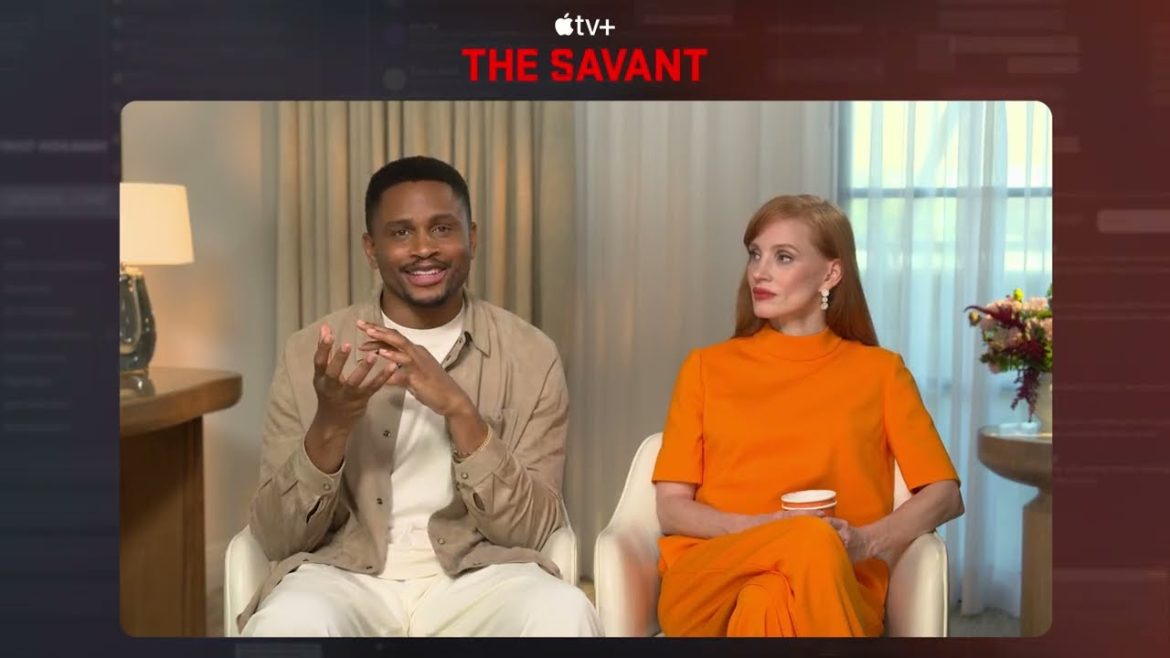
I was one of the few people given access to see it, and then had the opportunity to speak with Jessica Chastain and Nnamdi Asomugha about what drew them to the project, what it demanded from them, and what they hope people take from it, whenever and however it finds its way to an audience.

A Story That Started With Reality

For Jessica Chastain, the entry point into The Savant wasn’t just the role.

It was the story itself.

She described coming across the article that inspired the series and being struck by the idea that there are people whose work exists entirely in the shadows of the internet, embedding themselves inside dangerous online spaces in order to prevent real-world violence. It wasn’t just the concept that stood out to her, but the fact that it was centered on a woman balancing that work with a personal life.

That combination, the scale of the responsibility and the intimacy of the character’s life outside of it, is what made her want to be involved not just as an actor, but as a producer.

From her perspective, it wasn’t enough to simply perform in the story. She wanted to help shape how it was brought to screen.

And that meant committing to a process that was significantly larger than a typical film.

Building Something Long-Form

When I asked her about the difference between producing a series and producing a film, her answer was straightforward.

It’s the same job.

Just amplified.

Instead of telling a story over the course of a couple of hours, you’re building something that stretches across multiple episodes. More characters, more moving pieces, more time spent developing the world and shaping the narrative. It becomes a longer, more intensive process at every stage, from development to production.

She walked through how the project evolved from a single article into a full series. First comes the idea. Then the pitch. Then the process of finding a home for it. Then the development. Then the actual production.

Each step adding another layer.

By the time you arrive at the finished product, you’re not just looking at a single piece of work. You’re looking at something that has been built over years.

A Character Living Between Worlds

On the other side of the conversation, Nnamdi Asomugha spoke about his character, Charlie, and what it meant to exist within a story where so much is happening beneath the surface.

Charlie is navigating a family dynamic shaped by secrets, responsibilities, and the kind of pressure that doesn’t always present itself directly. For Asomugha, the connection to the role came less from the specifics of the storyline and more from the emotional structure around it.

He talked about the experience of being away from home for extended periods during production and then returning to reintegrate into his own family life. That rhythm—leaving, returning, recalibrating—mirrored what his character goes through in a different context.

The circumstances may not be the same, but the feeling of trying to reestablish your place within a family after time away is something that translates.

That sense of grounding becomes important in a show built around a subject that most people don’t encounter directly.

Work That Happens Out of Sight

Both actors kept returning to a similar idea when talking about what they hope audiences take from the series.

Awareness.

For Chastain, it’s about understanding the reality of what exists online, particularly for younger people, and the importance of paying attention to it. The idea that the digital world is not separate from real-world consequences, and that there are people actively working to monitor and prevent harm within those spaces.

For Asomugha, it’s about recognizing the individuals doing that work.

The people who operate behind the scenes, often without recognition, whose job is to prevent something from happening rather than respond after it already has.

It’s a different kind of heroism.

One that doesn’t announce itself.

One that, in many cases, people don’t even realize exists.

A Project in Limbo

What makes The Savant especially unusual is that these conversations are happening around a show that has not been released in the traditional sense.

It was developed. Produced. Completed.

And then, just before it was meant to reach audiences, it was pulled back.

There’s no standard way to talk about something in that position.

There’s no audience reaction to point to. No rollout to contextualize it. No shared experience of people watching it at the same time and forming a collective response.

Instead, what you’re left with is the work itself, and the people who made it.

And in this case, those people are talking about a project that, for now, exists in a kind of in-between space.

Not fully public.

Not entirely unseen.

Just waiting.

Final Thoughts

By the end of my conversation with Jessica Chastain and Nnamdi Asomugha, what stood out most wasn’t the scale of the production or the unusual circumstances surrounding the show’s release.

It was the intention behind it.

A story pulled from reality.

A character built around that reality.

A process that expanded from a single article into something much larger.

And a group of people trying to bring attention to a world that most audiences don’t regularly see.

Whatever happens next with The Savant, whether it finds its way back to audiences or remains in its current state, the work behind it is already there.

And for now, that’s the version of it that exists.
March 17, 2026 0 comments
0 FacebookTwitterPinterestEmail
EntertainmentUncategorized

by Jai Singh Nanda March 17, 2026
written by Jai Singh Nanda

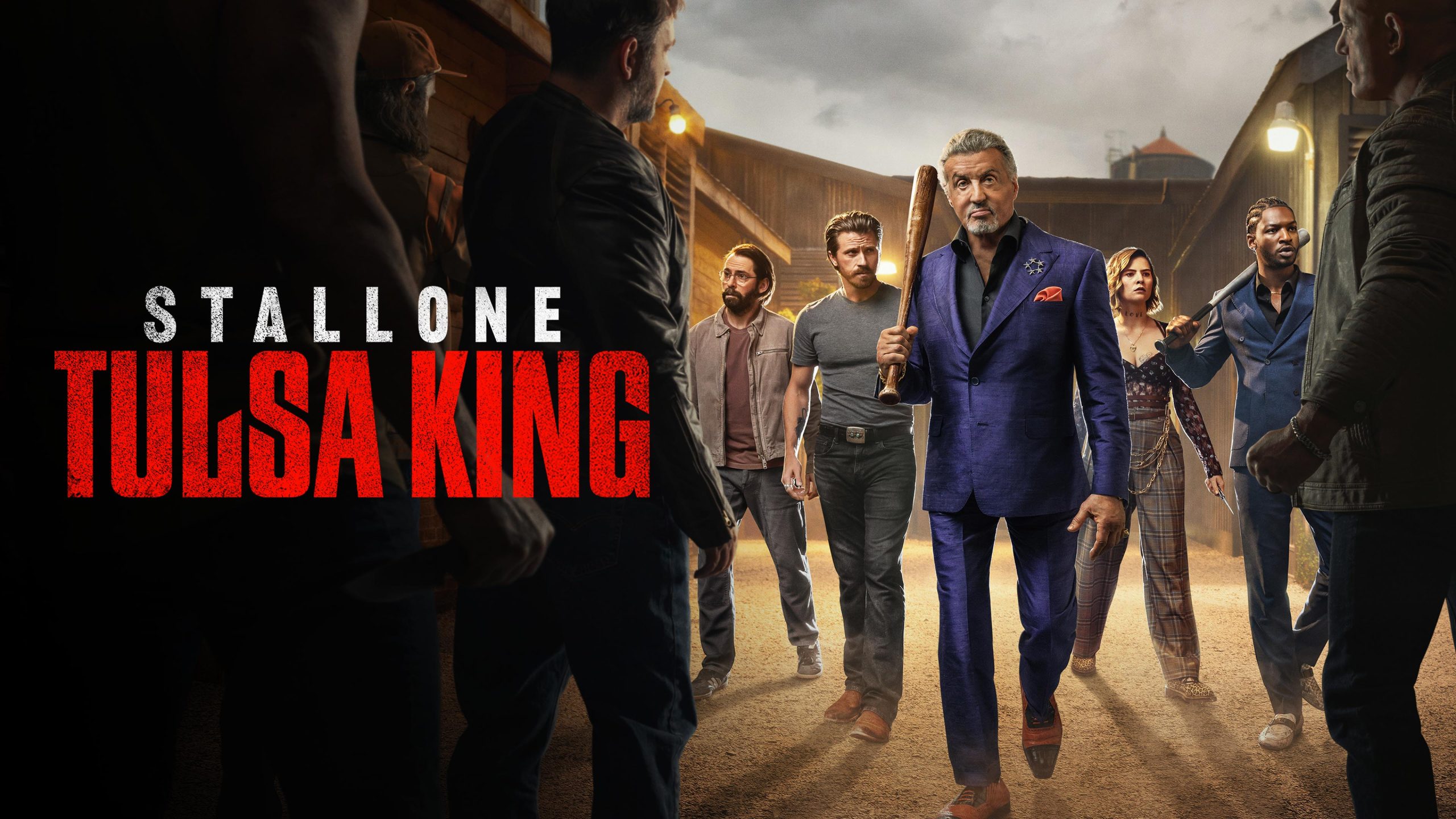
Swagger, Stories, and Controlled Chaos: Inside Tulsa King Season 3

Garrett Hedlund, Bella Heathcote, Dana Delany, Kevin Pollak, Jay Will, Annabella Sciorra, and Martin Starr break down the tone, the chemistry, and the chaos behind one of TV’s most entertaining crime dramas.
by Jai Singh Nanda

Some crime shows want to feel dangerous.

Others want to feel important.

Tulsa King doesn’t really worry about either of those things. It just wants to be good television.

And that confidence is exactly why it works.

From the moment the show dropped Sylvester Stallone into Tulsa as Dwight “The General” Manfredi, it found a rhythm that felt different from most modern crime dramas. It had the structure of a mob story, sure, but it also had humor, looseness, and a kind of personality that most shows in this space tend to sand down.

By the time season three rolls around, that identity is fully locked in.

The world is bigger now. The cast is deeper. The stakes are higher. But the tone, that balance between danger and fun, remains the engine that drives everything.

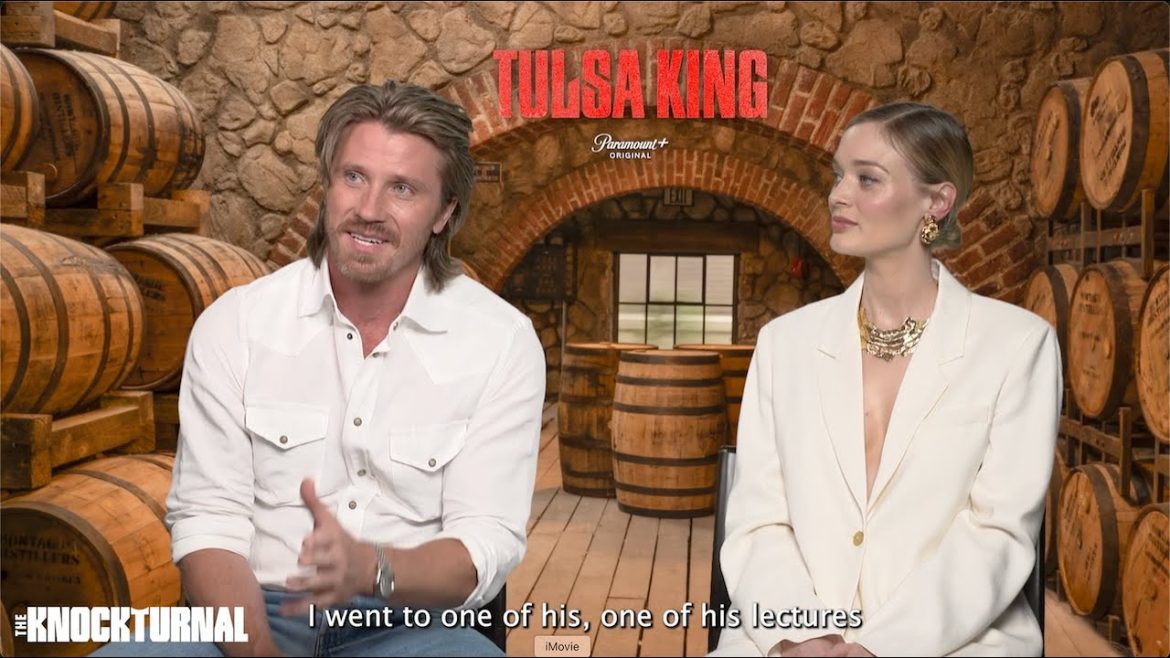
After speaking with multiple members of the cast, including Garrett Hedlund, Bella Heathcote, Dana Delany, Kevin Pollak, Jay Will, Annabella Sciorra, and Martin Starr, one thing became clear.

Everyone understands exactly what kind of show this is.

And more importantly, how to play it.

The Trick Is Not Taking It Too Seriously

One of the first things that came up in my conversation with Garrett Hedlund and Bella Heathcote was tone.

When I asked what Tulsa King demands from them as performers that other projects haven’t, Garrett’s answer cut right to the point. This isn’t a show that benefits from being played too heavily. If you lean too far into seriousness, it starts to feel off. The better approach is to relax into it, trust the rhythm, and let the character exist without forcing the weight of it.

That idea explains a lot about why the show feels so watchable.

It’s not that the stakes aren’t real. It’s that the show doesn’t suffocate under them.

Bella added another layer, talking about how her character carries emotional weight while still maintaining a sharp, flirtatious energy. Instead of collapsing into grief, she gets to hold both sides at once. That balance, being able to carry something difficult without losing the character’s edge, is something the show allows across the board.

And that’s a big part of what separates Tulsa King from other crime series. It doesn’t trap its characters in one emotional lane.

The Stallone Effect

At a certain point, every conversation circled back to the same person.

Sylvester Stallone.

It wasn’t even intentional. It just kept happening.

Bella shared a moment that was both funny and relatable. She spent the entire season trying to work up the nerve to ask for a photo with him, finally doing it through his daughter. When it finally happened and he threw up the classic Rocky pose, she said she completely melted.

Garrett’s story went in a totally different direction. He talked about spending time with Stallone discussing philosophy, Stoicism, and literature. The way he described those moments, you could tell that’s what stuck with him the most. Not the spectacle, but the quieter conversations.

And then talking to Dana Delany and Kevin Pollak, the stories kept evolving.

Dana described how Stallone still approaches scenes like a director, constantly checking playback, adjusting, refining. Kevin remembered his first day watching a scene back with him, where Stallone joked about spinning off their characters together. It was the kind of moment that immediately puts you at ease while also reminding you who you’re working with.

By the time I got to the third group, Jay Will, Annabella Sciorra, and Martin Starr, the stories became less specific but the point remained the same. Stallone changes the energy of the set.

He’s not just the lead.

He’s the center of gravity.

A Show That Knows Its Strengths

There’s a moment in my last interview where I asked what makes Tulsa King different from all the other crime stories out there.

One of them immediately said, “We have Sylvester Stallone.”

It got a laugh, but it wasn’t really a joke.

Because that’s a huge part of it.

There’s a certain kind of presence that very few actors still bring to the screen. Stallone has it. The show leans into it. And everything around him is built to support that energy.

But it’s not just about him.

The supporting cast understands how to exist around that presence without getting swallowed by it. They play off it. They react to it. They let it elevate the scene instead of trying to compete with it.

That kind of balance doesn’t happen by accident.

Expansion Without Losing Identity

Season three also feels bigger.

New characters, new dynamics, new tensions. The world is expanding in a way that feels natural rather than forced. You can feel the show stretching outward, introducing new players while still keeping its core intact.

Dana pointed out how excited she was for audiences to see Kevin Pollak come into the mix. Jay Will talked about the influx of new talent and how it adds new energy to the story.

That expansion matters.

A lot of shows struggle once they grow past their original setup. They either overcomplicate things or lose what made them work in the first place. Tulsa King manages to avoid both.

It adds without overcrowding.

The Comedy Is the Secret Weapon

If there’s one thing that really defines Tulsa King, it’s this:

It’s funny.

Not in a way that undercuts the stakes, but in a way that makes everything more engaging.

When I threw out some more offbeat questions, like whether they’d let Dwight into their house or what they’d do after getting out of prison, the answers were all over the place. Some said they’d let him in. Some said absolutely not. Some joked about making him coffee. Others were ready to call the cops immediately.

That range of responses actually says a lot about the character.

Dwight isn’t just dangerous.

He’s unpredictable.

And that unpredictability creates a kind of tension that doesn’t rely on constant violence. You don’t know how things are going to go, and that’s what keeps it interesting.

Why It Works

By the end of these conversations, the takeaway was pretty clear.

Everyone involved in Tulsa King understands the tone.

They know it’s not supposed to be played like a traditional crime drama. They know it needs that looseness, that swagger, that ability to move between humor and tension without getting stuck in either.

And most importantly, they seem like they’re having a good time.

That matters more than people think.

Because when a show feels like it’s enjoying itself, the audience does too.

Final Thoughts

Tulsa King isn’t trying to reinvent television.

It’s not trying to be the most serious show on air.

It’s just trying to be entertaining.

And at this point, it’s gotten really good at that.

Season three builds on everything that worked before, expands the world in smart ways, and continues to lean into the one thing that makes it stand out.

It knows exactly what it is.

And it doesn’t overthink it.


March 17, 2026 0 comments
0 FacebookTwitterPinterestEmail
EntertainmentTV

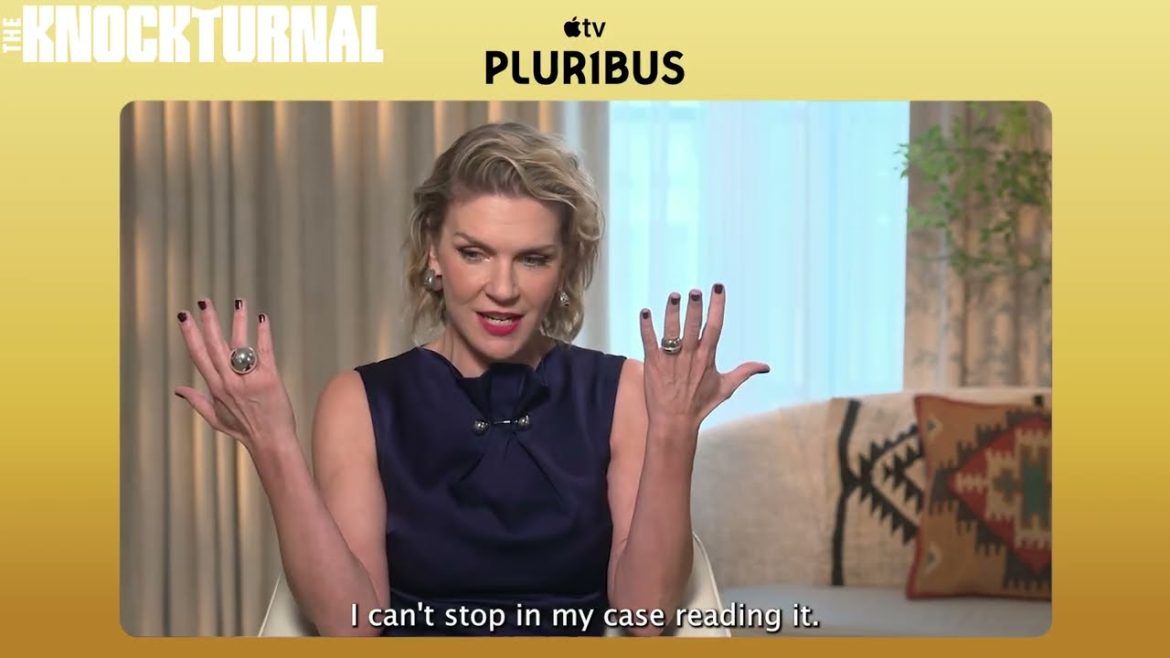
Chaos, Character, and Total Trust: Inside Pluribus

by Jai Singh Nanda March 17, 2026
written by Jai Singh Nanda

There are shows that arrive with hype.

And then there are shows that arrive with expectation.

Anything created by Vince Gilligan automatically falls into the second category.

After redefining modern television with Breaking Bad and Better Call Saul, Gilligan has built a reputation that is almost impossible to separate from the work itself. His name carries a certain promise. Precision. Control. Character-first storytelling. A world where tone can shift on a dime without ever feeling like it’s losing its grip.

So when Pluribus, his latest series for Apple TV+, began to take shape, there was a natural question hanging over it.

What does a creator like that do next?

From everything I’ve seen and heard, the answer is simple.

He swings.

And then he swings again.

I sat down with Rhea Seehorn, who leads the series, to talk about stepping into a project that feels intentionally unpredictable, tonally ambitious, and deeply rooted in character, even as it moves through genres that don’t usually sit comfortably together.

By the end of the conversation, one thing became very clear.

This is not Vince Gilligan repeating himself.

This is him pushing further.

A Project You Don’t Say No To

Before getting into anything about tone or storytelling, I asked Seehorn how she came onto the project and what initially drew her to it.

Her answer was immediate.

There wasn’t really a decision to make.

When Gilligan reached out, she said yes before even reading the script. He hadn’t told her what the show was about yet. He wasn’t ready to send the material. None of that mattered. The trust was already there.

And that says a lot.

Because in an industry where decisions are often calculated, strategic, and cautious, that kind of instinctive yes only happens when there is a deep creative confidence in the person leading the project.

When she finally did read the script, what struck her most was not clarity, but momentum.

She described the experience of reading it as something you can’t quite categorize while you’re inside it. It keeps shifting. You think you understand what kind of story it is, and then it moves. It starts to feel like one genre, then pulls away from it. It builds tension, then pivots into something unexpectedly funny. It asks big questions, then refuses to answer them in a straightforward way.

The word she kept coming back to, in essence, was unpredictability.

Not in a chaotic sense.

In a deliberate one.

A Show That Refuses to Sit Still

One of the most interesting things about Pluribus, based on how Seehorn described it, is that it does not allow the audience to get comfortable.

There are familiar entry points. You might recognize the language of suspense. You might think you’re watching something rooted in horror or science fiction. You might start to build expectations around where the story is heading.

And then it shifts.

That kind of storytelling is difficult to pull off, because it requires absolute control underneath the surface. If the tone slips even slightly, the whole thing can feel disjointed instead of intentional.

But that is exactly where Gilligan thrives.

Seehorn talked about the way the show moves between tension and humor, sometimes within the same sequence. One moment, her character is going through something deeply uncomfortable or emotionally raw. The next, there is a moment of dark humor rooted in behavior, not punchlines. And then it swings back again.

That elasticity is part of what makes the experience engaging.

It demands attention.

It assumes the audience is paying close enough attention to keep up.

And more importantly, it trusts them to.

Vince Gilligan’s Approach: Character First, Always

At a certain point, the conversation naturally turned toward Gilligan himself.

Why his work feels so watchable.

Why his shows hold tension so well.

Why his tone, even when it shifts, never feels accidental.

Seehorn’s answer cut straight to the foundation.

It starts with character.

Not concept. Not genre. Not spectacle.

Character.

She explained that even when Gilligan is exploring larger ideas or unusual narrative structures, he builds everything outward from the people inside the story. What they want. What is in their way. How they behave under pressure.

That may sound simple, but it is actually what allows everything else to work.

Because once the character is grounded, you can move them through almost any situation, and the audience will follow.

That is what gives Pluribus its freedom.

It can move between tones, because the core is stable.

Collaboration Without Fear

One of the most revealing parts of the conversation had nothing to do with plot or genre.

It was about environment.

Seehorn described Gilligan as someone who creates a space where actors feel safe to take risks. That may sound like a cliché, but the way she explained it made it feel very real.

She talked about how, over time, working with him helped build her confidence to bring ideas into the room. Not just to execute what’s on the page, but to actively explore it. To try something. To push a moment in a different direction. To experiment with tone.

And crucially, to not be afraid of getting it wrong.

That kind of environment is rare.

A lot of actors, she pointed out, carry a quiet fear into the room. The fear of failing. The fear of being judged. The fear of taking a swing that doesn’t land. And in some environments, that fear gets reinforced.

Here, it’s the opposite.

If something works, it stays. If it doesn’t, someone else tries something. The process becomes collaborative rather than performative.

That freedom matters, especially on a show like Pluribus, where tone is constantly shifting and there is no single “correct” way to play a scene.

You have to feel your way through it.

And that only works if the environment allows you to.

A Decade of Creative Trust

At one point, Seehorn mentioned something almost in passing that ended up reframing the entire conversation.

She realized that she and Gilligan have effectively been working together for close to a decade.

That kind of creative relationship is not common.

And it shows.

There is a shorthand there now. An understanding of rhythm, of tone, of how far to push something, of when to pull it back. That kind of trust doesn’t just make the work easier. It makes it deeper.

Because instead of figuring out how to collaborate, you are building on something that already exists.

That is part of what gives Pluribus its confidence.

It is not a first experiment.

It is an evolution.

Why This Feels Different

From the outside, it would be easy to look at Pluribus and try to categorize it through Gilligan’s previous work.

But that misses the point.

This does not sound like a continuation of anything.

It sounds like a departure.

A show that is willing to take tonal risks. A show that is less interested in staying within a single lane and more interested in seeing how far it can stretch without breaking. A show that leans into discomfort, humor, tension, and ambiguity all at once.

And importantly, a show that still trusts the audience to come along for that ride.

That trust is everything.

Because it creates a different kind of viewing experience. One where you are not being told how to feel in every moment. One where you are allowed to sit in uncertainty. One where you are not handed easy answers.

That is harder.

But it is also more rewarding.

Final Thoughts

By the end of my conversation with Rhea Seehorn, what stayed with me most was not just excitement about the show itself.

It was the clarity of the process behind it.

A creator who builds from character outward.

An actor who is willing to step into something without fully knowing what it is, simply because she trusts the person guiding it.

A set environment that encourages risk instead of punishing it.

And a story that refuses to stay in one place for too long.

That combination is rare.

And if Pluribus delivers on what it sounds like it’s aiming for, something unpredictable, tonally ambitious, and fully committed to the intelligence of its audience, then it won’t just be another entry in Vince Gilligan’s career.

It will be a continuation of what he does best.

Taking control of chaos.

And making it feel intentional.


March 17, 2026 0 comments
0 FacebookTwitterPinterestEmail
EntertainmentTV

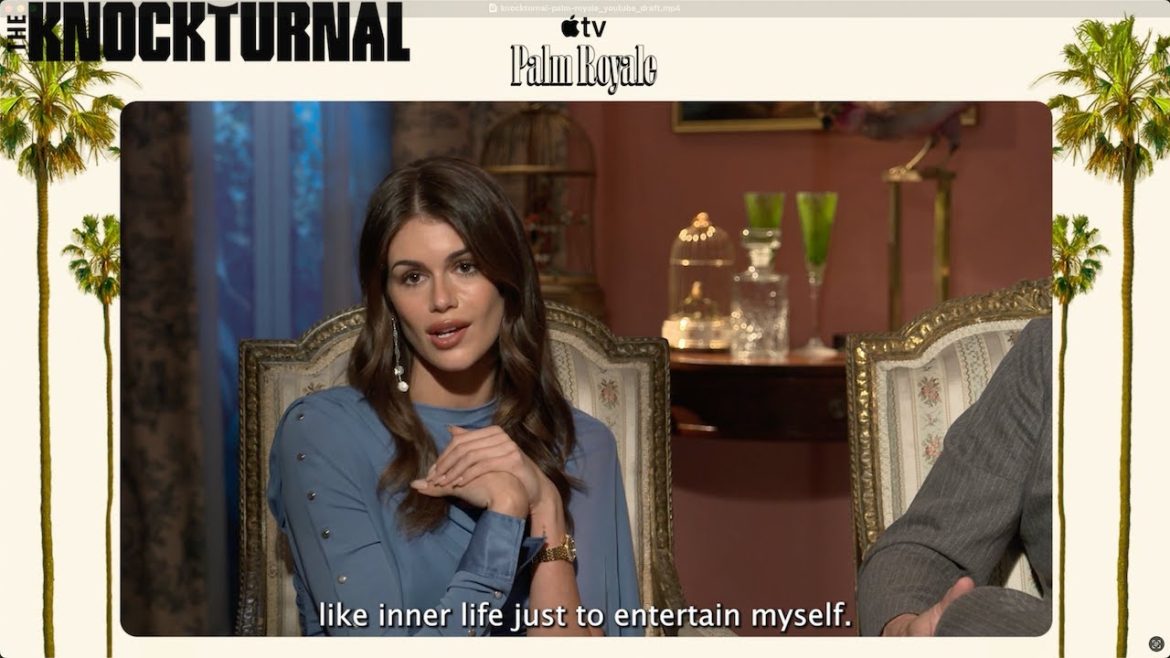
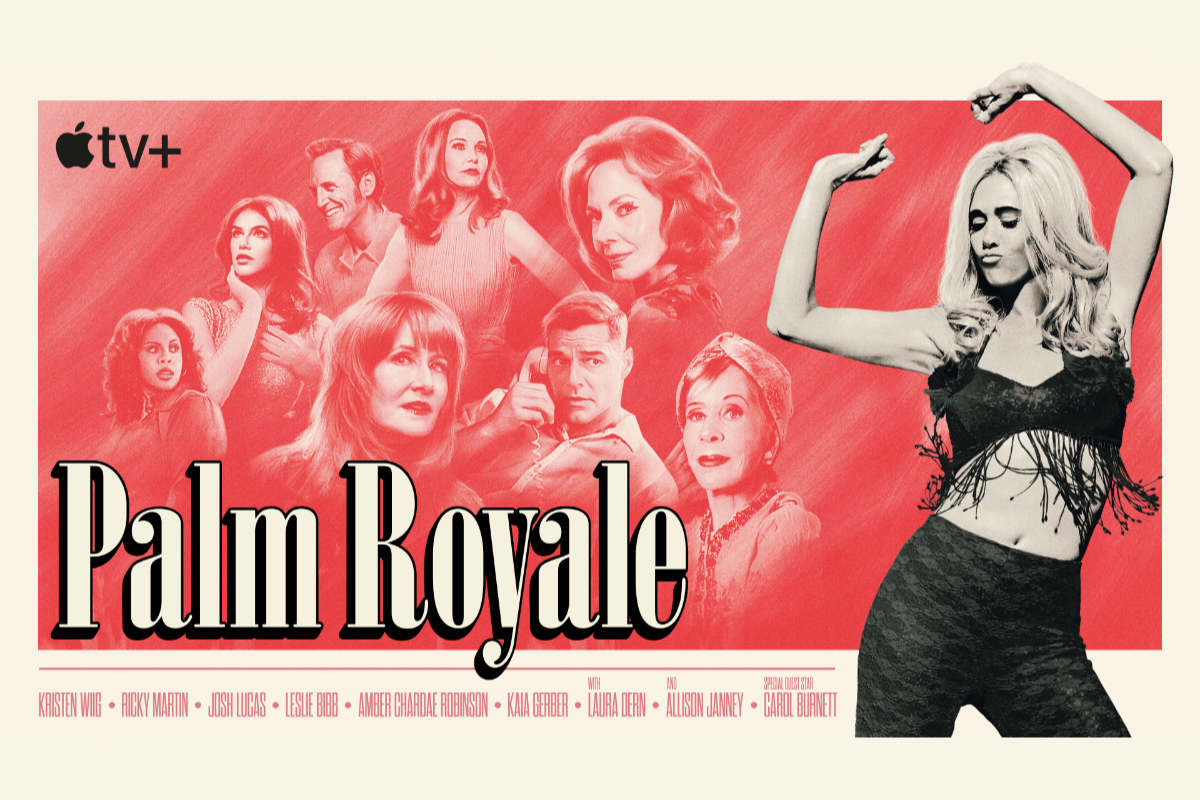
Glamour, Nerves, and Full Commitment: Inside Palm Royale Season 2

by Jai Singh Nanda March 17, 2026
written by Jai Singh Nanda

There are shows that ask actors to disappear into realism. There are shows that ask them to sharpen everything, make it bigger, brighter, stranger. And then there is Palm Royale, a series that somehow demands both at once.

Set in 1969 and built around the glittering, cutthroat world of Palm Beach high society, Palm Royale has always lived in a fascinating tonal space. It is funny, but never weightless. It is glamorous, but never hollow. It is absurd, but never so absurd that the emotions stop mattering. That balancing act is a huge part of what makes the show work, and it is also what makes it such an interesting series to talk to actors about.

Because this is not a world anyone can play halfway.

Everyone in Palm Royale has to fully commit. To the period, to the emotion, to the tension underneath the elegance, to the social theater of every interaction. The clothes are fabulous, the hair is immaculate, the sets are stunning, but none of that means anything unless the people inside that world believe in it completely.

That was the feeling I kept coming back to after speaking with Mindy Cohn and Amber Chardae Robinson, and then with Kaia Gerber and Josh Lucas. Their answers were all different, but they kept circling the same core ideas: nerves, trust, observation, tone, and the strange freedom that comes from letting go enough to truly play.

A World Where Performance Is Everywhere

At the center of Palm Royale is Maxine, played by Kristen Wiig, an outsider trying to break into the most exclusive social world in Palm Beach. That premise alone gives the show a natural charge. It is about class and reinvention, about image and power, about who gets welcomed in and who gets left standing at the door. But what makes the series more interesting is that everyone in it is performing something.

Some characters are performing wealth. Some are performing confidence. Some are performing stability, charm, romance, respectability, innocence. Even when they are standing in beautiful rooms under chandeliers, they are often scrambling internally to hold onto whatever version of themselves the world requires from them.

That is part of why the show works so well as both comedy and drama. Underneath the polish, everyone is managing panic, desire, insecurity, loneliness, or ambition.

And because season two already has that world established, it gets to go even deeper into the emotional absurdity of it all. The satire gets sharper, but the people do too.

Mindy Cohn on Why the Work Still Feels the Same

When I asked Mindy Cohn how the industry feels different now compared to when she started acting, I loved that she immediately separated the business from the actual experience of doing the work.

Her point was simple but kind of profound: whatever changes around the industry, stepping onto a set still feels the same. That part, the actor stepping into the space and getting ready to play, still feels like home.

That answer really stuck with me because it cut through all the usual noise around how much entertainment has changed. Of course it has changed. The platforms are different. The volume of projects is different. The pace is different. The way people consume stories is different. But her answer reminded me that the actual pulse of acting is still tied to something much older and simpler. You show up. You feel the nerves. You get ready. You do the scene.

She also spoke about this era as an exciting one because there are more kinds of voices and more kinds of projects out there. That breadth matters. And for someone who has worked across so many different eras of television, it was interesting to hear that sense of possibility rather than fatigue.

It also felt fitting for a show like Palm Royale, because it really is the kind of series that only works in an environment willing to make room for something this specific. It is period comedy-drama, social satire, emotional farce, and ensemble piece all at once. It is glossy and odd and deeply committed to its own rhythm.

That kind of thing needs people who still love the work.

Amber Chardae Robinson on Learning by Watching

When I asked Amber and Mindy what it was like working around such an accomplished ensemble, Amber gave one of the most revealing answers of the day.

She talked about what she absorbs by simply watching people like Laura Dern and Kristen Wiig work. Not in some abstract, starstruck way, but in the practical sense of learning how they carry themselves, how they use their power, and how they create an atmosphere around them.

One of the things she pointed to was the generosity of that environment. She described a moment with Laura where she was encouraged to ask for another take if she needed one. It sounds small, but it really is not. For someone still finding their footing, that kind of encouragement can completely shift how you understand your own right to take up space.

That stood out to me because it says a lot about what kind of set this must have been. On a show this ornate and high-performing, it would be easy for newer actors to feel like they should stay quiet and simply keep up. But Amber described a culture where great actors were not just impressive to watch, they were also teaching by example.

She also spoke about literally forgetting she was acting while watching Allison Janney burst into a scene. That image is so perfect for Palm Royale. It is a show of entrances, of force, of personalities that arrive like weather. And if you are lucky enough to be in the room for that, of course it can feel like a master class.

Everyone Still Gets Nervous

Mindy took that same question in a slightly different direction, and honestly, it may have been my favorite part of the entire conversation.

She talked about nerves.

Not just first-day nerves, but second-day nerves, two-month nerves, that constant flicker of anxiety that can still show up no matter how experienced you are. And what she found comforting was learning that the actors she admired most feel it too.

That felt deeply human, and it also felt very connected to Palm Royale itself.

Because this is a show about performance in every possible sense. Social performance. Romantic performance. Performance as survival. Performance as reinvention. And to hear someone as seasoned as Mindy say that nerves are still part of the process was a reminder that confidence and fear are often sitting right next to each other.

Her framing of it was smart too. Nervousness does not always have to be read as something negative. Sometimes it is simply excitement. Sometimes it is energy. Sometimes it is proof that you care.

And on a set where so many moving parts are waiting for you, lights, camera, crew, fellow actors, all of it, there is pressure in that. The challenge is letting those first moments pass so you can stop worrying about how you are being perceived and return to play.

That idea, returning to play, feels like the key to this whole show.

Josh Lucas on Playing the Truth, Not the Joke

My conversation with Josh Lucas got right to one of the trickiest parts of Palm Royale: tone.

I asked him how he finds the right balance on a show that is at once glamorous, ridiculous, satirical, and emotionally sincere. His answer was exactly what I hoped it would be.

He said you cannot play the comedy. You cannot chase the satire. You have to fully commit to the truth of the character and the reality of the moment.

That is the whole thing.

In Josh’s case, that means understanding Douglas not as some wink at rich men of the era, but as a man who genuinely moves through the world with a level of entitlement and arrested development that creates chaos everywhere he goes. He does not think he is being funny. He is just making a mess. The humor comes from how sincerely he inhabits that.

That is such an important distinction, because a show like this would collapse if the actors started playing from the outside in. If everyone treated it like an elaborate joke, the emotional grounding would disappear. But if they fully inhabit the relationships, the time period, and the stakes, then the comedy becomes sharper because it emerges naturally out of behavior.

Josh also said something I thought was especially sharp: one of the biggest mistakes an actor can make is trying to be funny. And on a show like Palm Royale, that is exactly right. The funniest moments are often the ones where the characters are taking themselves most seriously.

Kaia Gerber on Unlearning Camera Awareness

Then Kaia Gerber came at performance from a completely different angle, and her answer was one of the most self-aware of the day.

I asked her about the biggest differences and similarities between modeling and acting. She said that one of the biggest habits she had to unlearn was the constant awareness of the camera. In modeling, you are trained to know exactly where it is, how you are framed, how the light is hitting you. In acting, that level of awareness can get in the way. You cannot be fully inside a scene if part of your brain is still checking whether you are in your light.

That is such a smart observation because it gets to the difference between presentation and immersion. Modeling often asks for control over the image. Acting asks you to surrender control enough to live inside the moment.

But what I really liked was how she connected the two forms in a more personal way. She said she has often felt uncomfortable in front of the camera as herself, and that even as a model she would invent little inner characters to make herself feel more confident. Acting just takes that instinct further. Instead of briefly imagining a version of yourself for a shoot, you build a full interior world and sustain it over time.

That felt like a real answer, not a polished one. And it also made perfect sense in the context of Palm Royale, where so many characters are building and maintaining versions of themselves in order to survive a social ecosystem built on image.

What Still Excites Them About Storytelling

Toward the end, I asked Josh and Kaia what excites them about where storytelling is headed right now.

Josh’s answer was about scale and communal experience. He had recently seen The Wizard of Oz at Sphere and was clearly energized by the idea that some future forms of storytelling may become bigger, more immersive, and more collective again. He talked about the difference between solitary streaming and shared audience experience, and how there may be room for storytelling to split into different lanes rather than simply collapse into one model.

What I liked about his answer was that it acknowledged how unstable the industry feels right now while still leaving room for optimism. There is a lot of uncertainty, and he did not deny that. But he also seemed genuinely curious about where new forms could emerge.

Kaia’s answer went in a more intimate direction. She brought up the anxiety around AI, but instead of just staying in fear, she argued that what still gives her hope is human specificity. The strange, deeply personal, emotionally messy ideas that only come from actual lived experience. Her point was not that technology is irrelevant, but that it cannot authentically generate the weirdness, trauma, empathy, and specificity that make certain stories feel truly alive.

That felt especially relevant to Palm Royale, which is such a human show in all its excess. It is too strange, too emotionally contradictory, too interested in insecurity and longing and social absurdity to feel machine-made. Its pleasures are human pleasures. Vanity, delusion, heartbreak, performance, desire, gossip, jealousy, reinvention. No algorithm could have lived that.

Why Palm Royale Worked

What makes Palm Royale memorable is not just that it looked beautiful, though it certainly did. It is not just the costuming, the production design, the hair, the makeup, or the cast list, though all of those things mattered. What made it work was that beneath all the style, the show understood something very real about performance.

It understood that people are almost always acting a little.

Acting richer than they are. More stable than they are. More desirable than they feel. Less hurt than they really are. More secure, more elegant, more in control.

And in a world like Palm Beach in 1969, that performance becomes almost total. It is not just social. It is existential.

That is why the actors had to commit so fully. Because if anyone broke the illusion, the whole thing would wobble. Instead, what came through from every conversation I had was that the people making this show understood that truth and treated it seriously. They brought nerves into the work, but not fear. Observation, but not imitation. Glamour, but not emptiness.

By the end of my interviews with Amber Chardae Robinson, Mindy Cohn, Kaia Gerber, and Josh Lucas, what stayed with me most was not just how much talent was in this ensemble. It was how much thought was behind the performances.

A show this heightened only works when everyone believes in the emotional reality underneath the madness.

Palm Royale did.

And that is why, even at its most chaotic, it never stopped feeling human.

March 17, 2026 0 comments
0 FacebookTwitterPinterestEmail
EntertainmentTVVideo

Power, Pressure, and the People Caught in the Middle: Inside Landman Season 2

by Jai Singh Nanda March 17, 2026
written by Jai Singh Nanda

There are some shows that feel big because they are expensive. There are others that feel big because of their cast, their scope, or the scale of the world they are trying to build.

And then there is Landman, a series that feels big because everything inside it carries weight.

From its opening episodes, Taylor Sheridan’s Paramount+ drama established itself as something more than just another prestige series set in a dangerous American subculture. Inspired by the podcast Boomtown, Landman drops viewers into the oil fields of West Texas, where money, violence, family, labor, politics, class, and survival all collide in a world that is constantly one bad decision away from catastrophe. In season one, that world arrived with brute force. There were explosions, corporate maneuvering, cartel threats, family dysfunction, and the kind of hard-edged swagger Sheridan has made into a language of its own.

Season two does something more difficult.

It slows down just enough to dig deeper.

That choice may be less flashy on paper, but it pays off. Rather than simply escalating chaos for its own sake, the second season sharpens the emotional and relational stakes around the characters already living in this world. It expands the series without losing its center. It deepens the corporate danger, complicates the family dynamics, broadens the moral gray areas, and gives the show’s ensemble more room to breathe inside a machine that still feels one hundred percent capable of crushing them at any moment.

And that is a big part of what makes Landman so effective. It is not just a show about oil. It is a show about power. About inheritance. About masculinity. About risk. About the systems people keep alive, the systems that trap them, and the stories they tell themselves in order to survive inside both.

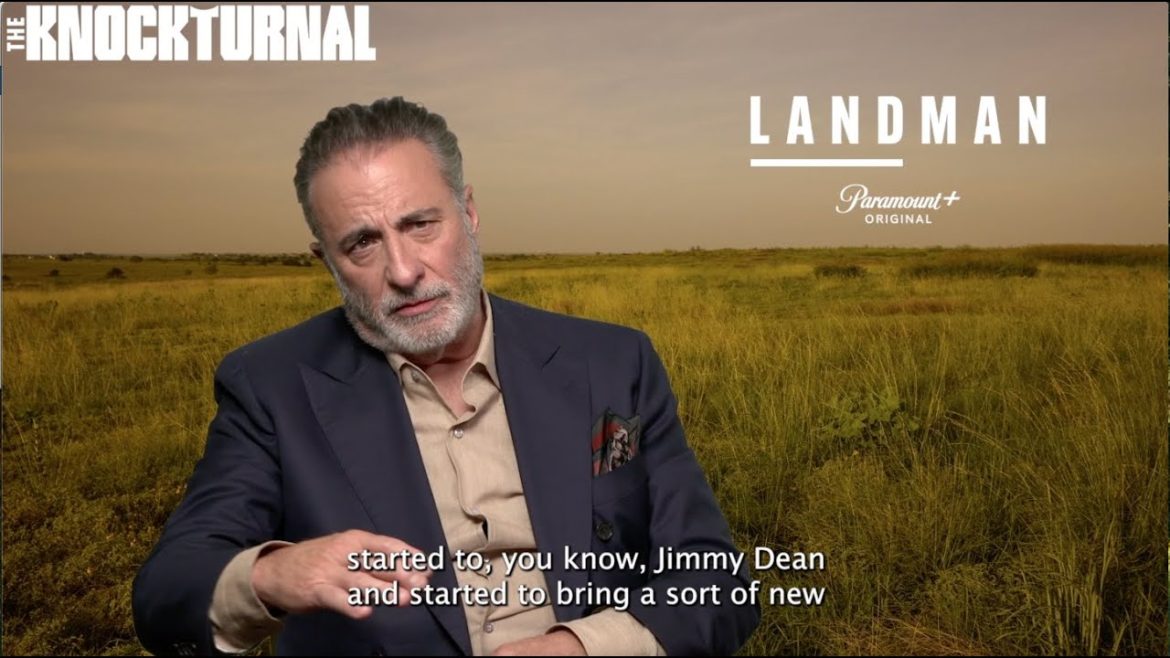
I sat down with Andy Garcia, who joins season two as Danny “Gallino” Morrell, and with Paulina Chávez and Jacob Lofland, who continue to ground one of the show’s more emotionally vulnerable storylines, to talk about the craft, the pressure, the scale, and what makes Landman resonate in such a crowded television landscape.

By the end of both conversations, one thing felt obvious.

This is not just a hit show.

This is one of the best dramas on television right now.

A Show Built on Tension, Not Just Plot

What Landman does especially well is create the feeling that every conversation matters.

Not every scene ends in violence. Not every episode depends on a twist. But almost every interaction is charged by the possibility that something is about to crack. That tension comes from the writing, yes, but it also comes from the way the show understands hierarchy. Every room has one. Every deal has one. Every family has one. Every romance has one. Every business conversation is also a negotiation of pride, leverage, and fear.

By season two, the series has enough confidence in its world to spend more time exploring that pressure rather than just announcing it. Tommy Norris, played with weary brilliance by Billy Bob Thornton, remains the gravitational center of the series, but what makes the show richer this season is the way the people around him begin to feel less like satellites and more like forces in their own right.

Cami Miller becomes more active. Cooper’s arc grows in complexity. Ariana continues to complicate the emotional terrain around him. Rebecca keeps pushing her way into spaces that don’t naturally soften for anyone. T.L. adds another generational layer. And then there is Gallino, the kind of character whose mere presence changes the atmosphere of a show.

Season two understands that danger is not always loud. Sometimes it is elegant. Sometimes it sits calmly in a room and smiles at you.

That is where Andy Garcia comes in.

Andy Garcia and the Weight of Craft

Talking with Andy Garcia did not feel like talking with someone trying to sell a show. It felt like talking with an artist thinking carefully about the lineage of performance itself.

When I asked him how he has seen acting and storytelling evolve through different creative eras, from the studio system to streaming, his answer did not drift into some generic reflection on “how much things have changed.” Instead, he went straight to the core of the craft.

For Garcia, the great shift was not some algorithm-era disruption. It was the evolution of naturalism onscreen, the move associated with actors like Montgomery Clift, Marlon Brando, and James Dean, and shaped by teachers like Lee Strasberg, Sanford Meisner, Stella Adler, and Uta Hagen. He talked about behavior, truth, and the deeper education of performance as something that gradually manifested on stage and screen. In other words, he spoke less about trend cycles and more about foundations.

That was striking, because it mirrors what makes his presence in Landman feel so effective.

Garcia does not play Gallino as a cartoon threat or a genre gimmick. He plays him with control. With behavior. With the confidence of someone who understands that menace becomes more interesting when it is restrained. Gallino is not scary because he is constantly announcing his power. He is scary because he does not need to. He carries himself like a man who can move between worlds, business, crime, elite social spaces, violence, without ever having to fully explain himself. The danger is embedded in the calm.

And in speaking with Garcia, it became clear that this kind of performance is not accidental. It comes from someone who genuinely loves the form.

When I brought up the fact that he has moved between film, television, even music, and asked what keeps him creatively curious, his answer was both simple and revealing. He loves the art form. He loves to play with actors. He follows the material. He follows good directors. He follows the possibility of collaboration.

That answer says a lot about Landman too.

Because this is a series that clearly attracts actors who want something to do. Not just something to appear in. Garcia even described Taylor Sheridan writing for him in almost mythic terms, likening that call to Shakespeare saying he wanted to write Hamlet for you. It is the kind of quote that could sound exaggerated coming from almost anyone else, but from Garcia it landed as sincere artistic admiration. He sees Sheridan as a “creative maestro,” and his enthusiasm about working with both Sheridan and Billy Bob Thornton was palpable.

That matters because Landman is, in many ways, exactly the sort of actor’s show that benefits from that level of seriousness. It may be sprawling and muscular and full of big dramatic machinery, but at its core it is still driven by people inhabiting very specific kinds of pressure. If the acting is not grounded, none of it works.

Garcia gets that.

And watching him in this world, you feel the benefit of decades of craft being distilled into something sleek, dangerous, and quietly magnetic.

Taylor Sheridan’s World, and Why It Keeps Working

There is a reason Taylor Sheridan’s name has become almost its own genre.

He writes systems. He writes institutions. He writes men trying to maintain control inside environments that are fundamentally unstable. He writes women who often have to navigate power structures that were not built with them in mind. He writes places as if they are moral climates. And whatever one thinks of his recurring fixations, his storytelling almost always understands one crucial thing: environment shapes behavior.

In Landman, that environment is West Texas oil country, a place where the pursuit of wealth and survival is inseparable from physical risk, corporate opacity, geopolitical tension, and deeply rooted ideas of identity. What keeps the show from becoming just another testosterone-heavy drama is the fact that Sheridan also understands that systems do not just affect the powerful. They seep into households, relationships, grief, sexuality, family structures, and aspirations.

Season two handles that especially well.

It brings in new players and higher-level corporate tension, but it also invests in the emotional spillover. The deals on paper become consequences in kitchens, bedrooms, bars, and backyards. What happens in a boardroom can end up shaping who gets fired, who gets threatened, who gets proposed to, who feels safe, who feels disposable, and who starts imagining a different future.

That is where the second interview, with Paulina Chávez and Jacob Lofland, becomes so useful in understanding what the show is really doing.

Paulina Chávez and Jacob Lofland on Finding a Home Inside the Pressure

When I asked Paulina Chávez and Jacob Lofland what it was like stepping into Landman’s vivid, high-stakes world and then figuring out who their characters were within it, both answers pointed to the same idea from different angles.

For Jacob, it was a shock at first. An adjustment. But one they all caught onto quickly, thanks in part to the support around them.

Paulina’s answer gave even more texture to that process. She talked about auditioning with her first three episodes, doing a chemistry read in Jackson Hole, and building the character in conversation with Taylor Sheridan. What came through was how delicate that storyline felt to her, and how intimidating it initially was to step onto a show populated by major names and high expectations.

That word, delicate, stood out.

Because amid the machinery of Landman, the Cooper and Ariana story has always functioned as one of the series’ most emotionally exposed threads. It is a relationship shaped by grief, class, uncertainty, masculinity, and the possibility of escape. Cooper is not just trying to become a man in his father’s world. He is trying to become a different kind of man than the world expects. Ariana is not just a love interest dropped into the narrative to soften him. She comes to the relationship carrying loss, survival instincts, and her own real hesitations about what it means to trust someone attached to a life that has already cost so much.

Even critics who did not connect to every part of season two often acknowledged that the show becomes more grounded this year. And whether or not every viewer locks into every arc, there is real value in the fact that the show tries to make space for a storyline like this inside such a relentlessly male-coded environment.

What Chávez and Lofland communicated in our interview was not just affection for the show, but comfort within the process. What began as something intimidating has, in Paulina’s words, become home. That is not a throwaway comment. It speaks to the chemistry of the set, the consistency of the creative team, and the degree of trust required to make a long-form series actually feel lived in.

You can sense that onscreen. Their scenes do not feel like separate programming imported into a tougher show. They feel like one part of the broader emotional ecosystem. A necessary counterweight to the more overtly brutal power games elsewhere in the season.

Learning From Legends Without Being Taught

One of the best parts of talking with younger actors on a major ensemble show is seeing how they articulate the difference between direct advice and observed professionalism.

So I asked Chávez and Lofland whether any of the more established actors on the show had given them a piece of advice that really stuck with them.

Jacob’s answer was refreshingly honest. He said it is not really that these actors walk up and lecture you or tell you how to do your job. That would be strange, and he made that point with a funny analogy about how he would never walk up and tell someone how to do an interview better. Instead, the lesson is in watching. In being around professionals and seeing the little things they do. The tricks, the habits, the discipline, the ease. The way they show you how to work without ever needing to announce that they are showing you.

That is such a smart answer, and honestly, a revealing one.

Because it gets at the unspoken apprenticeship embedded in ensemble television. On a show like Landman, where younger actors are sharing space with figures like Billy Bob Thornton, Andy Garcia, Demi Moore, Ali Larter, Jon Hamm in season one, and Sam Elliott in season two, the learning environment is not formal. It is atmospheric. You absorb standards. You absorb tempo. You absorb the rhythm of people who know exactly how to hold the screen.

Paulina added that if they do have questions, those actors are open and generous. That matters too. It suggests a set culture where knowledge is available without being imposed, where mentorship happens through presence, not ego.

That kind of environment often translates directly into the finished work. It creates a show that feels cohesive, not because everyone is doing the same thing, but because everyone is working at a shared level of seriousness.

Is TV More Exciting Than Film Right Now?

At one point, I asked Chávez and Lofland a broad question that I think is genuinely interesting right now: with television becoming more cinematic than ever, and movies often borrowing from long-form storytelling, where is the most exciting storytelling happening at the moment, TV or film?

Their answers were telling.

Paulina emphasized that there is a beautiful mix of both right now, but Jacob leaned toward TV, especially in the streaming era, because these shows can essentially function like ten-hour movies. That observation feels especially true for Landman. It does not play like a procedural or a traditionally episodic drama. It moves like a continuous narrative. Scenes echo forward. Conflicts carry over. Character choices reverberate over multiple hours. It is built less around episode-contained closure and more around cumulative tension.

That long-form structure is part of what makes the show so addictive. It lets Sheridan build not just plotlines but atmospheres of escalation. It gives relationships time to mutate. It allows power dynamics to be tested, strained, and recalibrated. And it gives the audience the feeling of being embedded in a world rather than simply visiting it once a week.

Paulina also made an important point about the crew. She talked about how many of them have worked with Taylor for years, and how much trust exists because of that continuity. That kind of creative consistency matters. It is one of the hidden advantages in Sheridan’s larger television empire. Whatever criticisms people have of the universe he has built, there is no denying that repetition has created an infrastructure of trust. The shows feel authored not just because of the scripts, but because there is an ecosystem around them that knows how to execute his tone.

That trust is visible in Landman. The show knows exactly what it is. It never looks confused about its own identity.

Season 2 as Refinement, Not Retreat

A lot of second seasons in successful dramas fall into one of two traps. They either try to go bigger in every possible direction and become bloated, or they get so self-conscious about topping themselves that they lose the sharpness that made the first season work.

Landman avoids both.

Season two is not about out-exploding season one. It is about refining the machinery.

Yes, the stakes remain high. Yes, the danger remains present. Yes, the corporate mess deepens and the world gets more crowded. But what impressed me most about the season is that it trusts its own people. It lets the drama emerge from the pressure points already built into the show rather than constantly reaching for artificial escalation.

Andy Garcia’s Gallino is a perfect example. He could have been introduced as a blunt-force villain. Instead, he is a sophisticated destabilizer, someone who heightens the stakes simply by existing in the same orbit. His presence enlarges the moral and economic dimensions of the show. Suddenly, the business world and the criminal world are not adjacent. They are braided together more tightly than ever.

Meanwhile, characters like Cooper, Ariana, Rebecca, Cami, Angela, and T.L. help broaden the emotional and thematic texture of the show. The season becomes less about simple momentum and more about consequence.

That is a harder kind of season to make.

And while some viewers may prefer the rawer propulsion of season one, I think season two is where Landman proves it is not just an entertaining show. It is a durable one.

Why Landman Works So Well Right Now

There is a reason Landman feels so alive in the current TV landscape.

A lot of prestige television today is technically impressive, emotionally literate, and visually polished, but it can also feel strangely bloodless. Very competent. Very tasteful. Very aware of itself. Sometimes too aware.

Landman is not bloodless.

It is messy, muscular, funny in strange ways, occasionally outrageous, emotionally bruised, and deeply committed to the people inside its world. It is willing to be entertaining. It is willing to be pulpy. It is willing to let larger-than-life personalities exist beside real grief and institutional critique. It is willing to let a scene breathe and then suddenly turn volatile. It is, above all, alive.

And that aliveness gets elevated by casting.

Billy Bob Thornton gives the series its exhausted soul. Andy Garcia adds a new level of elegance and danger. Jacob Lofland brings grit and openness to Cooper. Paulina Chávez gives Ariana a grounded emotional intelligence that keeps her from ever feeling like a symbol rather than a person. Around them, the rest of the ensemble keeps the machine moving.

That is why the show works. Not because it is subtle in every moment, and not because it is trying to be some pristine piece of tasteful television, but because it knows how to hold contradiction. It can be sprawling and intimate. Funny and brutal. Political and personal. It can critique power while still being fascinated by the people who wield it. It can dramatize systems while still caring about the individuals caught inside them.

That combination is rare.

Final Thoughts

By the end of my conversations with Andy Garcia, Paulina Chávez, and Jacob Lofland, what stayed with me most was not just their admiration for Taylor Sheridan or their respect for the scale of the production. It was the consistency of what they kept circling back to, whether directly or indirectly: craft, trust, and environment.

Garcia spoke like a man who still loves the foundations of acting, who sees performance as part of a long artistic lineage and treats strong material as a gift. Chávez and Lofland spoke like actors who understand the privilege and challenge of stepping into a world this large and then slowly making it feel like home. All three, in different ways, described a process built on trust, in the writing, in the cast, in the crew, and in the environment the show creates for its actors.

And that trust shows up onscreen.

Landman season 2 may be a slower burn in places than its explosive first season, but that is not a weakness. It is a sign of confidence. It is the show understanding that real stakes do not only come from who dies, who gets blown up, or who gets the last word in a deal. They come from who people become while living under pressure.

That is what Landman understands better than most.

And that is why, for me, it is not just another strong streaming drama.

It is some of the best television out there right now.


March 17, 2026 0 comments
0 FacebookTwitterPinterestEmail
Entertainment

Chaos, Christmas, and a Breaking Point: Inside Oh. What. Fun.

by Jai Singh Nanda March 17, 2026
written by Jai Singh Nanda

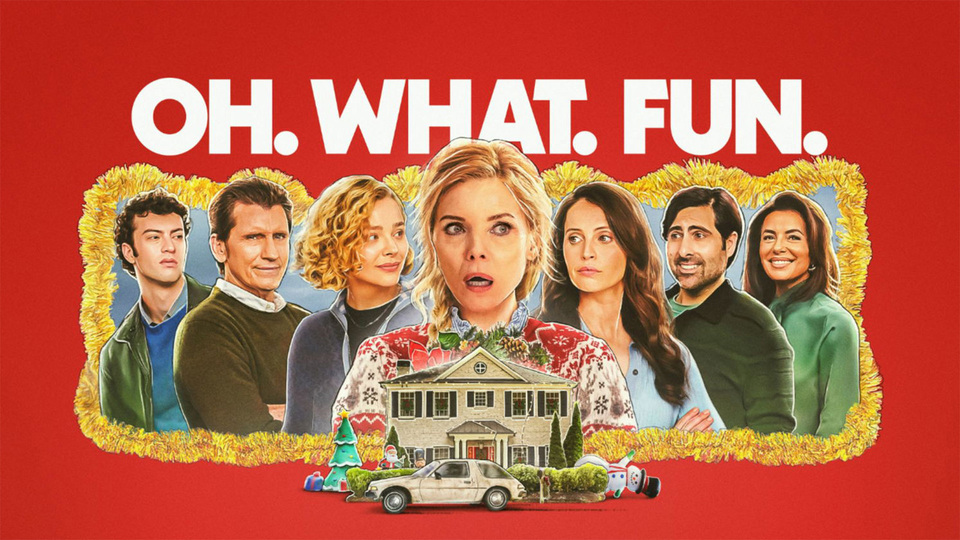
In Oh. What. Fun., Christmas is not just a holiday. It is a pressure cooker.

The Amazon MGM Studios holiday comedy, directed by Michael Showalter, takes a familiar idea and pushes it just far enough to feel fresh. What happens when the person holding everything together finally decides she’s done?

Michelle Pfeiffer leads the film as Claire Clauster, a mother who spends the entire year planning the perfect Christmas for her family, only to realize that no one seems to notice. When her efforts go unappreciated, she does something unexpected. She leaves.

What follows is a chaotic unraveling on both sides. Claire sets off on her own strange, impulsive journey, while back home, her family is left to deal with the reality of what happens when the glue disappears.

I sat down with Chloë Grace Moretz and Dominic Sessa, who play two of Claire’s children, to talk about stepping into that world, the shifting dynamics of family during the holidays, and how a story like this manages to feel both heightened and uncomfortably real.

When the Holiday Spirit Cracks

At its core, Oh. What. Fun. works because it taps into something instantly recognizable.

Everyone knows what the “perfect holiday” is supposed to look like. The decorations. The traditions. The expectations.

And everyone, at some point, has seen what happens when that image starts to crack.

The film leans into that tension. It takes the familiar chaos of family gatherings and pushes it just a little further, letting moments spiral into something bigger, funnier, and sometimes more revealing than expected.

That balance between comedy and reality is what gives the film its edge.

Growing Up in a Changing Industry

Our conversation started in a different place.

I asked Moretz about the evolution of the industry, having started her career in a time dominated by theatrical releases and traditional media, compared to today’s streaming-driven landscape.

For her, the difference is not subtle.

She spoke about the shift in pace, moving from shooting on film with more time to build something, to an era where everything can feel faster and more compressed. One word she kept coming back to was “content,” and how that mindset can sometimes take away from the process.

That is what made this project stand out to her.

She described Oh. What. Fun. as a rare experience where time was actually given to the film. A longer shoot, a more intentional process, and a team that treated it like something worth building, not just something to finish.

You can feel that in the final product. Even in its chaos, there is structure. Even in its comedy, there is intention.

What Success Actually Looks Like

For Dominic Sessa, the conversation shifted toward what it means to enter the industry today.

There is no longer one clear path. No single blueprint to follow.

His answer was simple.

Work with people you like.

It sounds obvious, but it is not something people always prioritize. For Sessa, success is not just about the project itself. It is about the environment you create while making it.

If you enjoy the people you are working with, that becomes its own version of success.

It is a perspective that feels especially relevant for a film like this, one that relies so heavily on ensemble energy and chemistry.

Finding the Humor in the Mess

Even within a story built on frustration and miscommunication, humor plays a central role.

That is where the film finds its rhythm.

The characters are flawed. They interrupt each other, misunderstand each other, and occasionally make everything worse. But that is also what makes them feel real.

The comedy does not come from perfection. It comes from the mess.

And that mess feels familiar.

A Holiday Story That Feels Lived In

What Oh. What. Fun. ultimately understands is that the holidays are not just about celebration. They are about expectation.

They are about the roles people fall into. The traditions they feel obligated to maintain. The quiet frustrations that build over time.

By pushing those ideas to their limit, the film finds something honest underneath the chaos.

And talking with Moretz and Sessa, that same awareness comes through.

There is a clear understanding of what the film is doing and why it works. It is not trying to present a perfect version of family. It is showing what happens when that version falls apart.

Controlled Chaos

By the end of the conversation, one thing stood out.

This is a film that embraces chaos, but it does it with purpose.

It knows exactly how far to push its characters. It knows when to let things spiral and when to pull them back. And most importantly, it understands that underneath all the noise, there has to be something real.

Because no matter how messy things get, the reason these stories work is simple.

They feel familiar.

And sometimes, that is more than enough.


March 17, 2026 0 comments
0 FacebookTwitterPinterestEmail
Entertainment

Hallways, Heart, and a Little Bit of Chaos: Inside How to Lose a Popularity Contest

by Jai Singh Nanda March 17, 2026
written by Jai Singh Nanda

In How to Lose a Popularity Contest, high school is not just a setting. It is a full-blown arena. Every hallway feels like a stage, every interaction carries weight, and every decision has the potential to spiral into something bigger than expected.

The Tubi original romantic comedy leans into a familiar formula. There is the overachiever with something to prove, the popular guy with more beneath the surface, and a rivalry that slowly turns into something more complicated. But instead of resisting those tropes, the film embraces them, building a world that feels intentionally heightened, nostalgic, and unapologetically fun.

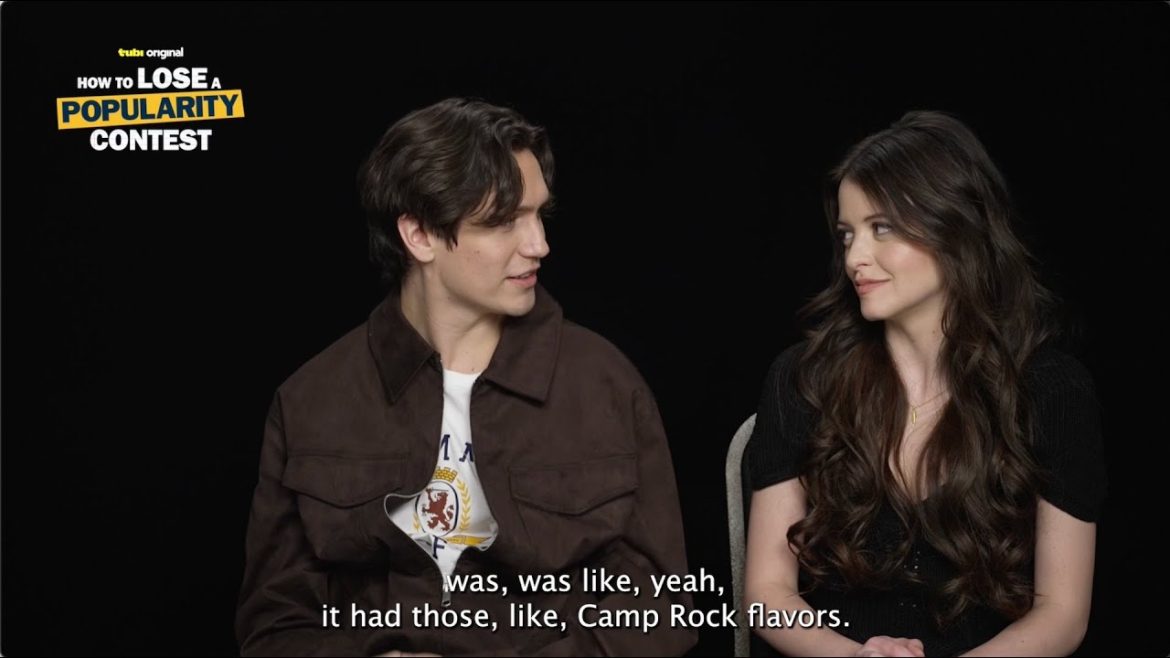
At its core, the story follows Ellie Pearse (Sarah Waisglass), an ambitious student determined to prove herself, who teams up with popular boy Nate Reed (Chase Hudson) in a student body presidential campaign that quickly becomes more personal than either of them anticipated. What starts as strategy turns into connection, and what begins as control slowly gives way to vulnerability.

I sat down with Chase Hudson and Sarah Waisglass to talk about bringing that energy to life, the unexpected nostalgia baked into the film, and why stories like this continue to resonate.

A Throwback Spirit

Before we even got into the interview, I wanted to do something a little different.

In the spirit of the film, I pulled up my 8th grade yearbook photo. It was patriotic, awkward, and exactly the kind of image that probably should have stayed buried. Naturally, I showed it to them.

What followed immediately broke the ice. It turned into jokes about campaign posters and popularity contests, and suddenly the conversation felt less like a formal junket and more like exactly what the movie is going for: a slightly chaotic, very real high school energy.

That tone carried into the discussion. Watching the film, I kept thinking about the kind of movies I grew up around. High School Musical. Camp Rock. Those ensemble-driven stories where everyone gets a moment and the world feels just a little bit bigger than reality.

Chase agreed that there is a sense of warmth in this film that separates it from more cynical takes on high school. The characters are not defined by cruelty or hyper-realism. There is a softness to the way they interact, a willingness to let moments land without undercutting them.

Sarah mentioned that this clicked early on, even during the first read-through. It became clear that the movie would allow everyone to go big, to fully lean into their characters while still keeping things emotionally grounded.

Finding the Balance

That balance between heightened comedy and emotional honesty is at the center of Sarah’s performance as Ellie.

While the character can be intense, driven, and at times difficult, she approaches her with a sense of understanding. Comedy, for her, is not just about getting laughs. It is a coping mechanism. It is how Ellie navigates pressure, disappointment, and everything that comes with trying to control her world.

It also makes the character more accessible. Even when Ellie pushes things too far, there is still something relatable underneath it.

Chase, coming from a music background, spoke about how performance translates between mediums. Whether you are on stage or on camera, the fundamentals stay the same. Expression, rhythm, and emotional alignment all play a role.

You can feel that in his performance. Nate could have easily been one-dimensional, but there is a looseness to the way he plays him that allows the character to evolve naturally.

Back to School

One of the most fun parts of the conversation was how quickly we all locked into the shared experience of high school.

The lockers. The classrooms. The weird, specific smell that every school seems to have.

They both talked about how stepping back into that environment brought everything rushing back. There is something immediate about it. You do not ease into those memories. They just hit you.

The film leans into that. It uses those details to ground everything, even when the story itself becomes heightened.

A Familiar Formula That Works

This is a movie that knows exactly what it is doing.

It does not try to reinvent the teen rom-com. It leans into it. And because of that, it works.

There is comfort in the structure, but what makes it land is the ensemble. Everyone has a moment. Everyone contributes to the world in a way that feels intentional.

That is what I kept coming back to while watching it. The same reason those early Disney Channel movies stuck. It is not just about the main storyline. It is about the energy of the group.

A Nostalgic Kind of Fun

By the end of the conversation, one thing felt very clear.

This is a movie that understands its audience.

It is playful. It is a little chaotic. It is nostalgic in a way that feels intentional, not forced. And it gives its characters enough room to feel human underneath all of it.

And sitting with Chase and Sarah, that same energy carries off screen. There is a genuine sense that they are enjoying what they are doing. They understand the tone, they understand the audience, and they are leaning into both.

Because sometimes the movies that hit are not the ones trying to break the mold.

They are the ones that remind you why you liked it in the first place.

March 17, 2026 0 comments
0 FacebookTwitterPinterestEmail
EntertainmentUncategorized

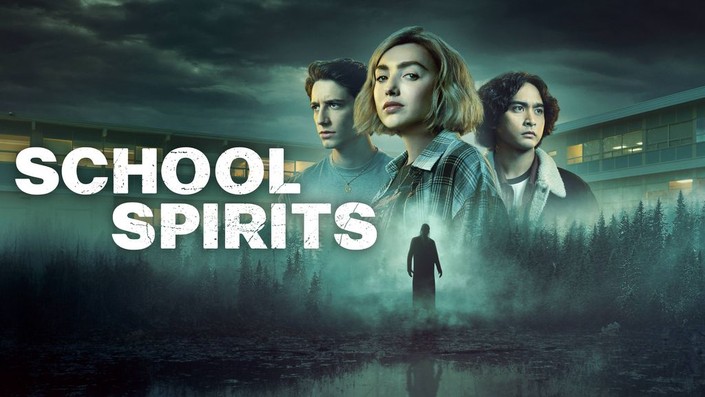
Between Worlds and Breaking Rules: Inside School Spirits Season 3

by Jai Singh Nanda March 17, 2026
written by Jai Singh Nanda

In School Spirits, death has never meant the end of the story. But in season three, it finally starts to feel like the rules, whatever they once were, are breaking.

Created by Nate and Megan Trinrud, the Paramount+ drama returns with its most ambitious chapter yet, plunging Maddie Nears and her friends into a deeper, darker mystery as the veil between worlds grows dangerously thin. What began as a grounded supernatural whodunit has evolved into something more unsettling: a story about unfinished business, emotional fractures, and the terrifying consequences of knowing too much.

After clawing her way back to life, Maddie is no longer simply searching for answers. She is burdened by them. Visions haunt her, secrets fester at Split River High, and the cost of protecting both the living and the dead grows heavier with every revelation. Season three does not just raise the stakes. It interrogates them.

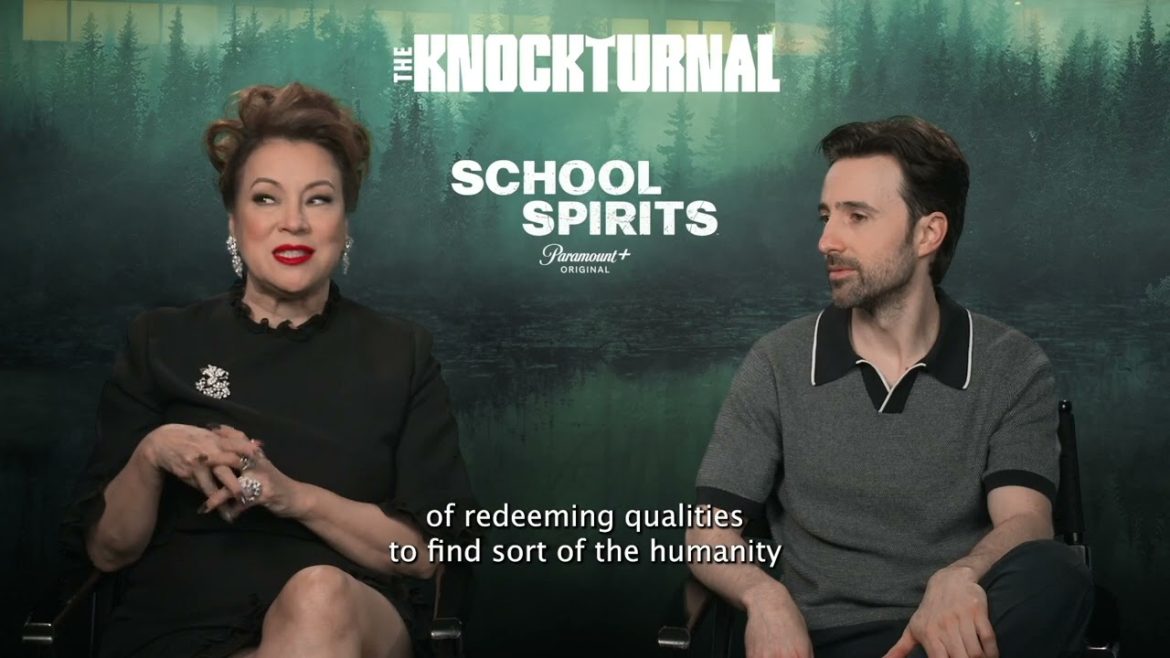
The Knockturnal’s Jai Singh Nanda sat down with multiple members of the School Spirits ensemble to unpack how the series expands its mythology while keeping its emotional core intact, speaking with Nick Pugliese and Sarah Yarkin, Jennifer Tilly and Josh Zuckerman, Spencer MacPherson, Kiara Pichardo, and Rainbow Wedell, and Miles Elliot and Ci Hang Ma about the shifting dynamics, darker tone, and surprising humanity behind the show’s most intense season yet.

A Darker Turn and Deeper Teamwork

For Sarah Yarkin, who plays the sharp-tongued Rhonda, season three marks a noticeable shift, not just in tone, but in how her character relates to the group.

With the mystery intensifying and the stakes affecting everyone, Rhonda is forced into unfamiliar territory: collaboration. Yarkin described a season where sillier moments give way to something more focused and more urgent, as Rhonda learns, uncomfortably, to be a team player. The darkness is not just external. It demands emotional growth.

Her co-star Nick Pugliese, who plays Charley, echoed that evolution from a different angle. While Charley has always wrestled with insecurity, season three magnifies those feelings by placing him in a relationship amid chaos. The result is a tonal balancing act the show embraces. Life-or-death stakes collide with deeply personal conversations about identity, love, and vulnerability. It is a contrast that feels true to the DNA of School Spirits: spooky, yes, but always human.

Stepping Into the Storm

Season three also introduces new energy into Split River High, most notably with Jennifer Tilly joining the cast as Dr. Hunter-Price. A deliciously unhinged addition, the character is narcissistic, power-hungry, and increasingly terrifying, and Tilly relished the challenge.

She spoke openly about the intimidation of stepping into an already tight-knit ensemble, but also about the thrill of playing someone with so few redeeming qualities. For Tilly, the appeal lay in digging for humanity where it barely exists and embracing a character who slowly transmogrifies into something truly horrific by season’s end.

For Josh Zuckerman, who returns as the enigmatic Mr. Martin, season three represents an earned unraveling. What once presented as confidence and authority begins to fracture as secrets surface, leaving Mr. Martin exposed, desperate, and emotionally adrift. Zuckerman credited the show’s creators and writers for being deeply communicative about the larger themes at play, emphasizing that School Spirits is never just about plot. It is about meaning.

Friendship Under Pressure

If season three interrogates the nature of truth, it also tests the strength of friendship. In conversations with Spencer MacPherson (Xavier), Kiara Pichardo (Nicole), and Rainbow Wedell (Claire), one theme emerged again and again. Pressure does not weaken these bonds. It reveals them.

MacPherson noted that the friendships at the center of the show are stronger than ever because they have to be. Wedell described the group as trauma-bonded, united by secrets they cannot share with anyone else. And for Pichardo, Nicole’s journey this season is about learning confidence under fire, guided by relationships that challenge her comfort zone.

Together, the trio painted a picture of an ensemble that thrives on trust, both on screen and off. That sense of safety, they agreed, is what allows the show to go to darker places without losing its heart.

Expanding the Afterlife

As the world of School Spirits widens, so too does its emotional and thematic reach. Miles Elliot and Ci Hang Ma, whose characters further expand the mythology of the afterlife, spoke about discovering new layers of meaning as season three reveals long-buried truths about Split River High.

For Ma’s Quinn, waking up in death paradoxically offers freedom, a second chance at belonging that life never quite provided. But that freedom comes with consequences, as the warnings left behind in season two begin to materialize. Elliot emphasized that this season does not just answer questions. It forces every character to rethink their place in a world that may be far more dangerous than they realized.

Grounding those revelations, both actors stressed, required constant communication with directors, writers, and each other to ensure the supernatural never eclipsed the emotional reality. Ghosts may haunt the halls, but it is the characters’ fear, hope, and longing that keep the story anchored.

A Haunting Evolution

By the end of these conversations, one thing became clear. School Spirits season three is not interested in easy answers. It is a season about consequences, of curiosity, of silence, of love stretched beyond its limits.

As the mystery deepens and the boundaries between worlds continue to blur, the series doubles down on what has always set it apart: an ensemble willing to go emotionally all in, even when the ground beneath them is not solid.

And if season three proves anything, it is that in School Spirits, the most frightening thing is not death. It is what happens when the truth refuses to stay buried.

Spending time with this cast, that passion extends far beyond the screen. There is a genuine sense that these are actors who not only care deeply about the work, but about the audience experiencing it. In a story built on connection between worlds, it feels fitting that the people behind it are just as invested in the connection with the fans watching along.

March 17, 2026 0 comments
0 FacebookTwitterPinterestEmail

Digital Cover No. 19

The Knockturnal Merch

Follow Us On The Gram

This error message is only visible to WordPress admins

Error: No feed with the ID 3 found.

Please go to the Instagram Feed settings page to create a feed.

About The Site

We are a collective of creative tastemakers made up of fashion, music and entertainment industry insiders. It’s all about access. You want it. We have it.

Terms Of Use

Privacy Policy

Meet The Team

CONTACT US

For general inquiries and more info on The Knockturnal, please contact our staff at:
info@theknockturnal.com
fashion@theknockturnal.com
advertising@theknockturnal.com
editorial@theknockturnal.com
beauty@theknockturnal.com

  • Facebook
  • Twitter
  • Instagram
  • Linkedin
  • Youtube

© Copyright - The Knockturnal | Developed by CI Design + Media

The Knockturnal
  • Home
  • Entertainment
  • Music
  • Lifestyle
  • News
  • Videos
  • Covers
  • Merch