In July 2012, 16-year-old Skylar Neese climbed out of her bedroom window in Star City, West Virginia in the middle of the night, without taking the essentials she would have needed to stay away for long. She never returned. What initially presented as a missing persons case, shaped by uncertainty, community search efforts, and quiet hope, slowly unraveled into something far more disturbing.
Surveillance footage showed Skylar getting into an unknown car just after 12:30 a.m. For months, there were no clear answers. Investigators and her family searched while social media posts from her inner circle hinted at tension but revealed nothing explicit. To the outside world, it looked like a disappearance suspended in ambiguity.
More than six months later, the truth emerged with chilling clarity. Skylar had been murdered by two of her best friends, Shelia Eddy and Rachel Shoaf, in a premeditated attack. They had driven her across state lines into Pennsylvania, brought knives along with cleaning supplies and a plan, and carried out the killing after counting to three. The brutality of the act was shocking. What made it even more unsettling was how ordinary everything surrounding it seemed.
Both eventually pleaded guilty. Shoaf confessed after a mental breakdown and led investigators to Skylar’s body, which had been hidden less than 30 miles from her home. She received a 30-year sentence with the possibility of parole. Eddy later pleaded guilty to first-degree murder and was sentenced to life in prison with the possibility of parole after 15 years.
The case quickly became one of the most disturbing examples of violence rooted not in strangers or sudden impulse, but in intimacy. These were girls who had grown up together, who had shared daily life, routines, and trust. At one point, one of them had even helped distribute missing person flyers for Skylar.
In the years since, the Skylar Neese case has been told through documentaries, news coverage, and the familiar machinery of true crime. The facts are widely known. The outline is clear. It even led to legislative change, with Skylar’s Law reforming how missing children alerts are issued in West Virginia. And yet, something about the emotional reality of the story, what it felt like to be inside those friendships and inside that moment of adolescence, has often remained just out of reach.
In true crime, the shape of a story is often familiar long before its emotional reality is understood.
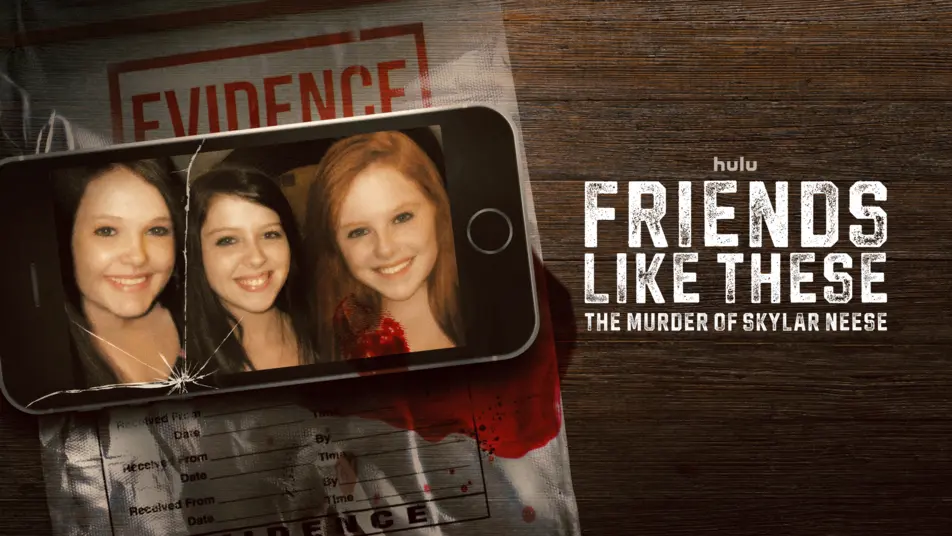
There is a victim, a crime, a search for answers, and eventually a public narrative that settles over everything like cement. The facts may remain, but the feeling of the people inside the story can get flattened in the process. That is part of what makes Friends Like These: The Murder of Skylar Neese, now streaming on Hulu, stand out from the increasingly crowded field of crime docuseries.
Rather than approaching Skylar Neese’s murder primarily as a procedural or a mystery, the three-part series looks inward. Told through social media posts, intimate interviews, and Skylar’s own words, it shifts the lens away from armchair detection and toward adolescence itself: the volatility of teenage friendship, the intensity of belonging, and the emotional stakes of being young in a world where everything is felt in public and archived forever.
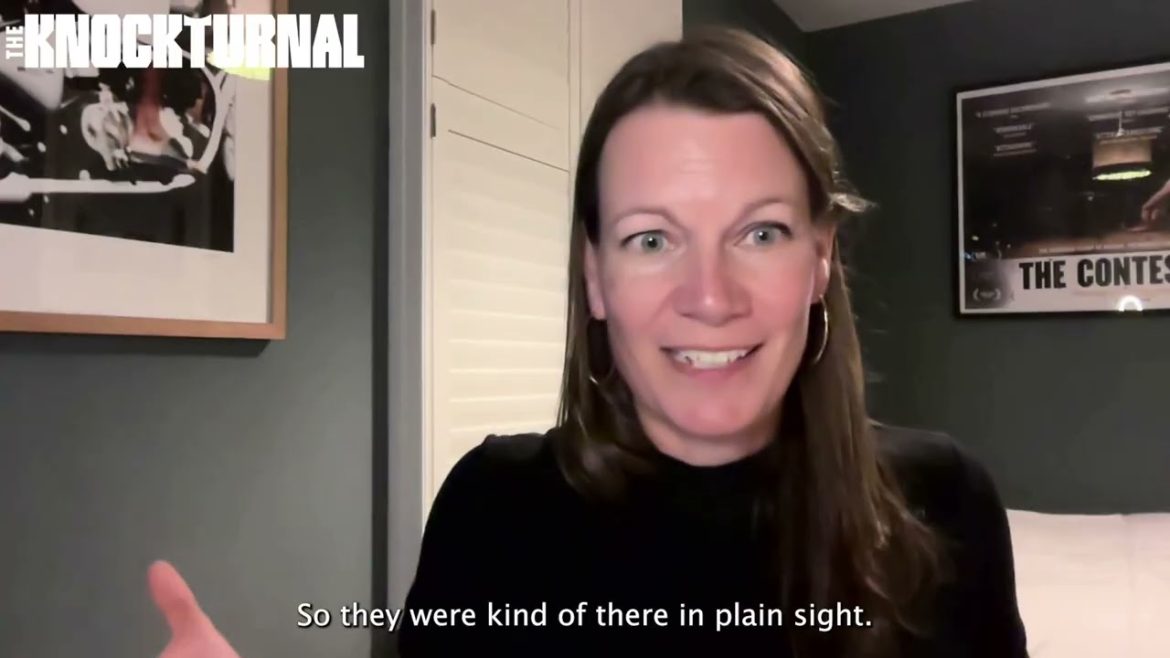
That approach is central to director Clair Titley’s vision for the series.
“This story has been told before in various different ways,” Titley told me, “in quite a true-crime kind of way in the past before.”
But from the moment she came aboard, she said, the intention was to tell it “from the inside out,” particularly through the perspective of Skylar and the peers who surrounded her.
That distinction matters. It is the difference between documenting what happened and trying to understand what it felt like.
For Titley, that meant foregrounding Skylar not as a plot device, but as a person. It also meant resisting some of true crime’s most familiar visual and emotional habits. Instead of leaning into darkness and severity at every turn, the series draws from teen films, adolescent color palettes, and a score that evokes the emotional confusion of being 15 or 16 before subtly curdling into something more unsettling.
The result is a series less interested in the neat moral architecture of “good” and “bad” than in the disorienting emotional ecosystem that teenage life can become.
A Digital World Hiding in Plain Sight
That same sensibility extends to the series’ use of digital material.
Social posts are not treated as decorative evidence or a flashy modern storytelling device. They are woven directly into the world the teenagers inhabited, appearing almost as part of the physical environment itself. The effect is not simply aesthetic. It reflects a deeper truth about the period and about adolescence online: that so much of what mattered was visible, but not necessarily legible to the adults around them.
In that sense, Friends Like These is not just about a crime. It is also about a generational blind spot.
Former FBI investigator and polygraph expert Rob Ambrosini, who was involved in the Skylar Neese case, spoke to that shift in stark terms.
“Students, kids at that particular time, high schoolers, adolescents, teenagers, are using it as a way to kind of shape their reality,” he said.
“It’s kind of like this cathartic dump of, well, this is what’s going on in my life, and they just throw it out there.”
From an investigative standpoint, those posts could provide timestamps, context, tension, and avenues for questioning. But Ambrosini’s comments also point to something the series seems especially interested in: teenagers were often expressing themselves in plain sight, even when the adults around them were not fully equipped to understand what they were seeing.
That tension between expression and interpretation runs through the entire series.
Ambrosini, who spent 24 years with the FBI and conducted more than 3,000 polygraph examinations, described cases involving young people as requiring a different kind of care. The work, he explained, is not simply about extracting facts. It is about slowing down, building trust, and recognizing that younger subjects may respond to pressure, confusion, or even a desire to please the adult in front of them.
In a series like this, that perspective is useful not only because it explains investigative realities, but because it complicates the public appetite for easy answers. High-profile cases often generate a demand for certainty, transparency, and immediate coherence. Real life rarely offers those things so cleanly.
Returning Skylar’s Humanity
If Ambrosini helps articulate the investigative dimension of the case, Eric Finch brings the emotional one.
Finch, who was friends with Skylar, does something especially important in both the series and in conversation: he returns her humanity to the center of the story.
When I asked what made Skylar laugh or what her everyday conversations felt like, his answer was not polished or theatrical. It was the opposite. He remembered the ordinary rhythm of constant communication, the kind of back-and-forth that would probably seem boring to outsiders but meant everything in the moment.
That detail, small as it is, says more about teenage closeness than any dramatic summary could.
He also spoke about what bonded them. Not just personality, but circumstance. Both came from lower-income backgrounds, and both understood early what it meant to have to work for spending money while other kids seemed to have things handed to them.
It was one of the subtler insights from my conversations around the series, but one of the most revealing. Adolescence is often discussed in broad emotional terms, but class, labor, and social pressure shape teenage belonging just as much as hormones and drama do.
Finch was also especially thoughtful when speaking about how adults tend to misread teenage relationships.
“It is teenage drama,” he said. “But from the teenager, that is life, and that is the most important thing.”
That may be the clearest articulation of what Friends Like These is ultimately trying to honor.
The Emotional Stakes of Being Young
Adults often dismiss teenage conflicts as temporary, melodramatic, or unserious. And from a distance, maybe they are. But inside that period of life, friendship can feel total. Rejection can feel existential. Betrayal can feel world-ending.
When those emotions unfold in a digital environment that records, amplifies, and circulates them, the line between ordinary adolescent volatility and something far more dangerous can become harder to recognize.
That does not mean the series excuses what happened. It means it is trying to understand the world in which it happened without reducing everyone involved to archetypes.
That is one of Titley’s more notable achievements here. So much true crime flattens people into roles: victim, suspect, best friend, villain. But in speaking with her, it was clear she wanted to resist that impulse.
Her emphasis was on emotional truth, complexity, and on allowing Skylar to exist as more than the tragedy that ultimately consumed her public image.
A Different Kind of True Crime
It is a difficult balance.
Too much stylization, and the material risks feeling exploitative. Too much reverence for familiar true-crime form, and the human core gets buried beneath grim mechanics. Friends Like These tries to live in the tension between those poles. It wants to be psychologically attentive without becoming indulgent, visually expressive without losing moral seriousness.
The result is a series that feels less concerned with sensationalizing a notorious case than with re-examining the conditions that made it possible: the fragility of friendship, the blindness of adults, the alienating half-public reality of social media, and the sheer emotional intensity of being young.
There is, of course, no shortage of true-crime stories competing for attention. Many arrive with the same promise of revelation, the same dark aesthetic, and the same invitation to decode trauma from the safety of a couch.
Friends Like These is more compelling when it resists that mode.
Its strongest instinct is not toward shock, but toward proximity. It asks viewers not just to observe what happened to Skylar Neese, but to sit with the unstable emotional world that surrounded her.
And in doing so, it lands somewhere more unsettling than a typical whodunit.
Not because the facts are unknown.
But because the feelings, even now, remain difficult to fully absorb.

 There are shows you watch along with everyone else.