Jacob Alon played Baby’s All Right in Brooklyn on Thursday night, carrying the songs of Live from the Roundhouse across the Atlantic.
The stage at Baby’s All Right sat low, with the people at the front standing close enough that Alon sang over their heads. Behind them, glass discs and diamonds glowed purple and pink beneath a row of blue LED bars. The ceiling hung with black boxes, a projector and a moving light trained on the stage. Everything pressed inward: the lights, the bodies, the sound.

Purple and pink lights illuminated the stage at Baby’s All Right, where Alon performed to a packed Williamsburg crowd on Thursday night. Photo Credit: The Knockturnal.
Even so, Alon’s songs seemed to come from somewhere far away and close to the earth. They moved through woods, pools, and gardens, through the dirt and weather of childhood, and cracked at the points where you expected them to hold.
I have spent only one day in Edinburgh, and I spent most of it on a hill. My dad and I had come up from London for the day, and we climbed Arthur’s Seat in a fog so thick that the city disappeared behind us after the first few switchbacks. The path was there, then it wasn’t. Somewhere beyond the haze sat the Firth of Forth, and across it, Fife, though we could not see an inch of it. The day felt moody and quiet, its tenderness inseparable from what it withheld. Jacob Alon grew up in Fife, and I thought of that gray, hidden coast when they began to sing.
Early in the set, after a piano cover of LCD Soundsystem’s “New York, I Love You but You’re Bringing Me Down,” Alon asked whether the lights could come up so they could see the crowd looking back at them. The lights only illuminated Alon further. “Wrong way,” they laughed softly, and asked our names. A few people shouted replies. Alon introduced themself in turn, then began to conduct the room: “Names on three!” A garbled chorus answered.
They called us, the crowd, “darlings” throughout the night and kept looking out after the lights had switched back. The exchange was silly, and the intimacy it created was necessarily brief. Still, it carried the wish to see and be seen, to make contact with people who would soon return to being strangers. This wish carried from the catches of conversation between songs, all the way through to the music itself.
“Zathura,” played next, put us in the darkness of the woods. Alon introduced it as a song about a chicken, and it is, but it’s mostly about a forest floor: two brothers going after a pet chicken with lightsabers and magic wands. They have branches for swords, worms and slaters taken prisoner, then a foot through a hive. The speaker backs away to save themself, and the song is that backing away, replayed. The chorus looks across the Firth of Forth, the water I couldn’t see from the hill, toward a loss that arrived too early. The regret made the floor of Baby’s All Right feel unsteady.
In “Don’t Fall Asleep,” the ground does open. Whereas “Zathura” was about leaving, this song asked someone to stay. Its central figure was a drowned man at the bottom of a pool, urged to keep his eyes open. Alon sang, “Don’t fall asleep / You’re precious to me / So stay awake and watch the flowers grow.” The plea was almost unbearably gentle. Though Alon switched guitars between nearly every song, their playing intricate on each one, the precision never made the music feel settled.
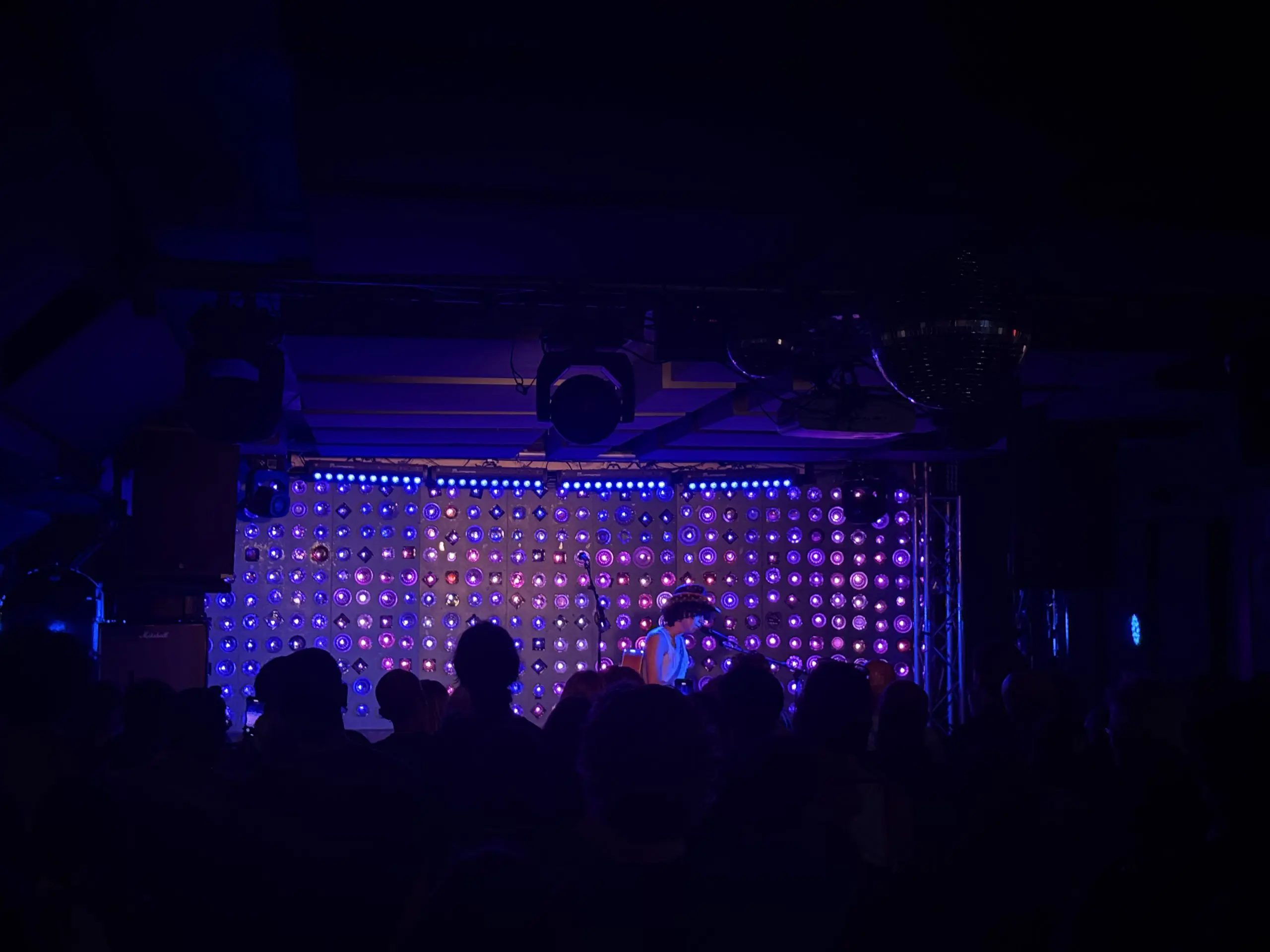
Alon moved between piano and guitar during a set that balanced intricate playing with songs about grief, shame, and childhood. Photo Credit: The Knockturnal.
Alon also sang “Confession,” and there the person who looked away was still alive. “This is a song about shame,” they prefaced. Two boys understood their intimacy through the language of sin. Years later, one scrubbed their hands until the skin was raw and avoided the other’s eyes, while the other pretended nothing had happened. Alon began in a whisper and ended in a scream as the guitar turned discordant. The noise gave form to two opposing versions of the same past: the encounter as it happened and the encounter as one person had learned to deny it.
“Sertraline” balanced the confused clash of sound as the softest thing in the room. It was a newborn opening its eyes and someone at the end of a life flashing back, fresh and worn down in the same breath. Alon yawned through it, almost hibernating, delicate and raw: “You’re tired, well, who isn’t, babe? / That’s the price for being awake / So come outside and play a game with me.”
The song moved toward the image of a willow tree dancing in the wind. Someone tore at its trunk with their teeth until sap and bark drew blood, then swallowed what they had taken. The image brought the song’s tenderness into contact with something more violent.
In Alon’s music, the natural world offers no innocence untouched by what happens in it. The woods contained the memory of a retreat; the pool held a dying man; the tree became something to wound and consume. Toward the end of the concert, in “Of Amber,” Alon sang of being “free from the earth and all of its pain.” After a set so preoccupied with bodies and the things they could not leave behind, the line sounded less like a resolution than a wish.
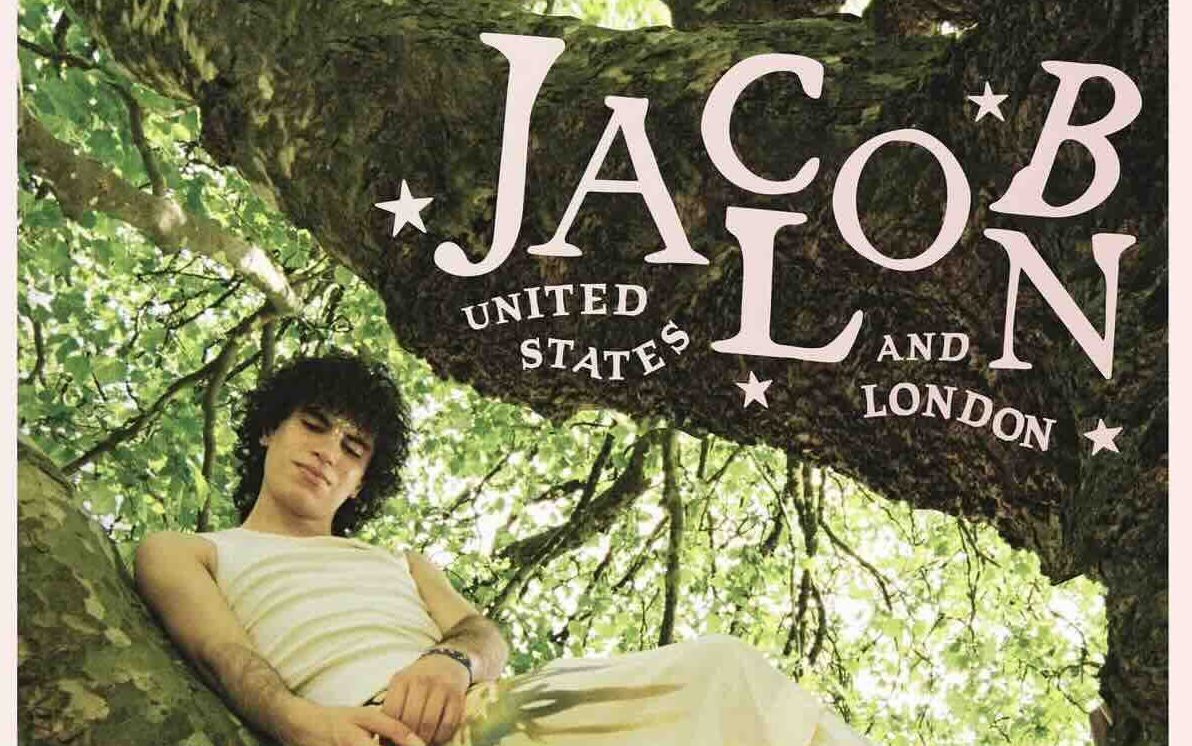
Jacob Alon’s tour poster for their run of United States dates, which reached Baby’s All Right in Brooklyn on October 15. Photo Credit: Jacob Alon via Instagram (@jacobalon).
You couldn’t quite hear Scotland when Alon sang; melody softened the edges of their accent without erasing it. A lilt remained in the falsetto, and the voice attained a gritty quality each time it dropped low and climbed again. After the last song, what stayed with me was not a particular lyric or image, but the sound of Alon’s voice as it crossed between registers, at once delicate and strained. It lodged like an aching tooth: hushed, then suddenly flashing with feeling.
