
Bughouse, written by playwright Beth Henley and conceived and directed by Martha Clarke, immerses audiences at Vineyard Theatre in New York City in the haunting and imaginative world of outsider artist Henry Darger.
I’ll be honest, I tend to gravitate toward musicals when going to see theatre — big numbers, high energy and spectacle. So the play Bughouse felt like stepping outside my comfort zone, with no singing and a much heavier subject, making it all the more intriguing.
I had never heard of Henry Darger before Bughouse came onto my radar, but once I started digging into his story, I was hooked. The scale of Darger’s work is staggering, and the fact that it was only discovered after his death adds a surreal, almost bittersweet dimension. There is a sense that his anonymity may have protected him — it is hard not to wonder whether he could have handled that level of attention during his lifetime. I also had the chance to see some of his work at the Museum of Modern Art in New York City, which added another layer; up close, the intricacy and imagination of his work are striking.

Courtesy Carol Rosegg
Bughouse brings audiences inside Darger’s universe through theatre. A Chicago janitor, he created a vast, fantastical world filled with child warriors, epic battles and haunting imagery — an alternate reality built entirely on his own. Darger’s life also raises important questions about mental health, particularly given the era in which he lived. He spent part of his childhood institutionalized at a time when people who did not fit societal norms were often misunderstood or overlooked. His story serves as a reminder of how many voices have gone unseen, and how art can function as both refuge and expression.
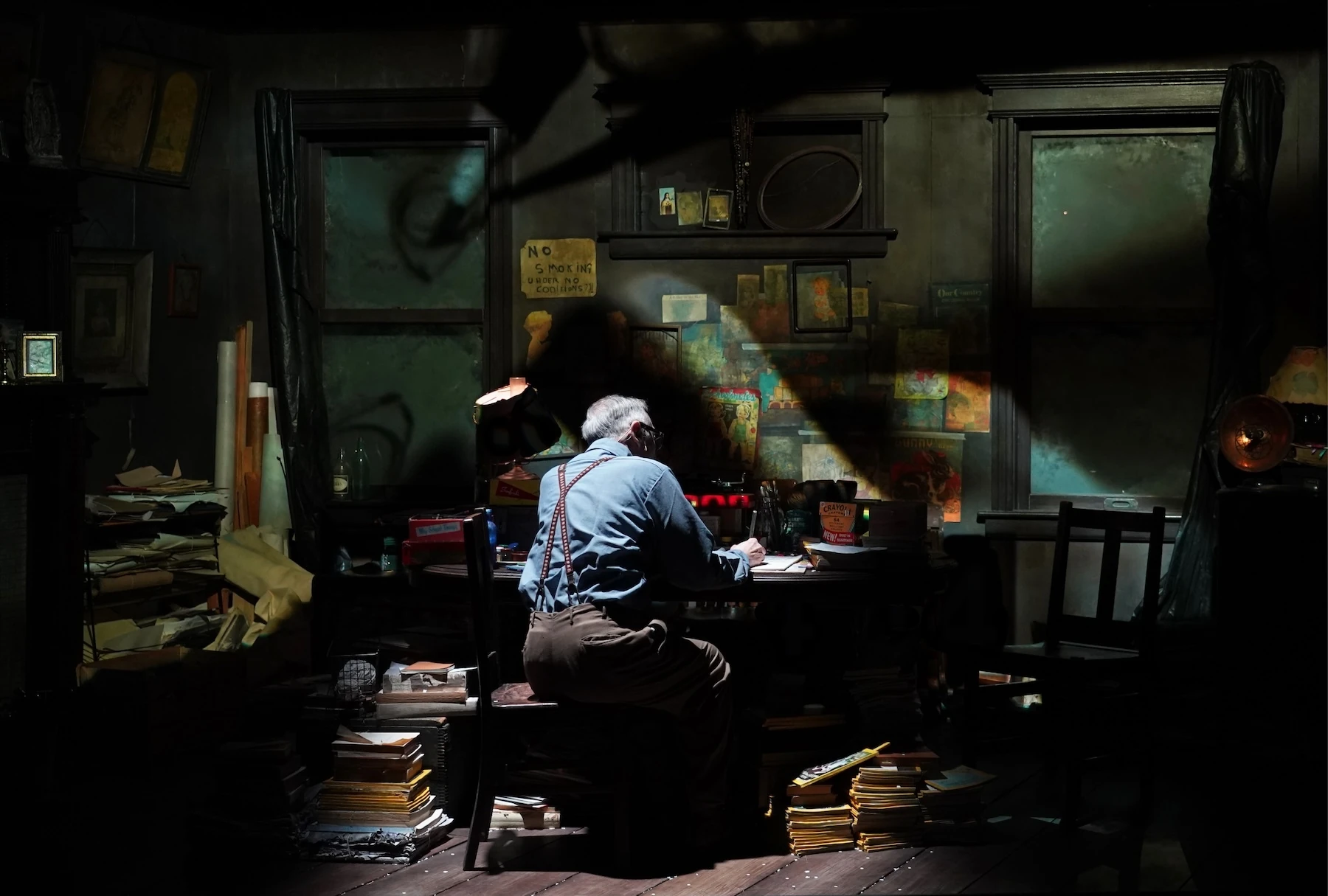
The script comes from Beth Henley, best known for her Pulitzer Prize-winning Crimes of the Heart and a career full of emotionally layered theatre with offbeat characters. In this piece, Henley leans into abstraction and mood rather than a straightforward narrative, letting Clarke’s visual vision take center stage. Starring John Kelly in a solo performance, the production runs about 70 minutes with no intermission and feels less like a traditional play and more like stepping inside a living work of art. Kelly’s performance is at the heart of it all—haunting, physical, and immersive. He doesn’t simply portray Darger; he inhabits the presence of someone who lived largely unseen, conveying isolation, obsession, and imagination all at once.
Courtesy Carol Rosegg
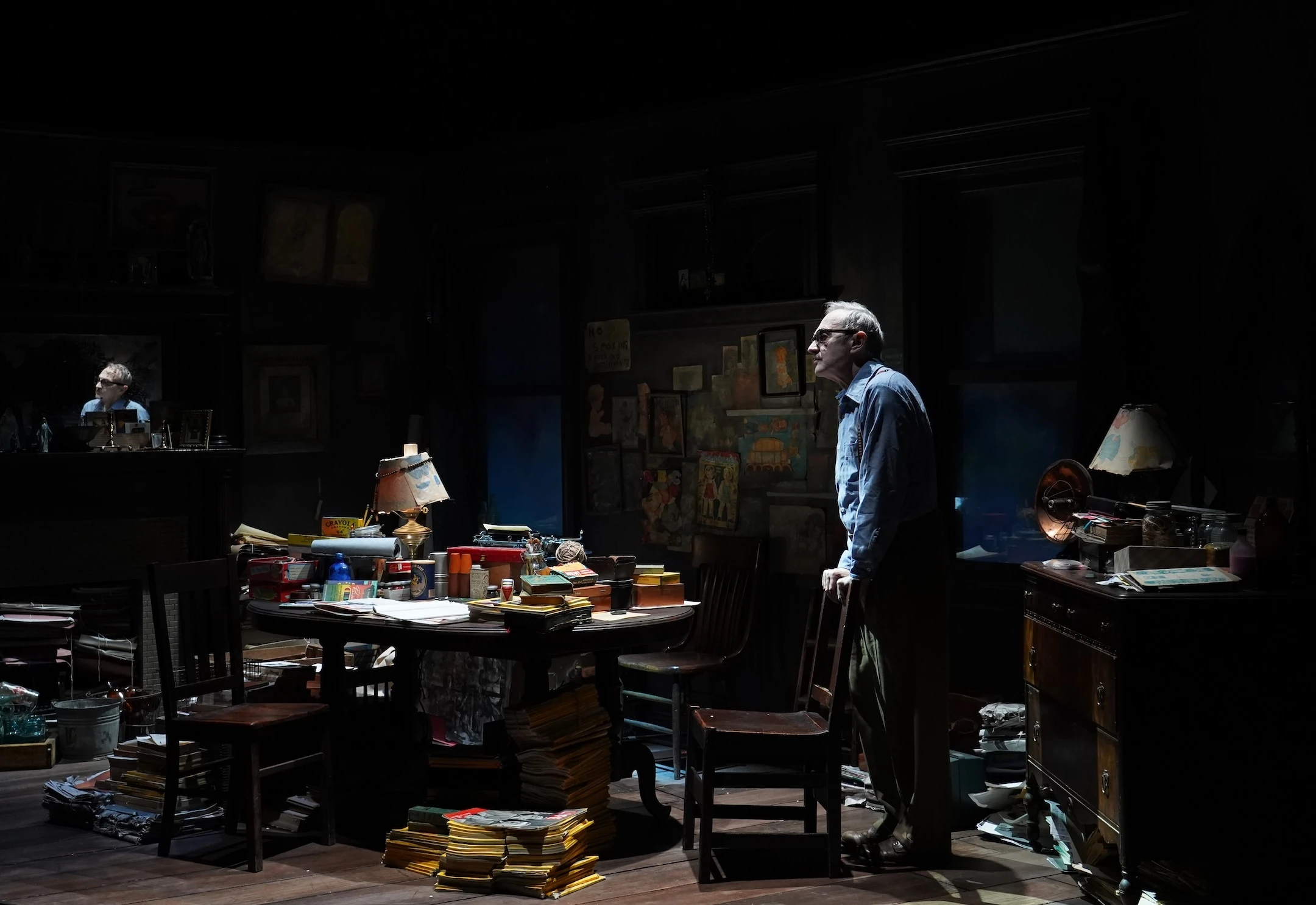
Starring John Kelly in a solo performance, the 70-minute theatre production, performed without intermission, feels less like a conventional play and more like stepping inside a living work of art — at times mesmerizing, if occasionally elusive in its abstraction. Kelly delivers a physically demanding and deeply immersive performance, conveying isolation, obsession and imagination with minimal dialogue.
For those unfamiliar with Henry Darger’s story, the lobby displays outlining his life provide helpful context and make the production easier to follow. Onstage, the design elements — including projections, lighting and sound — are meticulously layered, creating a fully immersive, sensory environment that brings Darger’s imaginative world to life.
Courtesy Carol Rosegg
Henley said the story of Henry Darger feels timely at any moment. “He is a brilliant artist with a fascinating, moving story. He has an original mind that possessed me,” she said. She first heard of Darger in the 1990s and was struck by the sheer volume of his work and the nature of his paintings. When director Martha Clarke called her about the project a year ago, Henley said she was drawn to Clarke’s long-standing vision. “Her vision was wide and extraordinary, and I wanted to help her realize it,” she said.
On the creative process, Henley explained that she did not write for specific projections. Clarke shared images constantly, some of Darger’s work, some from films, and some from the woods around her home. “And by constant, I mean over 20 emails a day,” Henley said. “She was not looking for a story. She did not want a story. She wanted Monet’s Water Lilies. Once she told me, ‘Pretend you are baking a cake and part of it is round and part of it is square and there are hot dogs in between.’ She kept it crazy and fun.”
Bughouse is playing at the Vineyard Theatre, 108 East 15th Street, New York City, through April 5.
