Inside the vaulted Gothic space of the Angel Orensanz Foundation on the Lower East Side, three distinct designers presented their collections on February 15, 2026.
Anthony Rubio opened the program with his latest collection, reaffirming his reputation as fashion’s reigning “pet couturier.” Models moved down the runway accompanied by impeccably groomed dogs, each dressed to mirror the model’s outfit. A glittering black gown with a high slit caught the light with every step, while sparkling midi skirts in vivid shades were styled with clean tops. Some dogs were cradled like purses; others trotted confidently on leashes, unfazed by the crowd. Rubio closed the presentation in a deep purple jacket, walking the platform with a poised pup in hand, an ending that felt very him: playful and fully committed to the world he’s built.
The tone shifted as AlyceSaundral took over. The music pulsated through the speakers, and the runway filled with adolescent models channeling a subversive school-uniform narrative. Think Catholic school reframed for fashion week: corseted tops, plaid skirts, patterned tights, knee-high and combat boots. Set against the cathedral interior of Angel Orensanz, the collection leaned into the tension between innocence and rebellion. This was not a demure classroom fantasy; it felt more like the girl who would be called to the principal’s office and wouldn’t apologize.
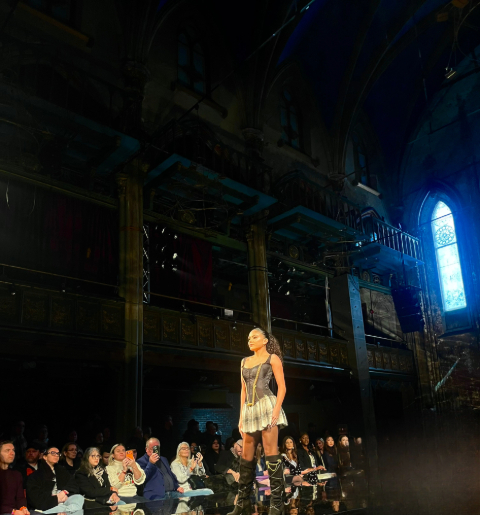
Photo Courtesy: Cassidy Colarik
Wanda Beauchamp closed the afternoon with one-of-a-kind couture gowns that filled the room. Voluminous skirts in pastel pinks and electric tones felt lifted from quinceañera tradition, then reworked for the runway. Intricate headpieces and bold makeup sharpened the impact. Under the arches, the dresses felt ceremonial, almost regal. If Rubio delivered spectacle and AlyceSaundral leaned into attitude, Beauchamp closed with full drama, a finish that held its own against the scale of the venue.