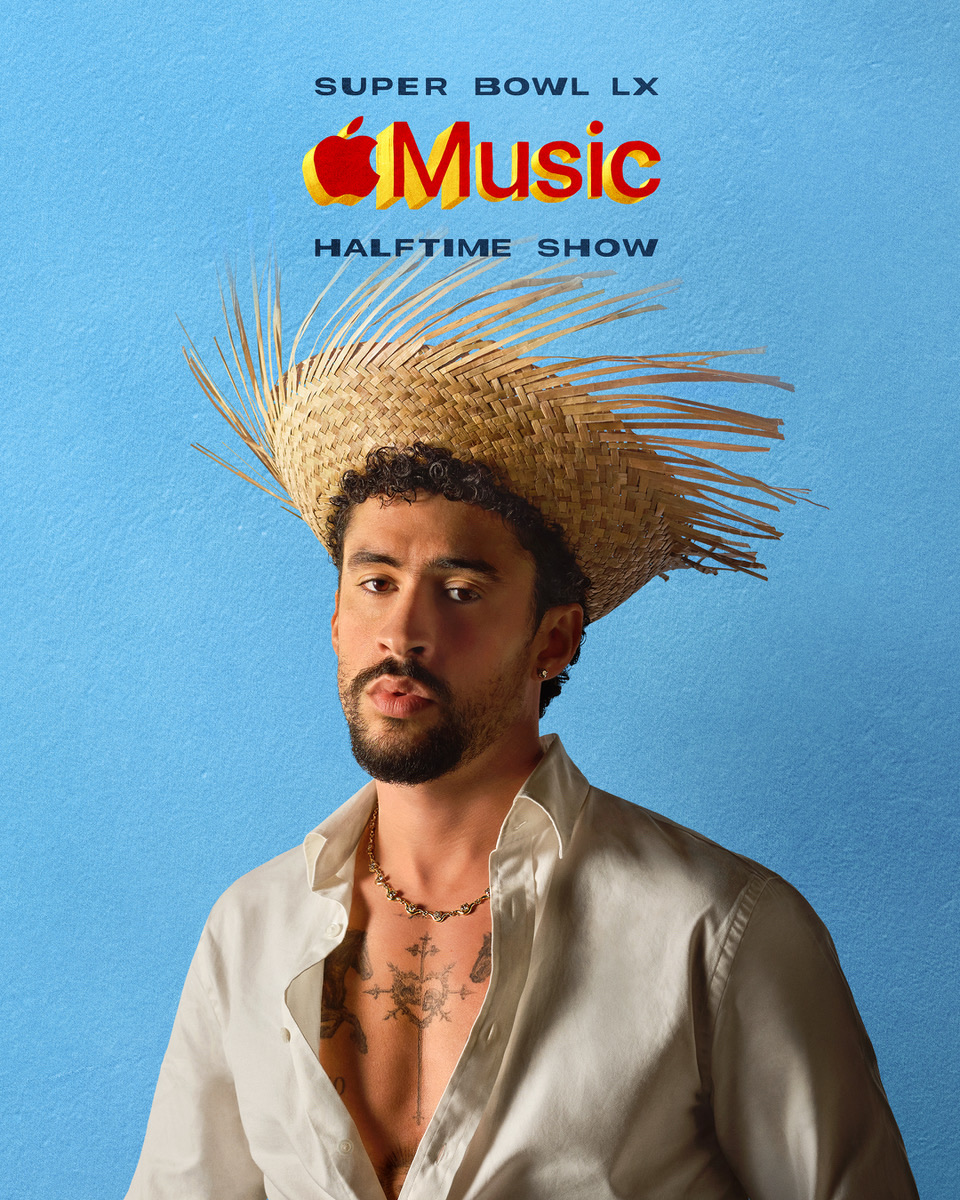
When Benito Antonio Martínez Ocasio was announced as the Super Bowl LX Halftime Show headliner last December, two starkly different responses exploded over social media within minutes. One was brimming with eager anticipation at the prospect of the Super Bowl’s first non-English show and the other was quite loudly outraged for that exact same reason. The show ended up becoming a global spectacle, delivering on the artist’s promise that the world would dance.
For a while, Halftime performances were considered as simply a form of filler entertainment. However, they have also been viewed as a direct reflection of the American spirit through music, especially in times of social unrest. The Super Bowl itself is America’s biggest evening in sports, during which the National Football League (NFL) invites some of the most popular and dynamic artists to take the field at halftime. This year, Bad Bunny took the opportunity of being on one of the world’s most broadcasted stages to make a statement of unity amidst the country’s current political polarization. Online discourse has referred to it as a sequel of sorts to last year’s show, which featured Kendrick Lamar as the headliner and was also distinguished for its profound cultural and racial commentary.
Bad Bunny’s chosen discography for the evening featured some of his most impactful works, which were no doubt selected with an allegorical intent. The performance opened with “Tití Me Preguntó”, during which he cruised by coco frío, piragua, and taco stands (these were real-life, local Latin businesses), and dodged punches from decorated boxers Xander Zayas and Emiliano Vargas. After that, was “Yo Perreo Sola”, known for its lyrics highlighting female autonomy and its viral music video of Bad Bunny decked in drag. It was then followed by an epic mashup of reggaeton legends leading right into “EoO” and later, an exuberant “BAILE INoLVIDABLE” on top of his famous “casita” set, which has been a prominent prop in his ongoing Debí Tirar Más Fotos tour. “NUEVAYoL” was performed as well, with dancers weaving through a constructed iteration of New York’s Latin neighborhoods. Also featured, was the gentrification-focused “LO QUE LE PASÓ A HAWAii” and “El Apagón”, with a full setup of jíbaros (rural farmers) dangling from exploding electricity poles. The latter song tributes to the archipelago’s constant power blackouts and political corruption, especially post-Hurricane María. The show then culminated with Bad Bunny’s most popular song as of now, “DtMF”.
The performance was also filled with surprises and meaningful moments. A young woman and man were featured getting married during part of the setlist; this was an actual licensed wedding between a lucky couple who had initially reached out to Bad Bunny’s agency without expecting much of a response. Additionally, Bad Bunny brought out his Album of the Year Grammy Award, which he had historically won just a week prior, and handed it to a young boy during “NUEVAYoL”—an endearing relay of his musical success to his childhood self. The internet was also sent into a fan-filled frenzy when Lady Gaga and Ricky Martin made surprise appearances. Gaga performed a salsa rendition of her hit collaboration with Bruno Mars, “Die With a Smile” during the featured wedding segment, while Martin was the one who sang “LO QUE LE PASÓ A HAWAii”. The moment that seemed to have truly hit its mark, however, was the shoutout Bad Bunny gave to every North, Central, and South American country during the finale. Among a clamor of pleneras and güiros, the screen was momentarily filled with flags of the Western Hemisphere—from Chile, up to Canada, and everywhere in between. The entire performance was a 13-minute colorful evocation of the Latin spirit, executed by a master team of musicians, dancers, choreographers, camera operators, and stunt coordinators.
Parallel to the Super Bowl’s broadcast, conservative organization Turning Point USA aired their alternative “All-American Halftime Show“, headlined by country-rock musician Kid Rock. While everyone is entitled to listen to whatever music they fancy, purposely labelling one performance as “All-American” over the other on the sheer basis of the performer’s race poses the dangerously ostracizing question of who and what is really “American”. A large aspect of the online outrage at the NFL’s performer announcement stemmed from Bad Bunny’s Puerto Rican identity. There was a widespread, blatant disregard for the fact that Puerto Rico has been considered a part of America since 1898, and those born there are legal American citizens by textbook definition. This had never stoked as much controversy before, especially considering how multiple past Halftime Show performers, including Coldplay, Paul McCartney, Shakira, and Rihanna, are not American citizens. Nonetheless, it didn’t stop more than 4.157 billion people from tuning into Bad Bunny’s performance across global broadcasts and social platforms within just 24 hours.
It doesn’t take significant effort to understand what this year’s Halftime Show meant for the Latin community, not when Levi Stadium’s enormous 4K video board quite literally spelled out the essence of it in capital block letters. The wave of videos on social media of people gathered by their T.V.s, with families erupting in cheers and dabbing away tears, speaks for itself as well. In a state of our nation where the people who are supposed to be our most renowned officials are excused to spew out racism under the name of law enforcement, seeing the Super Bowl field covered in a sea of sugarcane plants, pavas, and palm trees, was a message to everyone watching. As Bad Bunny said it himself, “Seguimos aquí.”
The full broadcast, currently holding the record for the highest-streamed Halftime Show performance, is available for viewing on YouTube, via the NFL’s official channel.