The Knockturnal
  • Home
  • Entertainment
  • Music
  • Lifestyle
  • News
  • Videos
  • Covers
  • Merch
Tag:

character driven storytelling

EntertainmentFeaturedTV

A Show Few Have Seen: Inside The Savant

by Jai Singh Nanda March 17, 2026
written by Jai Singh Nanda

There are shows you watch along with everyone else.

And then there are shows that, for one reason or another, never fully make it out into the world.

The Savant falls into the second category.

Originally developed as a limited series for Apple TV+, the crime thriller—created by Melissa James Gibson and inspired by a real-life article about a woman infiltrating online extremist groups—was set for release before being pulled back entirely. No rollout. No weekly drops. No real audience reception in the traditional sense.

Which makes the experience of watching it—and speaking to the people who made it—feel different from the start.

Because this is a show that exists, but in a way, also doesn’t.

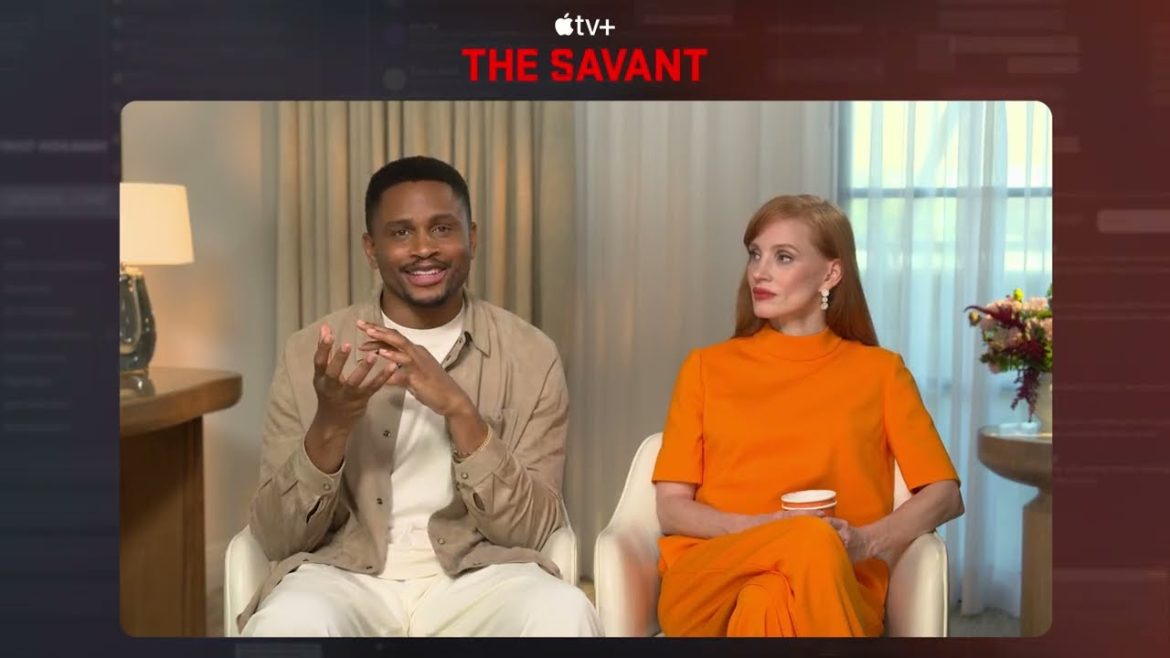
I was one of the few people given access to see it, and then had the opportunity to speak with Jessica Chastain and Nnamdi Asomugha about what drew them to the project, what it demanded from them, and what they hope people take from it, whenever and however it finds its way to an audience.

A Story That Started With Reality

For Jessica Chastain, the entry point into The Savant wasn’t just the role.

It was the story itself.

She described coming across the article that inspired the series and being struck by the idea that there are people whose work exists entirely in the shadows of the internet, embedding themselves inside dangerous online spaces in order to prevent real-world violence. It wasn’t just the concept that stood out to her, but the fact that it was centered on a woman balancing that work with a personal life.

That combination, the scale of the responsibility and the intimacy of the character’s life outside of it, is what made her want to be involved not just as an actor, but as a producer.

From her perspective, it wasn’t enough to simply perform in the story. She wanted to help shape how it was brought to screen.

And that meant committing to a process that was significantly larger than a typical film.

Building Something Long-Form

When I asked her about the difference between producing a series and producing a film, her answer was straightforward.

It’s the same job.

Just amplified.

Instead of telling a story over the course of a couple of hours, you’re building something that stretches across multiple episodes. More characters, more moving pieces, more time spent developing the world and shaping the narrative. It becomes a longer, more intensive process at every stage, from development to production.

She walked through how the project evolved from a single article into a full series. First comes the idea. Then the pitch. Then the process of finding a home for it. Then the development. Then the actual production.

Each step adding another layer.

By the time you arrive at the finished product, you’re not just looking at a single piece of work. You’re looking at something that has been built over years.

A Character Living Between Worlds

On the other side of the conversation, Nnamdi Asomugha spoke about his character, Charlie, and what it meant to exist within a story where so much is happening beneath the surface.

Charlie is navigating a family dynamic shaped by secrets, responsibilities, and the kind of pressure that doesn’t always present itself directly. For Asomugha, the connection to the role came less from the specifics of the storyline and more from the emotional structure around it.

He talked about the experience of being away from home for extended periods during production and then returning to reintegrate into his own family life. That rhythm—leaving, returning, recalibrating—mirrored what his character goes through in a different context.

The circumstances may not be the same, but the feeling of trying to reestablish your place within a family after time away is something that translates.

That sense of grounding becomes important in a show built around a subject that most people don’t encounter directly.

Work That Happens Out of Sight

Both actors kept returning to a similar idea when talking about what they hope audiences take from the series.

Awareness.

For Chastain, it’s about understanding the reality of what exists online, particularly for younger people, and the importance of paying attention to it. The idea that the digital world is not separate from real-world consequences, and that there are people actively working to monitor and prevent harm within those spaces.

For Asomugha, it’s about recognizing the individuals doing that work.

The people who operate behind the scenes, often without recognition, whose job is to prevent something from happening rather than respond after it already has.

It’s a different kind of heroism.

One that doesn’t announce itself.

One that, in many cases, people don’t even realize exists.

A Project in Limbo

What makes The Savant especially unusual is that these conversations are happening around a show that has not been released in the traditional sense.

It was developed. Produced. Completed.

And then, just before it was meant to reach audiences, it was pulled back.

There’s no standard way to talk about something in that position.

There’s no audience reaction to point to. No rollout to contextualize it. No shared experience of people watching it at the same time and forming a collective response.

Instead, what you’re left with is the work itself, and the people who made it.

And in this case, those people are talking about a project that, for now, exists in a kind of in-between space.

Not fully public.

Not entirely unseen.

Just waiting.

Final Thoughts

By the end of my conversation with Jessica Chastain and Nnamdi Asomugha, what stood out most wasn’t the scale of the production or the unusual circumstances surrounding the show’s release.

It was the intention behind it.

A story pulled from reality.

A character built around that reality.

A process that expanded from a single article into something much larger.

And a group of people trying to bring attention to a world that most audiences don’t regularly see.

Whatever happens next with The Savant, whether it finds its way back to audiences or remains in its current state, the work behind it is already there.

And for now, that’s the version of it that exists.
March 17, 2026 0 comments
0 FacebookTwitterPinterestEmail
EntertainmentTV

Chaos, Character, and Total Trust: Inside Pluribus

by Jai Singh Nanda March 17, 2026
written by Jai Singh Nanda

There are shows that arrive with hype.

And then there are shows that arrive with expectation.

Anything created by Vince Gilligan automatically falls into the second category.

After redefining modern television with Breaking Bad and Better Call Saul, Gilligan has built a reputation that is almost impossible to separate from the work itself. His name carries a certain promise. Precision. Control. Character-first storytelling. A world where tone can shift on a dime without ever feeling like it’s losing its grip.

So when Pluribus, his latest series for Apple TV+, began to take shape, there was a natural question hanging over it.

What does a creator like that do next?

From everything I’ve seen and heard, the answer is simple.

He swings.

And then he swings again.

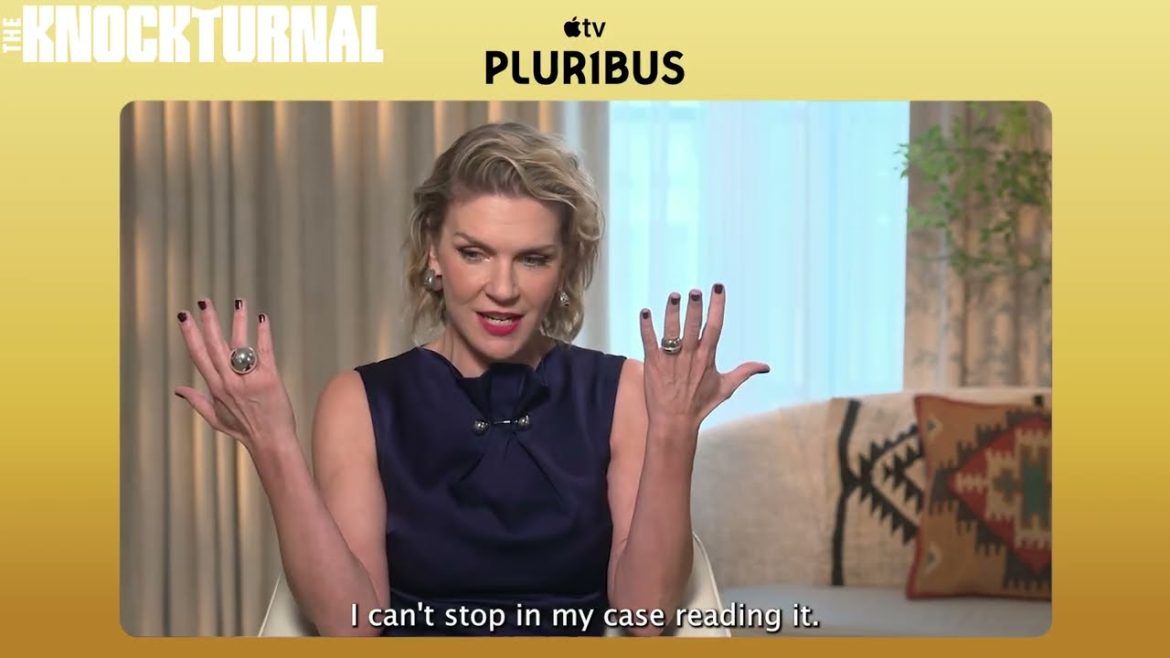
I sat down with Rhea Seehorn, who leads the series, to talk about stepping into a project that feels intentionally unpredictable, tonally ambitious, and deeply rooted in character, even as it moves through genres that don’t usually sit comfortably together.

By the end of the conversation, one thing became very clear.

This is not Vince Gilligan repeating himself.

This is him pushing further.

A Project You Don’t Say No To

Before getting into anything about tone or storytelling, I asked Seehorn how she came onto the project and what initially drew her to it.

Her answer was immediate.

There wasn’t really a decision to make.

When Gilligan reached out, she said yes before even reading the script. He hadn’t told her what the show was about yet. He wasn’t ready to send the material. None of that mattered. The trust was already there.

And that says a lot.

Because in an industry where decisions are often calculated, strategic, and cautious, that kind of instinctive yes only happens when there is a deep creative confidence in the person leading the project.

When she finally did read the script, what struck her most was not clarity, but momentum.

She described the experience of reading it as something you can’t quite categorize while you’re inside it. It keeps shifting. You think you understand what kind of story it is, and then it moves. It starts to feel like one genre, then pulls away from it. It builds tension, then pivots into something unexpectedly funny. It asks big questions, then refuses to answer them in a straightforward way.

The word she kept coming back to, in essence, was unpredictability.

Not in a chaotic sense.

In a deliberate one.

A Show That Refuses to Sit Still

One of the most interesting things about Pluribus, based on how Seehorn described it, is that it does not allow the audience to get comfortable.

There are familiar entry points. You might recognize the language of suspense. You might think you’re watching something rooted in horror or science fiction. You might start to build expectations around where the story is heading.

And then it shifts.

That kind of storytelling is difficult to pull off, because it requires absolute control underneath the surface. If the tone slips even slightly, the whole thing can feel disjointed instead of intentional.

But that is exactly where Gilligan thrives.

Seehorn talked about the way the show moves between tension and humor, sometimes within the same sequence. One moment, her character is going through something deeply uncomfortable or emotionally raw. The next, there is a moment of dark humor rooted in behavior, not punchlines. And then it swings back again.

That elasticity is part of what makes the experience engaging.

It demands attention.

It assumes the audience is paying close enough attention to keep up.

And more importantly, it trusts them to.

Vince Gilligan’s Approach: Character First, Always

At a certain point, the conversation naturally turned toward Gilligan himself.

Why his work feels so watchable.

Why his shows hold tension so well.

Why his tone, even when it shifts, never feels accidental.

Seehorn’s answer cut straight to the foundation.

It starts with character.

Not concept. Not genre. Not spectacle.

Character.

She explained that even when Gilligan is exploring larger ideas or unusual narrative structures, he builds everything outward from the people inside the story. What they want. What is in their way. How they behave under pressure.

That may sound simple, but it is actually what allows everything else to work.

Because once the character is grounded, you can move them through almost any situation, and the audience will follow.

That is what gives Pluribus its freedom.

It can move between tones, because the core is stable.

Collaboration Without Fear

One of the most revealing parts of the conversation had nothing to do with plot or genre.

It was about environment.

Seehorn described Gilligan as someone who creates a space where actors feel safe to take risks. That may sound like a cliché, but the way she explained it made it feel very real.

She talked about how, over time, working with him helped build her confidence to bring ideas into the room. Not just to execute what’s on the page, but to actively explore it. To try something. To push a moment in a different direction. To experiment with tone.

And crucially, to not be afraid of getting it wrong.

That kind of environment is rare.

A lot of actors, she pointed out, carry a quiet fear into the room. The fear of failing. The fear of being judged. The fear of taking a swing that doesn’t land. And in some environments, that fear gets reinforced.

Here, it’s the opposite.

If something works, it stays. If it doesn’t, someone else tries something. The process becomes collaborative rather than performative.

That freedom matters, especially on a show like Pluribus, where tone is constantly shifting and there is no single “correct” way to play a scene.

You have to feel your way through it.

And that only works if the environment allows you to.

A Decade of Creative Trust

At one point, Seehorn mentioned something almost in passing that ended up reframing the entire conversation.

She realized that she and Gilligan have effectively been working together for close to a decade.

That kind of creative relationship is not common.

And it shows.

There is a shorthand there now. An understanding of rhythm, of tone, of how far to push something, of when to pull it back. That kind of trust doesn’t just make the work easier. It makes it deeper.

Because instead of figuring out how to collaborate, you are building on something that already exists.

That is part of what gives Pluribus its confidence.

It is not a first experiment.

It is an evolution.

Why This Feels Different

From the outside, it would be easy to look at Pluribus and try to categorize it through Gilligan’s previous work.

But that misses the point.

This does not sound like a continuation of anything.

It sounds like a departure.

A show that is willing to take tonal risks. A show that is less interested in staying within a single lane and more interested in seeing how far it can stretch without breaking. A show that leans into discomfort, humor, tension, and ambiguity all at once.

And importantly, a show that still trusts the audience to come along for that ride.

That trust is everything.

Because it creates a different kind of viewing experience. One where you are not being told how to feel in every moment. One where you are allowed to sit in uncertainty. One where you are not handed easy answers.

That is harder.

But it is also more rewarding.

Final Thoughts

By the end of my conversation with Rhea Seehorn, what stayed with me most was not just excitement about the show itself.

It was the clarity of the process behind it.

A creator who builds from character outward.

An actor who is willing to step into something without fully knowing what it is, simply because she trusts the person guiding it.

A set environment that encourages risk instead of punishing it.

And a story that refuses to stay in one place for too long.

That combination is rare.

And if Pluribus delivers on what it sounds like it’s aiming for, something unpredictable, tonally ambitious, and fully committed to the intelligence of its audience, then it won’t just be another entry in Vince Gilligan’s career.

It will be a continuation of what he does best.

Taking control of chaos.

And making it feel intentional.


March 17, 2026 0 comments
0 FacebookTwitterPinterestEmail

Digital Cover No. 19

The Knockturnal Merch

Follow Us On The Gram

This error message is only visible to WordPress admins

Error: No feed with the ID 3 found.

Please go to the Instagram Feed settings page to create a feed.

About The Site

We are a collective of creative tastemakers made up of fashion, music and entertainment industry insiders. It’s all about access. You want it. We have it.

Terms Of Use

Privacy Policy

Meet The Team

CONTACT US

For general inquiries and more info on The Knockturnal, please contact our staff at:
info@theknockturnal.com
fashion@theknockturnal.com
advertising@theknockturnal.com
editorial@theknockturnal.com
beauty@theknockturnal.com

  • Facebook
  • Twitter
  • Instagram
  • Linkedin
  • Youtube

© Copyright - The Knockturnal | Developed by CI Design + Media

The Knockturnal
  • Home
  • Entertainment
  • Music
  • Lifestyle
  • News
  • Videos
  • Covers
  • Merch