
Fanatics Fest has quickly established itself as one of the biggest weekends on the sports calendar.
There are very few places where fans can watch Hall of Famers share stories, see current superstars interact across different leagues, shop for rare collectibles, and attend live programming that rivals a television production. For sports fans, there is genuine value in the event, and this year’s edition continued to prove why so many people make the trip to New York City.
What separates Fanatics Fest from most conventions is the programming. The stages remained busy throughout the weekend with conversations featuring some of the biggest names in sports and entertainment. Rather than relying solely on autograph sessions or photo opportunities, the event gave fans a chance to hear athletes reflect on their careers, discuss rivalries, and share stories that normally stay behind closed doors.
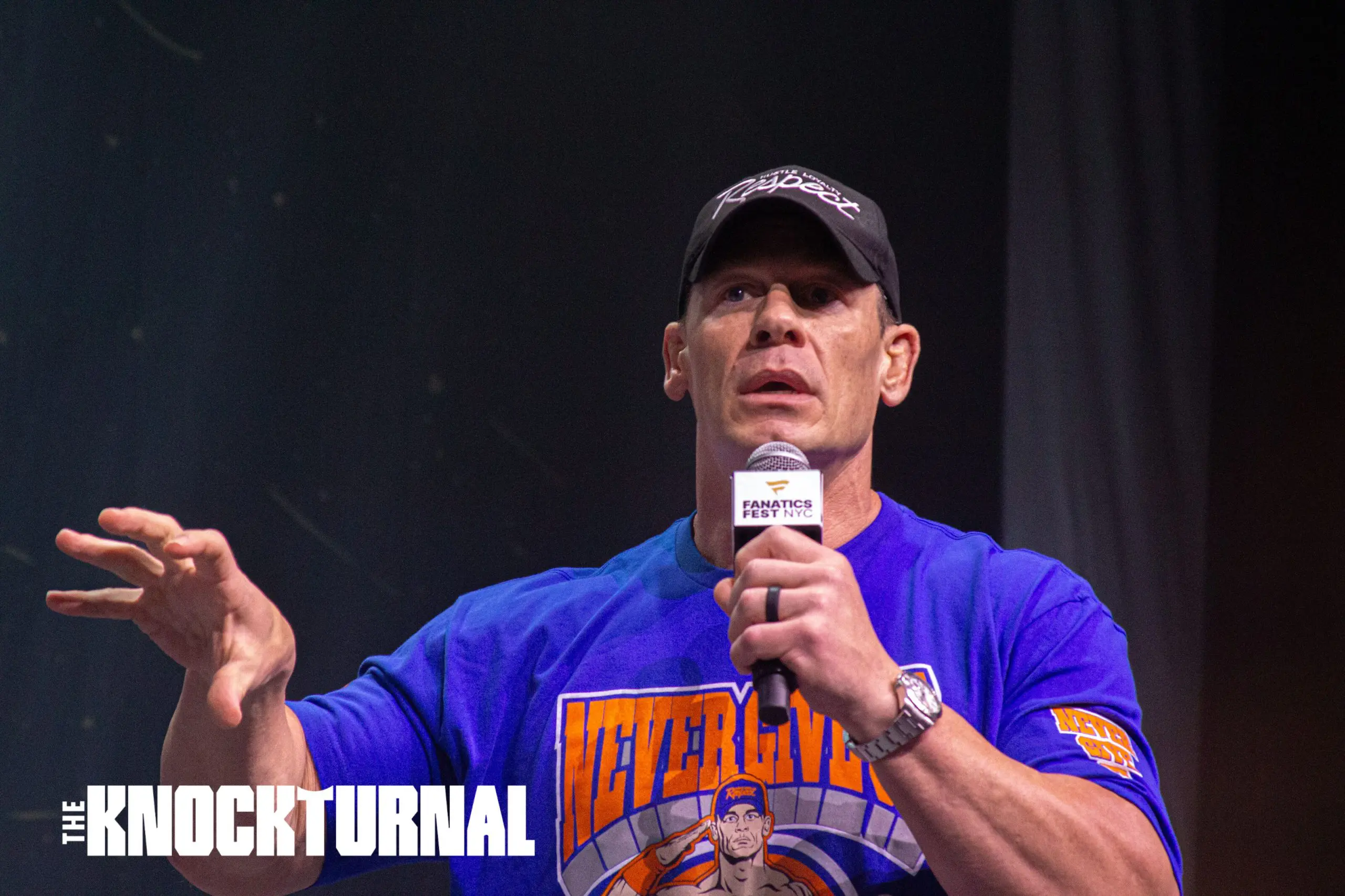
John Cena at Fanatics Fest 2026; Photo by The Knockturnal
John Cena’s Q&A was one of the weekend’s standout moments. Even after more than two decades in the spotlight, Cena continues to command a room with sincerity rather than spectacle. His discussion covered leadership, discipline, failure, and what motivates him at this stage of his career. It felt less like a promotional appearance and more like a genuine conversation, which made it one of the easiest sessions to recommend.
WWE, as a whole, was everywhere during Fanatics Fest. The company had a major presence across the convention floor with superstar appearances, autograph sessions, collectibles, and live stage programming. WWE no longer feels like an addition to the event as it has become one of its main attractions, and judging by the crowds throughout the weekend, that investment paid off. Alongside WWE personalities, fans also packed stages featuring stars from the NFL, NBA, MLB, and other major sports, giving the event an energy that rarely slowed down.
One addition that looked far more exciting on paper than it did in person was the return of Jay Z’s legendary 40/40 Club. Bringing back one of New York City’s most recognizable sports venues sounded like the perfect way to create an exclusive gathering space inside the convention. Instead, it remained surprisingly quiet for much of the weekend and never evolved into the destination many expected.
The rollout surrounding the 40/40 Club also exposed one of the event’s more frustrating organizational issues. On Sunday morning, Fanatics’ team distributed a media advisory inviting journalists to reach out for access. About two hours later, after following the instructions in the email, I was told the space had already reached capacity. After speaking with several other reporters, it became clear I was far from the only journalist who had the exact same experience. Sending media information after the opportunity has effectively disappeared creates unnecessary confusion and leaves reporters scrambling for answers that should have been communicated much earlier.
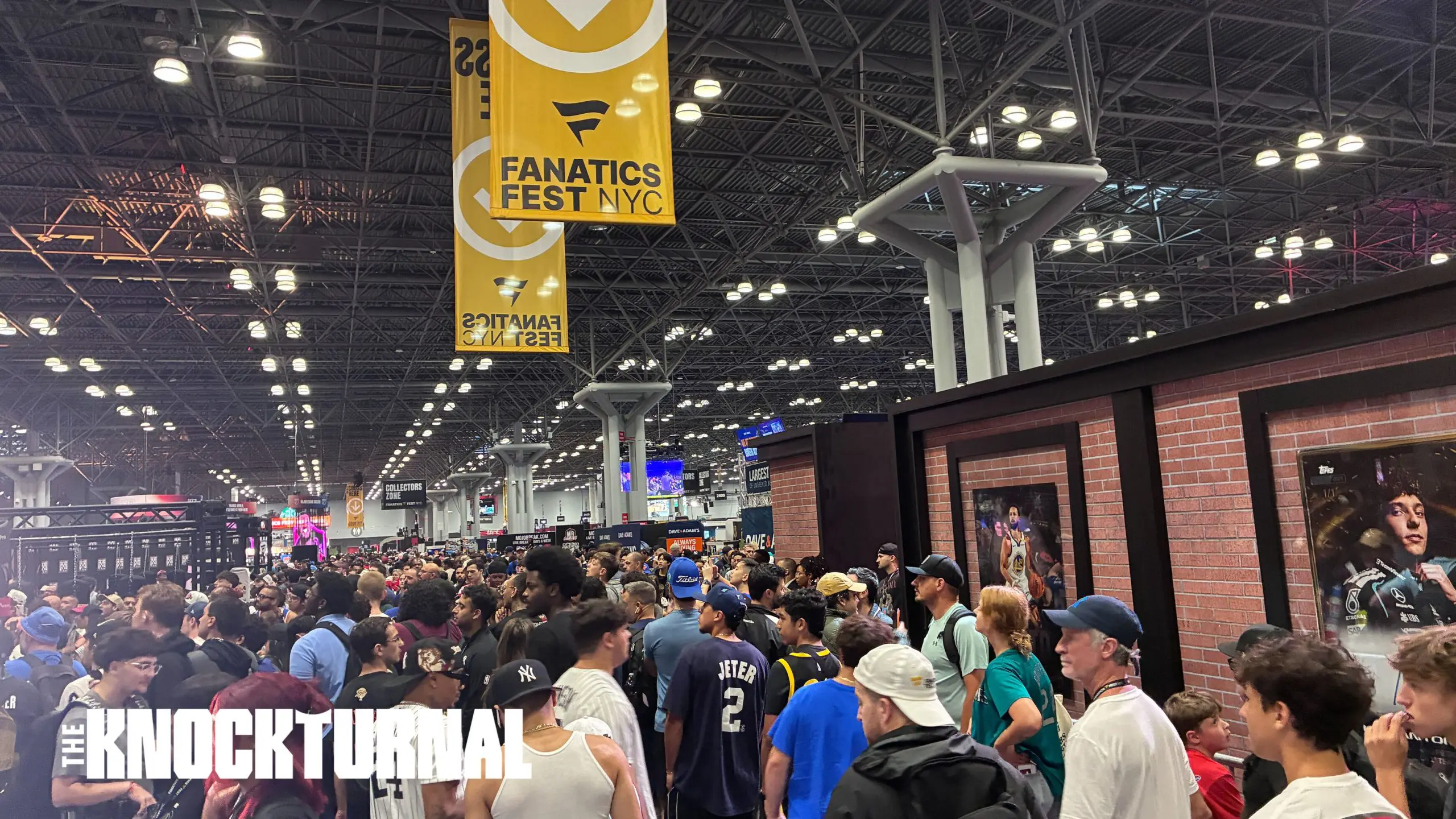
Fanatics Fest 2026 Show Floor; Photo by The Knockturnal
The convention floor presented an even bigger issue. Almost every major activation suffered from poor crowd flow. Barricades divided nearly every section of the venue, creating overlapping lines that frequently spilled into walkways and neighboring attractions. At times, it became difficult to tell which line belonged to which experience. Simply moving across the Javits Center often required weaving through crowds that had nowhere else to go. I’ve covered different conventions over the years like New York Comic Con and San Diego Comic Con and while the crowd control was hit or miss, it lacks the comparison to what I witnessed at Fanatics Fest.
The biggest frustration came from how celebrity appearances affected fans already waiting in line. Throughout the weekend, activities were routinely paused so celebrities could participate in games, film content, or create social media moments. While those appearances may generate attention online, they often came at the expense of paying attendees who had already spent one to two hours waiting for the exact same activity.
That balance feels like something Fanatics still needs to address. Celebrity moments absolutely have a place at an event of this scale, but they should never come before the fans who purchased tickets and patiently waited for their turn. Too often, it felt like the convention was more interested in showcasing which celebrity was participating than making sure attendees actually received the experience they had waited for.
Even with those shortcomings, Fanatics Fest continues to move in the right direction. The quality of the guests, the live conversations, and the overall ambition remain among the best in sports. The event has already figured out how to attract stars from every corner of the industry. The next step is making the experience on the convention floor feel just as polished. If Fanatics can improve crowd management, streamline operations, and keep the focus where it belongs, on the fans, this event has every chance to become the standard that every sports convention tries to match.
