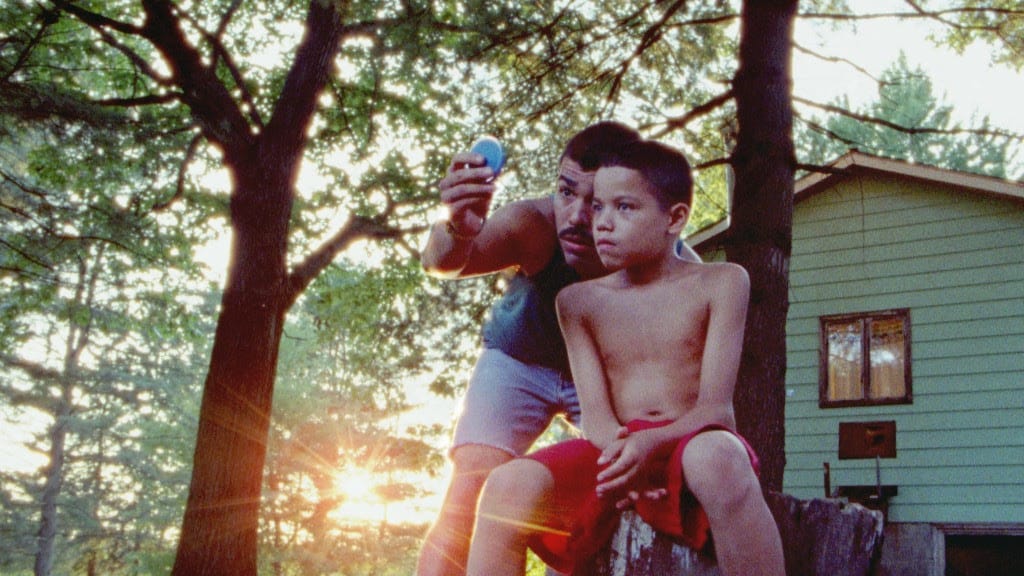
Jeremiah Zagar’s lyrical Sundance award-winner, based on the celebrated Justin Torres novel, weaves magic realism into a touchingly beautiful portrait of three brothers, their troubled parents and the secret that the youngest of them holds.
Manny, Joel, and Jonah tear their way through childhood and push against the volatile love of their parents. As Manny and Joel grow into versions of their Puerto Rican father (Raúl Castillo, Looking) and Ma (Sheila Vand, A Girl Walks Home Alone At Night) dreams of escape, Jonah, the youngest, embraces an imagined world all his own. Propelled by strikingly layered performances from its cast, this visceral coming-of-age tale, co-written by Zagar and Dan Kitrosser, transforms a landscape of childhood alienation and turns it into a fever dream careening toward the future.
Check out what director Jeremiah Zagar had to say about his latest film at the Tribeca Film Festival NY Premiere!
The Knockturnal: Could you explain the metaphors that appear throughout the film, especially the moment where Jonah starts flying?
Jeremiah Zagar: We were trying to find a cinematic way to elevate the film to poetry and, you know, there are a few of these moments that are actually in the book. The ‘Body heat’ sequence is one of them, and it becomes a repeated motif in the script. The flight is another one of these moments. In the book he references often, he talks about flying but there’s no literal moment where he flies, where it takes place. And with Justin Torres, we had these conversations where we would talk about the closeness between flying and drowning, and as filmmakers and authors, in particular, we understand that your ability to achieve something euphoric and your ability to fail miserably are very very close. You’re riding on an edge but when you are ridding on that edge you have the possibility of something euphoric, you have the possibility of transcendence. We wanted to find a simple metaphor for what this boy is experiencing for the first time. A simple, relatable metaphor that we would have all experienced so flying, because it’s so present in the novel, and drowning because it’s also so present in the novel made sense because of the repeated visual motif. And then in the back of the truck is another time that happens. In the book, they are all inside the car but we wanted to find a way to make it feel more visually poetic.
The Knockturnal: Could you tell us about the sound design and the very rhythmic soundtrack?
Jeremiah Zagar: I think there’s a rhythm in childhood, there’s a heartbeat to being a kid that is in the book rhythmically, in the words, and we wanted to figure out a way to do it in cinema. It’s something I talked about with my sound designer and my composer, Nick, more than three years ago. Nick composed the theme for my first film and he was great, so for this we wanted to figure out a rhythmic way to capture the children’s lives. Justin Torres talks about the banging of the forks a lot, the banging of the plates, the banging of the bowls, and we wanted to utilize those sounds throughout the movie and make sure that the rhythm of life persisted as this child got bigger and bigger and bigger.
The Knockturnal: Was there not more of a rejection by the family in the book than in the film? Why?
Jeremiah Zagar: Yes, but at the end of the book he’s seventeen years old and he has sex with an older man in the back of a bus and so it’s a very sexually difficult moment for the family to internalize. But, again in conjunction with Justin, because we didn’t want to age Evan we thought about what would be an appropriate reaction of a family discovering their 11-year-old who has just drawn a bunch of nude pictures. So now it’s more about what is that child going to become. And again, for Justin, the book and his real life and this are all different. For him it was just another translation.
The Knockturnal: In terms of the audience, do you think this is a film for young boys to watch or do you think it’s more for adults to watch and tap into their childhood?
Jeremiah Zagar: I actually never think about the audience. I have no idea who it’s for. I think that’s what actually moved me about the book. I thought ‘this is not for anyone, but this is for everyone!’ Also, I think that’s what’s so beautiful about the novel; it’s that it feels like it has no agenda. And the film has no agenda either. I’m not trying to say something. I think what was so moving about reading this book was that I thought I knew that family, that was my family. But it was because it was so intimate so much like the emotional experience of growing up, I just wanted to bring that to the screen. That’s why I did the movie. Because my family was like that. It’s for anybody that can relate to it. But also for people who can’t relate to it. I think it will mean different things to different people just like the book.
The Knockturnal: How did you manage the boys with the subject matter?
Jeremiah Zagar: We made a very conscious effort during filming that the young people in this film weren’t exposed to the things the characters in the movie are exposed to. So they’re never seeing any of the stuff you guys see. However their parents did bring them to the premiere at Sundance and I said at the premiere exactly what I just said now; that is that we were very careful and, don’t worry, they didn’t drown and they didn’t watch pornography and somebody in the audience just shouted « now they did » and that was true because all the kids were watching the movie. And that’s a testament to how amazing these parents were and are. Because, we didn’t cast for parents, we cast for young men and it just happens that their parents are so open-hearted about what their young, very young children have done. They were able to process it, they were able to embrace it and it’s very moving for me going forwards that they still want to talk to me.
